Kanta Elephant Sanctuary Chiang Mai — Half Day River Bathing Tour
Last updated: May 2026
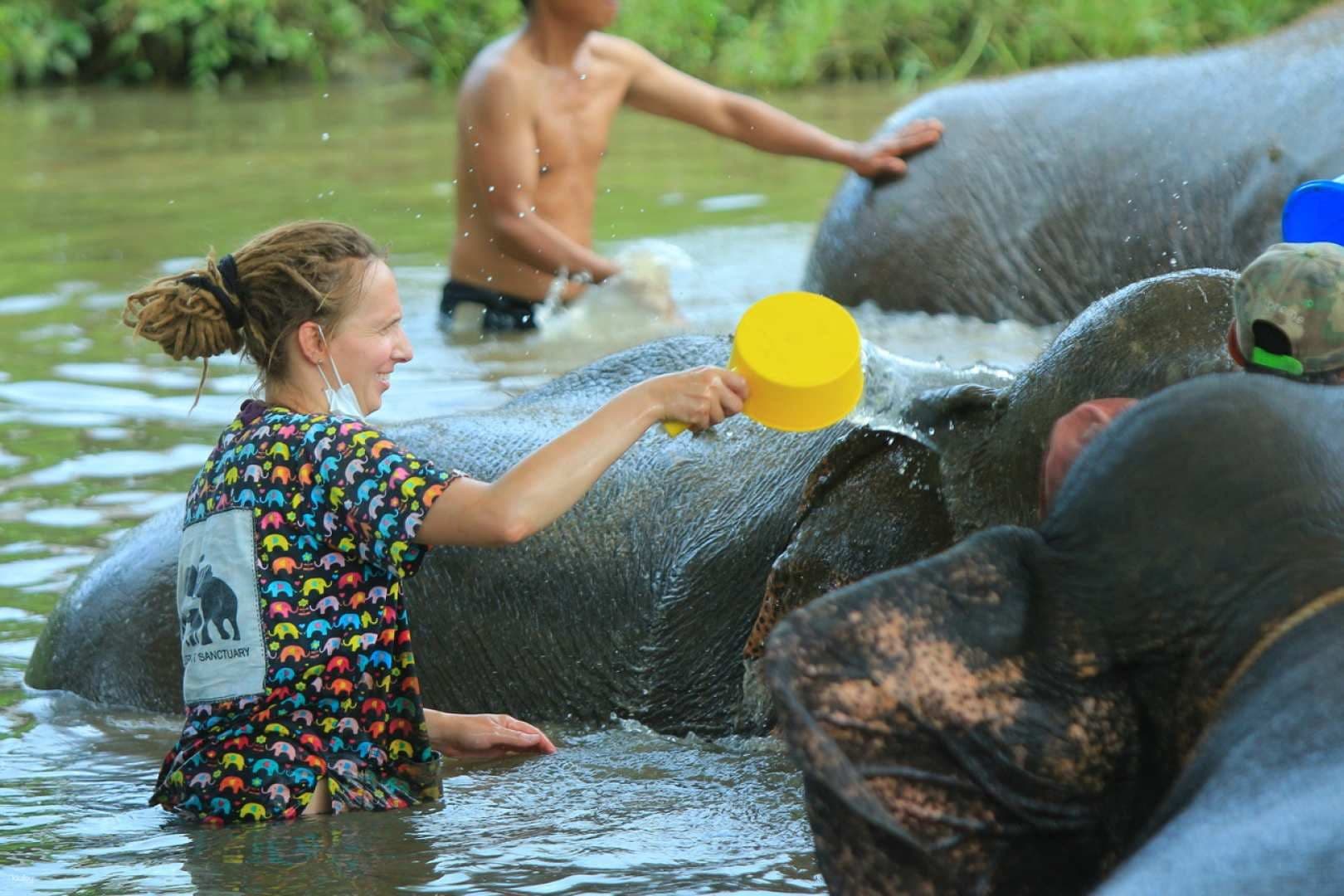

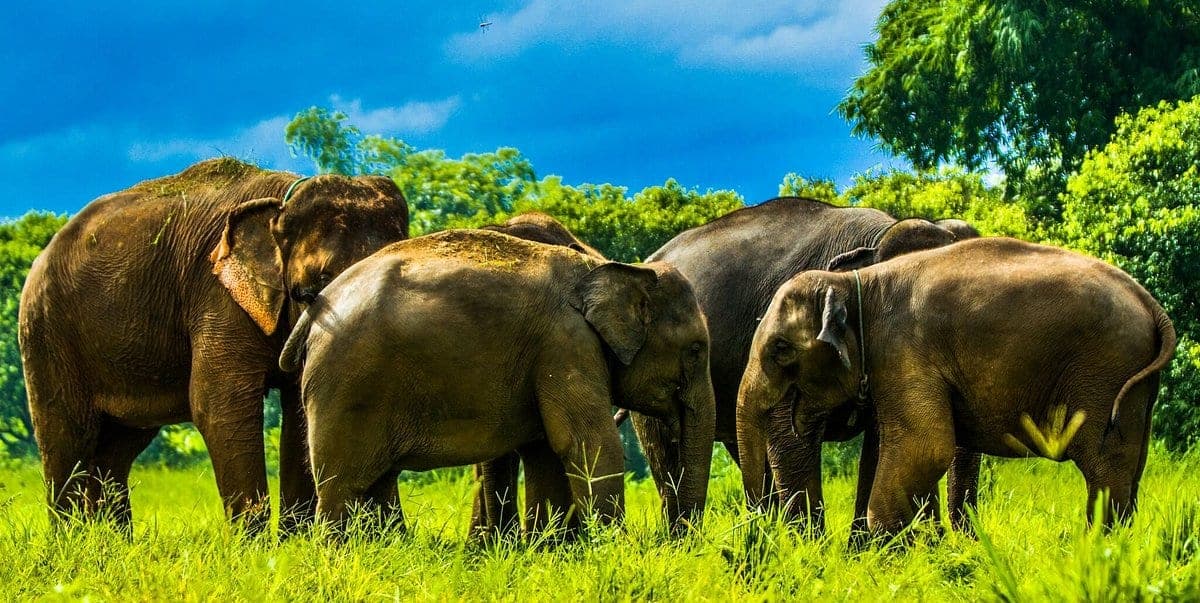


There is a moment at Kanta when the path from the sanctuary drops toward the valley floor and the Mae Taeng River comes into view below. The elephants have walked this route every day. They know what is at the bottom. They pick up their pace. What follows — an hour in moving water, waist-deep, scrubbing an animal the size of a small truck while it leans into the current — is the reason most visitors describe Kanta Elephant Sanctuary as the most physically real elephant experience they had in Thailand.
Kanta sits on 200 acres of open Mae Taeng Valley land approximately 50 kilometres north of Chiang Mai, operated by the Baanchang family — a Thai family with over 30 years of elephant care across three generations. It opened in March 2015 as a permanent retirement home for elephants who spent their working lives in logging camps and tourism. No riding has ever taken place here. The elephants are not passing through. This is where they live.
From ฿1,500 per adult. Hotel pickup included from all Chiang Mai hotels — no extra charge for hotels outside the ring-road. Morning and afternoon sessions available daily — book for one person or a whole family. Book via WhatsApp +66 89 949 6235 — we confirm your session and arrange your exact pickup time.
Kanta Elephant Sanctuary Chiang Mai Price 2026
Package Deals — Best Value
Half Day Morning Session
Hotel pickup + Kanta sanctuary entry + traditional clothing + herbal medicine prep + elephant feeding + Mae Taeng River bathing + fruit and tea break + return transfer
Morning pickup 6:30–7:00 AM. Back at hotel by 12:30 PM. ฿1,500 per adult (age 11+), ฿1,200 per child aged 3–10, under 3 free. No minimum group size. Daily.
Half Day Afternoon Session
Hotel pickup + Kanta sanctuary entry + traditional clothing + herbal medicine prep + elephant feeding + Mae Taeng River bathing + fruit and tea break + return transfer
Afternoon pickup 12:30–1:30 PM. Back at hotel by 6:30 PM. ฿1,500 per adult (age 11+), ฿1,200 per child aged 3–10, under 3 free. No minimum group size. Daily.
Optional Extras
Approximately ฿250 per person — paid on-site directly to photographer
Kanta has a resident professional photographer who follows your group through feeding, medicine prep, and river bathing. Photos are uploaded to Facebook and shared via Dropbox. Your guide also shoots on your own phone throughout at no charge.
Kanta Elephant Sanctuary Chiang Mai — Half Day River Bathing Tour
Bathe rescued elephants in the real Mae Taeng River — not a pool, not a shower. Kanta's 200-acre valley is backed by 30 years of Baanchang family elephant care. No riding. Hotel pickup included. ฿1,500 per adult, ฿1,200 per child aged 3–10.
Highlights:
- Real river bathing in the Mae Taeng River — you walk the elephants to a natural, flowing river and bathe them waist-deep in moving water with buckets and brushes. This is the experience most Chiang Mai sanctuaries offer in a constructed version; Kanta offers the original
- 200 acres of open Mae Taeng Valley land — the most spacious setting of Chiang Mai's major sanctuaries. Watch elephants move freely across real terrain at a distance before you are anywhere near them
- Baanchang family elephant care for over 30 years across three generations — the mahout relationships at Kanta are measured in years and inherited across families, not built from a training programme
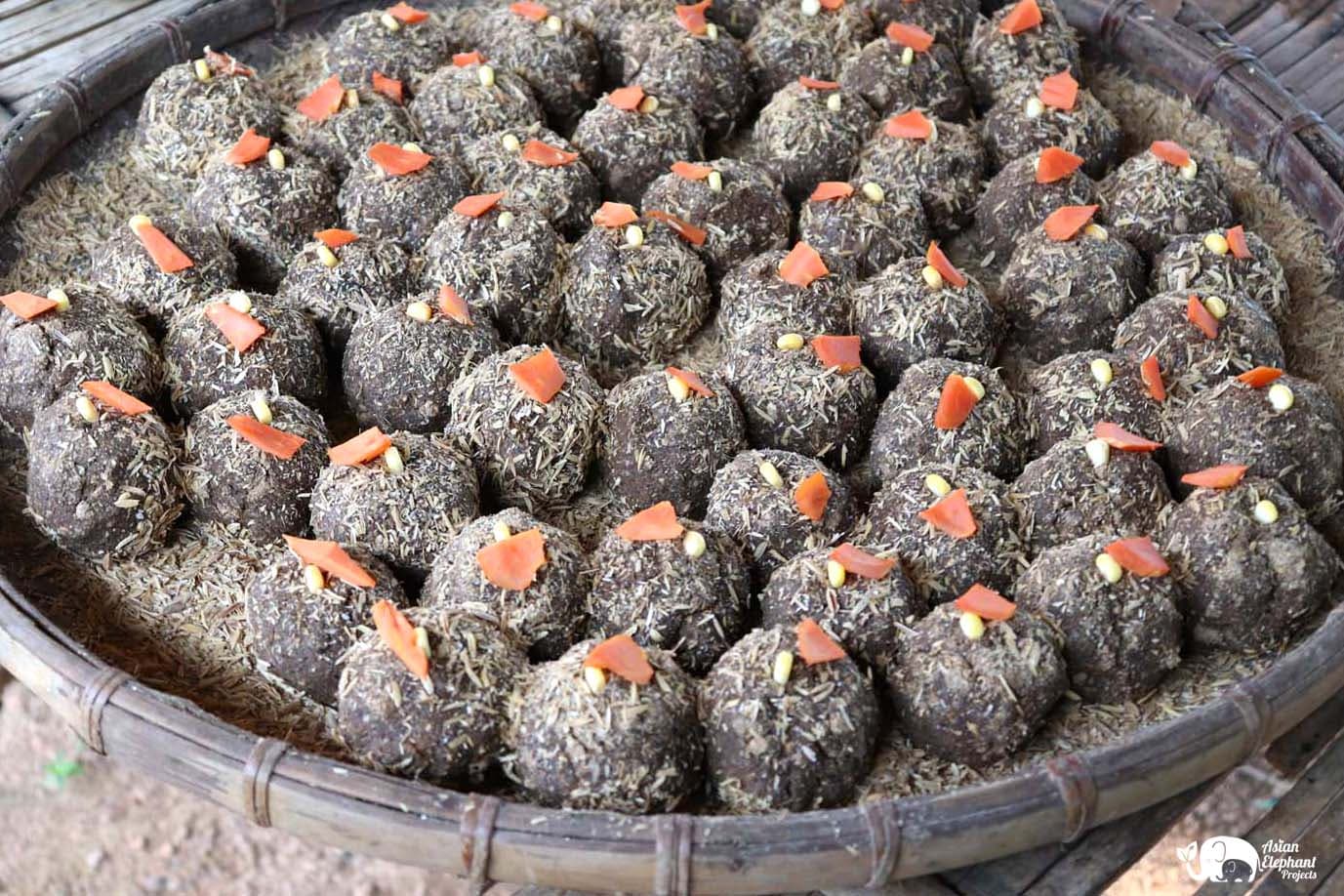
- Herbal vitamin medicine ball preparation — banana, tamarind, sticky rice, turmeric, and digestive herbs hand-rolled and placed directly into each elephant's mouth. Your guide explains every ingredient and why it matters for that specific animal
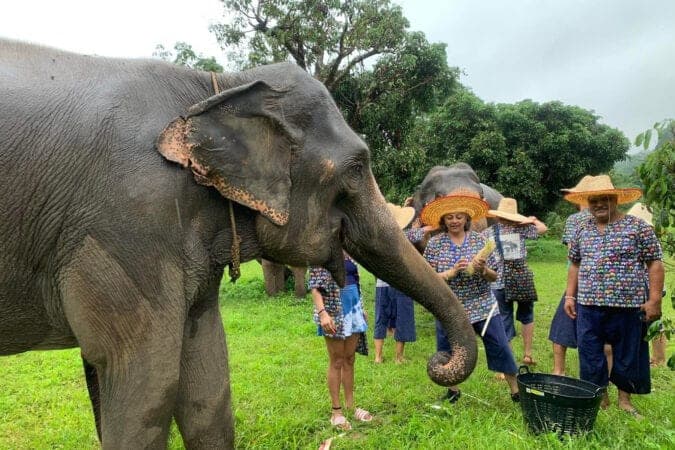
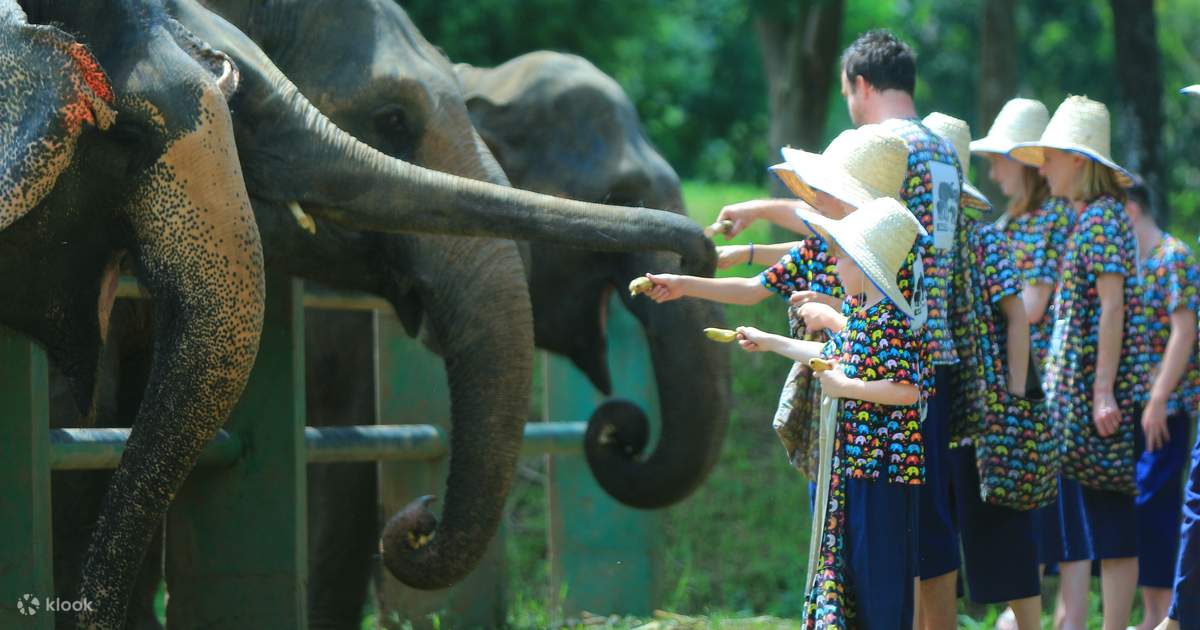
- Hand-feed elephants from a personal shoulder bag of sugar cane and grasses. Each elephant approaches individually and you learn their name and working history before the bag is empty
- Morning pickup 6:30–7:00 AM, back by 12:30 PM. Afternoon pickup 12:30–1:30 PM, back by 6:30 PM. Drive is 50 minutes — shorter than most Chiang Mai sanctuaries
- Secure lockers with key for bags and valuables, shower facilities, soap, and towels provided — practical details that matter when you have been in a river with elephants
- Professional on-site photographer available (฿250 per person, optional). Guide shoots on your own phone throughout at no charge
Tour Program
Driver arrives 6:30–7:00 AM (morning) or 12:30–1:30 PM (afternoon)
Drive is 50 minutes through rolling hills and Mae Taeng farmland.
Store bags in secure lockers, change into traditional sanctuary clothing
Guide introduces the Baanchang family history, sanctuary founding story, and each elephant by name and background.
Hand-feed elephants sugar cane and grasses from personal shoulder bags
Prepare herbal vitamin medicine balls — banana, tamarind, sticky rice, and medicinal herbs — placed directly into each elephant's mouth.
Walk elephants to the river
Bathe and scrub them waist-deep in moving water with buckets and brushes. Observe free-roaming behaviour on the open valley floor.
Tea, coffee, and fresh seasonal fruit at the sanctuary veranda
Shower and change into dry clothes. Drive 50 minutes back to your Chiang Mai hotel.
✅ Included
- ✓Kanta Elephant Sanctuary entry fee — no additional charge at the gate
- ✓Traditional sanctuary clothing to wear during all elephant activities
- ✓Herbal medicine ingredients for the vitamin ball preparation activity
- ✓English-speaking guide throughout — from hotel pickup to return drop-off
- ✓Hotel pickup and drop-off from all Chiang Mai hotels including hotels outside the ring-road at no extra charge
- ✓Air-conditioned private vehicle for your group
- ✓Secure locker with key for bags and valuables during all activities
- ✓Shower facilities, soap, and towel after river bathing
- ✓Fresh seasonal fruit, tea, and coffee break
- ✓Cold bottled water throughout
- ✓Elephant food — sugar cane, grasses, and medicine ball ingredients
❌ Not included
- ✕Hot lunch — Kanta half day includes fruit and tea, not a full meal. Budget ฿150–300 per person for lunch before or after
- ✕Professional photography — optional, approximately ฿250 per person, paid on-site to the sanctuary photographer
- ✕Personal purchases and souvenirs from the on-site shop
- ✕Gratuities for guides and mahouts — optional, 100–200 THB is standard and appreciated
The practical difference between Kanta and most Chiang Mai sanctuaries is the bathing setup. Outdoor shower rigs and constructed pools are the industry standard — controllable, photogenic, easy to manage for large groups. The Mae Taeng River runs at its own pace and depth depending on the season. The elephants choose how far in they go. You follow them. The result is messier, wetter, and substantially more real than anything that happens in a tiled enclosure.
The Baanchang family history matters here in a practical way. Three generations of mahout knowledge accumulate what institutional training cannot replicate: which herbs reduce inflammation in a specific elder animal, how an individual elephant signals discomfort, the difference between a content herd and an anxious one. At Kanta, that knowledge is visible in the mahouts' interactions with each animal — the ease of people who have known these elephants for years.
Please note - Read Important (Click to expand)▼
- There is no minimum group size. Solo travellers can book online for one person at ฿1,500 and join the same small session — no single supplement, no waiting for a second booking.
- Child pricing: Kanta charges from age 3. Children aged 3–10 are ฿1,200. Children under 3 travel free. Age 11 and above pays the adult rate of ฿1,500. Add children to the booking form using the Age 3-10 counter; infants under 3 do not need to be counted.
- Book at least 24–48 hours in advance. Contact us via WhatsApp for same-day or next-day bookings — we will check availability directly.
- You will get thoroughly wet during river bathing. Wear a swimsuit underneath or bring a full change of clothing and footwear. Shoes that can get wet are strongly recommended — the riverbank is uneven terrain.
- Hotel pickup is included from all Chiang Mai hotels at no extra charge, regardless of location. Contact us via WhatsApp before booking to confirm your exact pickup time.
- No hot lunch is served during the half day program. A fruit, tea, and coffee break is included. Plan to eat a full meal before the morning session or after returning from either session.
What to Bring — Don’t Forget These
- • Swimsuit worn underneath your clothes — the Mae Taeng River bathing session gets you genuinely wet from the waist down. Bring a full change of dry clothing and footwear for the return drive
- • Old shoes or water sandals with ankle support — the riverbank and valley terrain are uneven. Do not wear good shoes or flip-flops without ankle straps
- • Towel — provided at the sanctuary, but your own is recommended for comfort
- • Sunscreen and insect repellent — apply before pickup and avoid applying near the elephants at the sanctuary
- • Hat or cap — the Mae Taeng Valley is open and sunny, particularly during the morning session
- • Cash in Thai Baht for optional professional photography (฿250), on-site souvenirs, and gratuities
- • Your camera or phone — your guide shoots action photos on your own device throughout at no charge
Cancellation Policy
Morning Session
- 6:30–7:00 AM: Pickup from your hotel in Chiang Mai.
- 7:30–8:20 AM: Drive approximately 50 minutes north through rolling hills and Mae Taeng farmland.
- 8:20 AM: Arrive at Kanta. Store bags in secure lockers. Change into traditional sanctuary clothing.
- 8:30 AM: Guide introduces sanctuary history, Baanchang family heritage, and each elephant by name and background.
- 8:45 AM: Hand-feed elephants with personal shoulder bag of sugar cane and grasses.
- 9:15 AM: Prepare herbal vitamin medicine balls — sticky rice, banana, tamarind, herbs. Feed directly to elephants.
- 9:45 AM: Walk elephants to the Mae Taeng River. River bathing and scrubbing — buckets and brushes provided.
- 10:30 AM: Return walk through the open sanctuary valley. Observe free-roaming elephants.
- 10:45 AM: Shower and change at sanctuary facilities.
- 11:00 AM: Fresh fruit, tea, and coffee on the veranda. Optional professional photos available.
- 11:15 AM: Depart for Chiang Mai.
- ~12:30 PM: Drop-off at your hotel.
- Note: Times are approximate. The sanctuary prioritises time with the elephants.
Afternoon Session
- 12:30–1:30 PM: Pickup from your hotel in Chiang Mai.
- 1:30–2:20 PM: Drive approximately 50 minutes north through rolling hills and Mae Taeng farmland.
- 2:20 PM: Arrive at Kanta. Store bags in secure lockers. Change into traditional sanctuary clothing.
- 2:30 PM: Guide introduces sanctuary history, Baanchang family heritage, and each elephant by name and background.
- 2:45 PM: Hand-feed elephants from personal shoulder bag of sugar cane and grasses.
- 3:15 PM: Prepare herbal vitamin medicine balls. Feed directly to elephants.
- 3:45 PM: Walk elephants to the Mae Taeng River. River bathing and scrubbing.
- 4:30 PM: Return walk through the valley. Observe elephants on the open land.
- 4:45 PM: Shower and change at sanctuary facilities.
- 5:00 PM: Fresh fruit, tea, and coffee on the veranda.
- 5:15 PM: Depart for Chiang Mai.
- ~6:30 PM: Drop-off at your hotel.
- Note: Times are approximate. Schedule adjusts to the elephants and group pace.
We offer pick-up to the following places for this experience:
- Hotel pickup and drop-off included from all hotels in Chiang Mai at no extra charge — including hotels outside the middle ring-road. Contact us via WhatsApp to confirm your exact pickup time and arrangement before booking.
Why Choose Us?
- 🚐 Hotel Pickup from All Chiang Mai Hotels — no extra charge for hotels outside the ring-road, unlike Kanta's own direct booking. We handle the coordination regardless of where you stay
- ✅ TAT Licensed Operator No. 14/04232 — verifiable at tourismthailand.org
Have Questions?
Our local team in Thailand is ready to help you plan your perfect visit.
Chat with Us on WhatsAppPractical Information
Everything you need to know
What Actually Happens
The Drive North — 50 Minutes to Mae Taeng Valley
Your driver arrives at your Chiang Mai hotel at the agreed time — between 7:00 and 7:30 AM for the morning session, or 12:30 to 1:30 PM for the afternoon. The drive to Kanta takes approximately 50 minutes, which sits in a practical middle position among Chiang Mai's elephant sanctuaries: considerably shorter than EJS's 90-minute mountain road, roughly similar to Maerim. The route heads north through the city's agricultural fringe — rice paddies, flower farms, small villages — and into the rolling hills that frame the Mae Taeng District. Mae Taeng is one of Chiang Mai's most productive agricultural valleys: the river system that runs through it has supported farming communities for centuries, and the landscape on the drive reflects that — layered terraces, banana groves, small family operations set back from the road. Your guide introduces the Baanchang family story during the drive. The family has cared for elephants for over 30 years — before ethical tourism existed as a recognisable category in northern Thailand. What became Kanta Elephant Sanctuary in March 2015 was the ethical evolution of that tradition: the family ended all riding activities, committed to a no-coercion model, and built a permanent retirement facility on 200 acres of Mae Taeng Valley land. As you approach, the sanctuary comes into view on a slope above the river valley. The 200-acre property means that even from the access road you can see elephants moving at a distance — across open land, not in a fenced paddock. This sense of scale is one of the things reviewers mention most consistently. By the time you park, you can already see the Mae Taeng River in the valley below.
Arrival, Lockers, and the First Meeting
The first thing the sanctuary does when you arrive is practical: you are given a secure locker with a key for your bags, change of clothing, wallet, and anything you do not want to take into a river. This is worth noting because it removes a genuine anxiety from the experience — the question of where your dry clothes and phone are while you are waist-deep in water with an elephant. Your shoes, bag, and valuables are locked away before you go anywhere near the herd. After changing into the traditional sanctuary clothing provided — a woven outfit that doubles as practical river-bathing attire — your guide gives a full orientation. This covers the Baanchang family history, how the sanctuary differs from the riding camps that line the road north of Chiang Mai, safety protocols for approaching and moving around large animals, and individual introductions to the elephants you will meet. Each elephant at Kanta has a documented working history — years in a logging camp in Lampang, a decade in a trekking operation near Pai, several years in street begging in Bangkok before a welfare organisation brokered a transfer. The guide knows these histories because the mahouts have told them, and the mahouts know them because they were there. The shoulder bags of sugar cane are distributed before you walk to the herd. Each person carries their own bag — a full load of cane lengths and dried grass. The elephants can smell the sugar cane before they see you. They move toward the group with a purposeful ease that is surprising every time for people who have not been this close to an animal of this size. You will hand-feed each elephant individually, holding the cane out while they curl their trunk and pull. Your guide stays alongside through the entire feeding session.
Herbal Medicine — What Actually Goes Into an Elephant's Supplement
After the initial feeding, your group moves to a preparation table where the medicine ball ingredients are laid out: sticky rice already cooked, ripe bananas in sections, a bowl of tamarind paste, and several dried and powdered herbs. What follows is a hands-on pharmaceutical lesson in traditional elephant healthcare. Kanta publishes the full ingredient list and rationale on their website, which gives a sense of how seriously they take this part of the program. Turmeric is the central anti-inflammatory agent — the same compound that reduces inflammation in human joints works in elephant joints, and animals who spent years pulling logs or carrying tourists in howdahs frequently develop chronic pain in their shoulders and necks. Tamarind addresses the digestive system: Asian elephants are prone to intestinal impaction when their diet is restricted from the 150-to-200-kilogram daily variety they would eat in the wild, and tamarind acts as a natural laxative and gut-motility agent. The vitamin powder blend compensates for micronutrient gaps that accumulate when an elephant's ranging distance shrinks from the 80 kilometres a day they might cover wild to the fixed bounds of a 200-acre sanctuary. The ball itself exists because the flavour delivery matters. The elephants can smell the less palatable components — the dry herb powders, the vitamins — and will sort through a bowl to eat around them. Wrapping everything in banana and tamarind means the ball goes directly into the open mouth before the animal has a chance to assess its contents. Making them is stickier than it sounds: tamarind and banana combine into something close to warm paste, and you will have it on your hands and forearms well before the batch is finished. This is fine. You are about to go into a river.
The Mae Taeng River — Why This Is Different
The path from the sanctuary building to the river descends through the Mae Taeng Valley for about ten minutes. The elephants lead or walk alongside depending on the individual animal's preference on the day. The terrain is real — uneven, occasionally steep in sections, with the sound of the river growing louder as you drop toward the valley floor. When it comes into view, the Mae Taeng River is moving. This is not a constructed bathing area with tiled sides and a fixed shower head. It is a river. Depth and current vary by season. In the wet months from June to October, the river runs fast and full — chest-high in places, with a current you notice. In the dry months from November to May it is calmer and waist-deep, which is when the bathing is most accessible for children and older guests. In both seasons, you are standing in water that has come down from the mountains above Mae Taeng, carrying the temperature and character of the landscape it passed through. Bathing begins with buckets and brushes. You fill buckets from the river and pour them over the elephants' backs while the mahouts work with long-handled brushes on the harder-to-reach places — behind the ears, along the spine ridge, under the belly where dead skin and dried mud accumulate. The elephants move in the water at their own pace: some wade deeper, some stay near the shallows, some turn to face the current with the mild contentment of large animals that have found exactly the right temperature. At least one per session uses its trunk to drench the nearest person. This is not a command. It is what happens when an elephant is in water it enjoys and the people around it have ceased to be interesting in the way strangers are and have become familiar in the way companions are. The river session takes 30 to 45 minutes. By the end your clothes are soaked from the waist down, your shoes are in the river mud, and you will have a clear sense of why every TripAdvisor review that specifically mentions the bathing at Kanta uses the word 'highlight.'
The Veranda, the Fruit Break, and the Drive Back
After the river, the group walks back up through the open valley — the 200-acre expanse of Kanta's land visible on both sides, with elephants moving freely at a distance. The main building has a veranda with a direct view across the Mae Taeng Valley. Shower facilities with soap and towels are available before you collect your belongings from the lockers. The fruit and tea break is served on the veranda. Kanta's half day does not include a hot lunch — this is a genuine difference from EJS Chiang Mai, which includes a full Thai buffet, and it is reflected directly in the ฿1,500 price point. What Kanta provides is a generous spread of fresh seasonal fruit, good coffee, and tea. Most guests describe sitting longer than they planned: the view is expansive, the pace relaxes after the river, and the guide is still answering questions. This is also when the professional photographer, if you used the on-site service, provides the dropbox link for your photos. The sanctuary photographer follows the group throughout the session and tends to capture moments the guest cannot — the medicine ball going directly into an elephant's mouth, the spray of river water at the precise moment it leaves a trunk. The cost is approximately ฿250 per person, paid directly to the photographer. Your guide has also been using your own phone throughout, so you leave with both a personal collection and, if you choose, a professional one. The return drive to Chiang Mai takes 50 minutes. Morning guests are back at their hotels by 12:30 PM — the entire afternoon is free for Doi Suthep, the Old City temples, a Thai cooking class, or the Sunday Walking Street. Afternoon guests return by 6:30 PM. For ideas on combining Kanta with other Chiang Mai experiences, see our Chiang Mai tours page or the full Chiang Mai tour packages.
Is This Right for You?
✦ Travellers who want the most physical elephant experience
If the thing you most want from a sanctuary visit is to actually be in the water with an elephant — not watching from a bank, not using a shower rig — Kanta is the right choice among Chiang Mai's ethical sanctuaries. The Mae Taeng River bathing is not the same as any constructed alternative. It is messier, wetter, louder, and more unpredictable, which is precisely what makes it more memorable.
✦ Families with young children
Kanta is specifically recommended as the best Chiang Mai elephant sanctuary for families with younger children. The 50-minute drive is manageable, the valley terrain is flatter than mountain jungle trails, the pace throughout the session is relaxed, and the half day duration — back at the hotel by 12:30 PM for the morning session — means even a six-year-old is not exhausted by the end. Children aged 6 and above can participate fully in all activities including river bathing, and children aged 3 to 5 are welcome with close parental supervision. On price, the sanctuary charges from age 3: ฿1,200 for ages 3 to 10, free under 3, and the ฿1,500 adult rate from age 11.
✦ Travellers interested in elephant heritage and family history
The Baanchang family story — 30 years of elephant care across three generations, transitioning from a traditional park to an ethical sanctuary — gives Kanta a provenance that institutional operations cannot match. If you want to understand not just what ethical tourism looks like today but how it emerged from what came before, the guides at Kanta discuss this directly and personally. The mahout-elephant relationships here are measured in years, not orientation sessions.
✦ Couples, solo travellers, and Indian families
The relaxed pace and open valley setting suit couples who want a genuine experience without a rushed schedule. Solo travellers consistently praise the guides by name in reviews. For Indian families, the sanctuary's group-friendly format and locker facilities work well for multi-generational parties. Hindi-speaking assistance is available through Trip Thai Tour — contact us via WhatsApp when booking if your group needs this.
✦ Travellers who want value at the best price
At ฿1,500 per adult, Kanta is the most competitively priced of the three sanctuaries we offer in Chiang Mai. The lower price reflects one specific difference — no hot lunch is included, only a fruit and tea break — not a reduction in the quality of the elephant experience. The Baanchang family heritage, the 200-acre setting, and the Mae Taeng River bathing are genuine advantages. Budget ฿150–300 for lunch separately and you still pay less overall than most comparable alternatives in Chiang Mai.
✦ Is this tour available year-round?
Yes — Kanta operates daily regardless of season. The Mae Taeng River runs year-round, though depth and pace vary: the wet season brings a fuller, faster river, and the dry season offers a calmer, shallower experience. Peak season is November to February — book 7 to 14 days ahead. March brings some agricultural smoke haze to the valley. Rainy season offers the most availability and the most dramatic green landscape. Contact us via WhatsApp and we will advise based on your travel dates.
What Our Guests Say
"The river bathing is what separates Kanta from everywhere else. Waist-deep in the Mae Taeng with an elephant scrubbing herself against the current. One of the best experiences of our entire Thailand trip. The medicine ball preparation was also far more interesting than I expected — our guide explained exactly what each ingredient does and why."
"We brought our children aged 7 and 9. The guide kept both kids engaged throughout — feeding the elephants from their own sugar cane bags was the highlight for both of them. The drive is short enough that they were not tired on arrival, and the pace was genuinely relaxed. Highly recommend for families with young children."
"Thom our guide was knowledgeable, funny and clearly cared about the animals. The combination of the herbal medicine preparation — learning what each ingredient does and why — and the actual river bathing made this feel genuinely educational rather than a photo opportunity. Worth every baht at this price."
Verified reviews from our Trip Thai Tour on TripAdvisor
Ready to Book Your Adventure?
Secure your spot with instant confirmation.
Book Your Tour
Secure Online Reservation
Kanta Elephant Sanctuary Chiang Mai Half Day Tour
Frequently
Asked
Questions
Kanta Elephant Sanctuary is an ethical elephant sanctuary on 200 acres of Mae Taeng Valley land, approximately 50 kilometres north of Chiang Mai, operated by the Baanchang family who have cared for elephants for over 30 years across three generations. It opened in March 2015 as a permanent retirement home for elephants from logging and tourism industries.
The defining difference from most Chiang Mai sanctuaries is Mae Taeng River bathing — you walk the elephants to a real, flowing river and bathe them in moving water, not an outdoor shower or constructed pool. The 200-acre open valley setting is also genuinely distinctive: reviewers consistently describe watching elephants move freely across real terrain at a distance before they are anywhere near them.
The half day tour is ฿1,500 per adult through Trip Thai Tour — the same as Kanta's direct booking rate, with one important difference: we include hotel pickup from all Chiang Mai hotels at no extra charge, including hotels outside the ring-road that Kanta charges extra for directly. Children aged 3–10 are ฿1,200. Children under 3 travel free. Age 11 and above pays the adult rate of ฿1,500.
Note that the half day does not include a hot lunch — a fruit, tea, and coffee break is served before departure. Budget ฿150–300 per person for a meal before or after your session. For group rates on 6 or more travellers, contact us via WhatsApp (+66 89 949 6235).
Yes — significantly. Most Chiang Mai elephant sanctuaries bathe their elephants using outdoor shower rigs with fixed hoses, or constructed mud pools. Kanta walks the elephants to the actual Mae Taeng River. You bathe in moving water at real depth — waist-deep in the dry season, chest-high in the wet months.
The experience is louder, wetter, less predictable, and considerably more physical than a shower-rig session. The elephants move freely in the water and several reviews describe individual elephants using their trunks to soak nearby guests unprompted. It is messier and more memorable than the constructed alternative, and it is the main reason travellers choose Kanta over other sanctuaries at a similar price point.
Yes — Trip Thai Tour includes hotel pickup from all Chiang Mai hotels at no extra charge, regardless of location. Kanta's own direct booking charges extra for pickups beyond the middle ring-road; when you book through us, we absorb this cost.
Contact us via WhatsApp before booking and we will confirm your exact pickup time and arrangement. For private villas or non-standard accommodation, we will arrange the nearest convenient meeting point.
No — Kanta's half day program does not include a hot lunch. A generous fresh fruit, tea, and coffee break is served at the sanctuary veranda before the return drive. This is the main practical difference from EJS Chiang Mai, which includes a full Thai buffet, and it is reflected directly in Kanta's lower price point.
Morning guests are back in Chiang Mai by 12:30 PM with plenty of time for lunch. Afternoon guests should eat a full meal before their 12:30–1:30 PM pickup. The Old City area has dozens of excellent lunch options within walking distance of most hotels.
Yes — Kanta is specifically recommended as the best Chiang Mai elephant sanctuary for families with young children. The 50-minute drive is manageable, the valley terrain is flat and accessible, the pace is relaxed, and the half day format means children are not exhausted. On pricing, the sanctuary charges from age 3 — children aged 3–10 are ฿1,200. Children under 3 travel free. Age 11 and above pays the adult rate of ฿1,500. You select children on the booking form using the Age 3-10 counter.
On participation, children aged 6 and above can join every activity including the river bathing. Children aged 3 to 5 are welcome with close parental supervision, and under 3s travel free but are not expected to enter the river. The morning session — back at the hotel by 12:30 PM — is particularly practical for families with young children who need an afternoon rest.
After the initial feeding, your group prepares the elephants' daily dietary supplements by hand. The ingredients are sticky rice, ripe banana, tamarind paste, and a blend of dried herbs and vitamins — each chosen for a specific purpose. Turmeric reduces inflammation in joints damaged by years in trekking harnesses. Tamarind aids digestion and prevents the intestinal impaction that is a leading cause of elephant illness. Vitamins compensate for the restricted dietary variety of sanctuary life versus wild ranging.
The balls are placed directly into each elephant's open mouth, not left in a bowl, because the animals can smell the less palatable components and will sort through a bowl to reject them. The activity takes 20 to 30 minutes and is consistently rated as one of the most educational parts of the session. It is also considerably stickier than it looks — bring nothing to the preparation table that you mind getting banana and tamarind on.
Kanta has a resident professional photographer who follows your group throughout the session — feeding, medicine preparation, and especially the river bathing. Photos are uploaded to Facebook and shared via a Dropbox link. The cost is approximately ฿250 per person, paid directly to the photographer at the sanctuary on the day.
Your English-speaking guide also shoots photos and short videos on your own phone throughout all activities at no charge. You will leave with a good personal set of shots regardless of whether you purchase the professional package.
The drive is approximately 50 minutes each way — north through Chiang Mai's agricultural areas and rolling Mae Taeng hills. This is shorter than EJS Chiang Mai (90 minutes) and similar to Maerim (45 minutes), making Kanta practical for travellers with limited time in the city.
The sanctuary sits on 200 acres of Mae Taeng Valley land bordering a nature reserve. The setting is genuinely spacious — you can see elephants moving across open terrain before you are near them. Reviewers consistently describe this sense of scale as one of Kanta's most distinctive qualities compared to more enclosed sanctuary environments.
Yes — Kanta operates daily year-round. The Mae Taeng River runs in all seasons, with depth varying: wet season (June to October) brings a fuller, faster river; dry season (November to May) offers a calmer, shallower bathing experience. Both produce excellent river sessions.
Peak season is November to February — book 7 to 14 days ahead for preferred sessions. March brings some agricultural smoke haze in the valley. Rainy season has the most availability and the greenest landscape. Contact us via WhatsApp and we will advise based on your specific travel dates.
Yes — the half day format is designed for this. Morning session guests are back at their hotels by 12:30 PM with the full afternoon free for Doi Suthep, the Old City temples, a Thai cooking class, or the Night Bazaar. Afternoon session guests can spend the morning at any Chiang Mai attraction before their 12:30–1:30 PM pickup.
See our full range of Chiang Mai activities at /ChiangMai, or contact us via WhatsApp and we will suggest the best combination for your specific days in the city.
Cancellations more than 7 days before the tour receive a full refund; between 7 days and 48 hours a 50% refund applies; within 48 hours or for no-shows the booking is non-refundable. Contact us via WhatsApp +66 89 949 6235 to cancel or reschedule — full terms at tripthaitour.com/cancellation-policy.
We do not cancel confirmed bookings due to low numbers. Your tour runs as confirmed.
Experience the Real Thailand
Spend the day with our expert local guides and a small group. Book now and secure your seats for 2026.