Kanchanaburi Day Trip from Bangkok: River Kwai, Death Railway & Erawan Waterfalls
Kanchanaburi Day Trip from Bangkok: Two Experiences That Belong Together
Most days in Thailand leave you with photographs. A Kanchanaburi day trip from Bangkok leaves you with something harder to shake.
By the time you board the van for the return journey at dusk, two completely different things will have happened to you. In the morning you will have stood at a war cemetery reading the names of men who died building a railway through the jungle at gunpoint. You will have walked across the actual River Kwai bridge, felt the steel beneath your feet, and understood for the first time what that bridge actually cost. By the afternoon, you will be standing in a waterfall — the water emerald green, fish nibbling your feet, the jungle loud and utterly indifferent to history.
That contrast — grief and beauty, weight and release — is what makes Kanchanaburi unlike anywhere else in Thailand.
This guide covers the history of the Death Railway in full, what the Erawan Waterfalls actually are and what Thai people believe about them, the honest comparison of how to get there, and exactly how to choose between our two tour options — and what each delivers that the other does not.
Bangkok to Kanchanaburi: River Kwai, Death Railway & Erawan Waterfalls
From ฿2,100 per person — TAT Licensed Operator · Instant WhatsApp confirmation

Which Kanchanaburi Tour Is Right for You?
Trip Thai Tour operates two versions of the Kanchanaburi day trip from Bangkok. They cover the same core WW2 history sites — the War Cemetery, the JEATH Museum, and the Bridge over the River Kwai — but diverge completely after that.
Option 1 — Private Tour with Erawan Waterfalls (฿4,500/person)
Book the private Kanchanaburi Erawan tour →
This is a fully private tour using your own air-conditioned vehicle and licensed guide. The day begins at 06:30 from your hotel and ends at approximately 19:30. After the history sites, the afternoon is three full hours at the seven-tiered Erawan Waterfalls in Erawan National Park — the emerald-green pools fed by a limestone aquifer, open jungle, and the fish that nibble your feet. All entrance fees included, including the ฿300 Erawan National Park fee that most competitors exclude. Optional add-on: the Sai Yok Elephant Sanctuary.
Choose the private tour if: you want Erawan Waterfalls, a guide focused entirely on your group, flexibility on pace, or you are travelling as a family who wants privacy.
Option 2 — Shared Group Tour with Death Railway Train Ride (฿2,100/person)
Book the shared Kanchanaburi group tour →
This is a shared group tour using transport that collects passengers from multiple Bangkok hotels before departing for Kanchanaburi. The day begins at 06:00 and ends at approximately 16:30–17:00. After the history sites, the centrepiece is a 1.5-hour Death Railway train ride from River Kwai Bridge Station through the jungle to Tham Krasae — over the cliff-hanging wooden viaduct that is the most dramatic surviving section of the original route. Tham Krasae Cave and the Krasae viaduct landmark are visited after the train. Buffet lunch included.
Choose the shared tour if: you want the Death Railway train ride specifically, you are travelling solo or on a tighter budget, or you want to be back in Bangkok by early evening.
| Private Tour | Shared Tour | |
|---|---|---|
| Price | ฿4,500/person | ฿2,100/person |
| Pickup | 06:30, private vehicle | 06:00, multi-hotel shared transport |
| Return | ~19:30 | ~16:30–17:00 |
| War Cemetery | ✓ | ✓ |
| JEATH Museum | ✓ | ✓ |
| River Kwai Bridge | ✓ | ✓ |
| Death Railway train ride | Not fixed | ✓ 1.5 hours |
| Tham Krasae Cave | Not fixed | ✓ |
| Erawan Waterfalls | ✓ 3 hours | ✗ |
| Erawan entrance fee ฿300 | ✓ Included | N/A |
| Buffet lunch | ✓ | ✓ |
| Elephant sanctuary add-on | ✓ Optional | ✗ |
| Private vehicle & guide | ✓ Your group only | ✗ Shared |
The Death Railway — What Actually Happened Here
Before you walk the Bridge over the River Kwai, you should understand what it took to build it. Not the film version. The actual version.
The Railway That Should Have Been Impossible
In 1942, the Japanese Imperial Army needed a supply route to Burma. The existing sea route through the Strait of Malacca had become too vulnerable to Allied submarines. A land route through the Thai-Burma jungle — 415 kilometres of mountains, rivers, and rainforest — would take years to build under normal conditions using professional engineers and proper equipment.
The Japanese planned to build it in 16 months. Using prisoners.
After the fall of Singapore in February 1942 — the largest surrender in British military history — approximately 60,000 Allied POWs, along with an estimated 200,000 to 250,000 Asian labourers conscripted from Thailand, Burma, Malaya, and the Dutch East Indies, were sent into the jungle to build the Thailand-Burma Railway.
They called it the Death Railway. The name was earned.
The Mathematics of Suffering
The men who built this railway worked under conditions that are difficult to hold in the mind. Twelve to eighteen hour shifts. Rations that amounted to starvation — a cup of rice and a handful of vegetables per day. No shoes on the jungle floor. Bamboo tools and hand-held drills for the rock cuttings. Bare hands for the earthworks.
Disease spread through the camps in waves: cholera, dysentery, malaria, tropical ulcers that ate through flesh to the bone. There were no antibiotics. The Japanese camp commanders treated the labourers and POWs as assets to be used until depleted.
By the time the railway was completed in October 1943, approximately 16,000 Allied POWs had died. The estimates for Asian labourers vary, but historians use a figure of over 90,000 dead. That is more than one death for every four metres of track laid.
The railway was completed exactly on schedule.
Why the Film Got It Wrong — And Why That Matters
The 1957 film The Bridge on the River Kwai — seven Academy Awards, world-famous — is almost entirely fictional. In the film, a heroic British colonel leads his men in building a perfect bridge as a symbol of discipline and pride, then sabotages it at the last moment.
The real story is the opposite. Real POW officers fought constantly against being forced to work. They staged go-slows, deliberately miscalculated measurements, sabotaged equipment, hid tools, and found every possible way to slow construction. The idea that Allied POWs took pride in building the railway is, to survivors and historians, a damaging inversion of what actually happened.
The film was based on a French novel. The director, David Lean, later acknowledged that the real history bore little resemblance to what he filmed. Survivors' associations protested the film for decades.
This is worth knowing before you stand on the bridge. The bridge is real. The film is not.
The Kanchanaburi War Cemetery — 6,982 Names
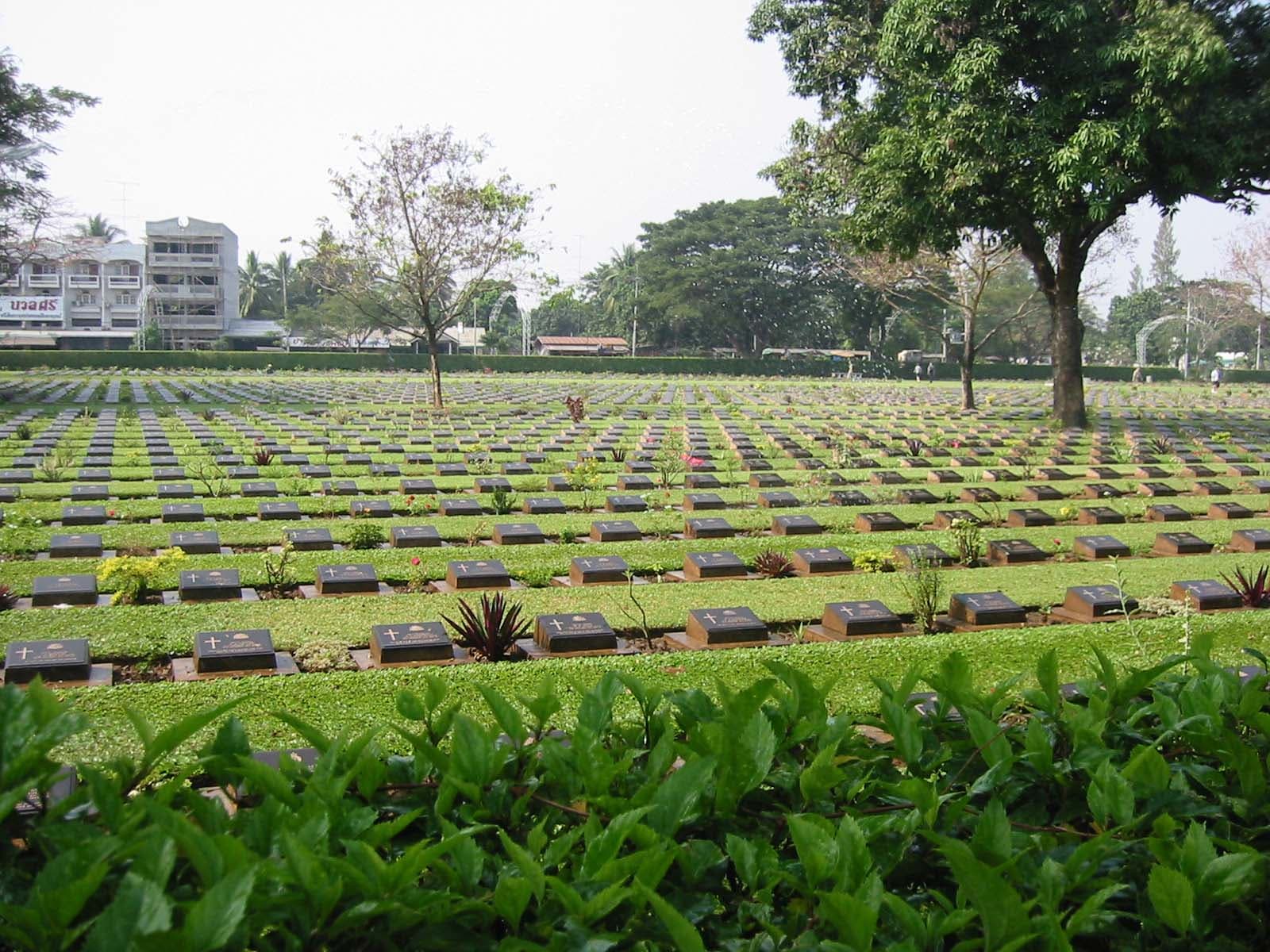
The War Cemetery sits in the centre of Kanchanaburi town, right next to a petrol station and a busy road. The contrast is jarring — and entirely right. These men are not hidden away in a remote jungle clearing. They are in the middle of the living world, which is where they should be.
There are 6,982 graves. Each one carries a headstone. Each headstone bears a name, a regiment, a service number, and a date. Most carry a personal inscription chosen by the family — words written in the 1940s and 1950s that have been standing in the Thai sun ever since.
He died that we might live.
Beloved son of Arthur and Edith.
Age 24.
Age 21.
Age 19.
The ages are the thing that hits hardest. Most of the men who built the Death Railway were in their twenties. Many of the graves carry no name at all — the headstone reads simply: A Soldier of the 1939–1945 War. Known Unto God.
Your guide walks with you through the rows, stopping at individual headstones to tell the stories the records preserve. Not a history lecture. An introduction to specific human beings, made visible by the specificity of each stone. After twenty minutes in this cemetery, the Death Railway is no longer a historical abstraction. It happened to people. People whose families chose these exact words, for this exact stone, in this exact place.
The cemetery is maintained by the Commonwealth War Graves Commission to the same standard as every Allied war cemetery in the world — grass immaculate, headstones upright, flowers changed regularly. The perfection of its maintenance has always felt like the right form of defiance: refusing to let these graves become ruins.
The JEATH War Museum — Inside the POW Hut
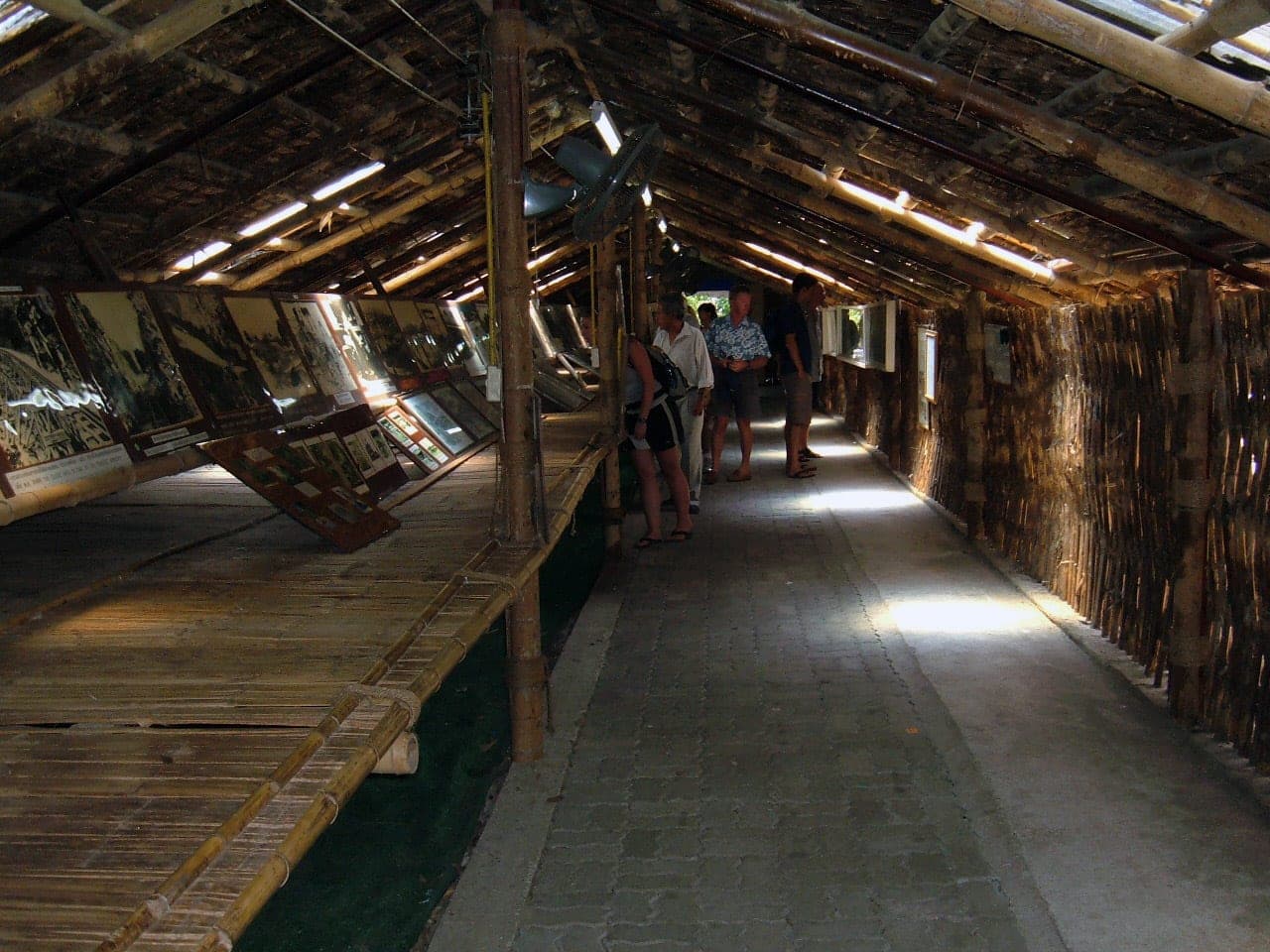
JEATH stands for the nationalities present on the railway: Japan (as captors), England, America, Australia, Thailand, Holland. The museum is housed in a replica bamboo atap hut — the same design in which tens of thousands of men slept, two to a sleeping platform, in forty-degree heat.
Walk inside and your eyes adjust to the dark. The space is low and close, the air smells of bamboo in the heat, and photographs cover every wall — taken by prisoners at serious personal risk, because cameras were forbidden in the camps. Men who are skin and bone carrying railway sleepers. Men whose legs have been consumed by tropical ulcers that look like something from a medical horror film. Men who are clearly dying, photographed by other men who knew they might be next.
But also — and this is the thing that stays with you — men playing cards. Men who have somehow acquired a dog. Men smiling at whoever is holding the camera. The specific, undeniable humanity of people refusing to let their circumstances be the whole of who they are.
The personal letters are the hardest exhibit. Written home by men who knew the censors would read every word. So they couldn't say where they were, what was happening, that they were frightened. They wrote about the weather. They asked about the family pet. They said they were fine. They hoped everyone was keeping well. They said they would be home soon.
Some of them were.
The River Kwai Bridge — Walking the Real Thing
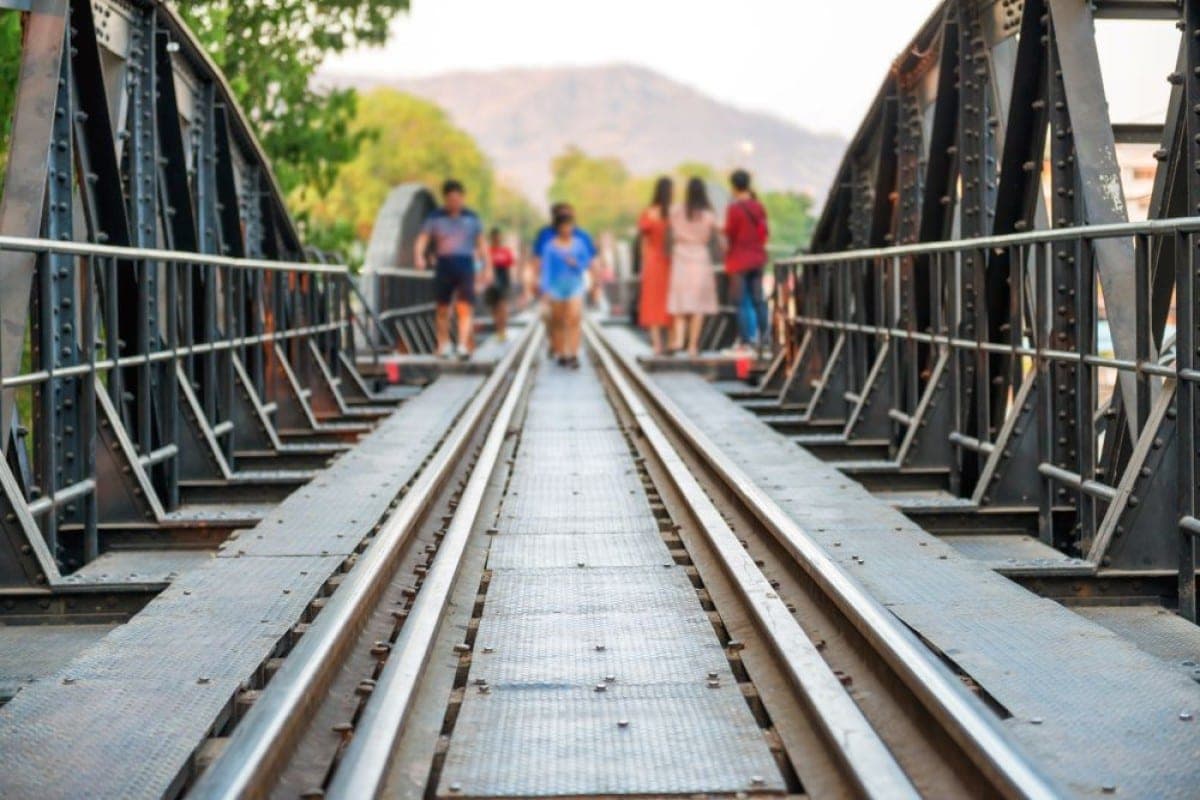
After the cemetery and the museum, the bridge can feel, at first, like a tourist landmark. It takes a moment to locate the right way to see it.
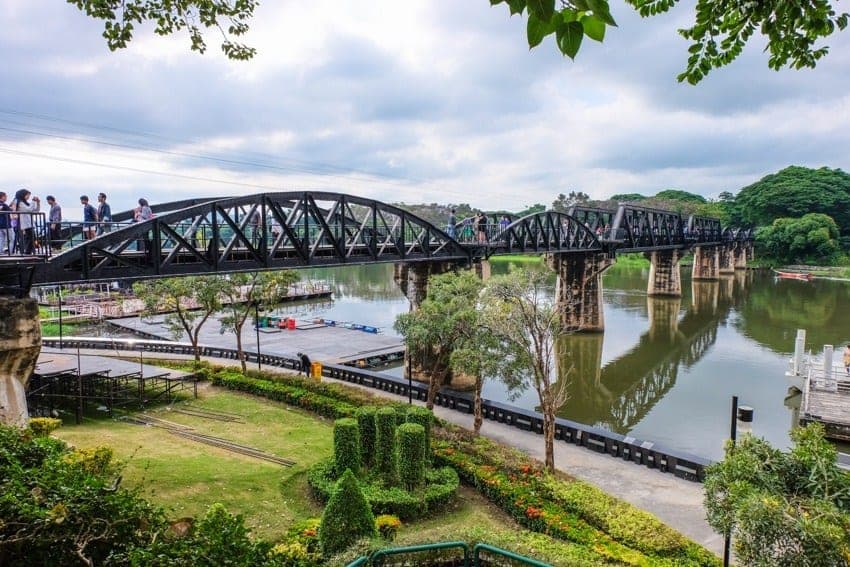
Stand at the riverbank and look at it properly. The River Kwai bridge is a working structure — trains still use it. The curved sections at each end are the original steel, built by POW labour in 1943. The angular replacement spans in the middle were installed after Allied bombing raids destroyed them in 1944 and 1945; Japan paid for the replacements as part of postwar reparations. The difference in the metalwork is clearly visible.
Wooden walkways alongside the tracks allow visitors to cross. You walk out over the Kwai Yai River on steel plates between the rails, the water brown and wide and moving below you, the jungle green on the far bank, the heat coming off the metal in waves.
Your guide stops you at the point where postwar steel meets original steel and explains exactly what you are touching — which part was here in 1943, built by men you read about this morning. This is the moment when the two parts of the morning click together.
If the timing aligns, you will see the historic scenic train cross while you are on the bridge. On the shared group tour, you will actually be boarding that train — at River Kwai Bridge Station, just steps from the bridge itself, at 11:05.
The Death Railway Train Ride — 1.5 Hours Through the Jungle
This section is exclusive to the shared group Kanchanaburi tour (฿2,100).
At 11:05, the train departs River Kwai Bridge Station. It is the same railway line. It runs on the same tracks. You are sitting in a carriage on the route that 16,000 Allied POWs and over 90,000 Asian labourers died building in 1943.
The train moves west along the Kwai Noi River, through limestone hills and teak forest, past small stations and villages that have grown up around the railway since the war. The windows are open. The air is warm and smells of jungle.
Approximately forty minutes after departure, the landscape changes. The jungle closes in, the river appears far below on the left, and the train slows. You are approaching the Tham Krasae section — the most dramatic engineering on the entire Death Railway route. The cliff here drops almost vertically to the Kwai Noi River. The Japanese engineers built a wooden viaduct cantilevered off the cliff face — teak and bamboo on timber stilts driven into the rock, built in the rainy season by men using hand tools in a malarial jungle.
As the train crosses this viaduct, you look out the window and see nothing but the river far below and the cliff face beside you. The train takes two to three minutes to cross. Most passengers do not speak during this section.
The journey ends at Nam Tok — Namtok Station — approximately 1.5 hours after departure. The complete State Railway of Thailand schedule and official route information is available on the State Railway of Thailand website.
Tham Krasae Cave and the Krasae Viaduct Landmark
Visited on the shared group tour after disembarking the train. Also accessible on the private tour when the train schedule permits.
After disembarking, the group visits Tham Krasae Cave — a small cave at the base of the limestone cliff below the viaduct. Inside, in the cool dark, there is a Buddha image that was here before the railway was built. The cave was used as a shelter by Allied POWs during construction — men who slept here when they could, out of the rain and the sun.
Then you walk back out into the light and look at the Krasae viaduct from below — or from the wooden walkway alongside the tracks. Seen from ground level, the structure is strikingly slender for something that has been carrying trains since 1943. Stand here and look up at it — the cliff above, the river below, the structure in between — and it is not difficult to understand why this section of the Death Railway is the one that stays in memory longest.
Interested in this tour?
Contact us on WhatsApp for instant booking and custom itineraries.
Message us on WhatsApp
Driving to Erawan — The Province That History Didn't Reach
This section applies to the private Kanchanaburi Erawan tour (฿4,500).
The drive from Kanchanaburi town to Erawan National Park takes about an hour and runs north through limestone hills and teak forest, past small villages and roadside noodle stalls and temples that appear and vanish in the green.
This is the same landscape the Death Railway ran through. The jungle grows fast and covers everything — whatever the railway cut through has long since been reclaimed. Nature in this part of Thailand does not preserve ruins. It absorbs them.
The lunch stop comes at a riverside restaurant near the park entrance — a local place with river views, ceiling fans, and food cooked the way it has always been cooked here. The river prawns from the Kwai are the dish to order: grilled whole over charcoal, served with lime and chilli dipping sauce. Eating them by the river they came from, knowing the morning you have just had, is the kind of moment that defies photography.
Then the park.
Erawan Waterfalls — What They Are and Why They Matter
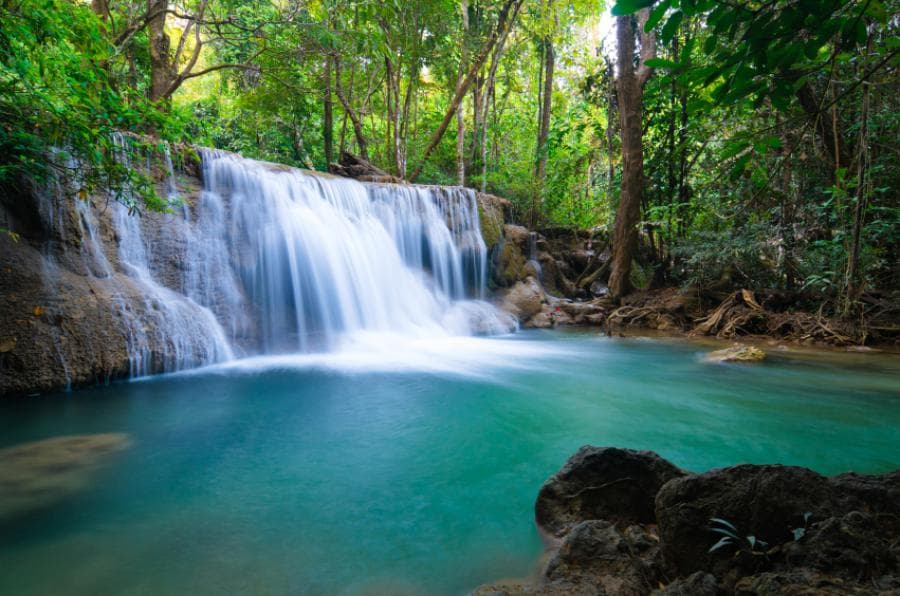
The Erawan Waterfalls are named after Erawan — the three-headed white elephant of Hindu and Buddhist mythology, the divine mount of Indra, the king of the gods. Stand at the upper tiers and look back down at the cascading levels below you, and the name makes sense: the shape of the cascade, broadening as it descends across three main drops, has the weight and presence of something mythological.
But the name is the least interesting thing about them.
The Colour That Cannot Be Faked
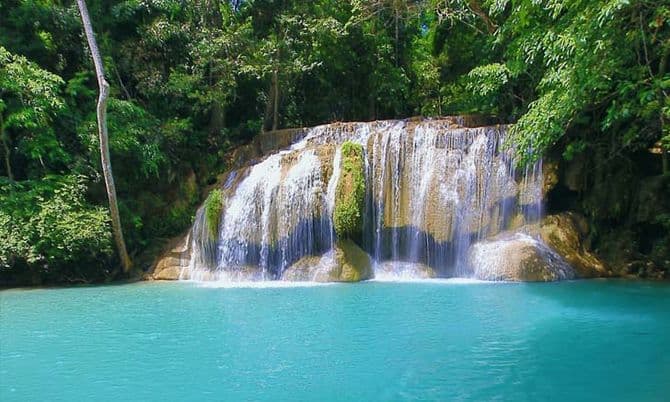
The thing that arrests every first-time visitor is the colour of the water. It is not blue, not green — it sits in a specific register of emerald between turquoise and jade that looks digitally enhanced in every photograph and is, in reality, exactly that colour.
The colour comes from calcium carbonate deposits in the limestone bedrock. As water flows across the rock, it dissolves and redeposits tiny amounts of calcium carbonate on every surface — building the terraced travertine formations that divide the pools, coating the rocks in luminous white mineral crust, and suffusing the water itself with suspended particles that scatter light into that impossible green.
The water is also, as a result of this chemistry, remarkably clear. You can see the bottom at three metres. You can watch the fish move around your legs in the full transparency of the pool.
Every photograph of Erawan underperforms. The camera always misses it by a margin. You have to be in it.
What Thai People Believe About Erawan
For Thai people, Erawan is not primarily a swimming destination. It is a place where the boundary between the human world and the spirit world runs close.
The forest of Erawan National Park is understood to be inhabited by Phi Pa — the spirits of the forest — who have presided over this land long before the park was established and long before the road was built. The waterfalls themselves are considered sacred. The pools at the upper tiers, which are harder to reach and visited by fewer people, hold a particular quality of reverence — Thai visitors often pause before entering the highest water, as if asking permission.
This is why you will see spirit houses near the park entrance and along the trail — wooden shrines with offerings of flowers, incense, and small figures. These are not decorative. They are acknowledgements that the human visitors are guests in a place that belongs to something older than tourism.
The Seven Tiers — What Awaits at Each Level
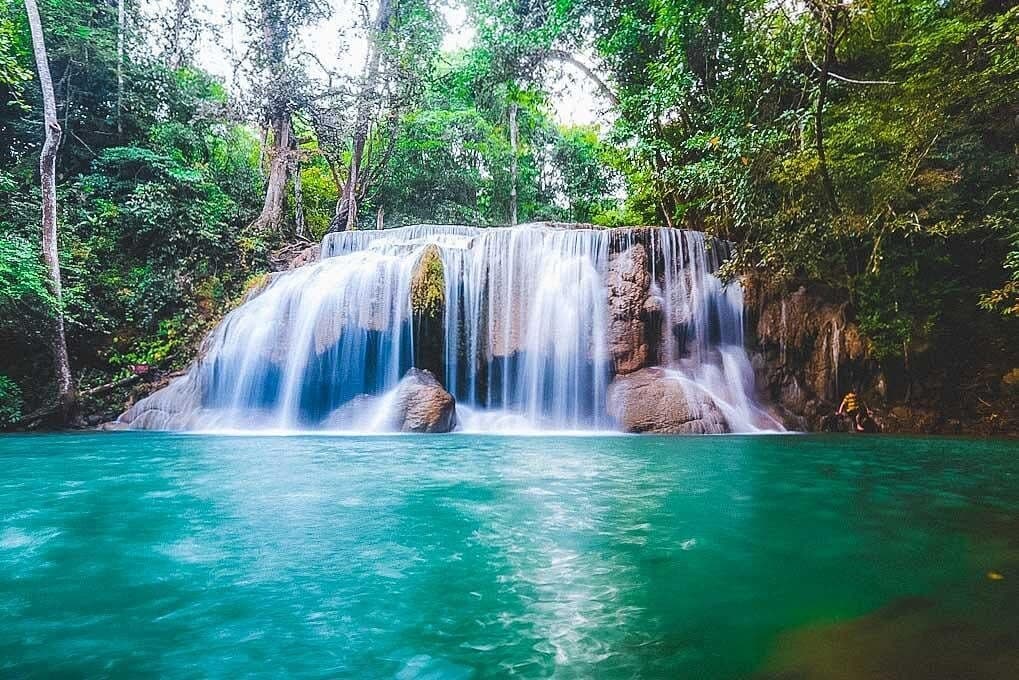
The trail runs 1.5 kilometres from the park entrance to the seventh tier, gaining about 120 metres of elevation. It is a real jungle trail — exposed roots, stepping stones across streams, rope handholds on the steeper sections.
Tier 1 is the most accessible — a wide, shallow pool fed by a broad cascade, with the fish that have made this level famous. Tiers 2 and 3 are the best for swimming — deeper, more sheltered, with the emerald colour at its most intense. Tiers 4 and 5 are where the crowds thin and the forest grows louder. Tiers 6 and 7 feel like a different world entirely — the highest pools sit in a bowl of overhanging limestone and jungle, fed by a narrow chute of water dropping into absolute stillness.
Three hours at the park gives most groups enough time to reach tier 7 at a comfortable pace and still swim at multiple levels on the way down. This is why the private tour allocates three hours — the industry standard of two hours is not enough.
Erawan Waterfall Entrance Fee 2026 — And the Hidden Charge Most Tours Don't Mention
The Erawan Waterfall entrance fee in 2026 is ฿300 per person for foreign visitors. Thai nationals enter free. This is charged at the national park gate and is frequently omitted from competitor tour prices — visitors discover it as a surprise charge at the entrance itself.
Our private Kanchanaburi Erawan tour includes the ฿300 Erawan National Park entrance fee, along with the JEATH Museum entrance and lunch. Nothing is added at any gate.
The shared group tour does not go to Erawan, so this fee does not apply.
Optional Add-On: Sai Yok Elephant Park — The Ethical Elephant Sanctuary on the River Kwai
Available on the private tour only, at additional cost.
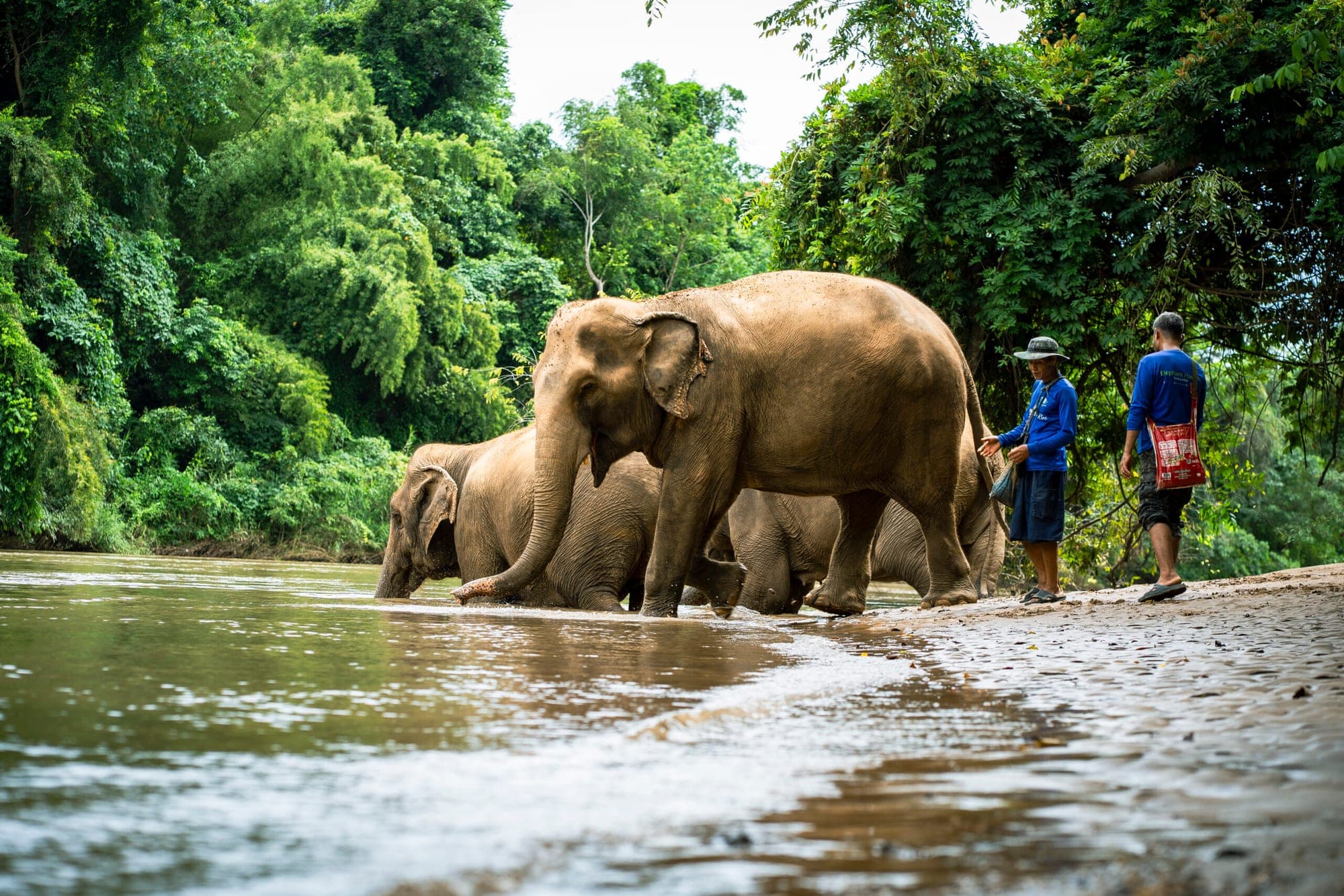
Sai Yok Elephant Park — known in Thai as ปางช้างไทรโยค — sits on the banks of the River Kwai in Sai Yok district, about 40 minutes north of Kanchanaburi town. The camp transitioned to a fully ethical "Saddle Off" model in partnership with the Save Elephant Foundation. The saddles came off permanently. The performances stopped.
Today the rescued elephants roam freely through riverside forest. You prepare food, feed them directly by hand, walk through the forest alongside them, and bathe them in the River Kwai. No riding. No bullhooks. No commands to perform.
Adding the sanctuary to the private tour means departing Kanchanaburi earlier — it replaces part of the Erawan time. If you want both experiences at a comfortable pace, your guide will help you find the right balance. The honest recommendation: if you have to choose, choose the elephants. Contact us via WhatsApp when enquiring about the private tour.
Why We Sequence the Day: History First, Waterfalls Second
Most Kanchanaburi day trips from Bangkok do the waterfalls in the morning and the history in the afternoon. It is exactly backwards.
When you have spent three hours hiking a jungle trail and swimming in cold pools, you arrive at the JEATH War Museum wet, physically tired, and mentally switched off. You look at the photographs. You read the headstones. You feel — not very much. The weight of the place doesn't land because there is no capacity left to receive it.
Reverse the order. Sit in the cemetery in the cool morning when your mind is clear. Let the names on the headstones reach you when you still have the stillness to hear them. Walk through the JEATH Museum when you can stand in front of a photograph and actually think about what you're looking at. Cross the bridge when the history is already inside you.
Then go to the waterfalls. The cold water and the emerald light and the fish and the noise of the jungle do exactly what they need to do. The release is more complete when there is something to release from.
Both our tours follow this sequence — history in the morning, the afternoon experience second.
How to Book Your Kanchanaburi Day Trip from Bangkok
We operate two versions of this tour:
Private tour with Erawan Waterfalls — ฿4,500/person Your own vehicle, your own guide, three hours at Erawan, all entrance fees included. Hotel pickup 06:30. Return ~19:30. Book the private Kanchanaburi Erawan tour →
Shared group tour with Death Railway train ride — ฿2,100/person Shared transport from multiple Bangkok hotels, 1.5-hour Death Railway train ride, Tham Krasae Cave, buffet lunch. Hotel pickup 06:00. Return ~16:30–17:00. Subject to minimum group size. Book the shared Kanchanaburi group tour →
Message us on WhatsApp at wa.me/+66899496235. Both tours require minimum 24 hours advance booking. We confirm within 1 hour during business hours (07:00–21:00 Bangkok time).
We are a TAT Licensed Tour Operator — Licence No. 14/04232. Learn more about our team and how we operate on our About page.
Planning more Bangkok day trips? See our complete Bangkok tour packages — Kanchanaburi is available as a day within multi-day private itineraries alongside the Floating Market, Ayutthaya, and other destinations.
Best Time to Visit Kanchanaburi — 2026 Guide
November to February is ideal — comfortable temperatures, dry trails, and the low-angle winter sun makes the historical sites gentle rather than punishing. The falls run at moderate, beautiful flow.
September to November brings the highest waterfall flow — the monsoon feeds the falls and the pools are at their most vivid green. Some rain and mud on the trail. Worth it if you can handle occasional showers.
March to May is the hottest period. The Erawan trail is demanding above 35°C. The early departure and afternoon park arrival become even more important.
June to August — early monsoon. Intermittent rain, lush surroundings, noticeably fewer crowds at both the historical sites and the falls.
Bangkok to Kanchanaburi: River Kwai, Death Railway & Erawan Waterfalls
From ฿2,100 per person · TAT Licensed No. 14/04232 · ⭐ 4.0 (186 reviews)
What to Bring — The Packing List
For Erawan (private tour): Swimwear under your clothes. Quick-dry towel. Water shoes — the most critical item. The trail crosses streams and the rocks around the pools are slippery. Tevas, Chacos, or Crocs are ideal. A waterproof case for your phone. Insect repellent. A change of dry clothes for the return journey.
For the train and history sites (both tours): Comfortable walking shoes. Sun hat and sunscreen — the War Cemetery is largely unshaded. A light layer — the transport and train can be cool in the early morning. Your camera, fully charged — the Tham Krasae viaduct from the train window is one of the most photographed locations on the Death Railway.
Cash: ฿200–400 in Thai Baht for personal drinks and optional souvenirs. All tour inclusions are prepaid.
Frequently Asked Questions
Yes — on the private tour (฿4,500/person), the Erawan National Park entrance fee of ฿300 per person is included. The JEATH War Museum entrance is also included. The shared group tour (฿2,100/person) does not include Erawan — it covers the War Cemetery, JEATH Museum, River Kwai Bridge, Death Railway train ride, Tham Krasae Cave, and buffet lunch.
Three key differences: (1) The private tour (฿4,500) includes three hours at Erawan Waterfalls; the shared tour (฿2,100) does not go to Erawan. (2) The shared tour includes the 1.5-hour Death Railway train ride from River Kwai Bridge Station to Tham Krasae; the private tour does not include the train as a fixed stop. (3) The private tour uses your own vehicle and guide; the shared tour collects from multiple Bangkok hotels. Both cover the War Cemetery, JEATH Museum, and River Kwai Bridge.
With three hours at the park on the private tour, most groups comfortably reach tier 5 or 6. Fit, motivated hikers typically reach tier 7. The lower tiers (1–3) have the largest pools and the best swimming. Tiers 4–7 are progressively quieter, more beautiful, and less crowded. Your guide walks the trail with you.
It's early, but deliberate. Kanchanaburi is 2.5 hours from Bangkok. The private tour departs at 06:30 to arrive at the War Cemetery by 09:00 — before the heat peaks. The shared tour departs at 06:00 because the vehicle collects from multiple hotels, and the Death Railway train departs at 11:05 sharp — the morning schedule is built backwards from that train.
Yes — swimming is the whole point of the Erawan stop on the private tour. The pools at tiers 1 through 4 are the most popular for swimming. The water is clear, cool, and a vivid emerald green from natural mineral deposits in the limestone. Bring swimwear, water shoes, and a quick-dry towel.
Yes — the 1.5-hour Death Railway train ride from River Kwai Bridge Station to Tham Krasae is the centrepiece of the shared group tour. The train departs at 11:05 sharp and covers 77 kilometres of the original route, including the cliff-hanging Tham Krasae wooden viaduct above the Kwai Noi River. This train ride is not a fixed stop on the private tour.
JEATH is an acronym for the nationalities of the Death Railway: Japan (as captors), England, America, Australia, Thailand, and Holland. The museum is housed in a replica of the bamboo huts POWs slept in during construction. It contains photographs taken by prisoners at personal risk, personal letters and diaries, tools used in construction, and a detailed account of the 16,000 Allied POWs and over 90,000 Asian labourers who died building the 415km railway.
The shared tour operates subject to a minimum group size. If the minimum is not reached, Trip Thai Tour reserves the right to cancel the tour and will issue a full refund to all booked guests immediately. We will notify you at least 24 hours before departure. This cancellation right belongs solely to Trip Thai Tour. The private tour never cancels due to group size — your private tour runs as confirmed.
Both tours require minimum 24 hours advance booking. We cannot accept same-day bookings. Book via WhatsApp — we confirm within 1 hour during business hours (07:00–21:00 Bangkok time) and send your pickup time with the confirmation.
Yes, with some considerations. The JEATH War Museum contains photographs of POW conditions that may be distressing for children under 10. The Erawan Waterfall trail involves uneven ground — manageable for most children but not stroller-accessible. The Death Railway train ride on the shared tour is enjoyed by children of all ages. For families who want privacy and flexibility, the private tour is better suited.
Swimwear worn under your clothes. Quick-dry towel. Waterproof sandals or shoes you don't mind getting wet — Tevas or Crocs are ideal. A change of dry clothes for the drive back. A small waterproof bag for your phone. Insect repellent — the trail runs through jungle and mosquitoes are present year-round.
November to February is ideal — cool season temperatures make the historical sites comfortable and the Erawan trail genuinely pleasant. Waterfalls are at maximum flow from September to November. March to May is the hottest period. June to August brings the early monsoon — intermittent rain, lush surroundings, fewer crowds.
Yes — Sai Yok Elephant Park (ปางช้างไทรโยค) is available as an optional add-on on the private tour at additional cost. The sanctuary sits on the banks of the River Kwai in Sai Yok district — no riding, no performances, no chains. Adding the sanctuary replaces part of the Erawan time. Not available on the shared group tour. Contact us via WhatsApp to add this option.
The private tour returns to Bangkok at approximately 19:30. The shared group tour returns earlier — approximately 16:30 to 17:00. If you have an evening commitment, the shared tour's earlier return makes it the more practical option.
Check Availability & Book
Send us your details to get an instant quote and secure your date.
Related Guides
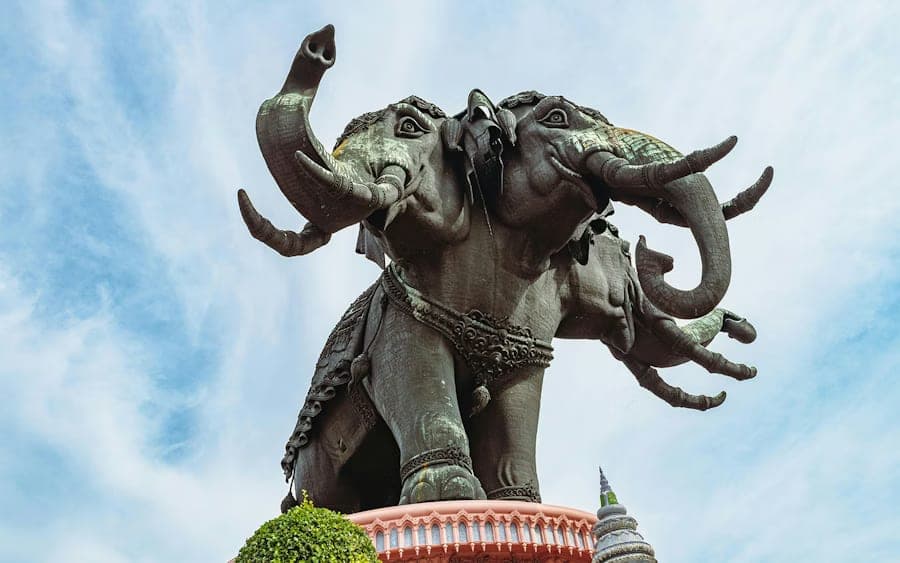
Samut Prakan Day Tour 2026: Ancient City, Erawan Museum & Crocodile Farm from Bangkok
Complete 2026 guide to a Samut Prakan day trip from Bangkok: Ancient City (Muang Boran) 116 monuments, Erawan Museum inside a 29m bronze elephant, and the Crocodile Farm. Ticket prices, honest advice, and the Lek Viriyaphan story connecting all three.
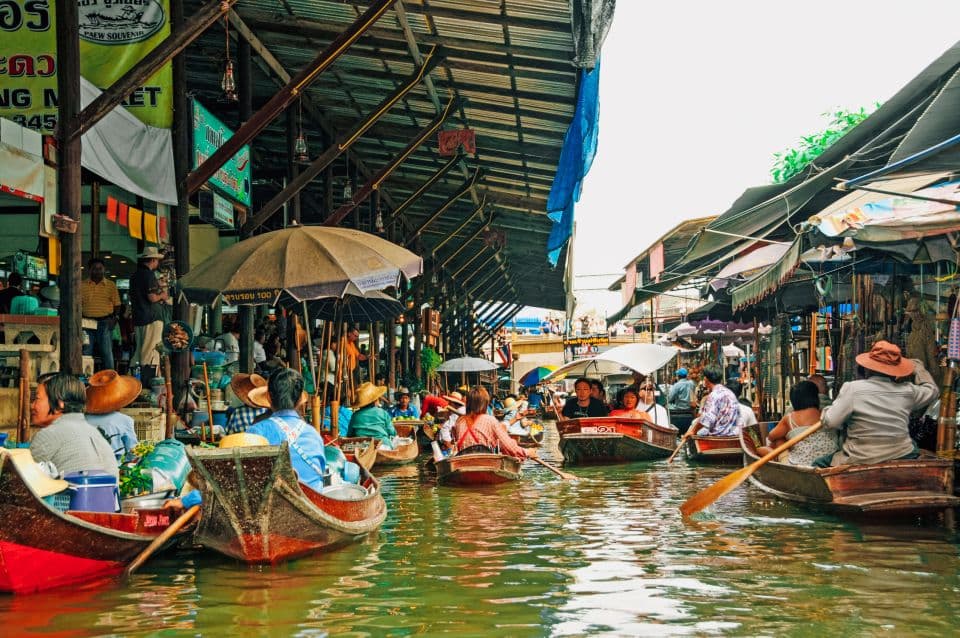
Damnoen Saduak Floating Market & Maeklong Railway Market: Private Half-Day Tour from Bangkok 2026
Visit Damnoen Saduak Floating Market and Maeklong Railway Market on one private half-day tour from Bangkok. Private longtail speedboat through the canals, train guaranteed, hotel pickup. The most exciting morning you will have in Thailand.
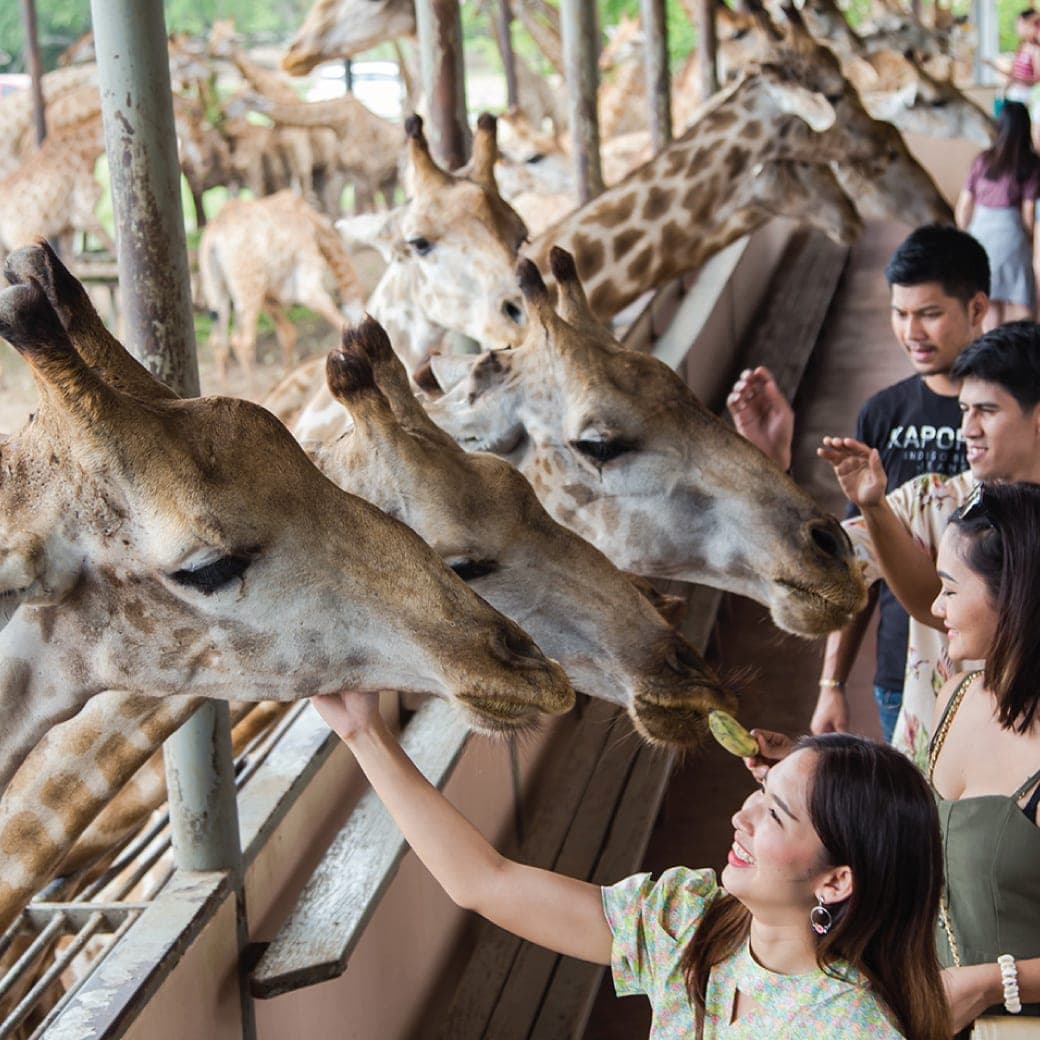
Safari World Bangkok: Complete Guide — Show Timings, Ticket Prices & Indian Buffet Lunch
Safari World Bangkok 2026 guide: official show timings (weekday & weekend), Safari World Bangkok ticket prices, Indian buffet lunch, and tickets at 1,200 THB versus 2,000 THB at the gate. Open Tue–Sun, closed Mondays. Ideal for Indian families.