Ethical Elephant Sanctuary near Pattaya 2026: The Honest No-Riding Guide (Elephant Jungle Sanctuary)

There is a photograph almost everyone used to bring home from Thailand: a person on a saddle on an elephant's back, smiling. Today, more and more travellers arrive in Pattaya having read the other side of that story — the metal saddles, the chains, the bullhooks, and the brutal "breaking" process that makes a wild animal accept a rider in the first place — and they want something different. They want to be near elephants without hurting them. The trouble is that the word "sanctuary" has become marketing, and telling a real one from a greenwashed riding camp is genuinely hard.
This guide is our honest attempt to help. It explains the ethical spectrum of elephant tourism, why riding is cruel, how to spot a fake sanctuary, and what a half-day at a genuine no-riding rescue sanctuary — the Elephant Jungle Sanctuary we work with in the hills of Khao Mai Kaeo, about 30 to 45 minutes east of Pattaya — actually involves. We are not going to pretend this is the strictest possible model of elephant tourism, because it isn't, and you deserve the full picture before you book.
We are Trip Thai Tour, a TAT Licensed Tour Operator (Licence No. 14/04232), and we only ever book no-riding sanctuaries. Our half-day visit is ฿2,650 per adult and ฿2,350 per child, including free transfer for Pattaya and Jomtien, lunch, a Karen shirt and photos. Here is everything you should know first.
The ethical spectrum: where every elephant "experience" really sits
The single most useful thing we can give you is a mental map. Elephant tourism is not simply "good" or "bad" — it runs along a spectrum, and knowing where a venue sits tells you almost everything.
At the unethical end are the riding camps. These offer treks and rides, often with metal seats strapped to the elephants' backs. They are the legacy of the old logging industry and depend on elephants that have been broken to accept human control.
In the middle are the hands-on sanctuaries. These do not offer riding. Instead, rescued elephants are fed and bathed by visitors, and a good one never forces an animal to take part. This is where Elephant Jungle Sanctuary sits, and it is a vast improvement on a riding camp — the animals are not made to carry weight or perform.
At the strictest end are no-touch, observation-only reserves. Here you watch elephants roam and forage from a respectful distance, with no physical contact at all. Welfare purists consider this the gold standard, because even gentle handling involves some human management.
Most families who come to Pattaya want the hands-on experience — the chance to feed an elephant by hand and stand beside it in a muddy pool. That is completely reasonable, and a no-riding hands-on sanctuary is an ethical, rewarding way to do it. But if you would rather observe with no contact, that is equally valid — and we would much rather tell you now than have you feel conflicted on the day.
Pattaya Elephant Jungle Sanctuary — Ethical Half-Day Tour
From ฿2,650 per person — TAT Licensed Operator · Instant WhatsApp confirmation

Why elephant riding is cruel — the part the camps don't explain
To understand why a no-riding policy matters so much, it helps to know what riding actually requires. Two facts do most of the work.
First, the anatomy. An elephant's spine is not built to carry weight on top. Unlike a horse, an elephant has sharp, bony protrusions running along its spine, and sustained loads — especially heavy wooden or metal seats carrying two adults plus a mahout — can cause lasting damage over years of trekking.
Second, and more importantly, the training. A wild or young elephant does not simply accept a human on its back. The traditional method used to make it submit is known in Thai as the phajaan, often translated as "the crush". It involves confining a young elephant, restraining it, and subjecting it to fear and pain until its will to resist is broken. The placid elephant offering rides at a camp is, very often, an animal that went through this. According to World Animal Protection, tens of thousands of elephants across Asia are still used in tourism, many in conditions that fall far short of their needs.
The Asian elephant is classed as Endangered on the IUCN Red List, and Thailand is home to an estimated 3,000 to 4,000 captive elephants — many of them former logging or riding animals. A genuine sanctuary exists to give some of those animals a better life, funded by visitors who come to feed and care for them rather than ride them.
How Thailand ended up with thousands of captive elephants
It helps to know how Thailand came to have so many captive elephants with nowhere to go. For centuries, domesticated elephants did the heavy work of the teak forests. Then, in 1989, Thailand banned commercial logging almost overnight, following catastrophic floods blamed on deforestation. Thousands of working elephants — and the mahout families who depended on them — were suddenly unemployed.
An adult elephant eats up to 150 to 200 kilograms of food a day and can live 60 to 70 years. Owners who could no longer earn from logging faced an animal that was enormously expensive to keep and impossible to release into a wild that no longer had room for it. Many turned to the two things that could still pay the bills: tourism — riding and shows — and, in the worst cases, street begging, walking elephants through traffic so tourists would buy food.
That is the backdrop against which "ethical sanctuary" has meaning. A genuine sanctuary takes elephants out of the riding, logging or begging economy and pays for their upkeep through visits that do not exploit them. When you feed and bathe a rescued elephant rather than ride a broken one, your money does the one thing that actually helps: keeping that animal fed, treated and unridden.
What Elephant Jungle Sanctuary near Pattaya actually is
The sanctuary we work with is part of Elephant Jungle Sanctuary, a network founded in July 2014 by Karen hill-tribe families and local residents who wanted to provide a safe home for elephants retired or rescued from tourism and logging. From a single camp in Chiang Mai it has grown to care for rescued elephants across four Thai provinces — Chiang Mai, Phuket, Pattaya and Samui — and it operates the first sanctuary of its kind in Pattaya.
The Pattaya sanctuary sits in the green hills of Khao Mai Kaeo, in Bang Lamung, about 30 to 45 minutes east of the city and a world away from Walking Street. The elephants here have been rescued from riding camps, logging and street begging, and they are given veterinary care, a proper diet and space to roam without chains or bullhooks. Crucially for you as a visitor, the activities are limited to things elephants do naturally — eating, mud-bathing and washing — and the sanctuary makes a point of never forcing an elephant to take part. There are no shows, no painting, no football and no riding.

A half-day escape from the Pattaya beaches
One of the quiet pleasures of this trip is how completely it changes the scene. Pattaya is beaches, jet-skis and Walking Street; 30 to 45 minutes east, the sanctuary sits in the green hills of Khao Mai Kaeo in Bang Lamung, where the resorts give way to farmland and forest and the loudest sound is an elephant tearing into a bunch of bananas. It is the kind of half-day that resets a beach holiday, and because it only takes a morning, it costs you very little of your trip.
The free hotel transfer covers Pattaya City and the Jomtien Beach area, with the pickup time confirmed by WhatsApp the night before. If your hotel happens to sit outside that zone, message us before booking and we will talk through the options for reaching the sanctuary — we would much rather sort it out in advance than surprise you on the day. The drive itself is part of the experience: the road climbs gradually inland, the high-rises shrink in the mirror, and within half an hour you are somewhere the elephants can actually live with space around them.
Because it only takes half a day, the sanctuary slots neatly into a Pattaya trip: do the morning session and spend the afternoon at the beach, or keep another day for the family-friendly Tiger Park Pattaya or the spectacular carved Sanctuary of Truth. Tell us your plans and we line up the logistics so the days flow together without backtracking across the city.
What a half-day really involves
Here is the honest, moment-by-moment shape of the day, so there are no surprises.
It begins early. The morning session collects you from your Pattaya or Jomtien hotel between 7:00 and 7:30 AM; the afternoon session between 12:30 and 1:00 PM. The early start is deliberate — elephants are most comfortable and active in the cool of the day. From Pattaya it is a 30 to 45 minute drive east into the hills of Khao Mai Kaeo.
On arrival you are welcomed with a snack, tea or coffee, handed a Karen shirt to wear for the day and keep, and briefed by your English-speaking guide. Then you prepare the food — gathering fruit, vegetables and natural supplements — before hand-feeding the elephants and hearing each one's rescue story. Next comes the mud spa, where you coat the elephants in cool clay, and then bathing and the outdoor "elephant shower", where the whole group, human and animal, ends up soaked.
After the water, you use the sanctuary's shower and changing facilities to clean up and change into dry clothes, then sit down to a traditional Thai lunch with seasonal fruit and vegetarian options. There is even a DIY recycled "poop paper" activity — elephant dung is mostly undigested fibre, and the sanctuary turns it into paper, which is a genuine hit with children. Finally you say goodbye and drive back, reaching your hotel late morning after the morning session or roughly 5:00 to 5:30 PM after the afternoon one.

The mud, the water, and why the elephants genuinely enjoy it
It is worth slowing down on the mud spa and the bathing, because they look like pure tourist theatre and are actually the most natural part of the day. Wild elephants mud-bathe constantly. A coating of mud is a triple-purpose tool for them: a natural sunscreen that shields their sensitive skin, a barrier against biting insects, and a coolant that helps an animal the size of a small truck shed heat. When you scoop clay onto an elephant's flank, you are helping with something it would seek out on its own.
The same is true of the water. Elephants love to submerge, spray themselves and play. Watching a two- or three-tonne animal lower itself into the water with obvious pleasure, then turn to accept a scrub from a stranger, is a completely different thing from watching one carry tourists up a hill in the heat. The body language tells the story: relaxed ears, slow movements, trunks reaching out to investigate.
This is why a good sanctuary keeps groups small, reads the elephants' moods, and — as this one does — never forces an animal into the pool. The single best tip we can give you for the day is to be the calm one: hang back, take turns, keep your voice down, and let the elephant come to you.
How to spot a fake or greenwashed "sanctuary"
Because "sanctuary" sells, plenty of places use the word without earning it. Use this checklist before you book anywhere — here or elsewhere.
Immediate red flags (walk away):
- Any riding at all. Treks, "bareback" rides, or photo-op rides where a mahout sits on the elephant while you pose. Riding in any form is disqualifying.
- Performances and tricks. Elephants painting, playing football, balancing, or bowing for tips. These are trained through force.
- Bullhooks and chains used to control the animals during your visit.
- Suspiciously cheap third-party tickets, which can route to unethical camps that pay for volume.
Good signs (worth booking):
- A clear, absolute no-riding policy.
- Rescued elephants with known histories.
- No shows — only natural behaviours like feeding and bathing.
- Small groups, and a stated policy of never forcing an elephant to take part.
- An operator who is transparent about exactly what you will and won't do — including being honest, as we are, that a hands-on sanctuary is not the same as a no-touch reserve.
If you remember only one rule, make it this: if riding is offered anywhere on the property, it is not a sanctuary, no matter what the brochure says.
The questions visitors worry about most
Beyond riding, a few honest worries come up again and again, and they deserve straight answers.
"Are the elephants chained up when visitors leave?" Captive elephants are powerful animals, so some management is a reality at almost every facility, including good ones — the question is whether it is humane and minimal. A genuine sanctuary uses space and supervision rather than bullhooks and is willing to talk openly about how the elephants are kept. If a venue refuses to discuss it, treat that as a warning sign.
"Do the mahouts use bullhooks?" The mahout is the elephant's lifelong handler, and a good relationship is based on trust and food rewards, not pain. You should not see bullhooks used to jab or control the animals during your visit. At a no-riding sanctuary the mahouts are there to keep both elephants and guests safe.
"Is it safe for me and my children?" Elephants are gentle here but enormous, so safety comes from following instructions: stay where the mahouts position you, approach from the front, never run or shout, and keep small children within arm's reach in the water. Incidents at well-run sanctuaries are rare precisely because the staff manage the interactions carefully.
"Am I just funding captivity?" This is the deepest question, and the honest answer is that your money keeps rescued elephants fed and unridden. Until there is a wild big enough to release them into, ethical sanctuaries are the realistic better option — and the income is what makes the no-riding model financially possible.
Practical information: prices, pickup and what to wear
Here are the facts in one place.
| Detail | Information |
|---|---|
| Price (adult) | ฿2,650 per person |
| Price (child, age 4–10) | ฿2,350 per person |
| Infants (under 4) | Free |
| Minimum booking | 2 people |
| Duration | ~4 hours on site + 30–45 min transfer each way |
| Sessions | Morning (pickup 7:00–7:30 AM) or Afternoon (pickup 12:30–1:00 PM) |
| Included | Free Pattaya/Jomtien transfer, guide, all activities, Thai lunch, Karen shirt, photos |
| Outside Pattaya/Jomtien | Message us before booking for options |
Free hotel transfer covers Pattaya City and the Jomtien Beach area; if your hotel is outside that zone, message us before booking and we will talk through the options. What to wear and bring: put your swimwear on under clothes you genuinely do not mind ruining — no white clothes, no good shoes. A Karen shirt is provided to wear over the top. Bring a full change of clothes, a towel, sunscreen, a hat, insect repellent, a copy or phone photo of your passport, and a little Thai Baht cash. The sanctuary has clean showers and changing rooms so you head home dry.
When to go and which session to choose
The sanctuary runs year-round, and because it is land-based it does not depend on the weather the way a boat trip does — the activities carry on in light rain, and the elephants rather enjoy it. Between the two sessions, we usually steer people toward the morning: elephants are most active and comfortable in the cool early hours, the light is softer for photographs, and you are back by late morning with the rest of the day free for the beach. The afternoon session is a good choice if you are not a morning person, and it still delivers the full feeding-mud-bathing experience.
Pattaya's elephant options, compared honestly
The Pattaya region has a growing number of elephant venues, and it helps to sort them into three honest buckets so you can match one to your own values.
Riding camps and "trekking" parks still operate in and around Pattaya, often with the word sanctuary or eco bolted on. If a venue offers a ride, a show, or a photo where you sit on the elephant, it belongs here regardless of its marketing — and we never book these.
Hands-on sanctuaries like the one we work with are the most popular middle path: no riding, no tricks, rescued elephants, a policy of never forcing the animals, and a day built around feeding, mud-bathing and washing. They give families and first-timers the close, joyful contact most people are hoping for, and they fund the elephants' care without exploiting them. This is the experience this guide describes.
No-touch observation reserves are the strictest model. A small number of projects keep retired elephants on large forested plots and let visitors watch them forage and roam with no physical contact at all. Welfare purists prefer these, and if that is your line, they are the right choice — though they are usually pricier, smaller and book out further ahead.
There is no single "most ethical" answer that suits everyone; there is only the most ethical choice for you. A family wanting to feed and bathe rescued elephants is making a genuinely responsible choice with a hands-on sanctuary. A traveller who believes elephants should never be touched is making an equally valid choice with an observation reserve. Our job is simply to tell you which is which, so you book the right one — and if a hands-on day is what you want, we are glad to be the honest operator who arranges it.
Is it worth it, and who is it for?
Honestly? For most visitors, yes. If you want a close, hands-on encounter with rescued elephants, with no riding and no guilt, a half-day here is one of the most memorable things you can do near Pattaya, and the price includes the things other listings nickel-and-dime you for — transfer, lunch, a Karen shirt and photos. It is superb for families, for welfare-conscious travellers, for couples after a meaningful morning, and for first-time visitors who want one genuinely memorable half-day.
It is not the right fit if your personal line is that elephants should not be touched by tourists at all. That is a principled position, and if it is yours, you want a no-touch observation reserve instead — message us and we will point you to one honestly. We would rather lose the booking than have you spend the morning uneasy.

How to book
Booking is simple. Choose your date and session, make sure you have at least two people and 24 hours' notice, and reserve the ethical Pattaya elephant sanctuary half-day online or message us on WhatsApp at +66 89 949 6235. Tell us your hotel and area so we can confirm the free Pattaya/Jomtien transfer, and flag any dietary needs for the included lunch.
We are a TAT Licensed Tour Operator (Licence No. 14/04232) — you can learn more about who we are on our About page, and verify our licence on the official TAT tour-operator registry. If you are building a fuller Pattaya itinerary, this half-day pairs naturally with Tiger Park Pattaya or the Sanctuary of Truth, and you can see everything we run on our Pattaya tours page. Book the ethical elephant sanctuary half-day here and we will confirm within minutes.
Pattaya Elephant Jungle Sanctuary — Ethical Half-Day Tour
From ฿2,650 per person · TAT Licensed No. 14/04232 · ⭐ 4.0 (186 reviews)
What our travellers say
"We took the kids for the morning session from our hotel in Pattaya. Pickup was on time, the guide was wonderful with them, the Karen shirts were a lovely touch, and the mud spa had everyone laughing. You could tell the elephants were relaxed and never forced into anything. No riding, no chains — exactly as described, and far better value than we expected." — Meera & Arjun S., Mumbai, India
That honesty is the whole point. We would rather tell you exactly what an ethical elephant day near Pattaya is — and isn't — than sell you a fantasy. Come for the mud, the feeding and the bathing, and leave knowing you chose the right kind of experience.
Frequently Asked Questions
The half-day at Elephant Jungle Sanctuary Pattaya is ฿2,650 per adult and ฿2,350 per child (age 4–10), with infants under 4 joining free. The minimum booking is two people. That price includes free round-trip transfer for Pattaya City and Jomtien, an English-speaking guide, all the elephant activities, a traditional Thai lunch, a Karen shirt and free digital photos. The rate is net, so the figure you book is the figure you pay — there is nothing extra to settle at the gate, and you only spend more if you choose drinks, souvenirs or a tip.
No. There is no elephant riding here and there never will be — no saddles, no chains, no bullhooks, and no performing tricks. Every elephant was rescued from the riding, logging or street-begging trades, and the day is built entirely around feeding, a mud spa and bathing, which the sanctuary only runs when the elephants are happy to take part. This is the single clearest line between a genuine sanctuary and a trekking camp with green marketing. If any 'sanctuary' offers riding at all, even a short bareback ride, it is not ethical.
The sanctuary keeps a small herd of rescued elephants and runs the visit in small groups rather than large coachloads, which is part of what keeps it calm for the animals. On busier days there may be one or two other small groups present at the same time. The most considerate visitors hang back, take turns and keep their voices down — calmer humans mean calmer elephants and better photos. If you want the quietest experience, choose the morning session, which is generally less busy and cooler for the elephants.
It is a genuine no-riding rescue sanctuary that never forces its elephants into any activity — a large step up from the riding camps that still operate in the region. We are also honest that it sits in the middle of the welfare spectrum: this is a hands-on experience where you touch, feed and bathe the elephants, whereas the strictest venues are no-touch, observation-only reserves. Most families want and love the hands-on day. If you would prefer no contact at all, tell us and we will point you to an observation-only option instead.
Since 2019, several review and booking platforms have a blanket policy of not selling tickets to any venue where tourists physically contact elephants — including feeding and bathing — no matter how well the animals are treated. Because this is a hands-on feed-and-bathe sanctuary, it falls under that policy, while recent reviews on the platform are in fact overwhelmingly positive. The 4.0 rating and 186 reviews on our site are Trip Thai Tour's own profile as a tour operator, not a rating of the sanctuary.
Elephants are not built to carry weight on their spines, and riding over time causes lasting damage, especially with heavy metal saddles. More fundamentally, an elephant only submits to riding after a traditional 'breaking' process known as the phajaan or 'crush', in which a young elephant is confined, restrained and hurt until its spirit is broken. The calm elephant giving rides at a camp is usually one that went through this. A true sanctuary refuses riding entirely, which is why we only work with no-riding venues.
After hotel pickup and a 30–45 minute drive east into the hills of Khao Mai Kaeo, you are welcomed with a snack, given a Karen shirt, and briefed by your guide. You then help prepare the elephants' food before hand-feeding them and hearing their rescue stories. Next is the mud spa, followed by bathing and the outdoor 'elephant shower', after which you clean up using the sanctuary's facilities, enjoy a traditional Thai lunch, try the 'poop paper' activity, and head back to your hotel. It is hands-on, muddy, wet and genuinely joyful.
There are two sessions a day. The morning session collects you from your Pattaya or Jomtien hotel between 7:00 and 7:30 AM; the afternoon session between 12:30 and 1:00 PM. You spend about four hours on site with a 30–45 minute transfer each way, so the morning session has you back late morning and the afternoon session around 5:00 to 5:30 PM. We recommend the morning session, as elephants are most active and comfortable in the cool of the day and the light is best for photos.
Free round-trip transfer is included for hotels in Pattaya City and the Jomtien Beach area, and your driver confirms the exact pickup time by WhatsApp the night before. If your hotel is outside the Pattaya City and Jomtien area, message us before booking and we will talk through the options for reaching the sanctuary. We never spring a surprise transfer charge on you on the day, which is one of the most common complaints about cheaper listings.
Yes — it is one of the best family experiences near Pattaya. Children love hand-feeding the elephants, the mud spa is joyful chaos, the Karen shirts are a hit, and the recycled 'poop paper' activity doubles as a science lesson. Children aged 4–10 are ฿2,350 and infants under 4 join free, though the sanctuary recommends ages 5 and above for the activities. Because there is no riding and the elephants are calm and supervised by their mahouts, it is a safe, close animal encounter. Bring a change of clothes and a towel for each child.
Wear your swimwear under your clothes, and choose clothes and footwear you genuinely do not mind ruining — you will be covered in mud and pool water. Avoid white clothes and good shoes; a Karen shirt is provided to wear over the top. Bring a full change of clothes, a towel, sunscreen, a hat and insect repellent for the jungle setting. Also bring a copy or phone photo of your passport, as the sanctuary records visitor details, plus a little Thai Baht cash for drinks, souvenirs or gratuities.
Watch for these red flags: any riding at all (including 'bareback' or short rides), performances such as painting, football or balancing tricks, and the use of bullhooks or chains. 'Sanctuaries' that offer these, however ethical their marketing sounds, are not. Good signs are a firm no-riding policy, rescued elephants, no shows, small groups, a policy of never forcing the animals, and an operator who is transparent about exactly what you will and won't do. Be wary of suspiciously cheap third-party tickets, which sometimes route to unethical camps.
Yes, and it works well because it only takes half a day. Many guests do the morning sanctuary session and keep the afternoon for the beach, or spread their trip across a sanctuary day, the family-friendly Tiger Park Pattaya, and the spectacular all-teak Sanctuary of Truth. Tell us your plan when you book and we will line up the logistics so the days flow together.
It is a fair and much-debated question. Bathing and mud-bathing are natural behaviours elephants do constantly in the wild, so helping with them is far less intrusive than riding or performing — and this sanctuary only runs them when the elephants want to. The honest counterpoint is that at very busy venues, constant human contact and large crowds can stress some elephants, which is why we recommend the quieter sessions and why a good sanctuary limits group sizes and reads the elephants' body language. If that debate matters to you, talk to us and we will help you choose.
Cancellations more than 7 days before the tour receive a full refund; between 7 days and 48 hours a 50% refund applies; within 48 hours or for no-shows the booking is non-refundable. Contact us via WhatsApp +66 89 949 6235 to cancel or reschedule — full terms at tripthaitour.com/cancellation-policy. We do not cancel confirmed bookings due to low numbers — your session runs as confirmed. Please book at least 24 hours in advance so we can confirm your session and your pickup time.
Check Availability & Book
Send us your details to get an instant quote and secure your date.
Related Guides
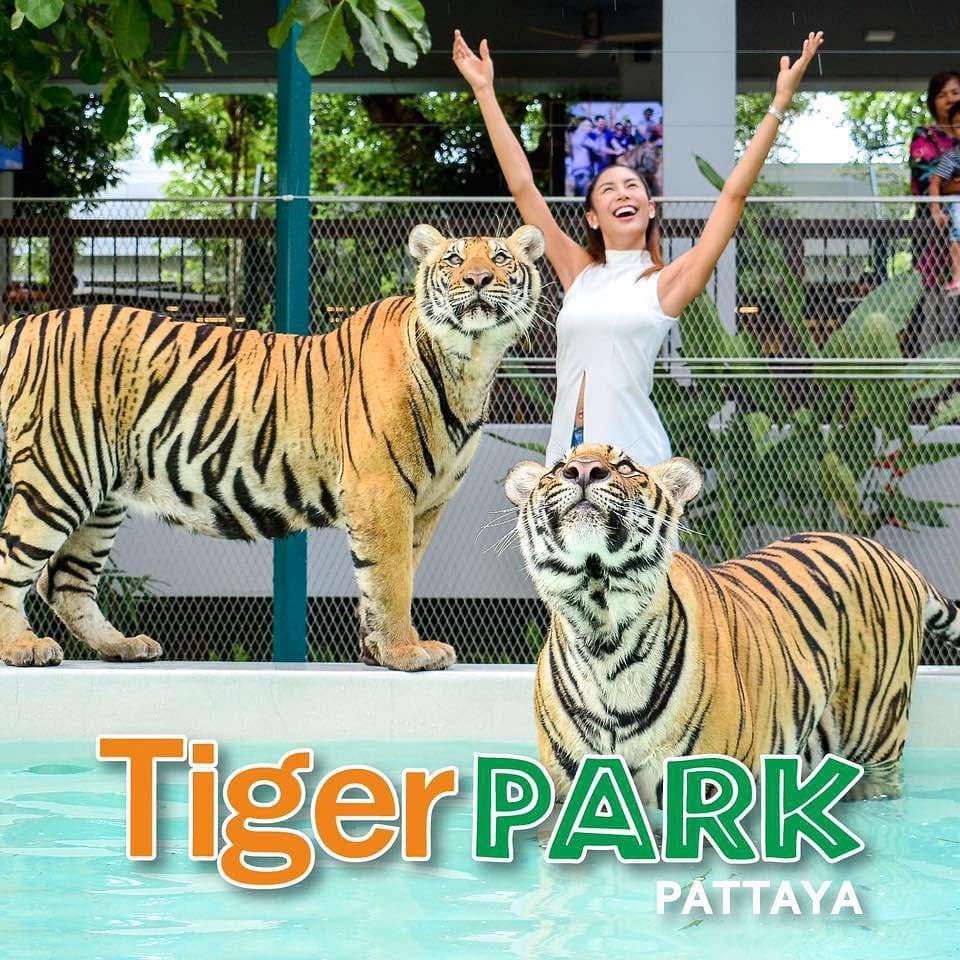
Pattaya Adventure Day 2026: Tiger Park, Floating Market, Zipline, ATV & Shooting in One Day
A complete adrenaline itinerary for Pattaya: Tiger Park in the morning, the Floating Market for lunch, then Tarzan Adventure for a 25-platform zipline, ATV trails and the shooting range — all on one site. Real 2026 prices, age and height rules, and the driving order that makes it work.

Alcazar Cabaret Show Pattaya 2026: Show Times, Ticket Prices & Honest Guide
Complete 2026 guide to the Alcazar Cabaret Show Pattaya — all four show times, ticket prices from ฿450, Standard vs VIP seats, the tipping rules nobody explains, and the story of the artists on that stage.
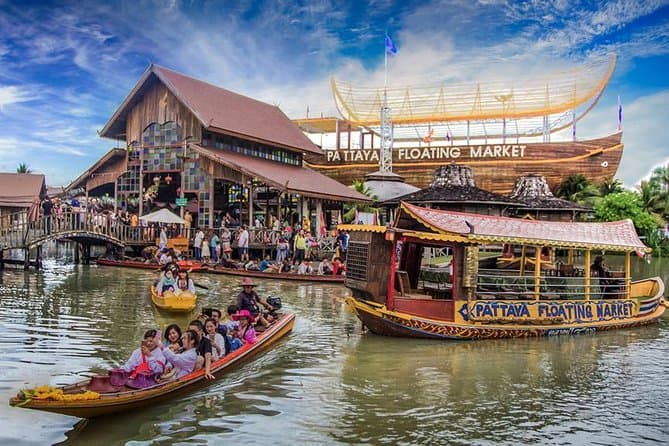
The Best Full-Day Pattaya Tour 2026: 5 Attractions in One Perfect Private Day
The perfect full-day Pattaya itinerary: Tiger Park, Underwater World, the [Floating Market](/Pattaya/Floating-Market), Big Buddha Hill and the Sanctuary of Truth in one private route — with timings, costs and honest tips.