Bangkok to Ayutthaya Day Trip: The Complete Private Guide to Bang Pa-In & UNESCO Ruins
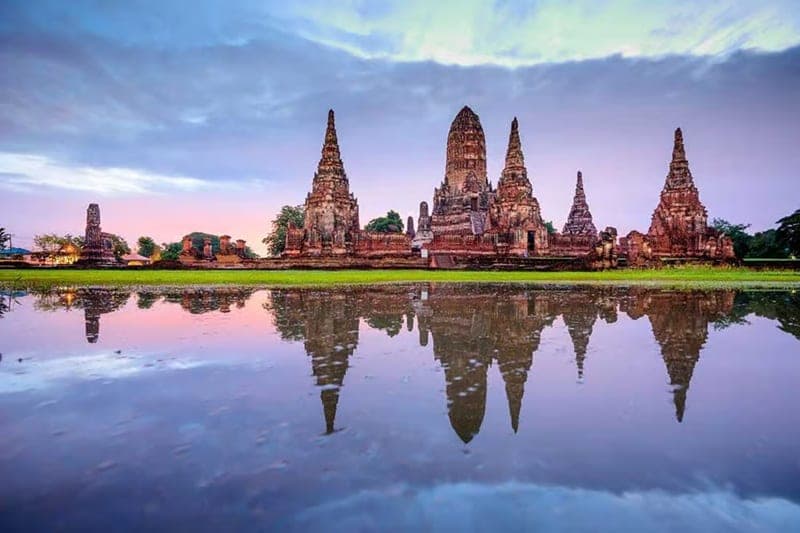
Bangkok to Ayutthaya Day Trip: One Day, Two Royal Sites, Four Centuries of History
The Bangkok to Ayutthaya day trip is the best day trip from Bangkok — and it is not even close.
Ayutthaya is 80km north, roughly 1.5 hours by private car. It was the capital of the Siamese Kingdom for over 400 years — a city of one million people, over 400 golden temples, international trade routes, and royal palaces that made it one of the most powerful cities on Earth. Today it is a UNESCO World Heritage Site full of ancient ruins that make everything else you have visited feel modern by comparison.
Most people who visit come back saying the same two things: they wished they had more time at each site, and they wished someone had explained what they were actually looking at.
Our private Ayutthaya tour from Bangkok solves both. Your own guide, your own vehicle, and an itinerary designed to put you at the right places at the right time — beginning with the cool of the morning at Bang Pa-In Summer Palace before the crowds arrive, then on to the UNESCO ruins of Ayutthaya with real time to absorb what you are seeing.
No shared buses. No strangers. No rushed itineraries. No hidden entrance fees.
Bangkok to Ayutthaya Private Day Trip: Temples, Ruins & Bang Pa-In
From $95 per person — TAT Licensed Operator · Instant WhatsApp confirmation

Why Most Bangkok to Ayutthaya Day Trips Disappoint
Read the reviews of Ayutthaya group tours on Viator and TripAdvisor and the same frustrations appear over and over:
- Not enough time — "We got 30 minutes at each ruin. Nowhere near enough to take it all in."
- Entrance fees not included — guests discover extra payments at each gate that were never mentioned when booking
- Cramped hot group vehicles — shared minivans with strangers stuck in Bangkok traffic for hours
- Guides who recite facts without telling stories — "the historical information was bland and limited"
- Bang Pa-In rushed or skipped — treated as a 20-minute photo stop rather than the extraordinary site it is
- No heat preparation — guests arrive at open-air ruins in sandals with no hat in 35-degree heat
- No photos taken — "our guide never once offered to take a photo of our group all day"
We built our private Ayutthaya day trip from Bangkok to solve every single one of these problems.
But before we explain what makes our tour different, you need to understand what Ayutthaya actually was — because knowing the history transforms ruins into one of the most powerful experiences in Southeast Asia.
What Was Ayutthaya? The Kingdom That Shaped All of Thailand
One of the Largest Cities on Earth
Founded in 1350, the Kingdom of Ayutthaya became one of the most powerful capitals in Asia. Sitting at the intersection of three rivers — the Chao Phraya, Lopburi, and Pa Sak — the city was the perfect hub for trade, with merchants arriving from China, India, Persia, Japan, the Netherlands, and Portugal.
By 1700, Ayutthaya had a population of approximately one million people — one of the largest cities in the world at that time. Larger than London. Larger than Paris. A city of over 400 golden temples, royal palace complexes, elephant stables, and canals. In the 17th century, European traders described it as one of the greatest cities in the East. Dutch and Persian merchants traded silk, spices, and precious metals along its waterways. Temple spires were covered in gold leaf, reflecting sunlight across the river plains.
The kingdom lasted 417 years across 33 kings — the golden age of Siamese civilisation, the period from which modern Thai culture, religion, art, architecture, and monarchy all draw their roots.
The Night It Was Destroyed
In 1767, after a 14-month siege, the Burmese army broke through the walls and burned Ayutthaya to the ground.
The temples were ransacked. The palace was destroyed. The royal library — centuries of Thai literature, history, law, and medicine — was burned. The Buddha statues you see with missing heads were deliberately decapitated during the invasion, their faces and headdresses taken as war trophies. Tens of thousands of people were killed or enslaved.
The survivors fled south to a new capital that eventually became Bangkok. What remained of Ayutthaya was left as ruins. The jungle slowly reclaimed the temples. Roots split the foundations. The golden spires collapsed.
But for Thai people, Ayutthaya represents resilience — not defeat. Walking through these red-brick ruins is walking through the roots of Thai identity. Understanding this transforms sightseeing into cultural respect.
Bangkok to Ayutthaya by Boat vs Private Car — Which Is Better?
Many travellers search specifically for Bangkok to Ayutthaya by boat, attracted by the romance of travelling the Chao Phraya River the way merchants and kings once did.
Here is the honest answer:
A river cruise from Bangkok to Ayutthaya typically takes 3 to 4 hours each way. If you depart at 8:00 AM, you arrive at noon. After lunch and visiting even two temples, you need to leave by 3:00 PM to return by 7:00 PM. In practice, most boat day trips give you 2 to 3 hours at the ruins — barely enough to scratch the surface.
A private car takes 90 minutes each way. That difference of 3 to 5 hours over the course of the day is the difference between a rushed glimpse and a proper experience.
Our recommendation: if you have two days, take the boat one way and the train back — a genuinely beautiful way to do it. If you have one day, the private car gives you the time to actually experience Ayutthaya rather than just photograph it.
Stop One: Bang Pa-In Summer Palace — The Most Underrated Royal Site in Thailand
Your day begins not at Ayutthaya but at Bang Pa-In Summer Palace, 20 minutes south of the ancient city. For most of our guests, this becomes the stop they talk about most when they return home.
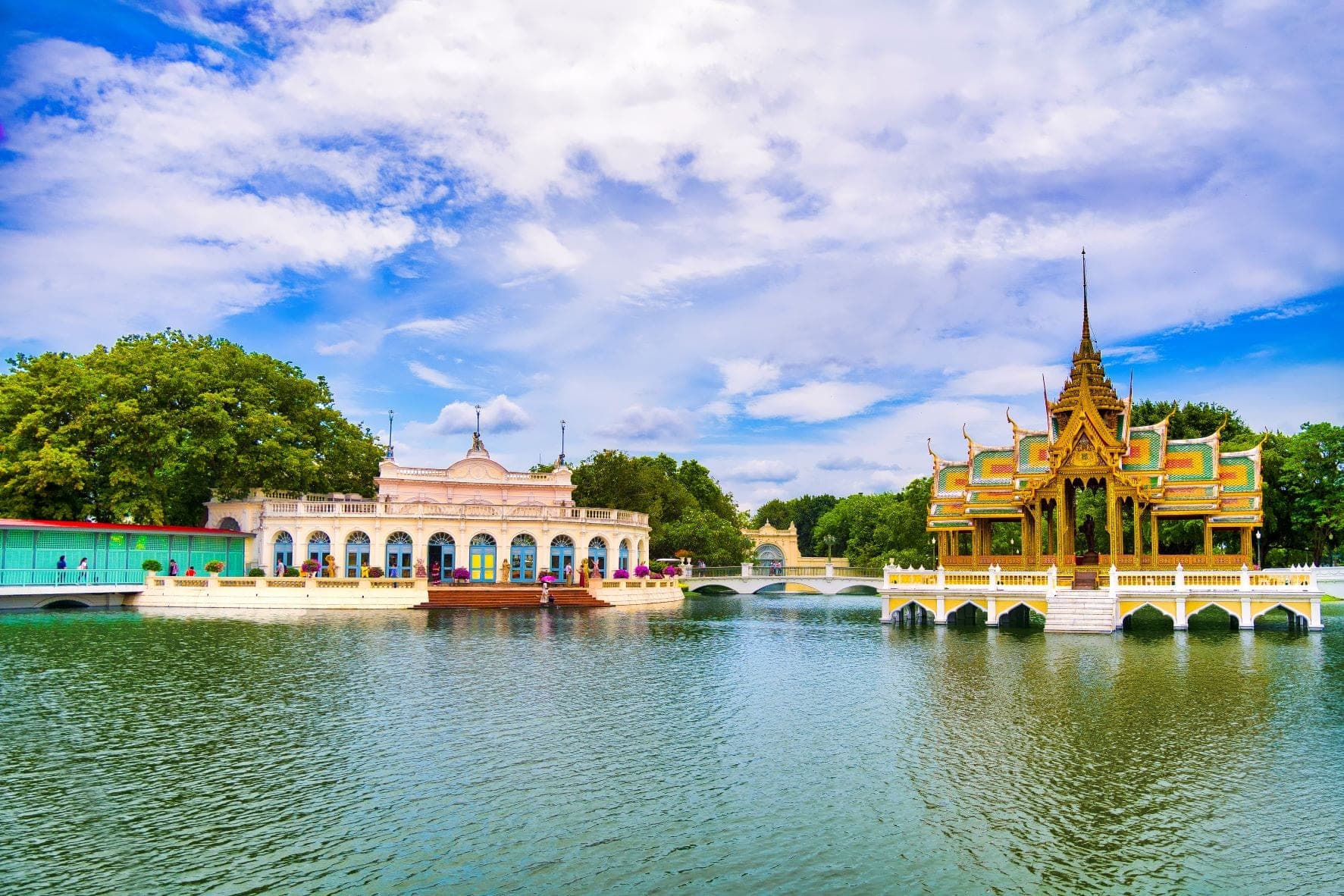
A Palace That Blends Five Architectural Styles
Bang Pa-In has served as the Thai royal family's summer retreat since the 17th century. But it was King Rama V — the modernising king who transformed Thailand in the late 19th century — who built the extraordinary complex you see today.
After travelling through Europe, King Rama V returned with a single vision: a summer palace that was both proudly Thai and openly international. Walk through Bang Pa-In and within 90 minutes you will have seen five completely different architectural worlds existing in perfect harmony:
The Aisawan Dhiphya-Asana Pavilion — the centrepiece of the palace and one of the most photographed royal buildings in Thailand. A perfectly proportioned Thai-style pavilion sitting on a small island in the ornamental lake, its reflection perfectly still in the water on calm mornings. Your guide positions your group for the photograph that does it justice.
Phra Thinang Wehart Chamrun — a full Chinese imperial palace, gifted to King Rama V by the Thai-Chinese community. Inside: Chinese furniture, porcelain, painted ceilings, and ornamental doors. A complete piece of imperial China sitting in a Thai royal garden.
The European Royal Residence — Victorian in character with symmetrical facades and formal reception rooms. Standing in front of it, you could almost believe you were outside a minor European palace rather than Thailand.
The Royal Gothic Church — perhaps the most surprising building of all. A full Gothic Christian church with pointed arches, bell tower, and stained glass, built for a Thai queen who converted to Christianity. It sits in the Thai gardens with complete incongruity and complete magnificence.
The Cable Ferry — a hand-pulled rope ferry still crossing to the small temple on the opposite bank, the same way royal visitors have crossed for over a century. Your guide takes you across.
The Summer Palace is impressive — the buildings, the gardens, the tower, the memorials. Everything is beautiful. Despite other visitors, it never feels crowded.
We allocate 1.5 hours here — enough to see every building, take photographs at the lake, and let the extraordinary architectural variety genuinely sink in. Most competitors rush through in 20 minutes.
Stop Two: Wat Phra Sri Sanphet — The Holiest Temple of the Kingdom
From Bang Pa-In, your driver takes you 20 minutes north into Ayutthaya. Your first stop at the ancient city is Wat Phra Sri Sanphet — and if you have seen one photograph of Ayutthaya, it was almost certainly taken here.
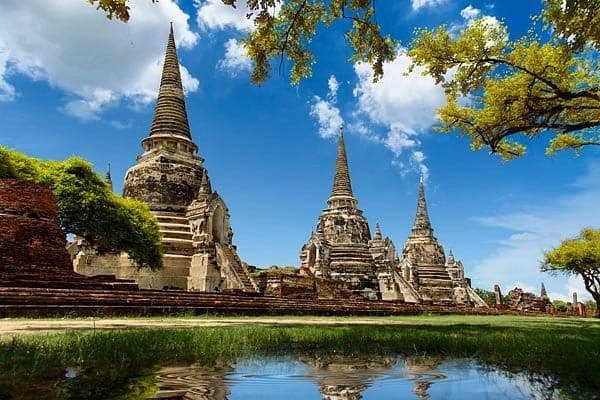
Sacred Geometry in Three Bell-Shaped Towers
The three restored bell-shaped chedis standing in a perfect row are the symbol of Ayutthaya — the image on every postcard, every guidebook, every magazine feature on Thailand. They house the ashes of three Ayutthaya kings. The bell shape symbolises spiritual ascent in Sri Lankan Buddhist architecture — a style that influenced all of Ayutthaya's major temples. They were once covered entirely in gold leaf, visible from miles across the river plains.
Wat Phra Sri Sanphet was the holiest site in the kingdom — the king's private royal chapel, the equivalent of what Wat Phra Kaew is to Bangkok today. No monks lived here. No ordinary citizens prayed here. This was reserved exclusively for the most sacred royal ceremonies and the enshrinement of royal ashes.
When the Burmese burned Ayutthaya in 1767, this was one of the first sites targeted — a deliberate act of desecration designed to strip the kingdom of its sacred legitimacy. Understanding this political dimension is what transforms the ruins from beautiful to deeply meaningful. Your guide explains it all.
Stop Three: Wat Mahathat — The Buddha Head in the Tree Roots
A short walk brings you to Wat Mahathat — home to the single most iconic image in Ayutthaya, and one of the most quietly powerful images in all of Southeast Asia.
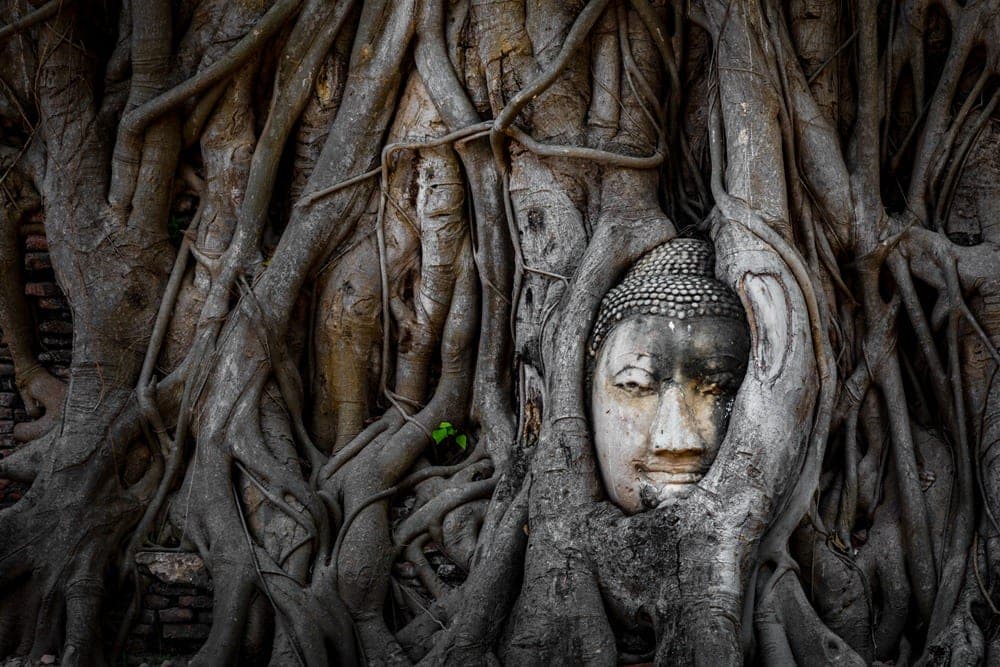
The Image That Silences Everyone
The stone Buddha head — eyes closed in absolute peace, completely entwined within the above-ground roots of a giant banyan tree — has become one of the defining images of Thailand. Unlike many photographs that disappoint in person, this one is more powerful when you are standing in front of it.
The head was severed during the Burmese invasion of 1767 and fell to the ground among the rubble. Over the centuries that followed, the roots of the banyan tree slowly grew around and claimed it. Many Thai people believe the tree spiritually protected and lifted the Buddha's face — a living act of faith enduring through destruction. Historically a casualty of war. Spiritually, a miracle of nature.
Our guide explained the history from the beginning and brought the meaning of this site to life — 1767 is the date that changes everything about how you understand what you are looking at.
How to Photograph the Buddha Head Respectfully
Kneel or lower yourself to the level of the Buddha's face — never stand above it or position yourself higher than the image. This is both culturally respectful and produces a far more powerful photograph than standing at normal height. Your guide shows you the exact position and takes the photograph for your group.
Beyond the Famous Tree
Most tour groups photograph the Buddha head and immediately leave. With our private tour, your guide walks you through the full ruins of Wat Mahathat — the main prang that once rose over 40 metres, the galleries of deliberately decapitated Buddha statues, the meditation halls, and the outer walls of one of the most important monasteries in the ancient kingdom.
Stop Four: Wat Chaiwatthanaram — Sacred Geometry on the River
On the western bank of the Chao Phraya, Wat Chaiwatthanaram offers one of the most dramatic silhouettes in all of Ayutthaya — and a masterclass in the sacred geometry of Buddhist architecture.
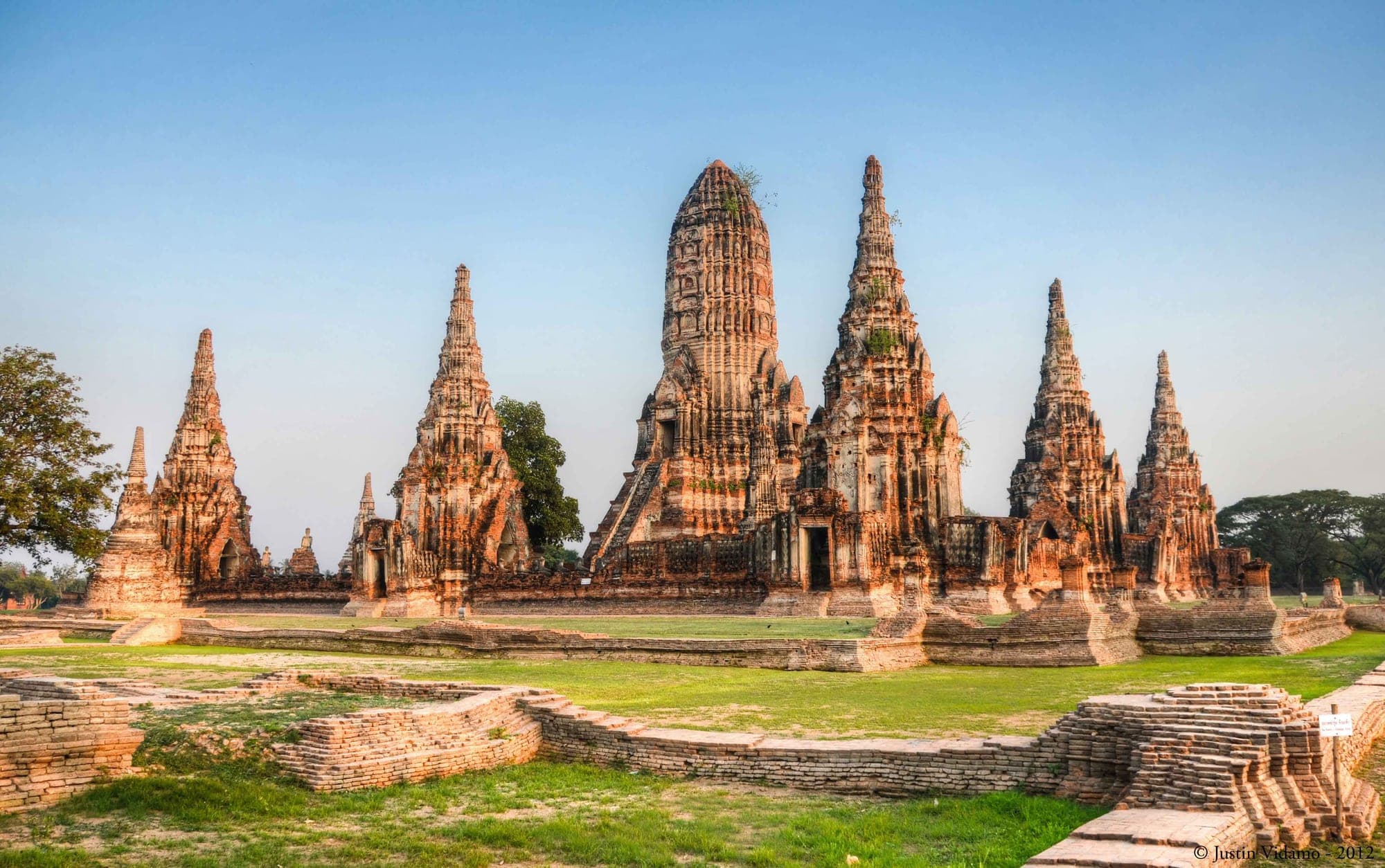
Architecture as Cosmology
The central prang at Wat Chaiwatthanaram represents Mount Meru — the cosmic mountain at the centre of the universe in Buddhist and Hindu cosmology. The four surrounding prangs represent the four continents of the world. The entire temple layout is a three-dimensional map of the Buddhist universe.
This is sacred geometry, not decoration. Every measurement, every proportion, every directional alignment was calculated to reproduce the divine structure of the cosmos in brick and stone. Standing at the centre of Wat Chaiwatthanaram, you are standing at the symbolic centre of the universe as the 17th century Siamese Kingdom understood it.
Built by King Prasat Thong in 1630, Wat Chaiwatthanaram was also a political statement — designed to celebrate a military victory and assert the divine legitimacy of the new king. Your guide explains this dual purpose and what it reveals about the relationship between religion and power in the Ayutthaya Kingdom.
The best symmetry photographs here are taken slightly off-centre from the direct front — your guide knows exactly where to stand for the composition that captures the full scale of the prang with the surrounding ruins in frame.
Riverside Lunch — Two Foods You Must Try in Ayutthaya
After the temples, your guide brings you to a recommended riverside restaurant on the banks of the Chao Phraya — the same river that carried merchants, diplomats, and kings to Ayutthaya for four centuries.
Lunch is at your own expense (budget 200–400 THB per person). Your guide helps you order. Two things are specific to Ayutthaya and should not be missed:
Grilled River Prawns (Goong Pao) — freshwater prawns from the Chao Phraya, grilled whole over charcoal and served with lime and chilli dipping sauce. Ayutthaya's river prawns are famous across Thailand for their size and sweetness — this is the dish that appears in almost every satisfied review of an Ayutthaya day trip.
Roti Sai Mai — Ayutthaya's unique local dessert: threads of palm sugar spun into cotton candy and wrapped in thin, soft roti pancakes. Sold by vendors near the riverside and in the market, it is unlike anything you will find in Bangkok. Sweet, delicate, and completely specific to this city. Your guide knows exactly where to find the best.
The lunch stop at a riverside restaurant is a highlight in itself — great local food at very reasonable prices, with the guide recommending exactly what to order.
The Heat: What Every Ayutthaya Guide Should Tell You But Usually Doesn't
This is a long day in the sun and it can be genuinely hot. Ayutthaya is largely open-air and the ancient stone reflects heat. Here is what we tell every guest in their confirmation email:
Sunscreen — apply at every vehicle stop, not just once in the morning. The overhead sun reflecting off pale stone between 11 AM and 2 PM is intense.
Hat — a wide-brimmed hat changes the experience. Non-negotiable in March through May. Worth bringing any month.
Shoes — comfortable closed shoes or sturdy sandals with heel straps. The ruins involve uneven ground, rubble, and steps. Flip-flops are a hazard. Sandals without heel straps are not permitted at Bang Pa-In.
Light breathable clothing — linen or light cotton in light colours. Dark synthetic fabrics trap heat. You will be outdoors for most of the day.
Drink constantly — we provide cold bottled water throughout, but do not wait until you feel thirsty. In Thailand's humidity, thirst is already mild dehydration.
We manage the heat by starting at Bang Pa-In in the cool morning, keeping the air-conditioned vehicle close at every site for breaks, and pacing the itinerary so you are never rushing through exposed ruins at peak heat. Bring a fan if you have one — a lightweight handheld fan makes a real difference.
Ayutthaya Entrance Fees: Complete Breakdown — Everything Included
One of the most common frustrations on Ayutthaya day trips is discovering entrance fees at each site that were never mentioned when booking. Here is the complete honest breakdown:
Bang Pa-In Summer Palace: 100 THB per person for foreign visitors.
Wat Phra Sri Sanphet: 50 THB per person.
Wat Mahathat: 50 THB per person.
Wat Chaiwatthanaram: 50 THB per person.
There is no combination ticket. Bang Pa-In and the Ayutthaya Historical Park temples are administered by different authorities and charged separately.
When you book our private tour, every single one of these fees is included in your price. Nothing to pay at any gate. We confirm the complete price breakdown before you book — not after you arrive.
What is not included — so there are no surprises. Elephant riding at the Royal Elephant Kraal is an extra cost, never part of the tour price. The kraal sits between the main temple sites and rides are sold there directly, at the kraal's own rate, paid on the day — so if you want one, tell your guide and he will take you and tell you exactly what it costs before you commit. Plenty of our guests skip it entirely and nothing in the itinerary depends on it. The same applies to the golf buggy at Bang Pa-In (about 400 THB for the first hour, paid at the palace) — genuinely worth it for elderly guests or families with toddlers covering those large grounds in the heat, and completely optional for everyone else. Lunch at the riverside restaurant is also at your own expense, roughly 200–400 THB per person.
Before booking any Ayutthaya day tour from Bangkok, always ask: are entrance fees included? How many people will be in the vehicle? Is lunch included or at your own expense? These are questions we answer before you book with us.
Is One Day Enough for Ayutthaya From Bangkok?
Yes — but only if the day is planned correctly.
The most common mistake independent travellers make is arriving without a plan, spending too long at one temple, running out of energy in the heat, and leaving feeling like they rushed everything.
The most common mistake group tours make is fitting too many stops into a single day. Some tours combine Ayutthaya with a floating market 90km in the wrong direction, meaning you spend four hours in a vehicle for two hours of sightseeing.
Our private Ayutthaya day trip focuses on four sites done properly — Bang Pa-In, Wat Phra Sri Sanphet, Wat Mahathat, and Wat Chaiwatthanaram — with real time at each, a proper lunch, and a guide who makes every stop meaningful. There was enough time to visit each place properly. The guide was thoughtful and explained the significance of every site.
Private Tour vs Group Tour: What the Reviews Actually Say
The experience gap between private and group tours at Ayutthaya is wider than almost any other destination.
On a group tour, your itinerary is locked to the slowest and fastest members simultaneously. The guide cannot adjust pace or depth for your group's interest. If the group is running late, everyone rushes. You spend your day with strangers on a schedule not designed for you.
The guide was very knowledgeable and answered all our questions. Very hot and not much shade so dress accordingly. The whole experience felt genuinely personal.
On our private tour, it is only your group. Your guide adjusts the storytelling to your level of interest. Your vehicle is yours for the full day. If you want 20 minutes photographing the Buddha head from every angle, you have it. If your children want the story of the Burmese invasion told as a battle narrative, your guide tells it that way.
The tour guide really loves Thailand. Very caring — giving out cooling wipes on the hottest day. Nothing felt rushed and nothing felt like we were being herded anywhere.
Full Day Itinerary
08:00 — Hotel Pickup in Bangkok Private air-conditioned vehicle and licensed English-speaking guide collect you from your hotel lobby. Your guide uses the 1.5-hour drive to give you the historical context of the Ayutthaya Kingdom — so you arrive already understanding what you are about to see.
09:30 — Bang Pa-In Summer Palace (100 THB — included) Morning visit in the cooler hours. Your guide walks you through all five architectural styles — Thai, Chinese, European, Gothic, and the cable ferry crossing. Approximately 1.5 hours.
11:15 — Drive to Ayutthaya Historical Park (20 minutes)
11:30 — Wat Phra Sri Sanphet (50 THB — included) The three royal chedis, the former royal chapel, and the story of the 1767 Burmese destruction. Approximately 45 minutes.
12:15 — Wat Mahathat (50 THB — included) The Buddha head in the tree roots, the full context of the 1767 invasion, and your guide's photograph of your group in the correct respectful position. Approximately 45 minutes.
13:00 — Riverside Lunch (own expense — approx 200–400 THB) Recommended riverside restaurant. Grilled river prawns and Roti Sai Mai. Approximately 1 hour.
14:00 — Wat Chaiwatthanaram (50 THB — included) The riverside temple, the Buddhist cosmology behind the architecture, and the best photography angles. Approximately 45 minutes.
15:00 — Depart Ayutthaya
16:30–17:00 — Hotel Drop-off in Bangkok Approximate return depending on traffic.
Getting to Ayutthaya Independently — Honest Comparison
For independent travellers, the main options from Bangkok are: train from Bang Sue Grand Station (third class 15 THB, air-con carriages available, approximately 1.5 hours — the station is across the river from the historical park with a short ferry crossing), private car by Grab (approximately $35–45 one way), or public minivan from Mo Chit.
The train has genuine charm and is one of the most pleasant ways to travel in Thailand. The limitation of every independent option is navigation once you arrive — tuk-tuk negotiations, figuring out which temples are worth your limited time, and no one to explain what you are looking at.
With our private tour, your vehicle and guide handle everything from the moment we collect you at your Bangkok hotel to the moment we drop you back. No tuk-tuk negotiations. No wrong turns. No standing in front of an ancient ruin wondering what it means.
Essential Information
Dress Code
Bang Pa-In Summer Palace (strictly enforced): Shoulders and knees covered for all visitors. No sleeveless tops, shorts, leggings, or sandals without heel straps. Visitors who arrive underdressed are turned away at the gate. We send a complete dress code guide with your booking confirmation.
Ayutthaya Historical Park temples: More relaxed than Bangkok's royal temples. Light long trousers and a t-shirt are comfortable and appropriate. Modest dress is respectful at all sites.
Best Time to Visit Ayutthaya
November to February — dry season, comfortable temperatures, ideal for open-air ruins. Peak season — popular dates fill quickly.
March to May — hottest period. Manageable with preparation but genuinely intense.
June to October — rainy season. Beautiful, uncrowded, dramatically atmospheric. Bring rain protection.
Opening Hours
Bang Pa-In Summer Palace: Daily 8:00 AM to 5:00 PM (last entry 4:30 PM)
Ayutthaya Historical Park (all temples): Daily 8:00 AM to 6:00 PM
Bangkok to Ayutthaya Private Day Trip: Temples, Ruins & Bang Pa-In
From $95 per person · TAT Licensed No. 14/04232 · ⭐ 4.0 (186 reviews)
How to Book Your Bangkok to Ayutthaya Day Trip
Fill in the inquiry form below with your preferred date, number of guests, hotel name in Bangkok, and any special requirements — including limited mobility (we arrange golf buggy rental at Bang Pa-In), children's ages, or dietary preferences for the lunch stop.
We confirm all private Bangkok to Ayutthaya day trip bookings within 1 hour during business hours (7 AM–9 PM Bangkok time) via email and WhatsApp.
Questions before booking? Message us on WhatsApp — we typically reply within 15 minutes. Most guests tell us this Ayutthaya day trip was the highlight of their entire Thailand visit.
Frequently Asked Questions
Yes — a well-planned private day trip gives you enough time to see the most important sites properly. Our itinerary covers Bang Pa-In Summer Palace, Wat Mahathat, Wat Phra Sri Sanphet, and Wat Chaiwatthanaram with meaningful time at each stop. The key is having a private vehicle and guide rather than a shared group tour, which eliminates all the time wasted waiting for other people.
Ayutthaya is approximately 80 km north of Bangkok. The drive takes about 1.5 hours by private car depending on traffic. We depart at 8:00 AM to avoid Bangkok's peak morning traffic and arrive in Ayutthaya before the midday heat and tour group rush.
River cruises are scenic but typically take 3+ hours each way, leaving very limited time at the ruins. By private car you reach Ayutthaya in 90 minutes, visit Bang Pa-In on the way, see four major sites with a real guide, have a riverside lunch, and return to Bangkok by 5:30 PM — comfortably. For most travellers, the boat is a beautiful idea that works better in theory than in a single day.
Yes, 100%. Bang Pa-In Summer Palace (100 THB), Wat Phra Sri Sanphet (50 THB), Wat Mahathat (50 THB), and Wat Chaiwatthanaram (50 THB) are all included in your price. You will never be asked to pay anything extra at any gate. We confirm the full price breakdown before you book.
Two reasons. Geographically, Bang Pa-In sits between Bangkok and Ayutthaya — it is the natural first stop on the route north. More importantly, Bang Pa-In has shaded gardens and covered pavilions ideal for the cooler morning hours. You see the palace at its best before the crowds arrive, then reach the open-air ruins of Ayutthaya as the day settles into a comfortable rhythm.
November to February is ideal — dry season, lower humidity, and temperatures that are manageable even at open-air ruins. March to May is the hottest period, intense but manageable with preparation. June to October is rainy season — the ruins are beautiful and far less crowded, but bring rain protection.
Lunch is not included in the tour price, but we stop at a recommended riverside restaurant in Ayutthaya where you dine at your own expense. Your guide helps you order. Budget approximately 200–400 THB per person. The grilled river prawns and Roti Sai Mai cotton candy are both Ayutthaya local specialities your guide will help you find.
We start at Bang Pa-In in the cool of the morning, keep the air-conditioned vehicle nearby between every site, and pace the itinerary so you are never rushing through exposed ruins at peak heat. We also send every guest a practical heat preparation guide with their confirmation — sunscreen, hat, and light breathable clothing are essential.
Absolutely. Children are typically fascinated by Ayutthaya — the scale of the ruins, the Buddha head in the tree roots, and the story of the Burmese invasion capture young imaginations powerfully. Our guide adjusts storytelling pace and style for families. Please mention the ages of your children when booking.
Yes. As a fully private tour we control the pace completely and can schedule rest breaks wherever needed. At Bang Pa-In, optional golf buggy rental (400 THB per hour) is available for guests who prefer not to walk the full complex. Please mention any mobility requirements at booking.
Yes — our guides actively take photos of your group at every major stop. Hand them your phone or camera and they will find the right angles. Your guide also knows the exact position for the iconic Buddha head photograph — the respectful kneeling angle that produces a far more powerful image than standing at normal height.
Bang Pa-In Summer Palace has a strict dress code — shoulders and knees covered, no sleeveless tops, shorts, leggings, or sandals without heel straps. Visitors who arrive underdressed are turned away. Ayutthaya's ruins are more relaxed, but modest dress is respectful. We send a full dress code guide with every booking confirmation.
Check Availability & Book
Send us your details to get an instant quote and secure your date.
Related Guides
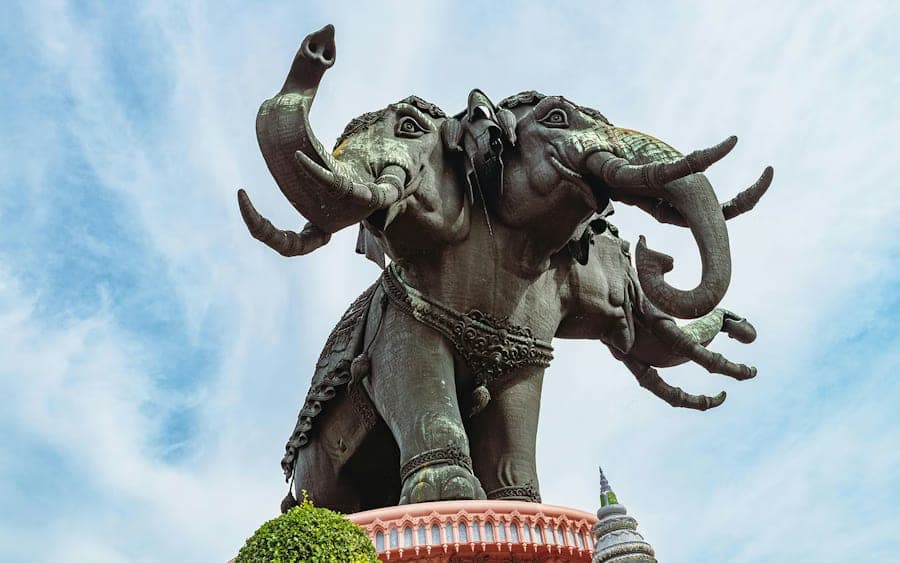
Samut Prakan Day Tour 2026: Ancient City, Erawan Museum & Crocodile Farm from Bangkok
Complete 2026 guide to a Samut Prakan day trip from Bangkok: Ancient City (Muang Boran) 116 monuments, Erawan Museum inside a 29m bronze elephant, and the Crocodile Farm. Ticket prices, honest advice, and the Lek Viriyaphan story connecting all three.
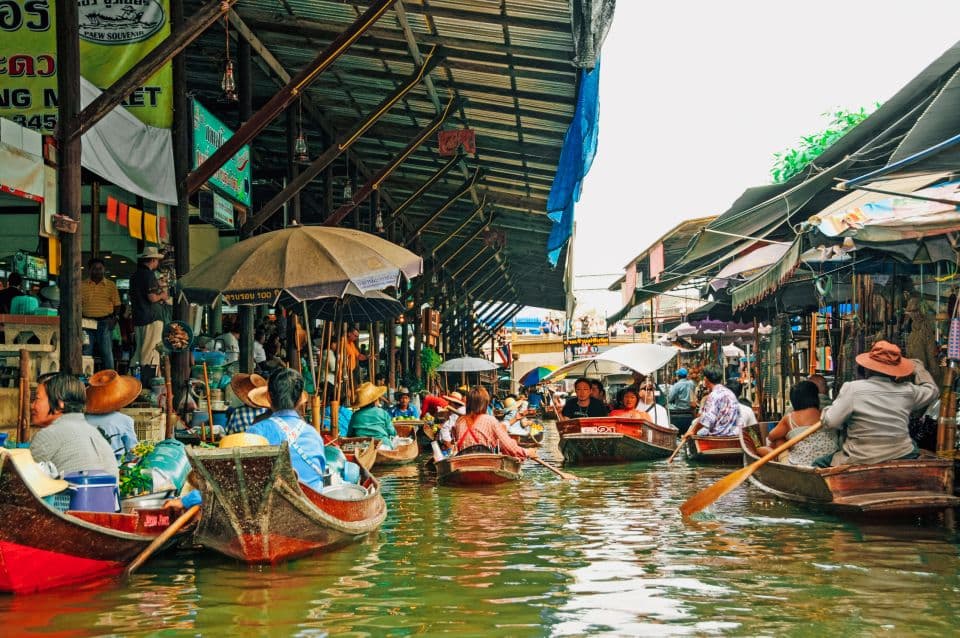
Damnoen Saduak Floating Market & Maeklong Railway Market: Private Half-Day Tour from Bangkok 2026
Visit Damnoen Saduak Floating Market and Maeklong Railway Market on one private half-day tour from Bangkok. Private longtail speedboat through the canals, train guaranteed, hotel pickup. The most exciting morning you will have in Thailand.
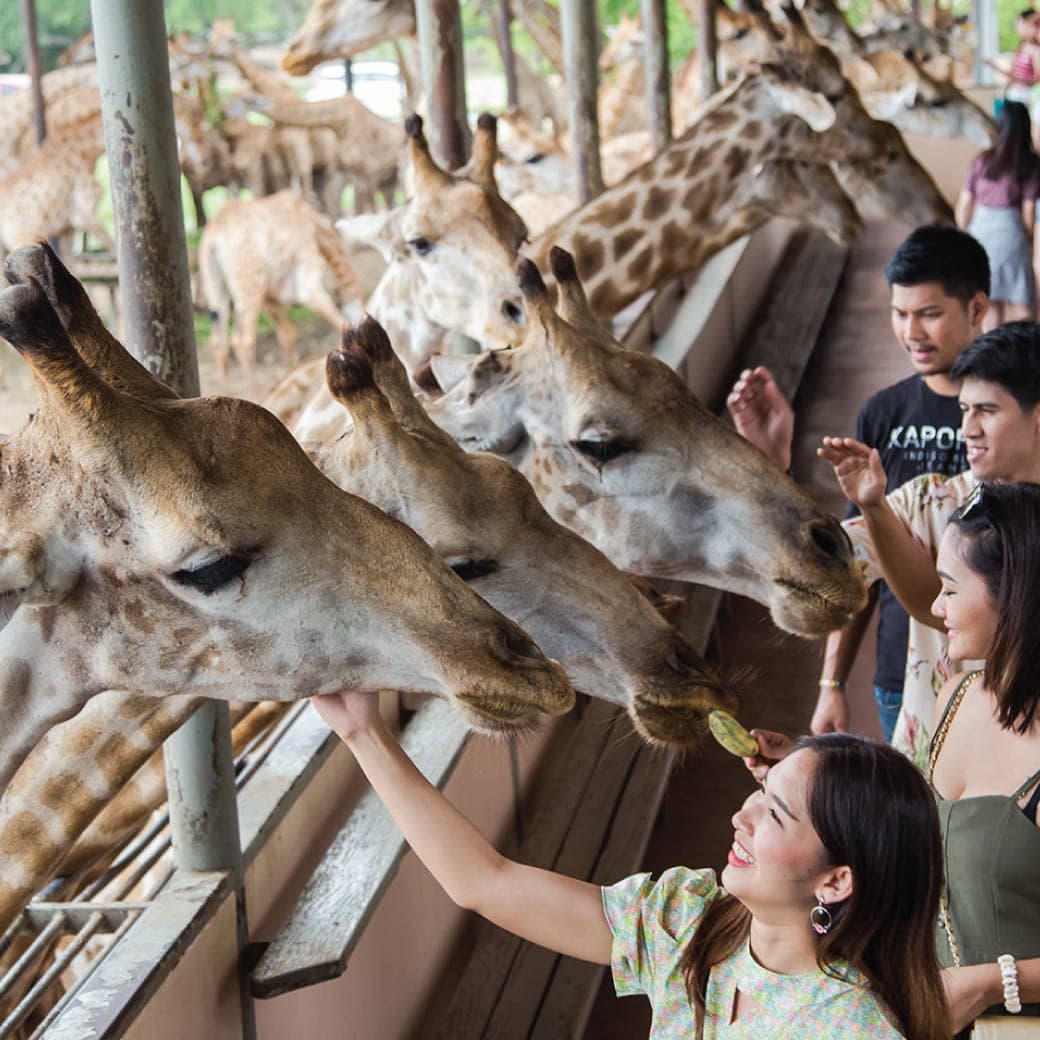
Safari World Bangkok: Complete Guide — Show Timings, Ticket Prices & Indian Buffet Lunch
Safari World Bangkok 2026 guide: official show timings (weekday & weekend), Safari World Bangkok ticket prices, Indian buffet lunch, and tickets at 1,200 THB versus 2,000 THB at the gate. Open Tue–Sun, closed Mondays. Ideal for Indian families.