Grand Palace Bangkok 2026: Tickets ฿500, Hours, Dress Code & Private Tour
Grand Palace Bangkok 2026 — Quick Answer
Most-asked questions about visiting the Grand Palace, answered before you read further:
| Question | Answer |
|---|---|
| Grand Palace ticket price 2026 | ฿500/person for foreign visitors (includes Wat Phra Kaew + Queen Sirikit Museum). Children under 120 cm free. |
| Wat Pho ticket price 2026 | ฿300/person — separate temple, separate ticket, 3 minutes on foot from Grand Palace. |
| Grand Palace opening hours 2026 | Daily 8:30 AM – 3:30 PM (last entry / ticket office closes 3:30 PM). Complex closes 4:30 PM. |
| Closed days | None — open every day of the week, including weekends and holidays. Only closes for Royal ceremonies. |
| Dress code | Strict — knees and shoulders fully covered. Shorts, sleeveless tops, torn jeans refused at the gate. |
| Best time to visit | 7:30–9:00 AM start. Cooler air, smaller crowds, far better photographs. |
| Tour with private guide + all tickets | From ฿2,990/person — includes ฿800 in tickets, English guide, hotel pickup, dress code check. |
✅ Skip the gate queue and the dress-code refusal. Trip Thai Tour's private half-day includes both Grand Palace + Wat Pho tickets (฿800 saved), a private English guide, and a dress code check at your hotel before you leave. Confirmation in 15 minutes on WhatsApp. Book the private tour from ฿2,990 →
Private Bangkok Grand Palace & Reclining Buddha Tour
From ฿2,990 per person — TAT Licensed Operator · Instant WhatsApp confirmation

The Grand Palace Bangkok: Two Icons in One Half-Day
The Grand Palace and Wat Pho are the two most important stops on any Bangkok temple tour — and they sit literally next door to each other, separated by a 3-minute walk.
Most visitors doing a Grand Palace tour in Bangkok make the same mistake: they visit only the Grand Palace and miss Wat Pho entirely. Or they try to do both on different days, spending twice the travel time for no reason.
Our private Bangkok tour combines both in one seamless half-day, so you see everything that matters without wasting a single hour — with both entrance tickets pre-included, a dedicated English-speaking guide, and a dress code check at your hotel before you leave.
Grand Palace Bangkok Ticket vs Klook vs Group Tour vs Private Tour — Honest Comparison
Searching for the cheapest way to visit the Grand Palace? Here is how the four main options actually compare:
| Buy at gate | Klook ticket | Group Viator tour | Our private tour | |
|---|---|---|---|---|
| Grand Palace ticket | ฿500 | ~฿1,200 (markup) | Often not included | Included |
| Wat Pho ticket | ฿300 extra | Not included | Sometimes included | Included |
| Guide | None | None — self-guided | Shared with 15–25 strangers | Private, English-fluent, your group only |
| Dress code refusal risk | Your problem at the gate | Your problem at the gate | Your problem at the gate | Checked at your hotel before departure |
| Hotel pickup | Get there yourself | Get there yourself | Fixed meeting point | Hotel door, time you choose |
| Pace | Yours | Yours | Group pace, no flexibility | Yours, with guide adapting |
| Total cost (typical) | ฿800 + transport + queue time | ~฿1,200 + transport + Wat Pho extra | ~฿1,800 + tickets + lost time | ฿2,990 all-in |
Verdict: Buying at the gate makes sense if you are confident, on a tight budget, and don't mind queues, scams, and figuring out the dress code yourself. Klook saves the queue but you still navigate Bangkok alone. Group tours sit awkwardly in the middle — fixed schedules and shared guides. A private tour at ฿2,990 is for travellers who would rather pay roughly ฿1,500 more to skip the queue, dress-code stress, and language barrier — and actually understand what they are seeing.
📖 One price, everything included — ฿2,990 per person for the Grand Palace and Wat Pho, both entrance tickets covered. See full details on the booking page →
The Best Bangkok Temple Tour: Why Private Beats Group Every Time
If you read the reviews of most Grand Palace tour operators on Viator and TripAdvisor, you will find the same complaints repeated:
- Guide English was hard to understand — ruined the whole experience
- Unexpected gem shop stop — wasted 45 minutes, felt pressured to buy
- Entrance fees not included — had to pay extra at the gate
- Guide never offered to take photos — came home with no good memories
- No dress code warning — turned away at the entrance on arrival
Our tour is built specifically to solve every single one of these problems. Before we explain how, let us tell you why these two places deserve more than a quick walk-through — because understanding what you are looking at changes everything.
The Grand Palace and Emerald Buddha: The Heart and Soul of Thailand
To understand why the Grand Palace matters, you need to understand what it means to Thai people — not just as a tourist attraction, but as the living heart of the entire nation.
The Most Sacred Place in Thailand
For Thai people, the Grand Palace complex is not simply a historical site. It is the spiritual and symbolic centre of the Kingdom. The palace was established in 1782 by King Rama I when he moved the capital from Thonburi across the Chao Phraya River to Bangkok — a new beginning for a new era of the Thai kingdom.
Everything about the palace was built to reflect the power, faith, and vision of the Thai monarchy. Every building, every mural, every statue was placed with deep intention. When Thai people visit, they are not sightseeing — they are paying respect to the foundation of their nation.
The Emerald Buddha — Thailand's Most Sacred Object
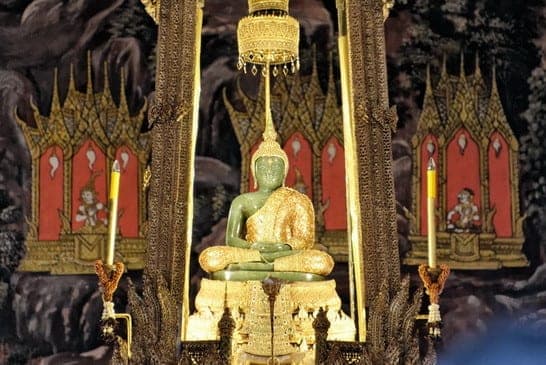
Inside Wat Phra Kaew sits the Emerald Buddha, and no single object in Thailand carries more spiritual weight.
Despite its name, the statue is not made of emerald. It is carved from a single piece of green jade, just 66 centimetres tall, seated in a meditation posture high on a gilded throne so elevated that most visitors never see its face clearly. The statue dates back to the 15th century, though its origins remain a mystery.
What makes this statue extraordinary is not its size or material but its history. The Emerald Buddha has been at the centre of political and spiritual power in Southeast Asia for over 500 years, passing through the hands of kingdoms in Chiang Rai, Lampang, Chiang Mai, Laos, and finally Bangkok in 1784. Every kingdom that possessed it believed the statue brought legitimacy and divine protection to its ruler.
Praying at Wat Phra Kaew — What Thai People Believe
For Thai Buddhists, coming to pray before the Emerald Buddha is one of the most powerful spiritual acts a person can perform. The belief is that the Emerald Buddha possesses exceptional spiritual energy accumulated over centuries of veneration by millions of worshippers.
Thai people come here to pray for protection, good fortune, success in business, health for their family, and guidance during difficult times. Many make the journey specifically during important life moments — before a major exam, before starting a new business, before getting married, or when facing illness.
The act of kneeling before the Emerald Buddha and making an offering of incense, flowers, and gold leaf is believed to bring genuine blessings. Whether or not you share this belief, witnessing the devotion of Thai worshippers in this space is one of the most moving experiences Bangkok has to offer.
The King of Thailand himself changes the Emerald Buddha's golden costume three times a year — at the beginning of the hot season, the rainy season, and the cool season — a royal ceremony that has continued unbroken for over 200 years.
Why Was the Grand Palace Built on the River? Strategy, Power, and Survival
The location of the Grand Palace on the banks of the Chao Phraya River was not accidental. It was one of the most strategically calculated decisions in Thai history.
The River as the Lifeline of the Kingdom
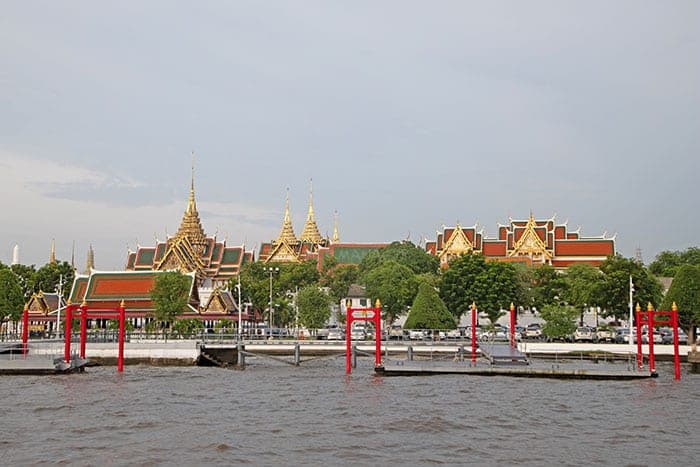
In 1782, the Chao Phraya River was the main highway of Southeast Asia. Everything moved by water — trade, communications, military forces, and people. Building the capital on the river's edge meant the king sat at the crossroads of all commerce and power flowing through the region.
The palace grounds were designed so that the river acted as the western defensive wall. Enemy forces approaching from the west faced an immediate natural barrier. Combined with the city walls and canals dug on the other three sides, Bangkok became a virtually fortified island city.
Canals as Moats
King Rama I ordered a network of canals to be dug around the palace complex, creating artificial moats that mirrored the bends in the river. Bangkok in the 18th century was designed as a water city — a Southeast Asian Venice — where canals served as streets, as defences, and as the primary means of moving soldiers and supplies rapidly around the city.
This defensive design meant that an enemy army would need to cross multiple water barriers under fire before reaching the palace walls. It is a system that kept Bangkok unconquered for the entirety of the Chakri dynasty.
The River as Spiritual Significance
Beyond strategy, the Chao Phraya River holds deep spiritual meaning in Thai belief. Water is considered a purifying and life-giving force. Building the most sacred institutions of the kingdom beside the river connected the palace and its temples to the natural sacred geography of the land.
💡 Want to experience the river as the kings did? A longtail boat run through Bangkok's old canals — the same waterways that protected the palace for 250 years — can be added to your Grand Palace and Wat Pho tour on the day. Just tell your guide. The river breeze is also the coolest part of any Bangkok morning.
Architecture: A Masterpiece Built to Last Forever
The Grand Palace complex covers 218,000 square metres and contains buildings spanning nearly 250 years of construction across multiple reigns. What makes the architecture extraordinary is not just its beauty but its deliberate symbolism — every element was chosen to communicate specific meanings about power, faith, and the cosmos.
The Three-Tiered Roof: Reading the Language of Thai Architecture
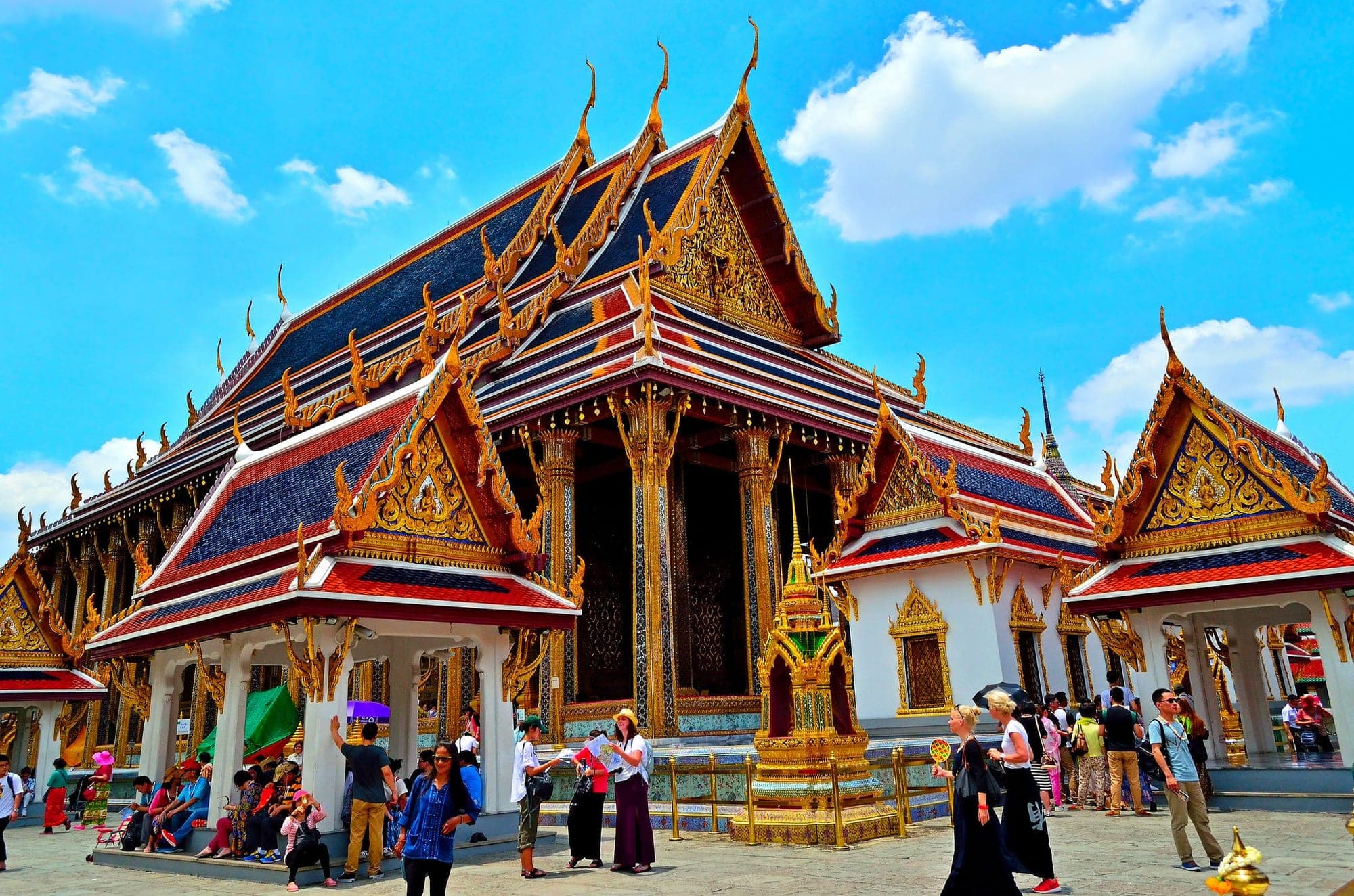
The most immediately striking feature of every major building in the complex is the multi-tiered roof, covered in glazed ceramic tiles of deep orange, green, and gold. These roofs are not purely decorative — they are a visual language.
The number of roof tiers indicates the rank and sacred status of a building. The highest-ranking religious buildings receive three or more tiers. The steep angle of the roof channels rainwater away rapidly in the tropical climate but also draws the eye upward — toward the sky and toward the divine.
The pointed roof finials called Cho Fa — which means sky tassel — represent the Garuda, the mythical eagle that serves as the vehicle of the god Vishnu and the royal symbol of the Thai king. Every Cho Fa on every rooftop in the complex is a statement of royal and divine authority.
Chakri Maha Prasat Throne Hall: East Meets West
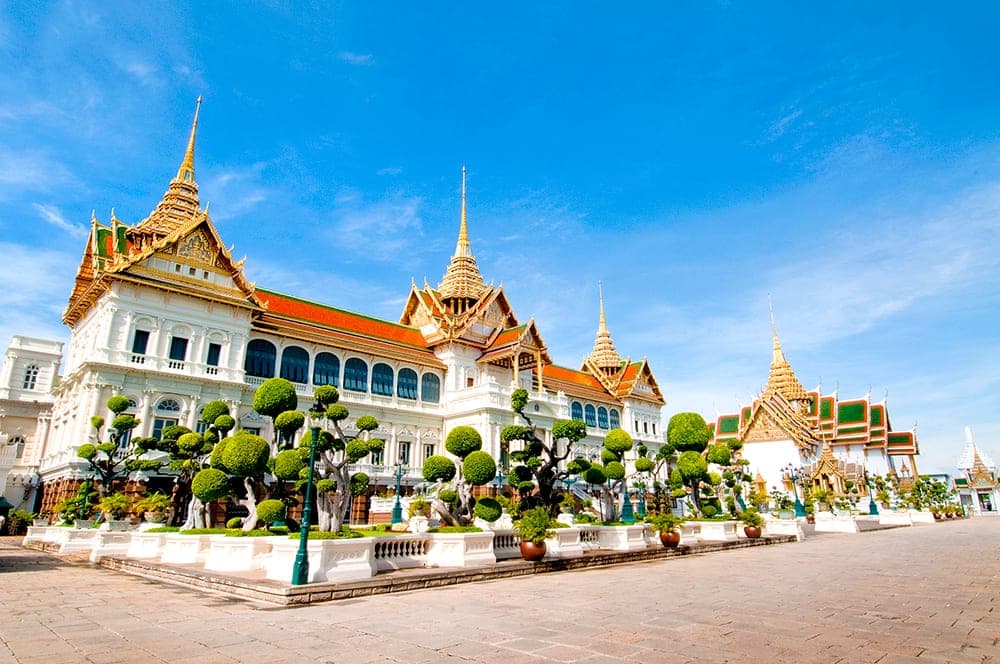
The most photographed building in the complex — and the one that surprises most visitors — is the Chakri Maha Prasat Throne Hall, built by King Rama V in 1882 to mark the centenary of the Chakri dynasty.
At first glance it appears to be a European neoclassical palace — symmetrical facade, arched windows, stone columns — the kind of building you might expect in London or Paris. Then your eyes reach the roof and everything changes. Sitting atop this entirely European building are three magnificent Thai-style spired towers, each finished in traditional gilded Thai architecture.
This jarring and beautiful fusion was entirely intentional. King Rama V was sending a message to the world: Thailand was a sophisticated modern nation that could engage with Western civilisation on equal terms while remaining proudly and defiantly Thai. It is one of the most politically loaded pieces of architecture in Southeast Asia.
The Giant Guardian Statues: Yak — Who They Are and Why They Stand Here
One of the most memorable sights for first-time visitors — and one that children absolutely love — are the enormous Yak (giant demon guardian) statues at the entrance gates throughout the complex.
These figures stand over five metres tall, dressed in full battle armour with fierce expressions, holding clubs, and wearing elaborate crowns. They come in pairs — one green, one gold at each major gate.
The Yak are characters from the Ramakien, Thailand's national epic — the Thai version of the Indian Ramayana. In Thai belief, these demon warriors were converted to the service of good and given the sacred duty of protecting holy places from evil spirits and negative forces.
Your guide will tell you that Thai people genuinely believe the Yak protect the palace and the Emerald Buddha. They are not merely decorative. Monks bless them regularly. Offerings are made at their feet. To disrespect them is considered genuinely dangerous.
What makes them remarkable from a craft perspective is the ceramic tile mosaic that covers their entire surface — millions of tiny pieces of coloured glass and ceramic set by hand, giving the giants an iridescent quality that changes in different light. This technique, called Lai Kram, requires extraordinary skill and patience. The restoration of a single Yak takes years.
Phra Mondop — The Library of Sacred Manuscripts
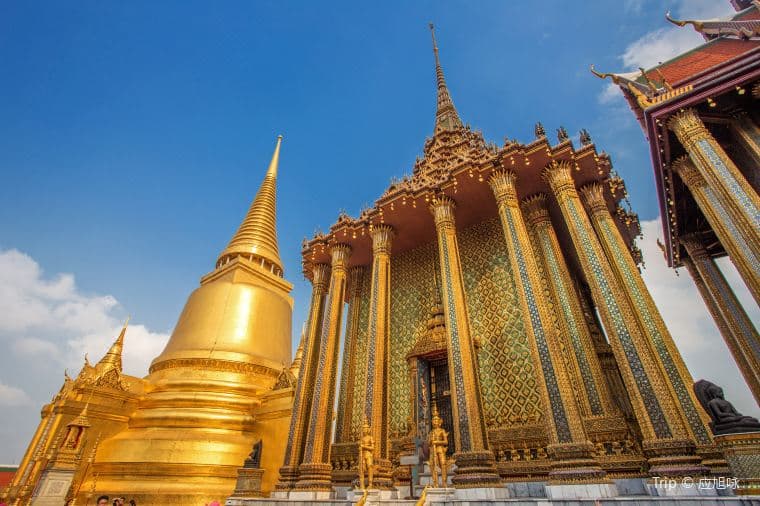
Often overlooked by visitors rushing between the major sites, the Phra Mondop is one of the most exquisitely crafted buildings in the complex. Built to house the sacred Buddhist scriptures, it sits on a raised platform surrounded by mythical creatures carved in stone.
The building is not open to the public but can be viewed from outside. Your guide will point out the mother-of-pearl inlay work on the window shutters — a technique so fine and labour-intensive that it took a team of royal craftsmen decades to complete.
The Golden Chedi: Phra Sri Rattana Chedi
The large golden bell-shaped stupa visible from most areas of the complex is Phra Sri Rattana Chedi, built in the Sri Lankan Buddhist style. It is said to enshrine a piece of the Buddha's breastbone, making it one of the most sacred reliquaries in Thailand.
Its surface is entirely covered in gold mosaic tiles that catch the sun and glow with extraordinary intensity in the morning light. This is one of the spots your guide will always take you for photographs — the combination of the golden chedi, the blue sky, and the surrounding architecture makes for images that genuinely look unreal.
The Murals of the Ramakien: A Gallery That Took 30 Years to Paint
Running along the inner walls of the gallery that surrounds Wat Phra Kaew is one of the greatest works of art in Southeast Asia — a continuous mural painting of the Ramakien, the Thai national epic, stretching for 178 panels covering 1.3 kilometres of wall.
What Is the Ramakien?
The Ramakien is Thailand's version of the ancient Indian epic the Ramayana, adapted and retold over centuries to reflect Thai culture, values, and mythology. It tells the story of Rama — a prince who is the human incarnation of the god Vishnu — and his battle against the demon king Tosakan who has kidnapped his beloved wife Sida.
The story is a meditation on duty, loyalty, love, courage, and the eternal battle between good and evil. For Thai people, Rama is not just a literary character — he is the ideal king, the model of righteousness that every Thai monarch aspires to embody. The King of Thailand takes the title Rama as his reign name for this reason.
Must-See Panels
Your guide will point out the panels considered the highlights:
The Battle Scenes — The depictions of the great battle between Rama's army and the demon forces of Tosakan are the most dramatic and detailed panels in the entire series. Thousands of figures in combat, rendered with extraordinary energy and precision.
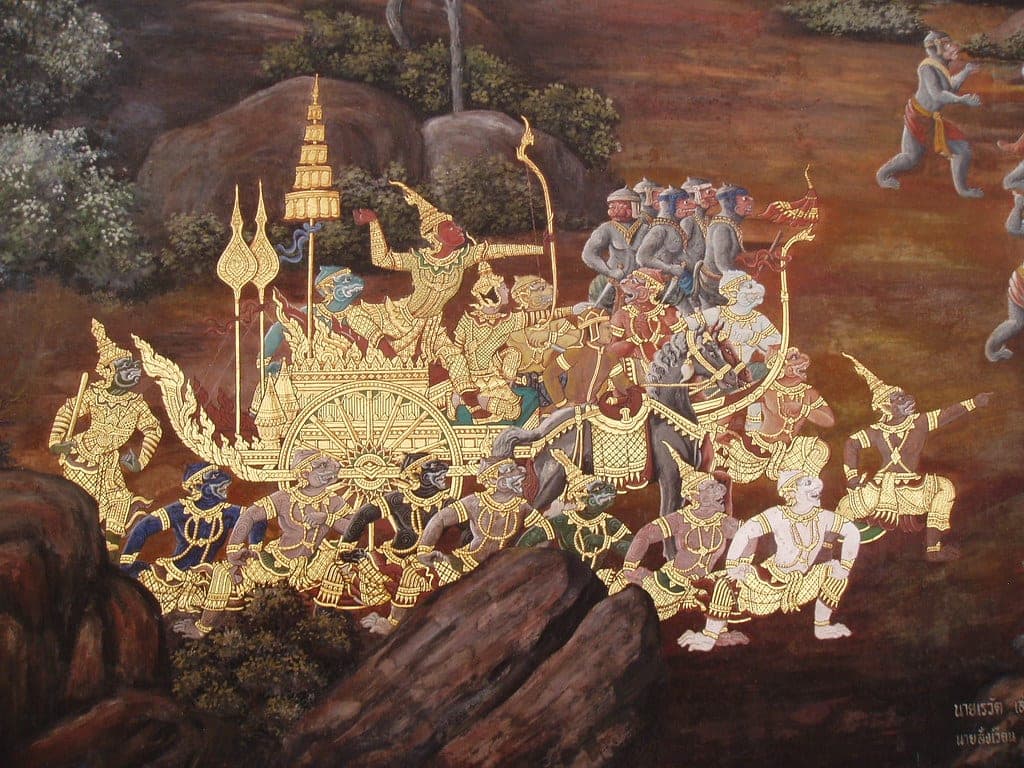
Hanuman the Monkey General — Hanuman, the white monkey warrior and devoted servant of Rama, is the most beloved character in the Ramakien and one of the most important figures in Thai culture. The panels showing Hanuman's exploits — his incredible strength, his loyalty, his playful personality — are among the most detailed and expressive in the entire mural.
The Celestial City of Ayodhya — The panels depicting Rama's heavenly kingdom show Thai artists' vision of a perfect divine city, painted in extraordinary detail with golden spires and celestial beings.
The Abduction of Sida — The dramatic scene where the demon king Tosakan disguises himself and kidnaps Sida is one of the most emotionally charged panels, beautifully composed and frequently photographed.
🇮🇳 Visiting from India? Our guides connect every Ramakien panel to the Ramayana your family already knows — Rama, Hanuman, Sita, the Lanka kingdom. Indian families consistently tell us this is the moment Bangkok started feeling like a story they recognised. See our family tour options →
Wat Pho and the Reclining Buddha: Three Minutes Away, A World Apart
After the Grand Palace, your guide walks you directly to Wat Pho — a 3-minute walk that takes you from one of the most ornate royal complexes in the world into one of Bangkok's oldest and most spiritually powerful temples.
Most tourists who visit the Grand Palace on a Bangkok city tour never make it to Wat Pho. That is one of the biggest mistakes you can make in Bangkok.
The Reclining Buddha — 46 Metres of Pure Gold
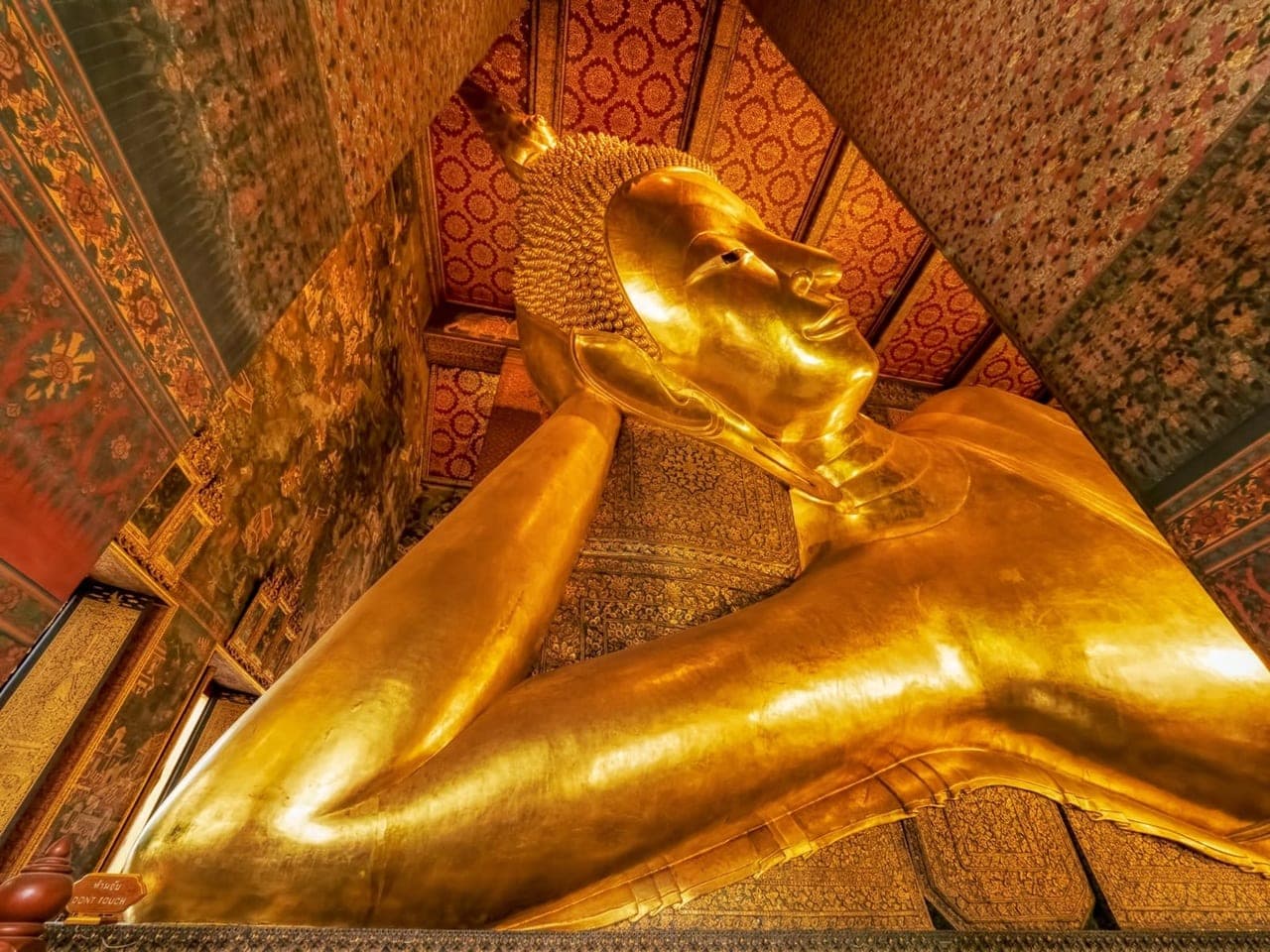
The centrepiece of Wat Pho is the Reclining Buddha — one of the largest Buddha images in Thailand and one of the most visually overwhelming religious works of art you will ever stand in front of.
The statue is 46 metres long and 15 metres tall. It fills an entire building constructed specifically around it. When you walk inside and realise the scale of what you are looking at, the reaction is almost always the same — a sharp intake of breath and complete silence.
The statue is covered entirely in gold leaf and depicts the Buddha at the moment of entering Parinirvana — the final passing into Nirvana, the ultimate liberation from suffering and the cycle of rebirth. The expression on the face is one of absolute peace — serene, complete, beyond pain or desire of any kind.
The Feet: 108 Auspicious Signs
The detail that stops almost every visitor is the soles of the feet. Each foot is inlaid with 108 distinct panels of mother-of-pearl, depicting the 108 auspicious signs that identify a true Buddha. The craftsmanship is extraordinary — each panel tells a different story, rendered in intricate geometric and figurative patterns that take most visitors 10 to 15 minutes to fully absorb.
The number 108 is deeply significant in Buddhist tradition — it represents the number of earthly desires that must be overcome to achieve enlightenment, the number of beads on a Buddhist prayer rosary, and the number of sacred sites in the Buddhist world.
The 108 Bowls — A Meditation in Action
Along the inner wall of the Reclining Buddha hall runs a row of 108 bronze bowls, each numbered. For 20 baht you receive a small cup of coins — exactly 108 — and walk slowly along the row, dropping one coin into each bowl as you go.
The sound of coins falling into bronze bowls in a gentle, continuous rhythm creates an unexpected meditative atmosphere. Thai people believe completing the full circuit of 108 bowls brings good fortune and spiritual merit. Even visitors with no Buddhist background typically describe it as one of the most quietly calming moments of their entire trip.
Wat Pho as the First University of Thailand
Wat Pho is one of the oldest temples in Bangkok, predating the Grand Palace itself. King Rama III designated it as Thailand's first centre of public education in the 19th century — a living university where knowledge of medicine, astronomy, literature, and Thai massage was inscribed on stone tablets built into the temple walls so that anyone could come and learn for free.
Those stone tablets are still there. Your guide will show you sections covering traditional medicine, yoga postures, and massage techniques — information that is nearly 200 years old and still accurate.
The Birthplace of Traditional Thai Massage
Wat Pho is internationally recognised as the birthplace and spiritual home of traditional Thai massage. The temple houses the Wat Pho Thai Traditional Medical and Massage School, one of the most respected massage institutions in Thailand, operating on the temple grounds for over a century.
A 30-minute session at the school costs approximately ฿420 per person, payable on site. After 4 to 5 hours of walking in Bangkok's heat, it is one of the most restorative ways to end the morning. Tell us when you book and we will build the time into your schedule.
Experience this in person
Private Grand Palace & Wat Pho Tour from ฿2,990 — tickets included, English guide, hotel pickup, dress code check before departure
Adding Wat Arun: Why It Is Worth It on the Same Day
Wat Arun — the Temple of Dawn — stands directly across the Chao Phraya River from Wat Pho. The central spire (prang) rises 82 metres, covered entirely in fragments of Chinese porcelain mosaic that catch the light differently at every hour of the day.
Should you add Wat Arun to your Grand Palace + Wat Pho morning? Yes — and we strongly recommend it. Here is why:
- It is 2 minutes by ferry from Wat Pho. A 3-baht crossing from Tha Tien Pier. The view from the water as you approach Wat Arun is one of Bangkok's defining moments — guests describe it for years afterward.
- The cool of the morning is when Wat Arun is most pleasant. River breeze, shade from the prang, smaller crowds than mid-day.
- For couples and honeymooners, Wat Arun produces the best photographs of any Bangkok temple. Thai traditional costume rental is available on site (฿300–600) and the porcelain spires in morning light are unforgettable.
- You are already there. Three minutes away by ferry. Not crossing is the bigger regret.
We do not sell this as a package you have to choose at booking. If you'd like to cross, tell your guide on the morning — they arrange the ferry, the entrance and the extra time, and it adds 1 to 1.5 hours to your day. If the heat has beaten you by then, finishing at Wat Pho is a perfectly good morning too.
For the full history — King Taksin, the fall of Ayutthaya, the Emerald Buddha's brief time at Wat Arun before its move to Bangkok — read our complete Wat Arun guide.
Grand Palace Bangkok Ticket Price 2026 — What Is Included
The Grand Palace entrance fee in 2026 is ฿500 per person (gate purchase only — there is no online booking on the official site). This single ticket covers:
- The entire Grand Palace complex
- Wat Phra Kaew (Temple of the Emerald Buddha) — the most sacred site in Thailand
- The Queen Sirikit Museum of Textiles — most independent visitors miss this; our guide takes you there
- The Royal Decorations & Coins Pavilion
Wat Pho is a separate ฿300 ticket — three minutes on foot from the Grand Palace exit.
Children under 120 cm enter the Grand Palace free. Children above that height pay adult price (฿500) regardless of age. Wat Pho applies the same height rule.
When you book our private Bangkok tour at ฿2,990 per person, all entrance fees are included — Grand Palace ฿500 and Wat Pho ฿300 totalling ฿800 in tickets, already in your price. You walk straight to the entrance with nothing to pay at either gate. (Source: The Grand Palace Official Website)
✅ Save ฿800 in tickets, skip the queue, and avoid the gem-shop scam. Our private half-day tour from ฿2,990 includes both Grand Palace and Wat Pho tickets, English guide, hotel pickup, and a dress code check at your hotel before you leave.
The Grand Palace Bangkok is Closed — The Scam Every Tourist Must Know
⚠️ This is one of the most important things to read before visiting the Grand Palace.
If a tuk-tuk driver, stranger near the gate, or anyone on the street tells you "Grand Palace is closed today" — it is a scam. Walk away immediately.
The Grand Palace is open every single day from 8:30 AM to 3:30 PM (ticket office closes 3:30 PM sharp). It closes to tourists only on a small number of major royal ceremonies — and these are always announced publicly well in advance and prominently displayed at the entrance.
How the scam works: Someone approaches you near the Grand Palace and tells you it is closed for a royal ceremony, a special holiday, or a Buddhist day. They then offer to take you somewhere else "while you wait" — usually a gem shop, a tailor, or a "lucky Buddha" temple. The whole conversation is scripted. The "closed" claim is always false.
The gem shop scam is a variant: a tuk-tuk driver offers you an extremely cheap or free ride to the Grand Palace, then detours to a gem shop along the way, claiming there is a "government export sale" happening today only. The shop sells overpriced stones at artificial tourist prices with hard-pressure sales tactics. The driver earns a commission on anything you buy.
Our tour eliminates both risks entirely. Your guide picks you up at your hotel and takes you directly to the Grand Palace entrance. You never stand on the street alone near the gate where these approaches happen. In five years of operating Grand Palace tours, none of our guests has ever encountered this scam on our watch.
The Hidden Bangkok Experience Inside the Grand Palace Most Tourists Never Find
This is the kind of insider knowledge you only get with a private Bangkok guided tour — and it is completely free.
Inside the Grand Palace complex, there is a free traditional Khon performance that takes place on most days. Your guide will check the schedule and take you there if time allows — and we strongly recommend making time.
What Is Khon?
Khon is Thailand's most ancient and elaborate classical performing art — a masked dance drama that tells stories from the Ramakien. It was performed exclusively for Thai royalty for centuries and was considered so sacred that only specially trained court performers were permitted to dance it.
UNESCO inscribed Khon on the Representative List of the Intangible Cultural Heritage of Humanity in 2018, recognising it as one of the world's great artistic traditions.
Why It Is Worth Watching
The costumes are among the most elaborate in any performing art tradition in the world. Each costume takes master craftsmen months to create — hand-sewn fabric, gilded headdresses, jewelled accessories, mirror work. The demon characters wear full face masks of extraordinary craftsmanship. The divine characters wear open-faced golden crowns that can stand over 60 centimetres tall.
The movement is highly codified — every gesture of the hand, every angle of the head, every step has a specific meaning that trained audiences can read like text. A single hand position can indicate emotion, identity, or narrative action. Performers train for years before they are permitted to perform publicly.
The music is performed live by a traditional Piphat orchestra — a combination of xylophones, oboes, drums, and cymbals that creates a sound unlike anything in Western music. The tempo and melody shift to reflect the emotion and action of each scene.
The characters you are most likely to see performed are Rama, Sida, Hanuman, and Tosakan — the four central figures of the Ramakien whose stories you will have already learned from the murals on the walls around you. Seeing those painted stories come to life in front of you — in costume, in music, in movement — creates a moment that many of our guests describe as the single most memorable experience of their entire trip to Thailand.
It is free. It happens inside the palace complex. And almost no one who comes without a guide ever finds it.
Grand Palace Bangkok Dress Code 2026 — What to Wear (and What Gets You Turned Away)
The single most common reason tourists are refused entry — and 100% preventable with the right information.
What Is Required
| Person | Top | Bottom | Shoes |
|---|---|---|---|
| Men | Shirt with sleeves (not sleeveless) | Long pants (not shorts, not 3/4 length) | Closed shoes or sandals with heel straps |
| Women | Top covering shoulders and chest fully | Long skirt or pants covering ankles. No leggings | Closed shoes or sandals |
| Children | Same rules — covered shoulders | Long trousers or skirt covering knees | Closed shoes |
What Is Refused at the Gate
❌ Shorts of any length — even long shorts near the knee ❌ Torn or ripped jeans — even fashionable torn jeans ❌ Sleeveless tops, tank tops, vest tops, spaghetti straps ❌ Cut-sleeve shirts or shirts with armholes cut out ❌ Crop tops — anything exposing the midriff ❌ Backless flip-flops (men specifically) ❌ Transparent or sheer clothing ❌ Beachwear of any kind, sarong skirts, beach dresses
What happens if you arrive incorrectly dressed: The entrance guards stop you and direct you to a clothing rental counter just inside the gate. You can borrow a sarong or trousers, but this takes time, feels uncomfortable, and wastes 15–20 minutes of your visit. On peak days the clothing queue is long.
The same dress code applies at both the Grand Palace and Wat Pho.
✅ When you book with us: We send you a complete photographed dress code guide with your booking confirmation, and your guide checks every member of your group at hotel pickup before departure. None of our 100+ guests has ever been turned away at the entrance. Book the private tour →
📷 Photography note: Photography is permitted everywhere in the Grand Palace complex except inside the Emerald Buddha chapel (Wat Phra Kaew), where it is strictly prohibited by Thai law. Your guide will remind you before entry.
Grand Palace Bangkok Opening Hours 2026
| Location | Hours | Notes |
|---|---|---|
| Grand Palace complex | 8:30 AM – 3:30 PM daily | Ticket office and last entry close 3:30 PM. Complex closes 4:30 PM. |
| Wat Phra Kaew (Emerald Buddha) | 8:30 AM – 3:30 PM daily | Included in Grand Palace ticket |
| Queen Sirikit Museum of Textiles | 9:00 AM – 4:00 PM daily | Included in Grand Palace ticket |
| Wat Pho | 8:00 AM – 6:30 PM daily | Separate ฿300 entrance fee |
Critical timing note: The Grand Palace ticket office closes at 3:30 PM sharp. If you arrive at 3:00 PM you can still buy a ticket, but you will only have 30 minutes inside before closing — not enough time to see anything meaningfully. Aim to arrive by 8:15–9:00 AM.
The Grand Palace is open every day of the week, including weekends and public holidays. The only closures are for Royal Family ceremonies, which are announced separately on the official Grand Palace website.
Our tour pickup is at the time you choose. We strongly recommend 7:30–9:00 AM — this means arriving at the Grand Palace at opening time, beating the tour bus crowds that arrive from 10 AM, and finishing the entire morning before Bangkok's heat becomes serious.
How to Get to the Grand Palace Bangkok
The Grand Palace is in the Rattanakosin Island area of Bangkok — the historic heart of the city on the east bank of the Chao Phraya River.
When you book with us: We pick you up directly from your Bangkok hotel. No navigation required.
For independent travellers:
- Grab taxi — Most reliable option. 15–40 minutes from central Bangkok depending on traffic. Set destination to "Grand Palace Bangkok" or "Sanam Chai Road." Fares from approximately ฿60–150.
- Chao Phraya Express Boat — The most scenic and traffic-free option. Take the boat to Maharaj Pier (N9) or Chang Pier (N8). The Grand Palace is a 5-minute walk from either pier. Boats run frequently and cost ฿15–40 depending on the service.
- BTS Skytrain — The Grand Palace is NOT served directly by BTS. The nearest station is Saphan Taksin (Silom line), from where you take the Chao Phraya Express Boat north to Maharaj Pier.
- Tuk-tuk — Only reliable for short distances from nearby hotels. For longer distances, tuk-tuks have a strong incentive to detour you to gem shops. Use Grab for longer journeys.
Address: Grand Palace, Na Phra Lan Road, Phra Borom Maha Ratchawang, Phra Nakhon, Bangkok 10200
Why Our Private Bangkok Tour Solves Every Common Complaint
Your Own Private Vehicle and Guide
This is a fully private Bangkok tour. Just you and your group — no strangers, no shared bus, no waiting for other people. Your private air-conditioned vehicle picks you up directly from your hotel lobby and brings you back when the tour is done.
A Guide You Can Actually Understand
Every guide on our team speaks clear, fluent English and is tested before joining our team. Your guide does not just walk and talk — they help you take photos throughout the tour, point out details independent visitors miss entirely, and adjust the pace to your group.
100% Transparent Pricing — Everything Included
Your quoted price includes the private vehicle, guide, all entrance fees for both Grand Palace (฿500) and Wat Pho (฿300), hotel pickup and drop-off, and bottled water. There is nothing extra to pay at the gate.
One Price, No Tiers to Compare
฿2,990 per person covers the Grand Palace, Wat Phra Kaew, and Wat Pho — both entrance tickets (฿800 in total), a private air-conditioned car, a dedicated English-speaking guide for your group only, hotel pickup at the time you choose, the dress code check before you leave, and bottled water. Four to five hours, door to door.
If you decide on the morning that you want to cross to Wat Arun or take a longtail boat through the old canals, your guide arranges it there and then and confirms the cost with you first. Nothing to choose between at booking.
Private Bangkok Grand Palace & Reclining Buddha Tour
From ฿2,990 per person · TAT Licensed No. 14/04232 · ⭐ 4.0 (186 reviews)
Booking Your Grand Palace Tour
⭐ "Best decision of our Bangkok trip — guide was brilliant, no gem shops, entrance fees all sorted. Kids loved the Yak statues." — Priya S., Delhi (verified booking, 2025)
Ready to book?
✅ From ฿2,990 per person — both tickets, English guide, hotel pickup, dress code check, all included ✅ Confirmation in 15 minutes during business hours (7 AM–9 PM Bangkok time) ✅ TAT Licensed No. 14/04232 — verifiable at tourismthailand.org ✅ Same-day bookings usually available — message us on WhatsApp before 6 PM the previous evening ✅ About Trip Thai Tour — who we are, our team, and why we started
Book Your Private Grand Palace Tour →
Have questions first? Message us on WhatsApp at +66 89 949 6235 — we typically reply within 15 minutes.
Planning more of Bangkok? Browse our full range of Bangkok tours and packages — all with hotel pickup included. Or pair the Grand Palace with our Damnoen Saduak Floating Market tour on a different morning for the two most distinctive half-days available from Bangkok.
Frequently Asked Questions
Klook sells the Grand Palace entry ticket alone (no guide, no transport, no Wat Pho ticket, no dress code support) for around ฿1,200 — a markup over the official ฿500 price. Our private tour at ฿2,990 includes both Grand Palace + Wat Pho tickets (saving ฿800 in entrance fees), a dedicated English-speaking guide for your group only, hotel pickup and drop-off in your private car, and dress code check at your hotel before departure. For roughly ฿1,500 more than a Klook ticket, you get a fundamentally different experience — and most of our guests tell us afterward they would have paid more if they had known what they were getting.
Group Viator tours typically run with 15–25 strangers, fixed pickup points and times, a guide whose attention is divided across the whole group, and a pace set by the slowest person. The single most common complaint on Viator Grand Palace reviews is that the guide spoke so little English that guests learned nothing. Our private tour is your group only — the English-speaking guide is yours alone, answering your questions, adapting to your interests, taking photos throughout. For families with children especially, the difference is dramatic.
The Grand Palace entrance fee in 2026 is ฿500 per person for foreign visitors — this single ticket includes Wat Phra Kaew (the Emerald Buddha temple) within the same complex, the Queen Sirikit Museum of Textiles, and the Royal Decorations & Coins Pavilion. Children under 120 cm enter free. The Wat Pho entrance fee is ฿300 per person separately. Total ticket cost if purchased independently: ฿800 per person. When you book our private tour at ฿2,990 per person, both fees are fully included — nothing is paid at either gate.
The Grand Palace is open daily from 8:30 AM. The ticket office and last entry close at 3:30 PM sharp — arrive before this to purchase entry. The complex itself stays open until approximately 4:30 PM for visitors already inside. The Grand Palace is open every day of the week, including weekends and public holidays. The only closures are for Royal Family ceremonies, which are announced separately on the official website. Aim to arrive at 8:30 AM opening time for the coolest air, smallest crowds, and best photographs.
The Grand Palace enforces the strictest dress code of any attraction in Thailand, without exception. Required: long trousers or a skirt covering the knees fully; a top with full sleeves covering both shoulders; closed shoes or strapped sandals. Not allowed: shorts of any length, torn or ripped jeans, sleeveless tops, tank tops, cut-sleeve shirts, crop tops, backless flip-flops (men), transparent clothing. Dress code applies to children equally. Our guide checks every member of your group at hotel pickup before departure, and we send a complete photographed dress code guide with your booking confirmation. None of our 100+ guests has been turned away.
Yes, and nothing needs to be arranged in advance. Our tour is the Grand Palace and Wat Pho at one price. Wat Arun is just 2 minutes by ferry from Wat Pho — if you'd like to cross once you are standing at Tha Tien Pier looking at it, tell your guide on the morning and they will arrange the ferry, the entrance and the timing. It adds roughly 1 to 1.5 hours. The 82-metre porcelain-covered prang and the view from the river as you approach are among Bangkok's defining moments, and in the cool of the morning it is one of the more comfortable temple visits in the city. Equally, plenty of guests have had enough sun by then and are happy finishing at Wat Pho — deciding on the day works better than committing weeks ahead.
The Grand Palace is open every day from 8:30 AM to 3:30 PM. It is never closed to tourists except for a small number of major royal ceremonies — and those are always announced well in advance and prominently displayed at the entrance. The 'Grand Palace is closed today' scam involves a tuk-tuk driver or stranger near the entrance telling you the palace is closed and offering to take you to a gem shop or temple instead. It is completely false. When you book with us, your guide is with you from your hotel — you will never face this situation.
Wat Pho is literally a 3-minute walk from the Grand Palace exit. They are next-door neighbours, which is why visiting both on the same half-day tour is so easy. Your guide walks you directly from one to the other.
We typically spend 1.5 to 2 hours at the Grand Palace and Wat Phra Kaew, then 45 minutes to 1 hour at Wat Pho. The total tour is 4 to 5 hours including hotel pickup and drop-off. Add 1 to 1.5 hours for Wat Arun, or 1 hour for the canal longtail boat. Your guide adjusts the pace based on your group's interest.
Absolutely — children respond to this tour more strongly than most parents expect. The Yak guardian statues are universally loved by kids; the Reclining Buddha's scale is jaw-dropping at any age. For families, the early morning start is especially important because children tire in heat quickly. The dress code applies equally to children — long lightweight trousers and a t-shirt with sleeves covers every requirement. Note: children above 120 cm pay adult ticket price at both temples; our ฿2,990 covers all ages.
Yes. We host Indian families regularly and our guides connect Thai history to the Ramayana your children already know — the Yak guardian statues from the Ramakien (the Thai Ramayana), the temple architecture's Hindu-Buddhist roots, the connection between Thai and Sanskrit names. Indian buffet lunch can be arranged. Hindi-speaking guides can be arranged with advance notice. Just mention your requirements when you book.
Yes — same-day bookings are usually possible if you contact us before 6 PM the previous evening. WhatsApp +66 89 949 6235 to check availability. Confirmation typically arrives within 15 minutes during business hours. For best results we recommend booking at least 24 hours in advance, which gives us time to send your dress code guide and brief your assigned guide on your group's interests.
Photography is permitted throughout most of the Grand Palace complex and is encouraged — the architecture is extraordinary. The one exception is inside the Emerald Buddha chapel (Wat Phra Kaew): photography is strictly prohibited inside the building as a mark of respect for this sacred space. Your guide will remind you before you enter.
The Queen Sirikit Museum of Textiles is located inside the Grand Palace grounds in the former Royal Apartment building. It houses an extraordinary collection of royal Thai textiles and costumes, including the personal wardrobe of Queen Sirikit. Admission is included with your Grand Palace ticket. Most independent visitors miss it. Our guide takes you there — it is one of the most beautiful and least-crowded spaces in the entire complex.
The Wat Pho entrance fee in 2026 is ฿300 per person — separate from the Grand Palace ticket. Wat Pho is open daily 8:00 AM to 6:30 PM (longer hours than the Grand Palace). When you book our private tour, the Wat Pho ticket is included in your ฿2,990 per person price along with the Grand Palace ticket — total ฿800 in tickets saved at the gate.
Yes — this is important to understand before booking. The Grand Palace is the working palace of the Thai Royal Family and is regularly used for official ceremonies. When this happens, parts or all of the complex may close to tourists, sometimes with short notice. If a Royal closure significantly affects your booked tour, we will contact you as early as possible and offer a full refund or reschedule at no extra cost. Morning visits have the most reliable unrestricted access — another reason for the early start recommendation.
When you book with us, we pick you up directly from your hotel at the agreed time — no navigation required. For independent travellers: the Grand Palace is not served by BTS Skytrain. The best options are Grab taxi (most reliable, 15–40 minutes from central Bangkok depending on traffic), Chao Phraya Express Boat to Maharaj Pier N9 (scenic and traffic-free), or tuk-tuk for short distances only. Avoid tuk-tuks for longer journeys — they have a strong incentive to detour to gem shops.
Check Availability & Book
Send us your details to get an instant quote and secure your date.
Related Guides
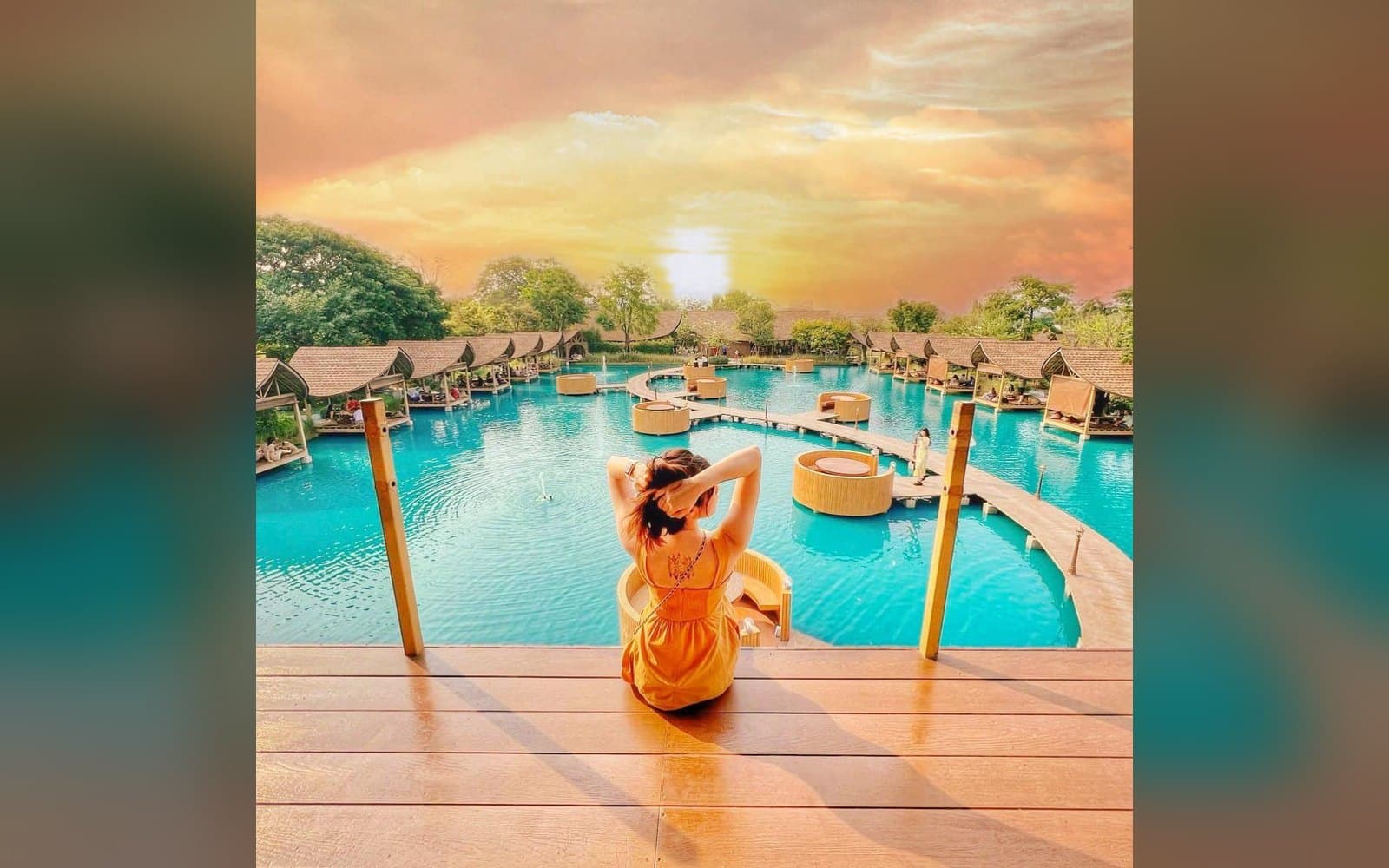
Bubble in the Forest Cafe Bangkok 2026: The Seat Guide Nobody Writes — Zones, Timing, Food and How to Actually Get a Table on the Water
A complete 2026 guide to Bubble in the Forest Cafe in Sam Phran, Nakhon Pathom — the five seating zones ranked, why walk-ins never get the water booths, the two hours of good light, what to order, what it costs, and how to reserve a seat for free.
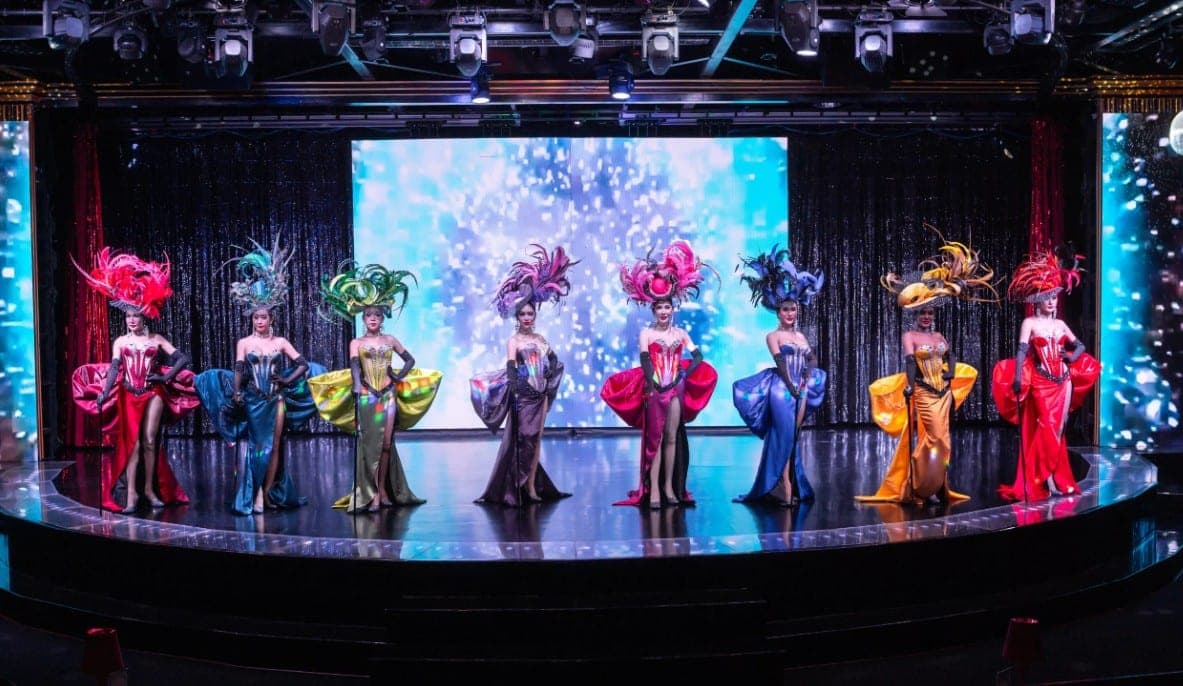
Calypso Cabaret Bangkok 2026: Show Times, Ticket Prices & Honest Guide
Complete 2026 guide to Calypso Cabaret at Asiatique The Riverfront — both nightly show times, tickets from ฿900, why the 540-seat theatre changes everything, and the history nobody tells you.
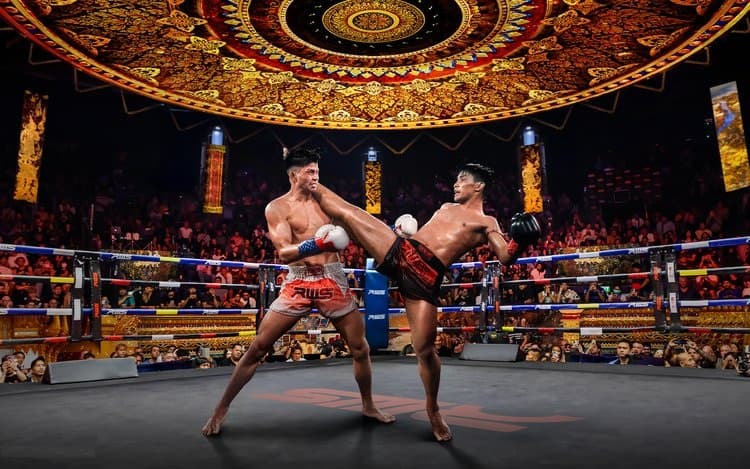
Muay Thai in Bangkok 2026: Rajadamnern Ticket Prices, Which Night to Book & How to Avoid the Touts
A complete buyer's guide to seeing Muay Thai at Rajadamnern Stadium in Bangkok — every seat tier priced, which of the seven fight nights to book, why Thais pay less than you do, how the ticket touts operate, and what the rituals and the betting tier actually mean.