Thai Dress at Wat Arun 2026: Costume Rental, Photoshoot Prices & Entrance Fee
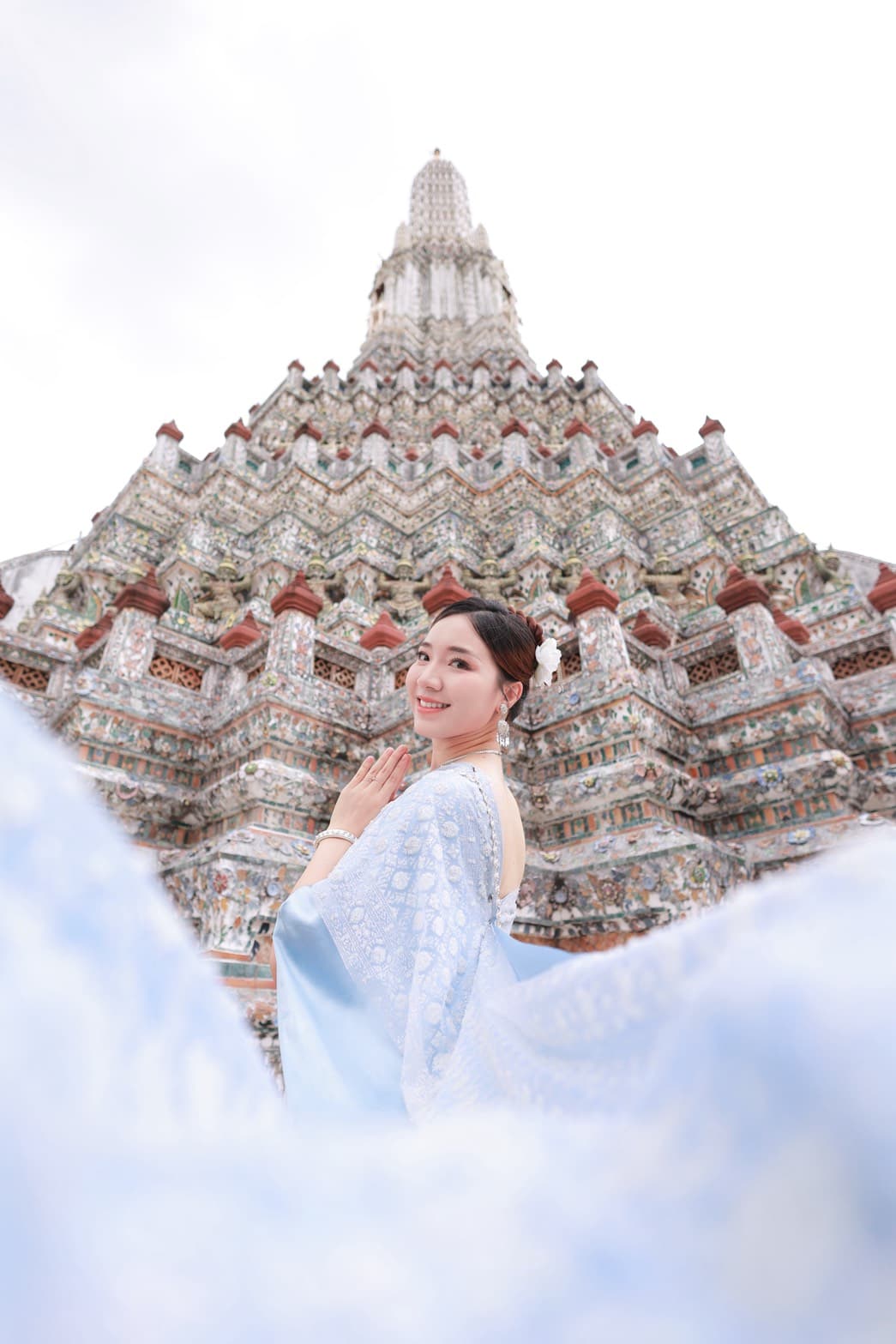
Thai Dress at Wat Arun — the Short Answer
Thai dress at Wat Arun costs ฿500 per person when you book it ahead — the ฿200 temple entrance fee plus a ฿300 traditional Thai costume for three hours, including dressing and accessories. Children under 4 pay ฿300, because they normally enter the temple free. Makeup, hairstyling and a professional photographer are optional, priced separately, and paid at the studio on the day — every rate is published further down this page.
That is the whole offer, and we have deliberately kept it that way. Book the Thai dress experience here, or message us on WhatsApp at +66 89 949 6235 if you want to talk it through first.
Most people arrive at Wat Arun for one reason, and it is not the architecture. It is the photograph — the one where you are standing in Thai silk in front of an 82-metre tower encrusted with ten million pieces of Chinese porcelain. This guide is about getting that photograph properly, at a price you agreed before you left your hotel.
Wat Arun Thai Dress Experience + Entry Ticket
From ฿500 per person — TAT Licensed Operator · Instant WhatsApp confirmation

What ฿500 Actually Includes
| Included in ฿500 | Detail |
|---|---|
| Wat Arun entrance fee | ฿200, already paid — no cash-only queue at the gate |
| Thai costume, 3 hours | ฿300 standard tier, women's, men's or children's |
| Dressing service | Staff wrap, pin and fit the garment for you |
| Accessories | Belt, necklace, earrings, hair ornament as the look requires |
| Booking confirmation | Reserved outfit and arrival slot, held for your name |
And what is not included, stated plainly so there are no surprises: makeup, hairstyling, a professional photographer, food and drink, and transport. None of these are compulsory. All of them can be added at the studio on the day at the rates below.
The Honest Bit About Walk-Up Prices
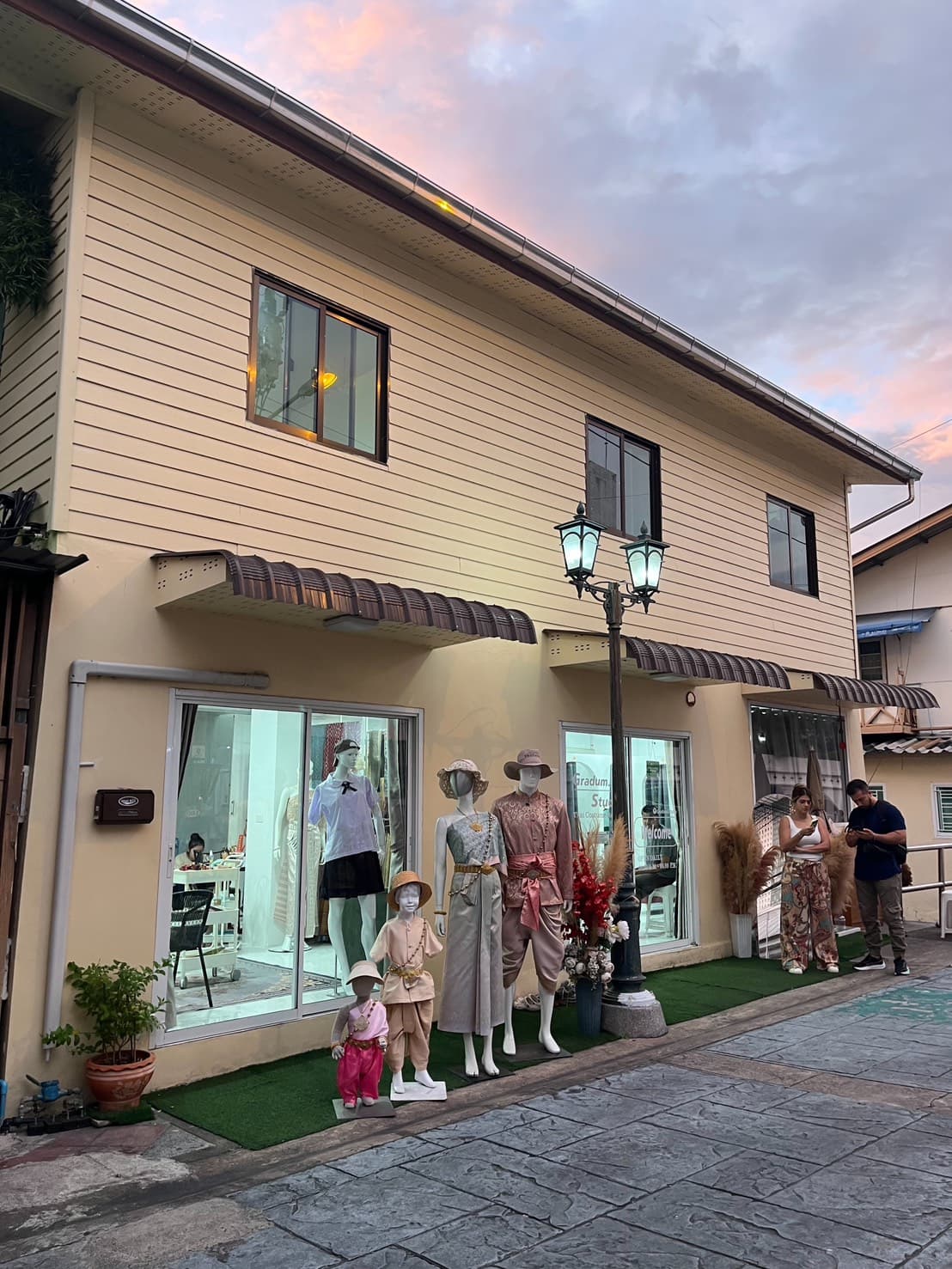
You can absolutely walk into any of the shops in the lanes around Wat Arun and rent a costume without booking. Their advertised local rates start around ฿200–300, and if that is what you are quoted, that is a fair price.
The complication is that quoted rates vary — by shop, by season, by hour of the day, and by who is asking. Visitors regularly report being quoted ฿750 to ฿1,000 for an outfit comparable to the ฿300 standard tier, particularly at busy times and particularly when they do not speak Thai. Nobody is doing anything sinister; it is simply an unregulated street trade where the price is whatever the day allows.
Booking in advance at ฿500 does three things. It fixes the price and the quality tier before you travel. It reserves a specific outfit rather than whatever is left on the rack at noon. And because your ฿200 entry is already paid, you skip the cash-only ticket queue entirely. On a 34-degree afternoon, that last one matters more than it sounds.
Every Price, Published
Here is the full published price list for the optional extras, so you can budget the whole day before you commit to anything. You pay these at the studio, on the day, only if you want them.
Costume tiers
| Costume | Price | Notes |
|---|---|---|
| Standard — women | ฿300 | Around 100 looks in the current range. This is the tier included in your ฿500. |
| Standard — men | ฿300 | Around 66 looks. Jacket, wrapped trousers, sash. |
| Standard — children | ฿300 | Full children's rack, all sizes on site. |
| Premium — women | ฿1,500 | Heavier silk and more elaborate accessories. Upgrade on the day. |
| Luxury — women | ฿3,500 | The most ornate tier, closer to ceremonial dress. |
Makeup and hairstyling
| Level | Price |
|---|---|
| Natural | ฿300 |
| Full glam | ฿900 |
| Premium | ฿1,500 |
| Bridal / editorial | ฿2,500 |
Professional photographer
| Group size | Price for the session |
|---|---|
| 1–2 people | ฿2,000 |
| 3–4 people | ฿3,000 |
| 5–6 people | ฿3,500 |
| 7–10 people | ฿4,000 |
| More than 10 | ฿500 per person |
A session is roughly an hour of shooting with unlimited frames. To put those numbers in context: a couple wanting the full treatment — two costumes, two natural makeups, and an hour with a photographer — lands at ฿500 + ฿500 + ฿300 + ฿300 + ฿2,000, so about ฿3,600 for two people, all in, with the temple entry already covered.
Prices published August 2026 and set by the studio, not by us. We will keep this table current, but always confirm at the counter.
Choosing Your Costume
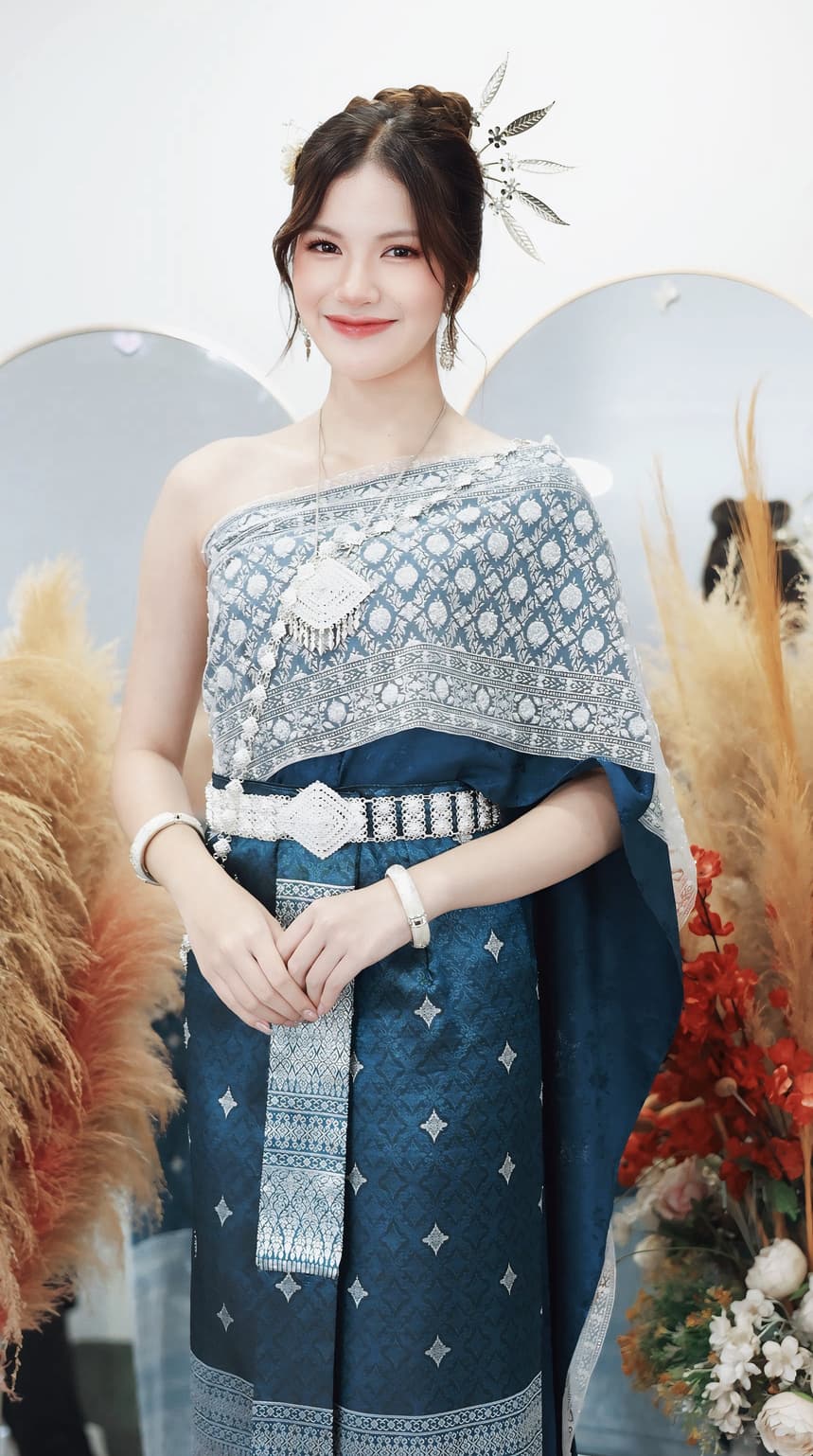
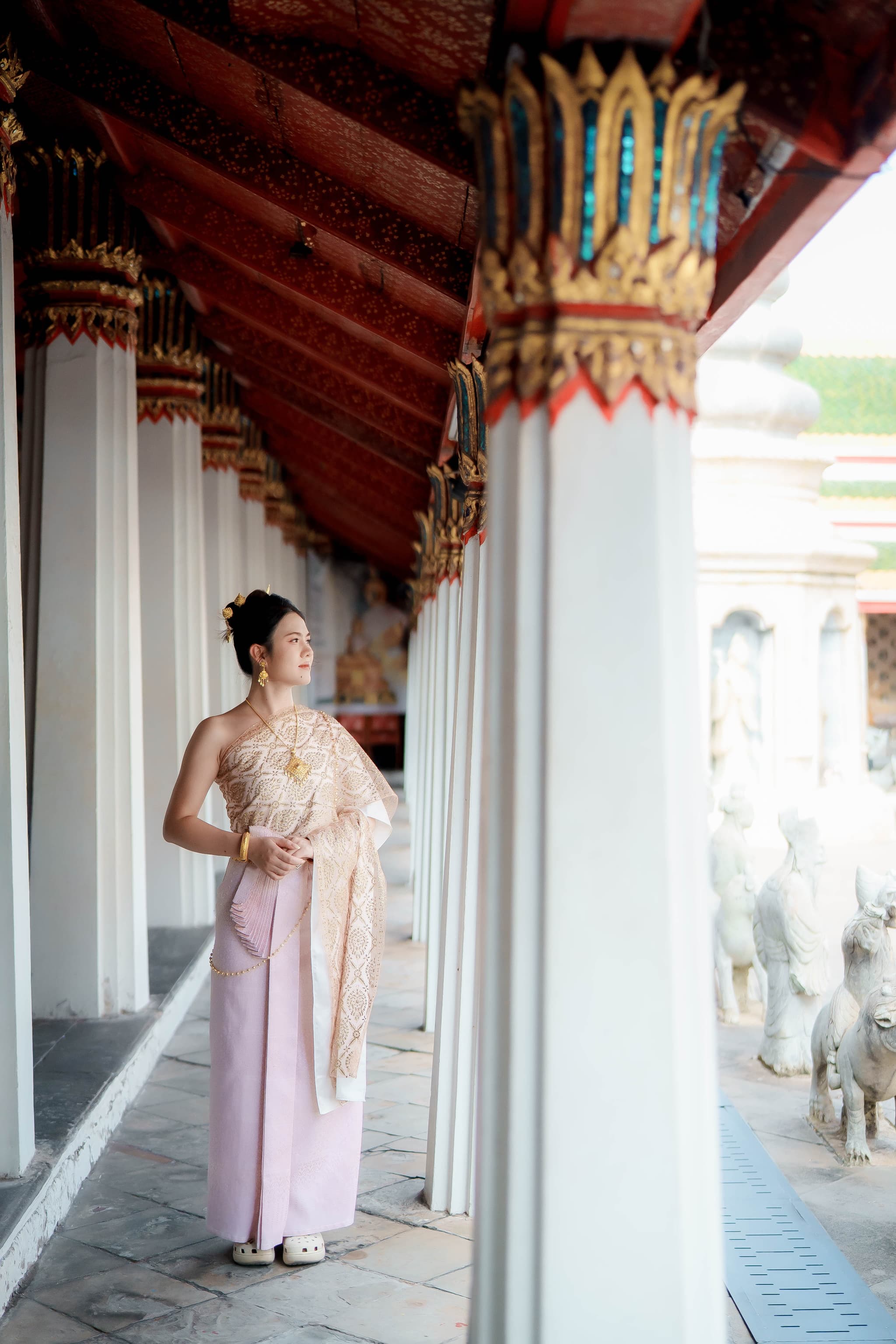
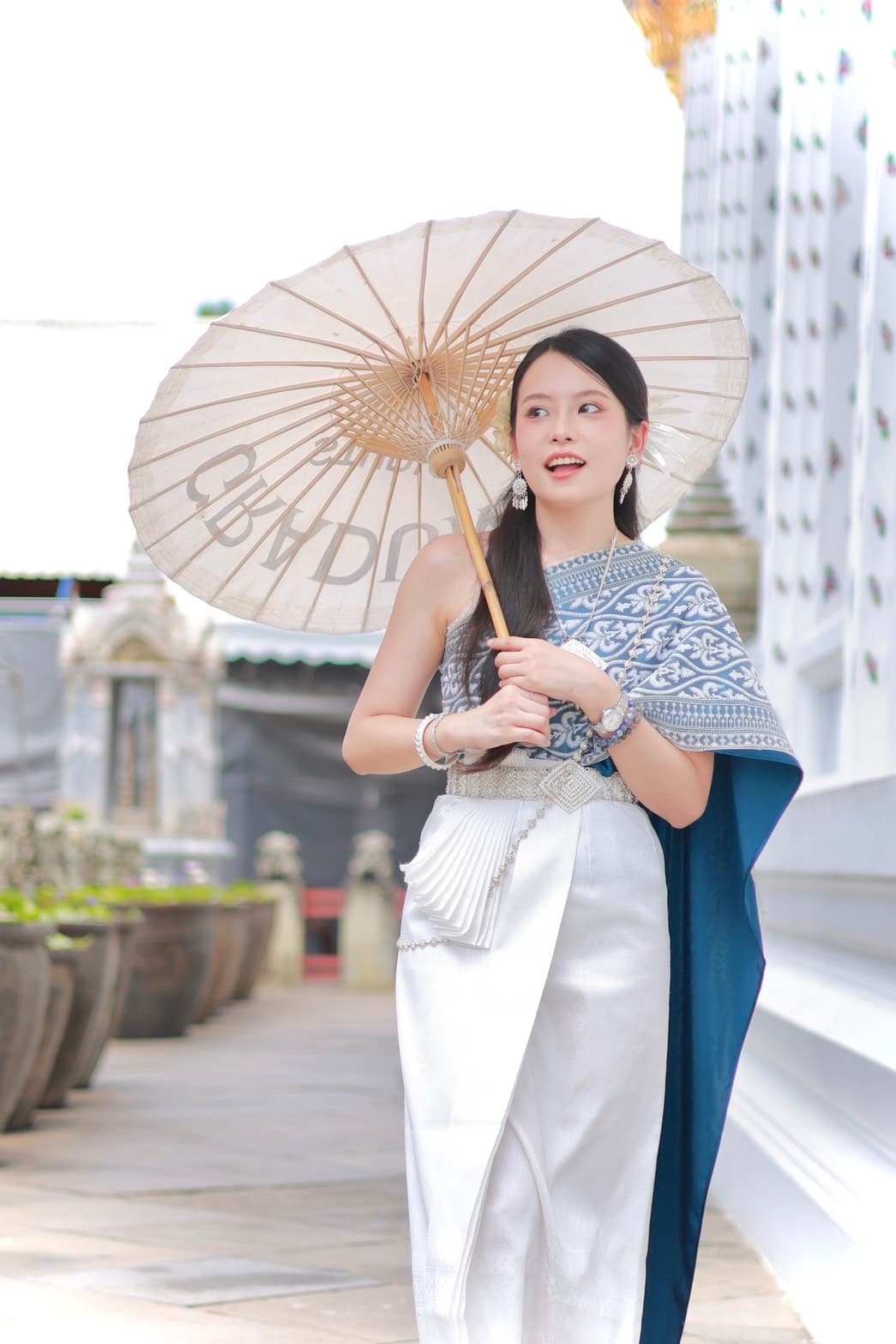
The women's range is built around the chut thai silhouette: a wrapped lower garment, a sabai shawl draped diagonally across one shoulder, a decorative belt, and a matching necklace, earrings and hair ornament. Colours run from ivory and pale blue through to deep red and emerald. Pale colours photograph best against the porcelain prang, which is itself a busy surface; deep reds and golds work better against the white arches and the colonnade.
But "Thai dress" is not one thing. It spans about four hundred years and the styles look genuinely different from each other — there is a full breakdown of the eras, the eight royal styles, and which one photographs best here, further down this page.
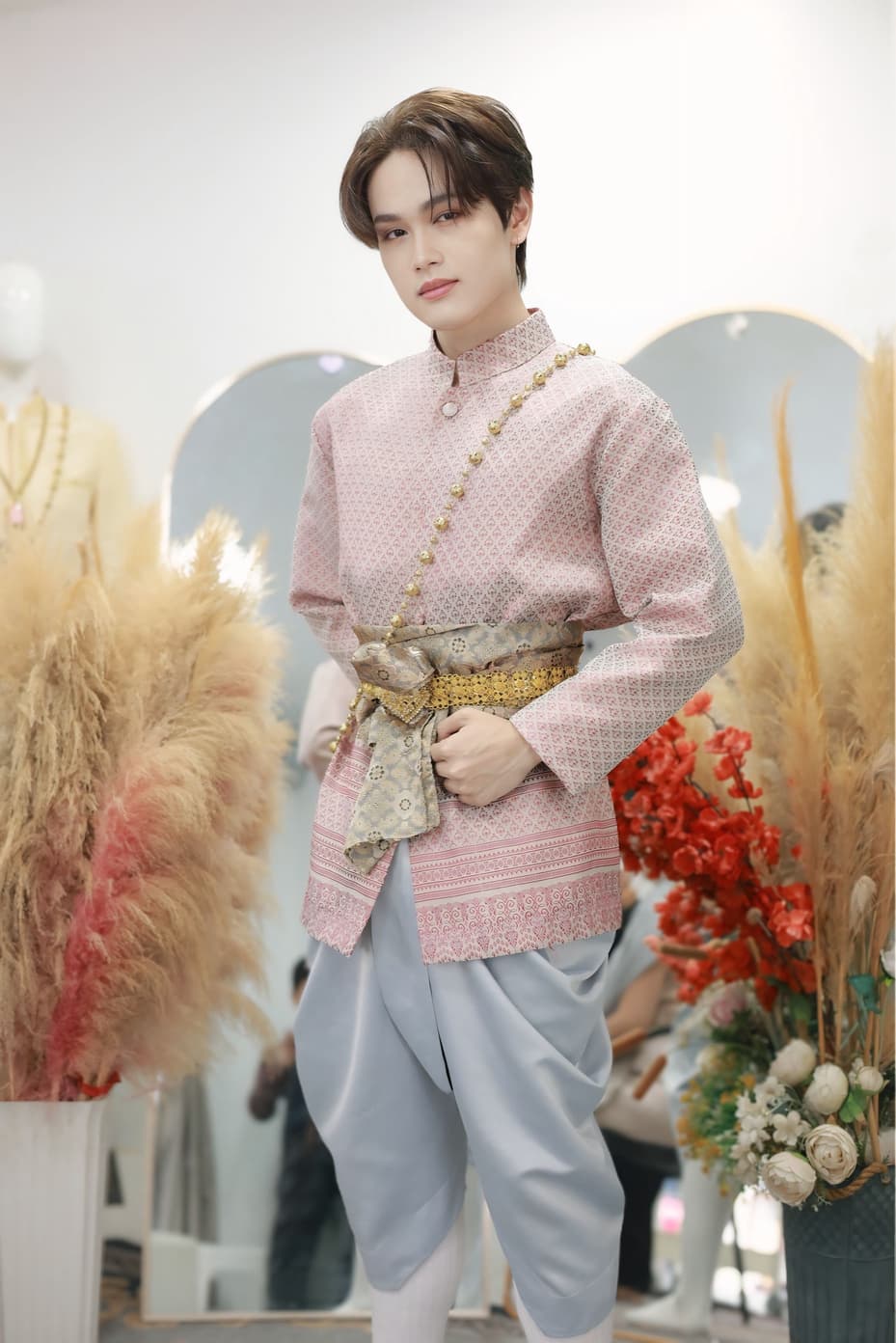
Men often skip this and then regret it in the photographs, because a group where one person is in a t-shirt reads as a group where someone forgot. At ฿300 it is the cheapest thing in the entire day.
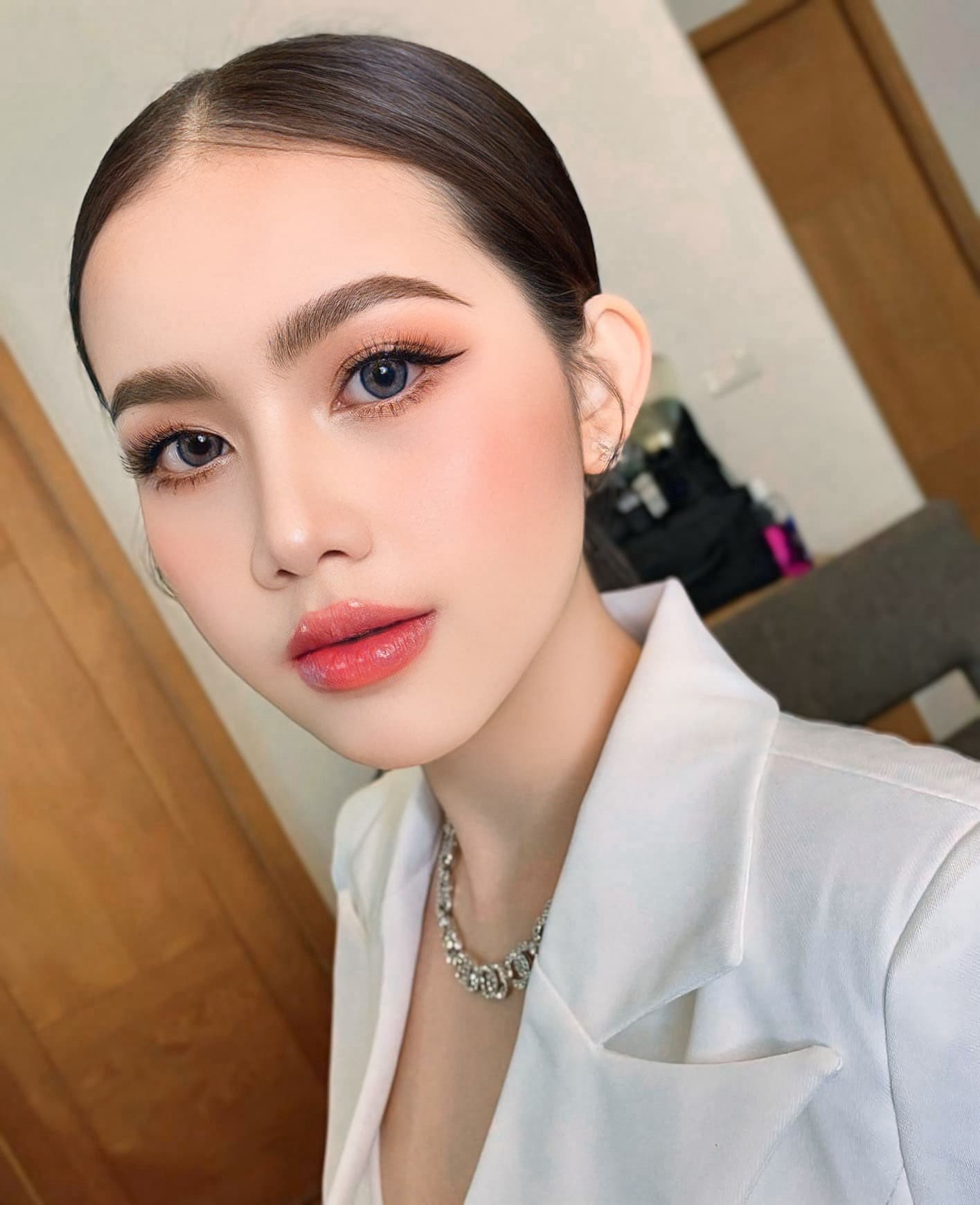
One practical note worth raising, because it comes up repeatedly in reviews of this experience elsewhere in the city: check the foundation shade against your own skin before it is applied. Studios in this area stock primarily for Thai and East Asian complexions, and visitors with deeper skin tones sometimes end up looking paler than they are in the finished photographs. Ask to see the shade first, and if the match is not right, skip the foundation and keep the eyes and lips — it photographs better than a mismatch. If you would rather do your own base and add only the eyes and hairstyling, the studio is happy to work that way.
What Happens on the Day
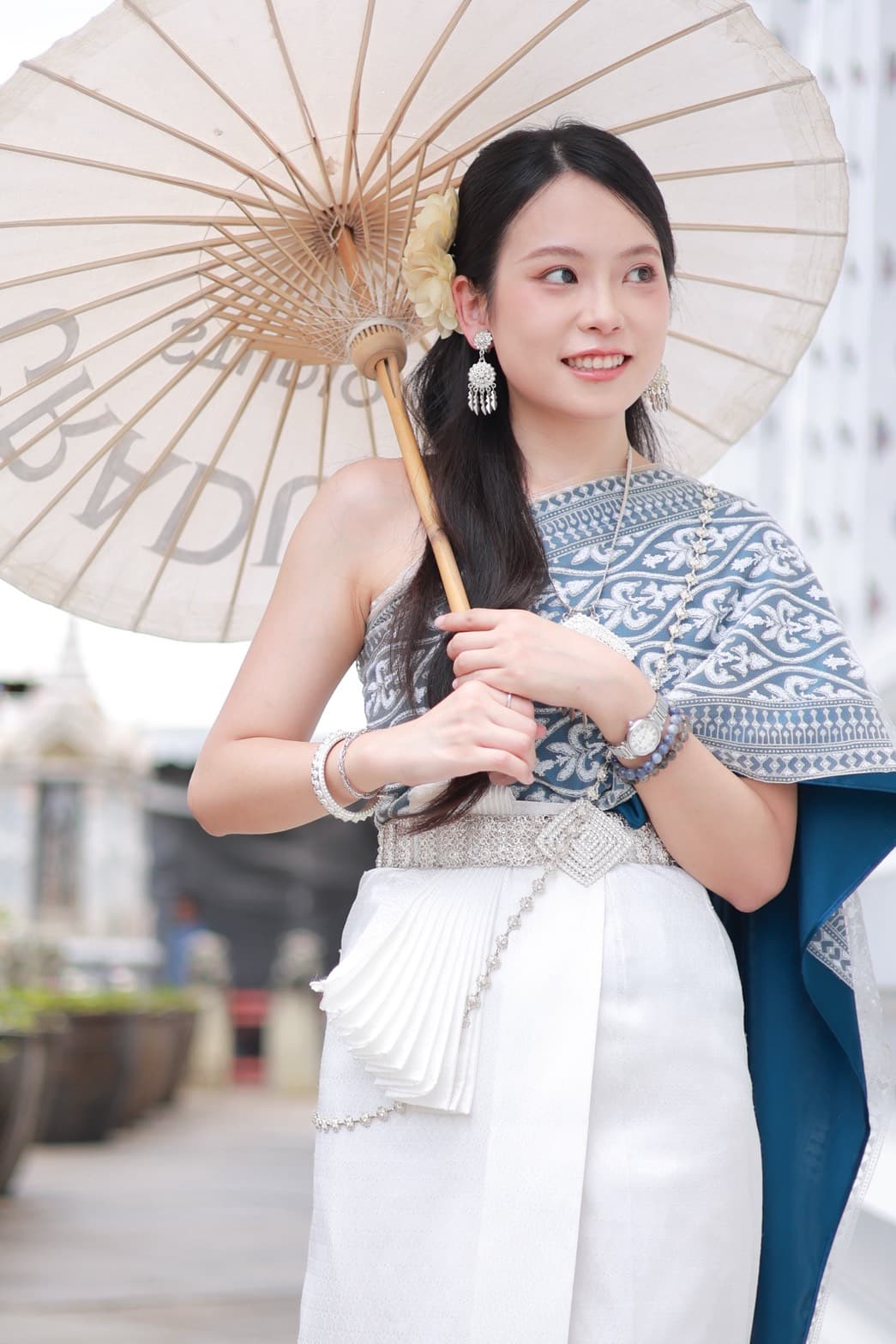
Arrive and check in. Show your booking reference at the studio, roughly two minutes' walk from the temple gate. Your outfit is already reserved against your name.
Choose and change. Browse the racks, pick your colour, and change. Staff do the wrapping and pinning — the garments are not clothes you put on unaided, and the fitting is done for you. Budget 20 to 30 minutes. You will change down to your underwear during this, so ask for the private area if that matters to you.
Add makeup and hair, if you want them. Another 20 to 30 minutes, decided and paid on the spot.
Walk to the temple. Your ฿200 entry is already covered, so you walk in rather than queue. The three strongest backdrops are the base of the central prang, the riverside terrace facing east across the Chao Phraya, and the white arches on the northern side, which give clean negative space and are usually quieter than the prang.
Change back within three hours. Return to the studio, change, collect your things. If you booked the transfer, your driver is waiting.
Why Wat Arun Became The Thai Dress Temple
This is a fair question, and the answer is more specific and more recent than most people assume. Thais have always worn their best clothes to temples. But the phenomenon you see at Wat Arun today — dozens of costume studios in a few hundred metres, foreign visitors queueing for silk at eight in the morning — is barely a few years old, and it has a precise cause.
In 2018, Channel 3 broadcast a period drama called บุพเพสันนิวาส — Buppesannivas, released internationally as Love Destiny. Fifteen episodes, aired between 21 February and 11 April. A modern archaeologist wakes up in the body of a noblewoman in 17th-century Ayutthaya, in full court dress.
It became the biggest television event in modern Thai memory, and it did something no tourism campaign has ever managed: it made Thai people want to dress like their own ancestors. Within weeks, government officials were wearing chut thai to work. People turned up at district offices in full traditional costume to have their national ID card photographs taken. Ayutthaya recorded close to a threefold increase in Thai visitors. The Thai press named the phenomenon after the show.
The costume rental trade exploded to meet it — first in Ayutthaya, then at every photogenic heritage site in the country. And Wat Arun won that competition for reasons that are purely visual: it is the most vertical, most texturally dramatic, most instantly recognisable backdrop in Bangkok, it sits on a river with open sky behind it, and it is small enough to walk in twenty minutes.
What began as a domestic craze became the thing international visitors now fly in for. The important consequence, and the reason you should not feel like a tourist doing a tourist thing: the Thai people around you in costume are not performing for anyone. They are doing what they have done since 2018 because they enjoy it. You are joining something local, not staging something for Instagram.
Which Thai Dress Style Should You Wear?
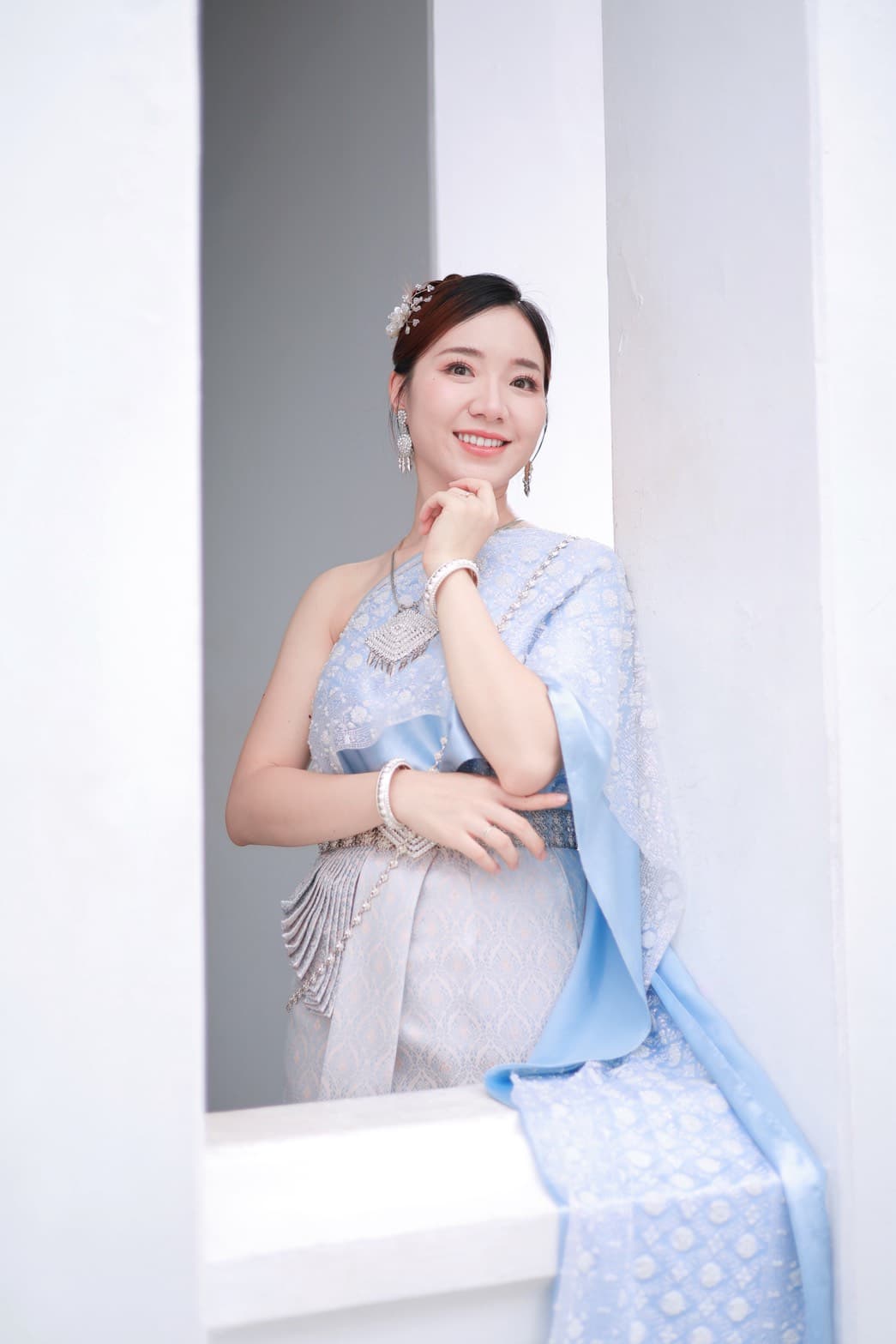
"Thai traditional dress" spans about four hundred years, and the styles look genuinely different. Here is how to tell them apart, and which to ask for.
The ancient look — Ayutthaya and early Rattanakosin
This is the Love Destiny silhouette, and the oldest: a sabai (สไบ) — a long cloth wrapped around the chest and over one shoulder — worn with chong kraben (โจงกระเบน), a length of fabric wrapped around the waist, drawn between the legs and tucked in at the back, producing something between a skirt and loose trousers.
There is almost no tailoring in it. It is cloth, wrapped, and it is the most distinctly Thai thing in the entire range — nothing in European costume looks remotely like it. The shoulders are largely bare, jewellery is heavy, and it reads unmistakably as pre-modern.
Ask for this if you want the historical, dramatic, "stepped out of the past" photograph. It is also the coolest to wear in the heat, being fewer layers than the later styles.
The Westernised era — Rama IV to Rama VII
Through the late 19th and early 20th centuries, Siamese court dress absorbed European influence: lace blouses, high collars, puffed sleeves, buttoned jackets, stockings and shoes, worn over a chong kraben or the tubular pha sinh skirt that gradually replaced it.
It is a fascinating, slightly hybrid look — recognisably Siamese, recognisably Victorian. It photographs beautifully in the shaded colonnade and reads as far more formal and restrained.
Ask for this if you prefer covered arms and shoulders, or want something less bare without losing the period feel.
The modern classics — the eight royal styles
In the early 1960s, Queen Sirikit faced a practical problem: Thailand had no agreed national dress for state occasions, and she was about to tour the United States and Europe representing the country. She commissioned a set of eight standardised styles, drawn from historical Thai dress but engineered to be wearable — hidden zips and fastenings instead of endless wrapping.
These are the ชุดไทยพระราชนิยม (chut thai phra ratchaniyom), the royally-endorsed Thai dress, each named after a royal residence or throne hall. They are what most modern "Thai dress" actually is:
| Style | What it looks like | Formality |
|---|---|---|
| Ruean Ton (เรือนต้น) | Round neck, long sleeves, no sabai, two shoulders covered. Plainest of the eight. | Casual — merit-making, daytime |
| Chitlada (จิตรลดา) | Like Ruean Ton but finer fabric. Still no sabai. | Formal daytime |
| Amarin (อมรินทร์) | Long sleeves, round neck, gold or silver thread. | Formal evening |
| Boromphiman (บรมพิมาน) | Standing collar, long sleeves, with sabai. | High formality, day or evening |
| Dusit (ดุสิต) | Short sleeves, round or V-neck, lace or silver detail. The most contemporary-feeling. | Formal evening |
| Chakri (จักรี) | One shoulder bare, sabai draped diagonally across the other. Gold-threaded silk. | Evening, weddings — and the icon |
| Siwalai (ศิวาลัย) | Standing collar, long sleeves, sabai, raised-weave silk. | Highest formality |
| Chakkraphat (จักรพรรดิ) | The most ornate — heavy gold brocade, elaborate pleating. | Grandest ceremonies, bridal |
So which one actually photographs best at Wat Arun?
Honestly: Chakri. The single bare shoulder with the sabai running diagonally across the body creates a strong clean line, the gold thread catches the light against the pale porcelain, and it is the silhouette the entire world recognises as Thai. If you have seen one photograph of someone in Thai dress at a temple, you have seen a Chakri.
But pick for your situation, not for the internet:
- Hottest day, or you want to walk a lot → Ruean Ton or Chitlada. Fewer layers, no draping to keep adjusting.
- You would rather not have a bare shoulder → Boromphiman or Siwalai. Standing collar, fully covered, and genuinely the most elegant of the eight.
- You want the historical, cinematic look → the Ayutthaya sabai and chong kraben, not one of the eight.
- Pre-wedding, engagement or anniversary shoot → Chakkraphat or Chakri, which is what the premium and luxury tiers are for.
- Men → the mandarin-collar jacket with chong kraben and sash sits naturally alongside any of the above.
A last note that matters more than style. If you intend to go inside the ordination hall and pay respects — and you should — the covered styles are the more comfortable choice for kneeling, and you will need to remove your shoes anyway. Nobody will turn you away in a Chakri. But there is something fitting about wearing the more modest cut into the room where a king's ashes rest.
Timing, Heat and Crowds — Read This Part
If you take one piece of advice from this page, take this one: go as early in the day as you can.
The costumes are multi-layered brocade with long sleeves and full-length lower garments. They are beautiful and they are hot. Across every review of this experience we have read, heat is the single most-cited complaint, and it is not a small one — by mid-morning the stone courtyards radiate heat upwards while the sun works downwards, and the enthusiasm for one more photograph drains away quickly.
The temple opens at 08:00, and the earlier you arrive the softer the light, the cooler the stone and the quieter the good backdrops. Our booking timing is flexible — tell us your preferred arrival time and we confirm it back with the studio, so you are not forced into a fixed slot. From roughly 10:00 the tour coaches arrive — Wat Arun takes steady group traffic from India, China, Indonesia, Malaysia and across Europe — and at the best-known spots you will be waiting your turn behind other photographers.
The second window is golden hour, 16:00 to 17:30, when the light turns amber on the porcelain. It is genuinely lovely and it is genuinely crowded. Last entry is around 17:30.
Whichever you choose, take the parasol, drink more water than you think you need, and do the photographs you care about most first, while the makeup is fresh.
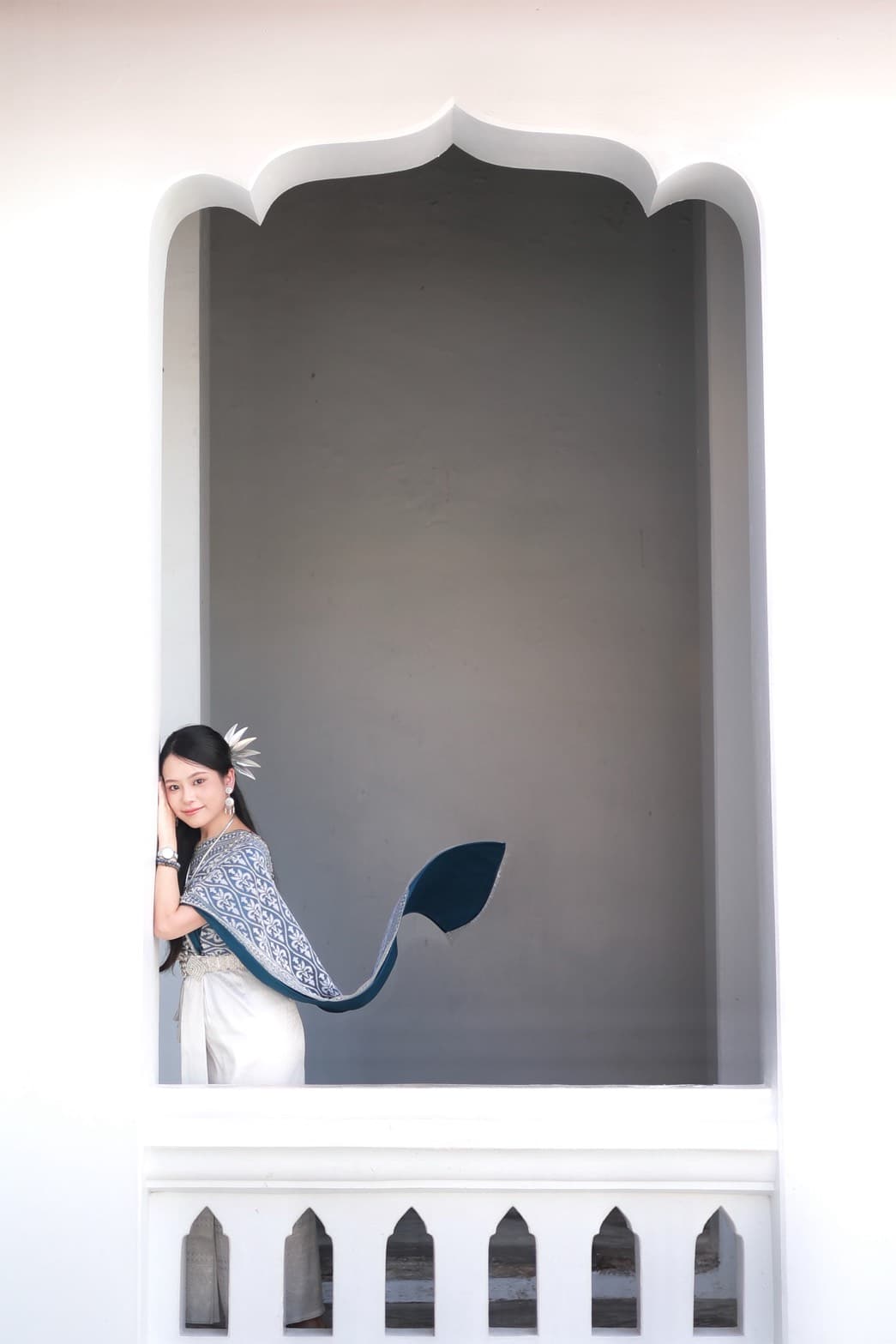
Families, Men, Couples and Everyone Else
Children. Costumes are ฿300 and the studio keeps a full children's rack. Children below roughly 120cm are generally admitted to the temple free, so for under-4s we charge ฿300 rather than ฿500. The temple does not publish a fixed height or age cut-off and the counter makes the call on the day — if your child is older than 4 but clearly small, message us and we will sort the difference out rather than have you overpay.
Couples. The 1–2 person photographer rate of ฿2,000 is the best value on the whole list, because it is the same price for one person as for two.
Larger family groups. Coordinated colours across four or five people photograph far better than everyone choosing independently — ask the studio to match a set when you arrive. The photographer rate for 3–4 people is ฿3,000 and for 5–6 it is ฿3,500, so the per-person cost falls sharply as the group grows.
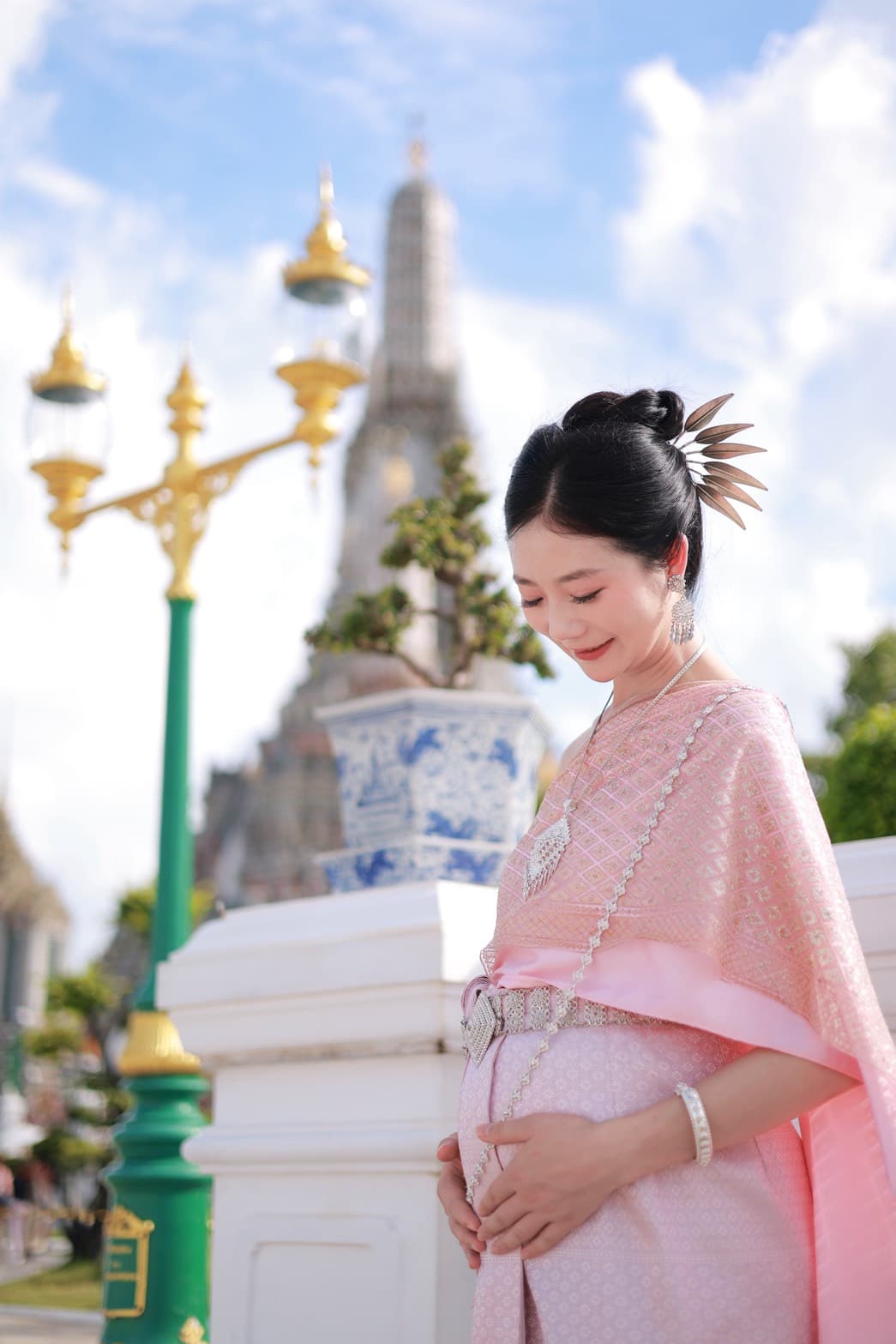
Maternity. Wat Arun is a popular and genuinely beautiful setting for a pregnancy shoot, and the costume range includes cuts that drape well. Go early — the heat consideration above applies double.
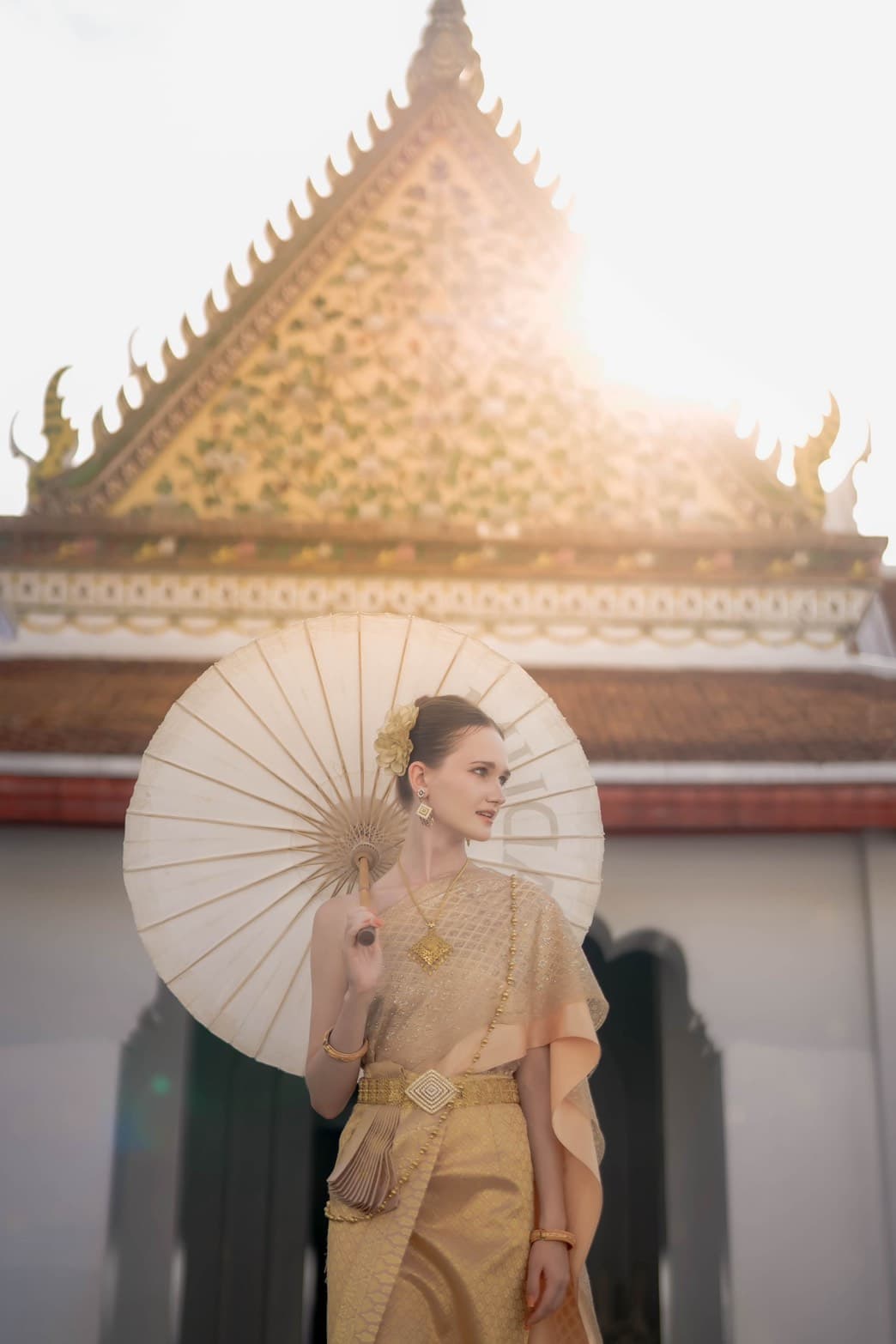
International visitors. The costume sizing is built primarily around Thai and East Asian proportions. Larger and taller frames are usually accommodated, but if you are concerned about fit, message us before booking with heights and sizes and we will check the range for you rather than let you find out on the day.
Photography Rules at Wat Arun in 2026
Personal photography is welcome. Bring your phone, bring your camera, photograph the courtyards and the riverfront as much as you like — there is no camera charge.
What has changed is the treatment of staged and commercial work. As of 2026, tripods, drones and professional lighting equipment are restricted across most of the grounds, and organised fashion or commercial shoots require advance permission and a paid permit. Photography is also actively steered away from active prayer halls and monks' living quarters, where flash and shutter noise disrupt religious practice — signs and volunteer staff mark these areas.
For an ordinary Thai dress photoshoot with a studio photographer, none of this should affect you. If you are shooting for commercial use, for a brand, or with a full lighting setup, message us before you travel and we will check the current requirements and costs for you rather than have you turned away at the gate.
And the obvious point that is easy to forget in the excitement: this is a functioning place of worship, not a film set. Keep out of the way of people who came to pray, remove your shoes before entering ordination halls, and do not climb on the structure for a photograph.
Wat Arun Essentials 2026
| Entrance fee | ฿200 for foreign visitors, cash only at the gate. Thai nationals free. Included in our ฿500. |
| Opening hours | 08:00–18:00 daily, last entry around 17:30. Open every day of the year. |
| Children | Generally free below roughly 120cm; no published official cut-off. |
| Dress code | Shoulders and knees covered. A rented Thai costume complies. Sarongs near the gate around ฿200. |
| Climbing | First terrace only. Upper levels have remained restricted since the 2013–2017 restoration. |
| Ferry | Cross-river from Tha Tien Pier (N8), under 3 minutes, every 5–10 minutes, cash only. Fares were revised upward in April 2026 — carry small coins. |
| Address | 158 Thanon Wang Doem, Wat Arun, Bangkok Yai, Bangkok 10600 |
The Temple That Was Here Before Bangkok
Most visitors photograph Wat Arun without ever learning why Thai people lower their voices when they walk into the ordination hall. It is worth ten minutes of your time, because it changes what you are standing in.
The temple is older than the city. Long before Bangkok existed it was a modest neighbourhood temple on the Thonburi bank called Wat Bang Makok (วัดบางมะกอก) — "the temple at the olive-plum village." French cartographers working for the court of King Narai recorded it on maps as early as 1688, which means it had already been there for generations when the events that made it famous took place.
The dawn that gave it its name
In 1767 the Burmese army destroyed Ayutthaya, the capital that had stood for four centuries. It is difficult to overstate what this meant: the kingdom's records, its art, its royal line and its sense of itself were burned in a matter of weeks. Thai history divides cleanly around that year.
A general named Taksin gathered what forces remained, fought his way out, and sailed down the Chao Phraya looking for somewhere to begin again. The account every Thai schoolchild learns is that his boat reached this stretch of river just as the light broke — and he took it as an omen. He came ashore here, made Thonburi his capital, and renamed the temple Wat Chaeng (วัดแจ้ง). Chaeng means daybreak, the moment darkness becomes light.
That is the actual origin of the name. Not the architecture, not the sunrise photographs — a king with nothing left choosing a word that means the dark is over. Everything Thai people believe about this temple grows out of that moment.
The Emerald Buddha slept here
From roughly 1779 to 1784, Wat Chaeng housed the Emerald Buddha — the single most sacred object in Thailand, the palladium of the kingdom, the image whose robes the King still changes with his own hands three times a year. Taksin had brought it from Vientiane, and for five years it sat on this side of the river.
When Rama I founded the Chakri dynasty in 1782 and moved the capital across to the east bank — better defended, better drained, more room to build — the Emerald Buddha went with him to the temple built for it inside the new Grand Palace. Wat Chaeng was left outside the walls of the new city.
It was not abandoned, though. Rama I appointed Phra Phutthakhosachan (พระพุทธโฆษาจารย์) as its first abbot in 1783, keeping the temple under royal patronage even after the court had moved on. And the connection to that lost Emerald Buddha was never really broken — a reliquary linked to it was later placed within the base of the temple's own principal image.
Rama II gave it his name, and then his ashes
Rama II finished what Rama I had begun, completing the ordination hall and the viharn, and gave the temple the name it carries today: Wat Arun Ratchawararam (วัดอรุณราชวราราม). Arun is the Sanskrit for dawn, and the name of Aruna, the charioteer of the sun in Hindu cosmology — the god who brings the light but is not the light himself.
Rama II also commissioned the principal Buddha image in the ordination hall, and Thai tradition holds that he shaped the face of it himself. Whether or not that is literally true, it is what people believe, and belief is the point.
Then comes the fact that makes this temple different from every other temple you will photograph in Bangkok. Rama IV had Rama II's royal ashes enshrined in the base of that Buddha image, beneath a Garuda emblem. They are still there.
This makes Wat Arun the temple of Rama II's reign — in Thai, wat pracham ratchakan thi song. Each Chakri king is associated with one temple, and this is his. When a Thai visitor kneels in front of that image, they are not only paying respect to the Buddha. They are paying respect to a king, whose remains are in the pedestal in front of them. That is why the room is quiet.
The porcelain mountain
The prang you photograph came last. Rama III raised it from a modest structure of around 16 metres to the tower that now dominates the river — commonly cited at about 82 metres, although published figures range from roughly 67 to 86 metres depending on the survey and whether the trident finial at the summit is counted. Take any single number you read online, including ours, with a little caution.
Up close, the surface is the thing that stops people. What reads as carving from the river is in fact millions of pieces of Chinese porcelain, broken and set by hand into mortar. The porcelain came to Siam as ballast in the holds of trading junks — worthless weight, discarded on arrival. Rather than throw it away, the builders made a mountain from it. Some of the flower forms studding the terraces were assembled by anonymous craftsmen from smashed plates and teacups.
The shape is not decorative either. The central prang is Mount Meru, the axis of the universe in Hindu-Buddhist cosmology, and the four smaller prangs around it are the continents of the Traiphum — the three worlds. You are not looking at a tower. You are looking at a diagram of the universe, built out of other people's rubbish, by people who thought that was a perfectly reasonable thing to do.
You can verify the conservation history through the Fine Arts Department of Thailand, and Trip Thai Tour's operating licence through the Tourism Authority of Thailand registry.
Why Wat Arun Is Sacred — What Thai People Come Here to Ask For
In Thai, a place like this is ศักดิ์สิทธิ์ — saksit. There is no clean English equivalent. "Sacred" is close but too passive; saksit carries the sense of a place with power that acts, that answers, that can change the direction of your life if you approach it properly.
Wat Arun's particular power is bound up in its name, and Thai people are very literal about this. Arun and chaeng both mean daybreak. So the belief attached to this temple is about beginnings — that making merit here causes your life to become รุ่งเรือง (rung-rueang): rising, bright, flourishing, like light coming up over the river.
That is not a general-purpose blessing. It is specific, and it shapes exactly who you will see praying here:
- People starting something. A new job, a new business, a new degree, a marriage. Thais deliberately choose this temple for a beginning.
- People at New Year. Both at Western New Year and at Songkran, Wat Arun fills with Thais making merit to set the tone of the year ahead. The belief is explicit: begin the year here and the year rises with you.
- People coming out of a bad period. This is the one that surprises foreign visitors. If someone's luck has been poor — illness, debt, a run of misfortune, what Thais call being duang tok, your fortune fallen — Wat Arun is where you come to turn it around. The dawn temple is where the dark ends.
- Students before examinations, and people facing a decision they cannot see their way through.
- People paying respect to Rama II, whose ashes are in the pedestal.
You will also see visitors at the two enormous guardian giants (yak) flanking the ordination hall gate — figures from the Ramakien, the Thai telling of the Ramayana. The green one is Thotsakan and the white one Sahatsadecha. They are guardians of something valuable, and there is a long-running Thonburi legend about the giants of Wat Chaeng. People stop, wai, and ask them to guard what matters to them too.
The ritual under the Buddha's pedestal
There is one practice here that visitors almost never hear about, and it is the most revealing thing at the whole temple.
Beneath the principal Buddha image, worshippers pass underneath the pedestal — the phra thaen. The belief is that doing so washes off misfortune: lang khro, lang suay — rinsing away bad luck, breaking a run of bad fortune, lifting your duang (your fortune, your astrological standing) back up.
Think about what that means in the context of everything above. This is the temple named for the end of darkness, holding the ashes of a king, founded by a man who arrived at dawn with a burned country behind him. And the ritual is to physically pass underneath and come out the other side. The whole place is one continuous metaphor about beginning again, and it has been for two hundred and fifty years.
If you take part, do it quietly and follow the person in front of you. Nobody will mind you joining; people will mind you photographing them while they do it.
What Thai People Actually Do Here — Merit-Making, Step by Step
If you have only ever watched this from a distance, here is what is actually happening. Thai Buddhists call it ทำบุญ (tham bun) — making merit. The underlying idea is that good actions accumulate, in this life and beyond it, and that merit can be shared with people who can no longer make it themselves.
Nobody will stop you taking part, and doing so respectfully is welcomed. Here is the sequence:
1. Buy the offering set. Small stalls near the entrance sell a chut for a modest sum: typically a lotus bud, three sticks of incense, one candle, and a small square of gold leaf. The three incense sticks represent the Triple Gem — the Buddha, his teaching, and the monastic community. The lotus is the standard image of the mind rising out of muddy water and opening clean.
2. Light the candle first, then the incense from it. Hold them together with the lotus between your palms, raised to your forehead, and wai.
3. Kneel before the principal Buddha and bow three times. The full form is the benchangkhapradit — five-point prostration, with forehead, forearms and knees touching the floor. Once for the Buddha, once for the teaching, once for the monks. Sit with your feet tucked behind you and never point your feet at a Buddha image; this is the single most common mistake foreign visitors make.
4. Place the lotus, and put the incense in the sand pot outside. Incense goes in the sand, outdoors — never inside the hall.
5. Apply the gold leaf — pit thong. You press the tiny square onto the image or onto a designated surface. There is a lovely practice called pit thong lang phra, "applying gold leaf to the back of the Buddha": doing good where nobody sees it, which Thais consider the purest form of merit and also use as an everyday idiom for thankless work.
6. Donate, then pour the water. The kruat nam is the closing act — water poured slowly from a small vessel while the merit you have just made is dedicated to your parents, your ancestors, the dead. This is the part that quietly moves people. You are not asking for anything. You are giving away what you just earned.
Around this you will see people offering alms to monks in the early morning, releasing fish into the river, tying sai sin blessing thread around their wrists, and receiving holy water. And you will see plenty of Thai visitors doing exactly what you are doing — photographs in full costume, laughing, and then going inside to kneel. The two are not in conflict here. Wearing your best clothes to the temple is the respect. That is worth knowing before you feel self-conscious in silk.
The Thai School Uniform Photoshoot
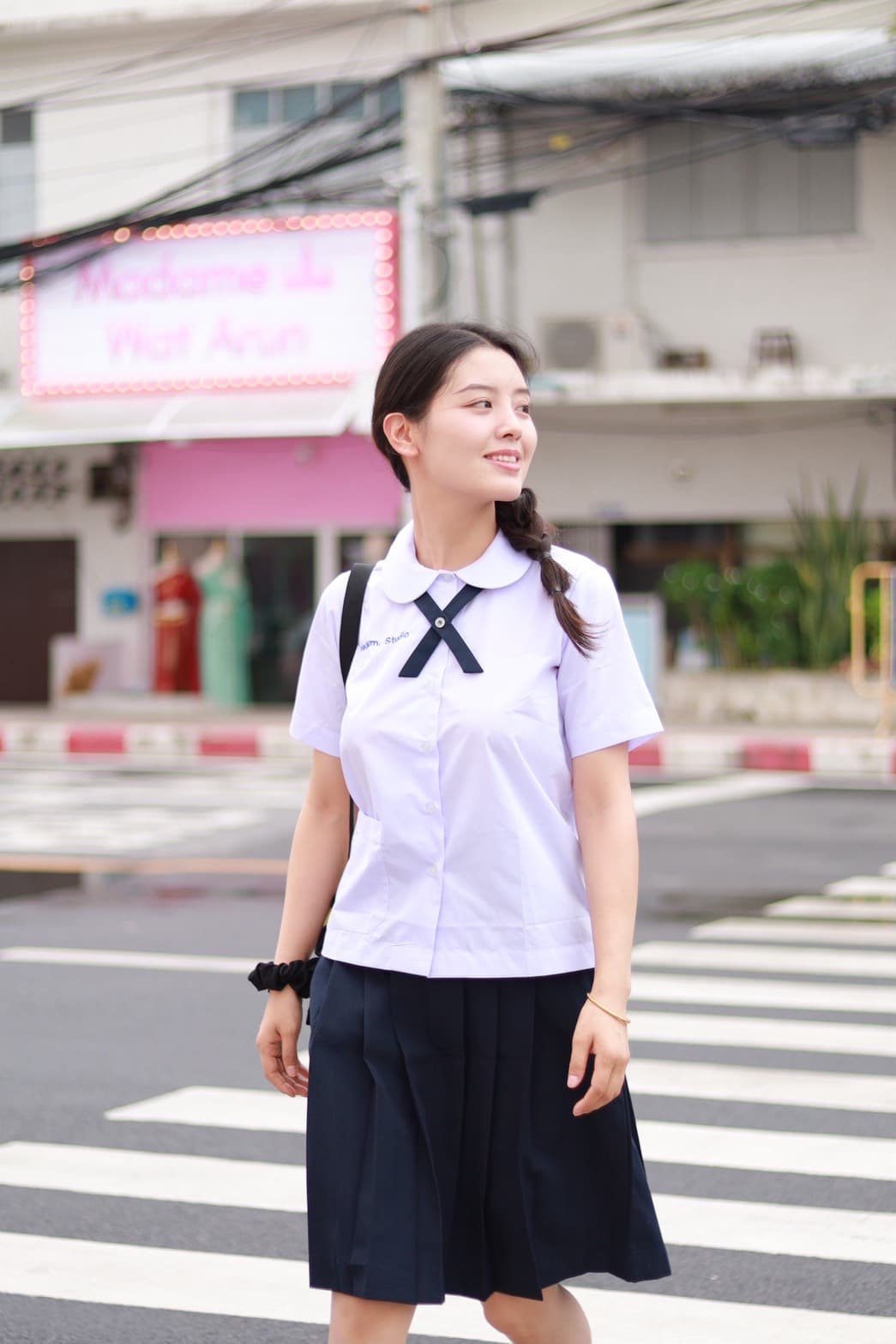
The same studio also rents Thai school uniforms — the white blouse, navy pleated skirt and ribbon that anyone who has watched a Thai drama will recognise instantly. It is enormously popular domestically and almost invisible in English-language travel writing.
It is a different look and a different setting: shot in the streets, shophouse doorways and crossings around the temple rather than in the temple grounds, with a lighter, more playful feel than the formal chut thai. Rates are not on our standard list yet — message us on WhatsApp if you want it and we will quote it.
Getting There
By ferry. The classic approach. Walk to Tha Tien Pier (N8) on the east bank and take the cross-river ferry — under three minutes, boats every 5 to 10 minutes, cash only. Fares are a few baht and were revised upward in April 2026, so carry coins.
By Chao Phraya Express Boat. The orange-flag line stops at Tha Tien, connecting to Sathorn Pier and the BTS at Saphan Taksin.
By road. Wat Arun is on the Thonburi side, and traffic through the old town is unpredictable. If you would rather not think about any of it, add our private round-trip transfer at ฿1,500 per vehicle for up to 10 passengers — collection from your Bangkok hotel at a time you choose, all waiting time included with no hourly charge, and return to the same hotel. It is a driver and vehicle, not a guided tour.
The Scam You Should Know About
Somewhere near the Grand Palace or the Wat Arun approach, a friendly, well-dressed stranger may tell you the temple is closed today — a Buddhist holiday, a royal ceremony, cleaning — and offer to take you somewhere else instead. That somewhere else is a gem shop or a tailor, and there is a commission attached.
Wat Arun is open every single day of the year, 08:00 to 18:00. There are no surprise closures. Walk past and keep going. The same script is used at the Grand Palace, where it is even more common.
Adding Other Temples or a Canal Tour
The Grand Palace, Wat Pho and Wat Arun sit within about 1.5km of one another, and the Thonburi canals — the khlongs that gave Bangkok its "Venice of the East" name — start directly behind Wat Arun. Combining any of these makes a genuinely good day out.
It is also a genuinely different booking. A multi-temple day needs a licensed guide, a vehicle, timed entries and separate entrance fees at each site; a canal tour needs a boat booked for the right stretch at the right hour. The correct sequence depends on your dates, your group size, how early you are willing to start, and what you actually want out of the day — and getting that order wrong is the difference between a relaxed morning and three hours in traffic.
So rather than bury a confusing menu of combinations at the bottom of this page, we would rather design the plan with you. Tell us who is travelling, which dates, and what you would like to see, and we will build the right itinerary around it — temples, canals, the river, or all three.
Message us on WhatsApp and we will put a proper plan together. The Thai dress experience on this page stays deliberately simple and standalone; everything else, we plan properly.
How to Book
Book the Wat Arun Thai Dress Experience — ฿500 per person, at least 24 hours ahead so the studio can reserve your costume and staff for your arrival time. Choose your date and the time you would like to arrive; we confirm by email with a reference to show at the studio.
Add the ฿1,500 private round-trip transfer during booking if you want hotel collection — tell us your hotel and preferred pickup time and it is arranged.
Everything else — makeup, hairstyling, a photographer, an upgraded costume tier — you decide at the studio, on the day, at the published rates above. No pressure and no obligation.
Trip Thai Tour is a TAT Licensed Tour Operator, Licence No. 14/04232, verifiable on the Tourism Authority of Thailand registry. You can read more about who we are on our About page. Questions? WhatsApp +66 89 949 6235 — we answer in English, every day.
"We booked the dress and tickets before we flew and I am so glad we did. My sister and I got there just after eight, had the whole terrace almost to ourselves for twenty minutes, and the lady at the shop pinned my sabai three times until it sat right. We added the photographer once we saw how good the light was. My only regret is that we did not book my husband a costume too — he is the only one in a polo shirt in every single photo." — Meera R., Pune, India
Wat Arun Thai Dress Experience + Entry Ticket
From ฿500 per person · TAT Licensed No. 14/04232 · ⭐ 4.0 (186 reviews)
Frequently Asked Questions
Frequently Asked Questions
Booked in advance with Trip Thai Tour, ฿500 per person covers everything you need to get through the gate in costume: the ฿200 Wat Arun entrance fee plus a ฿300 traditional Thai outfit for three hours, including dressing help and accessories. Children under 4 pay ฿300 because they normally enter the temple free. Makeup, hairstyling and a professional photographer are optional extras paid at the studio on the day, starting at ฿300 for makeup and ฿2,000 for an hour with a photographer. There are no other compulsory charges.
Not usually. There are several costume shops in the lanes around the temple and their advertised local rates start near ฿200–300, but visitors frequently report being quoted ฿750–1,000 for a comparable outfit once they arrive, and prices vary from shop to shop and hour to hour. Booking ahead at ฿500 fixes the outfit, the quality tier and the temple entry before you travel, and you are not negotiating in 34-degree heat. You also skip the cash-only ticket queue, because your entrance fee is already paid.
฿200 per person for foreign visitors. Thai nationals enter free. The ticket usually comes with a small bottle of water. Payment at the gate is cash only — there is no online ticketing system run by the temple itself, which is why the counter queue moves slowly at peak times. If you book the Thai dress experience with us, the ฿200 is already included in your ฿500 and you walk straight in. Children below roughly 120cm are generally admitted free, though the temple does not publish a fixed cut-off.
Wat Arun is open every day from 08:00 to 18:00, with last entry around 17:30. It does not close for Buddhist holidays, despite what strangers near the gate may tell you. The outer grounds and the river pier are accessible earlier, so sunrise photography of the exterior is possible before the ticket gate opens. The temple is floodlit after dark and photographs beautifully from the east bank, but you cannot go inside the grounds in the evening.
Yes. Wat Arun requires shoulders and knees covered, and the costume shops supply outfits cut to comply, which is precisely why the rental trade grew up around the temple. You will not be asked to add a sarong over the top. If you visit in ordinary clothes instead, sarongs are available near the entrance for roughly ฿200, and vest tops, shorts above the knee and sheer fabrics will be refused. Shoes are removed before entering ordination halls, so wear something you can slip off easily.
Three hours, which is the standard rental window at the shops around Wat Arun and comfortably more than most people need. A typical visit runs 20–30 minutes for choosing and dressing, another 20–30 if you add makeup and hair, roughly an hour inside the temple, and 15 minutes to change back. The clock generally starts when you are dressed rather than when you walk in the door, but confirm this at the counter so there is no confusion at the end.
Yes to both. Men's outfits — a mandarin-collar jacket over wrapped chong kraben trousers with a sash — rent at the same ฿300 standard rate as the women's, and there are around 66 men's looks in the current range. Children's costumes are also ฿300 and the studio keeps a full children's rack. Family groups photograph particularly well in coordinated colours, and the studio will help match a set across four or five people if you ask when you arrive.
Wear or bring close-fitting underwear, and for women a strapless or halter bra, since many women's styles leave one shoulder bare. You will change down to your underwear while staff wrap and pin the garment, so bring whatever makes you comfortable with that. Ask for the private changing area if you would prefer one. Skip anything bulky underneath — the outer layers are thick brocade and adding more fabric makes the heat considerably worse.
As early in the day as you can manage. Timing on our booking is flexible — you tell us your preferred arrival time and we confirm it back — and the earlier you go, the better it gets. Wat Arun opens at 08:00, when the light is soft, the stone is not yet radiating heat and the popular backdrops are not yet queued. The single most common complaint about this experience is the heat — the costumes are heavy multi-layered brocade with long sleeves, and by 10:00 it becomes genuinely uncomfortable. Golden hour, roughly 16:00 to 17:30, gives warmer light on the porcelain but you will share every good angle with other groups.
The studio's published rates run by group size: ฿2,000 for one or two people, ฿3,000 for three or four, ฿3,500 for five or six, ฿4,000 for seven to ten, and ฿500 per person above ten. That covers roughly an hour of shooting with unlimited frames. You book and pay for this at the studio on the day, not through us, so you can decide once you have seen the light and the crowds. Makeup runs separately at ฿300, ฿900, ฿1,500 or ฿2,500 depending on the level.
Ordinary personal photography with a phone or camera is welcome throughout the public courtyards and along the riverfront, at no extra charge. What has tightened is staged commercial work: tripods, drones and professional lighting rigs are restricted across most of the grounds, and organised fashion or commercial shoots require advance permission and a paid permit. Photography is also steered away from active prayer halls and monks' residences. If you are shooting for anything beyond personal use, message us first and we will check the current position for you.
You do not have to, but it is worth it. We ask for 24 hours' notice so the studio can reserve your costume and staff for your arrival window. Booking ahead locks your price at ฿500 including entry, guarantees the outfit rather than whatever is left on the rack at midday, and means no cash-only queueing at the ticket counter. Weekends, Thai public holidays and the December-to-February high season are the periods when walk-ins most often find the good outfits already gone.
Yes, but it is a different kind of booking. The Grand Palace, Wat Pho and Wat Arun sit within about 1.5km of each other and are often combined, though doing it properly needs a licensed guide, a vehicle, timed entries and three separate entrance fees. Rather than list a confusing menu of combinations here, message us on WhatsApp at +66 89 949 6235 with your dates and group size and we will plan it around you. The Thai dress experience on this page is deliberately kept simple and standalone.
Wat Arun is the temple of King Rama II's reign — his royal ashes are enshrined in the base of the principal Buddha image in the ordination hall, placed there by Rama IV. It predates Bangkok, appearing on French maps by 1688, and it housed the Emerald Buddha from roughly 1779 to 1784 before the capital moved across the river. King Taksin renamed it Wat Chaeng, meaning daybreak, after reaching this stretch of river at dawn in 1767 following the destruction of Ayutthaya. For Thais it is a place about beginnings, not just a landmark.
Beginnings and reversals of fortune. Because arun and chaeng both mean daybreak, the belief attached to this temple is that merit made here causes life to become rung-rueang — rising and bright, like dawn. Thais come when starting a new job, business, degree or marriage, at New Year and Songkran to set the tone of the year, before examinations, and particularly when coming out of a bad run of luck. There is also a practice of passing beneath the Buddha's pedestal to wash away misfortune and lift your fortune back up.
Yes, and you are welcome to. Thai visitors do exactly this — photographs outside in full costume, then inside to kneel and pay respects. Wearing your best clothes to a temple is itself a form of respect in Thai culture, so there is no conflict. Offering sets with a lotus, three incense sticks, a candle and gold leaf are sold near the entrance. Remove your shoes before entering the ordination hall, sit with your feet tucked behind you, and never point your feet toward a Buddha image.
A 2018 Thai television drama called Buppesannivas, or Love Destiny, in which a modern woman wakes up in 17th-century Ayutthaya. It became a national phenomenon — Thais wore traditional dress to work and even to have their ID card photographs taken, and Ayutthaya saw close to a threefold rise in Thai visitors. Costume rental studios spread from there to every photogenic heritage site. Wat Arun won because it is the most vertical and instantly recognisable backdrop in Bangkok, on open river, walkable in twenty minutes.
Three broad groups. The oldest is the Ayutthaya look — a sabai cloth wrapped over one shoulder with chong kraben trousers, almost untailored, and the Love Destiny silhouette. Then the Rama IV to VII period, which absorbed Victorian influence: lace blouses, high collars, puffed sleeves. Finally the eight royal styles created by Queen Sirikit in the early 1960s — Ruean Ton, Chitlada, Amarin, Boromphiman, Dusit, Chakri, Siwalai and Chakkraphat — each named after a royal residence and ranging from plain daytime wear to heavy gold bridal brocade.
The Chakri style, for most people. One shoulder is left bare with the sabai draped diagonally across the body, which creates a strong clean line, and the gold thread catches light beautifully against the pale porcelain of the prang. It is also the silhouette the world recognises as Thai. If you would rather be fully covered, ask for Boromphiman or Siwalai, which have standing collars and are arguably more elegant. On a very hot day, Ruean Ton or Chitlada have fewer layers and no draping to keep readjusting.
Yes — an optional private round-trip transfer costs ฿1,500 for the vehicle, not per person, and seats up to 10 passengers. Your driver collects you from your Bangkok hotel at the time you choose, waits while you change and visit the temple, and returns you to the same hotel. All waiting time is included — there is no hourly charge and no limit on how long your driver stays. There is no guide included with the transfer; it is a driver and vehicle only. If you would rather travel independently, the cross-river ferry from Tha Tien Pier takes under three minutes and costs a few baht.
Check Availability & Book
Send us your details to get an instant quote and secure your date.
Related Guides
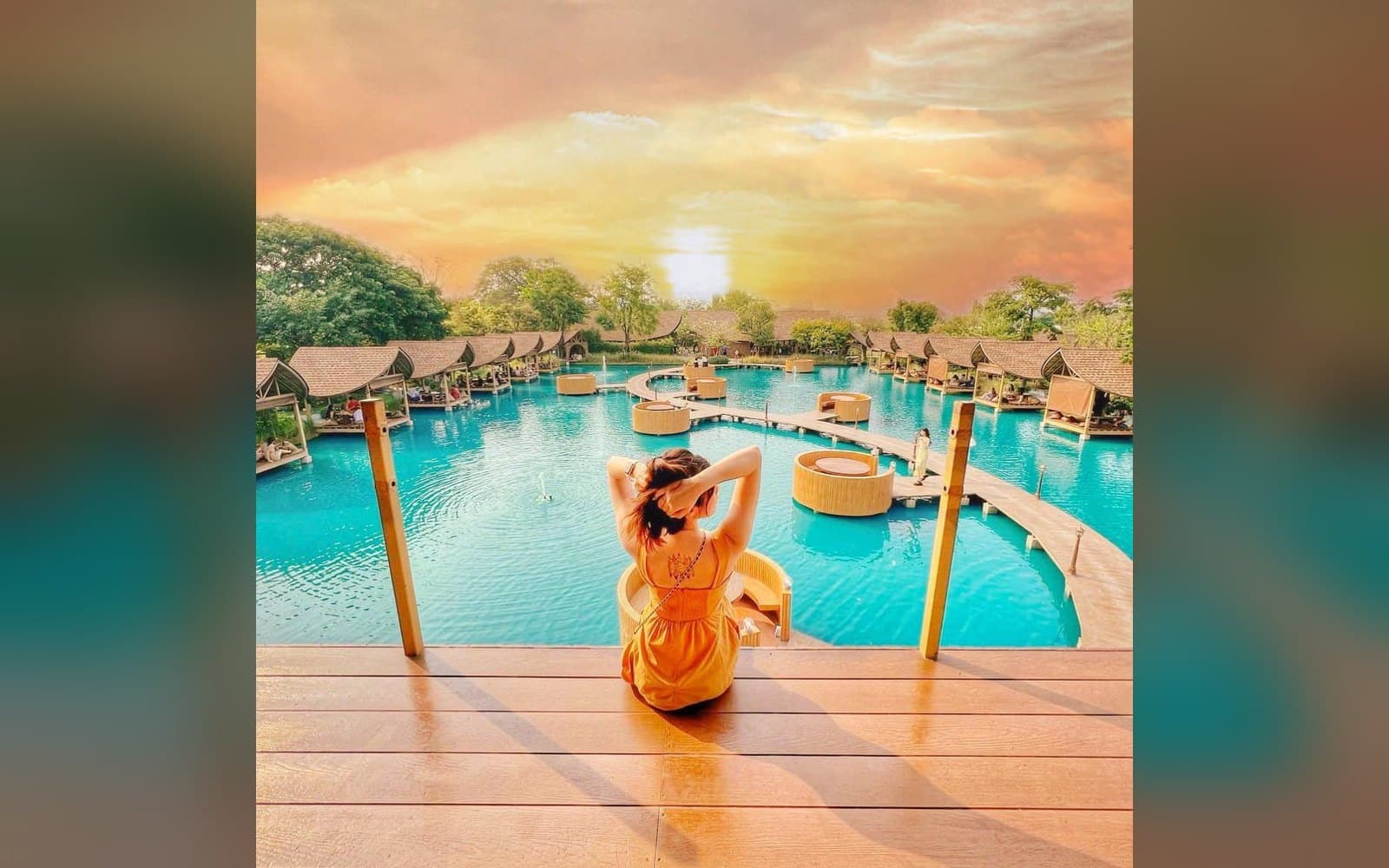
Bubble in the Forest Cafe Bangkok 2026: The Seat Guide Nobody Writes — Zones, Timing, Food and How to Actually Get a Table on the Water
A complete 2026 guide to Bubble in the Forest Cafe in Sam Phran, Nakhon Pathom — the five seating zones ranked, why walk-ins never get the water booths, the two hours of good light, what to order, what it costs, and how to reserve a seat for free.
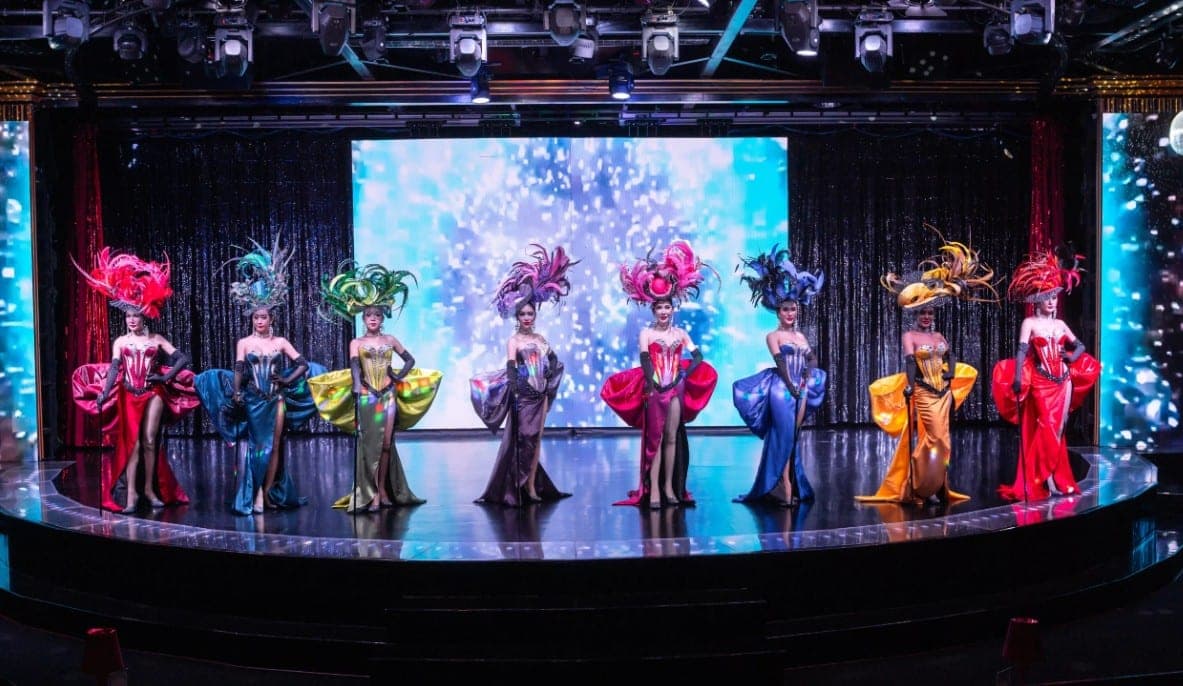
Calypso Cabaret Bangkok 2026: Show Times, Ticket Prices & Honest Guide
Complete 2026 guide to Calypso Cabaret at Asiatique The Riverfront — both nightly show times, tickets from ฿900, why the 540-seat theatre changes everything, and the history nobody tells you.
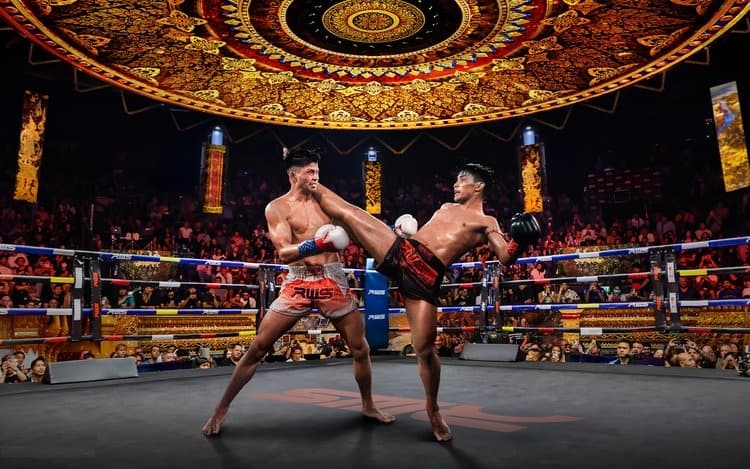
Muay Thai in Bangkok 2026: Rajadamnern Ticket Prices, Which Night to Book & How to Avoid the Touts
A complete buyer's guide to seeing Muay Thai at Rajadamnern Stadium in Bangkok — every seat tier priced, which of the seven fight nights to book, why Thais pay less than you do, how the ticket touts operate, and what the rituals and the betting tier actually mean.