Samut Prakan Day Tour 2026: Ancient City, Erawan Museum & Crocodile Farm from Bangkok
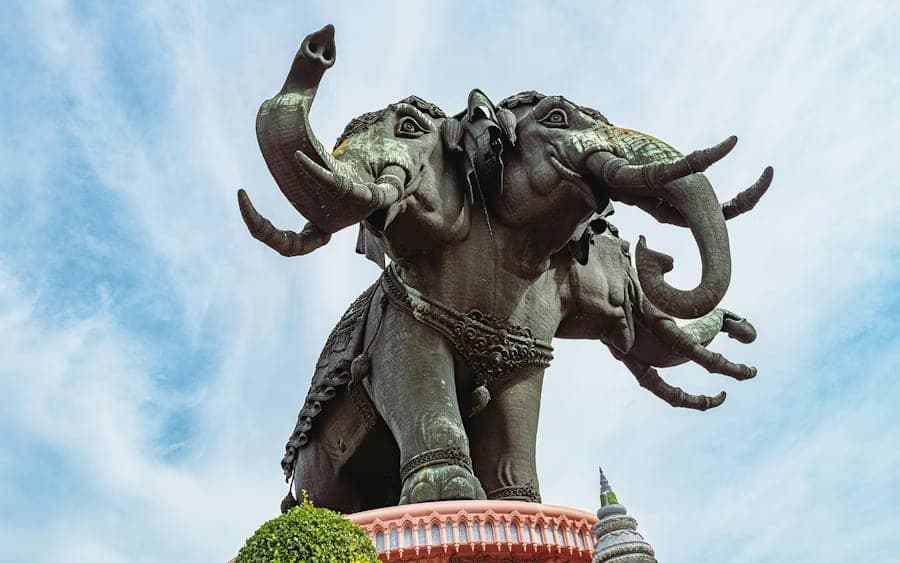
Forty kilometres south of Bangkok's Sukhumvit hotel strip, two of the most extraordinary cultural attractions in Southeast Asia sit within 15 minutes of each other — and almost no first-time Bangkok visitor knows either exists. The Ancient City (Muang Boran) is a 240-acre open-air museum containing 116 scale replicas of every major Thai historical monument, organised in the geographic shape of Thailand itself. The Erawan Museum is a 29-metre bronze three-headed elephant housing three floors of Hindu-Buddhist antiquities inside its body, built by the same man who built Ancient City, opened three years after his death. Both attractions were funded and conceived by Lek Viriyaphan — a Thai-Chinese automotive billionaire who decided, in his sixties, that preserving Thailand's cultural heritage was more important than any further accumulation of wealth.
This guide covers everything you need to plan a Samut Prakan day tour from Bangkok in 2026: ticket prices verified at the official websites, the logistics of visiting both venues in one day, the Erawan Museum dress code, honest advice on the Crocodile Farm, and the full story of Lek Viriyaphan that connects all three of his cultural monuments — including the third one, the Sanctuary of Truth in Pattaya, which has been under construction since 1981 and may never be finished.
What Is Samut Prakan Province?
Samut Prakan is the most industrialised coastal province in Thailand, sitting directly south of Bangkok where the Chao Phraya River reaches the Gulf of Thailand after flowing 372 km from the northern mountains. The provincial capital is a working city of around 400,000 residents — not a tourist town. Most travellers pass through it on the expressway without stopping. The few who stop encounter three of the most undervisited attractions in the Bangkok region.
The province is approximately 30–40 km south of Sukhumvit, reachable in 45–60 minutes on Expressway 7. All three attractions covered in this guide — Ancient City, Erawan Museum, and the Crocodile Farm — sit within a 15-km corridor along the Old Sukhumvit Road, making the combination logical as a single day trip.
Ancient City & Erawan Museum Day Tour from Bangkok
From ฿3,200 per person — TAT Licensed Operator · Instant WhatsApp confirmation

Lek Viriyaphan: The Man Who Built Them All
To understand Ancient City and Erawan Museum, you need to understand the person behind them. Lek Viriyaphan was born in 1914 in Sampeng, Bangkok's historic Chinese merchant quarter — the neighbourhood of Cantonese and Teochew traders who arrived from Guangdong generations earlier. He was sent to university in Shanghai in the 1930s, the most cosmopolitan city in Asia at the time, and returned with a lifelong obsession with Asian art, antiques, and philosophy.
He rebuilt his family's trading business and then expanded aggressively: he secured the Mercedes-Benz distribution rights for Thailand in 1957, established the Thonburi Automotive Assembly Plant in 1961, and co-founded the banking entity that eventually became Krungthai Bank (when his Monton Bank merged with Kaset Bank in 1966). By the early 1960s, Lek Viriyaphan was wealthy enough to do what he actually wanted.
In 1963, he purchased land at Bang Pu, Samut Prakan, intending to build a golf course. He never built the golf course. Instead, he spent nine years filling 240 acres with scale replicas of every Thai historical monument he could document — commissioning artisans, funding surveys, and moving original rescued buildings to the site. On 11 March 1972, King Bhumibol Adulyadej inaugurated Ancient City in a ceremony attended by Queen Elizabeth II during her first state visit to Thailand. That historical footnote — one of the most visited monarchs in the world witnessing the opening of a 240-acre cultural museum that started as a golf course — appears in no OTA listing for this attraction.
In 1981, he broke ground on the Sanctuary of Truth in Naklua, Pattaya: a 105-metre structure made entirely of teak, every surface carved with religious and philosophical figures from Hindu, Buddhist, Taoist, and Confucian traditions, with no metal fasteners, designed by his original vision to take 300 years to complete. It is still under construction in 2026 — 45 years later.
In 1994, at the age of 80, he began construction on the Erawan Museum: a 29-metre bronze three-headed elephant housing a cosmological museum inside its body. He died on 17 November 2000, aged 86. The Erawan Museum opened in 2003.
Three monuments. Four decades. One man's answer to the question he articulated in his own words: "Should the cultural traditions that the ancestors gave to their children be abandoned and destroyed?"
Ancient City (Muang Boran): 116 Monuments in 240 Acres
What It Is
Ancient City — Muang Boran (เมืองโบราณ) in Thai — is the world's largest open-air museum. The grounds cover approximately 240 acres (600 rai) laid out in the geographic shape of Thailand, divided into four regional zones:
- Central zone: Rattanakosin-era palaces, Ayutthaya throne halls, central-plains temples
- Northern zone: Lanna teakwood houses, Chiang Mai-style wiharn facades, northern-style chedis
- Northeastern zone: Khmer-influenced stone towers, Isan vernacular wooden houses
- Southern zone: Malay-influenced stilted homes, sea-facing pavilions, southern Thai mosque architecture
The 116 structures range from full-scale recreations of destroyed monuments — most notably the Sanphet Prasat Palace, the Ayutthaya throne hall razed by Burmese forces in 1767 and never rebuilt — to original rescued buildings: actual century-old teak structures purchased from rural villages facing demolition, disassembled, transported, and rebuilt within the park. When you walk through a Lanna teakwood house in the Northern zone, you may be standing inside a building that stood in Chiang Rai in 1880.
Ticket Prices 2026
| Category | Price |
|---|---|
| Adult (foreigner) | ฿800 |
| Child (ages 6–14, foreigner) | ฿400 |
| Opening hours | Daily 09:00–19:00 (tickets until 18:00) |
Thai residents with a work permit or Thai driving licence receive Thai national rates. Car entry adds ฿400/vehicle.
How to Get Around
Ancient City covers 240 acres — approximately the area of 180 football pitches. How you move between structures determines whether this visit is comfortable or exhausting:
- Private van (on our tour): Your vehicle enters the grounds and drives between zones. You step out at each structure, spend as long as you like, then return to the van. No heat stress between stops.
- Golf cart rental: Available at the entrance for ฿350/first hour + ฿100–200/additional hour (2 or 4-seater). Popular option for independent travellers — but it adds cost, requires queuing, and leaves you exposed to direct sun between structures.
- Electric tram: A scheduled circuit tram is included in the ticket price (must request at time of purchase). It follows a fixed route and stops on the tram's schedule, not yours.
- Bicycle: Available free or for ฿100/day. Practical in the early morning, inadvisable in midday heat.
The van-inside option on our tour is the most efficient way to cover the park's priority structures in 3–3.5 hours without exhaustion.
Priority Structures to See
Even with 3.5 hours and a vehicle, you cannot see all 116 structures in depth. Your guide prioritises based on historical significance and photography value. Key structures:
- Sanphet Prasat Palace (Central zone) — recreation of the Ayutthaya throne hall. The only place in the world to see this building standing.
- Floating Pavilions (Central zone) — the most photographed reflection shots in the park
- Khmer stone tower complex (Northeastern zone) — modelled on Prasat Hin Khao Phanom Rung; directly relevant to Indian visitors' Hindu heritage
- Lanna teakwood house (Northern zone) — original rescued 19th-century building
- Southern pavilion (Southern zone) — Malay-influenced sea-facing architecture unlike anything in central Bangkok
Best photography: 09:00–10:00 (golden morning light, minimal crowds). Midday heat peaks 11:00–14:00 — your van air-conditioning makes this manageable.
The Hindu Connection at Ancient City
The Northeastern zone deserves specific attention for Indian visitors. The Khmer-style stone towers at Ancient City reproduce the iconographic vocabulary of the Khmer empire at its height (9th–13th century AD) — which drew directly from Hindu cosmological tradition: Mount Meru as the cosmic mountain at the centre of the universe, apsaras (celestial dancers) on the carved lintels, Vishnu and Shiva in the pediment carvings, the churning of the ocean of milk (samudra manthan) depicted in bas-relief. These are not abstract decorations for Indian visitors — they are the same stories from the Mahabharata and Puranas that Indian temple architecture has depicted for 2,000 years. Your guide draws the explicit connections.
Erawan Museum: Inside a 29-Metre Bronze Elephant
What It Is
The Erawan Museum is one of the most architecturally unusual buildings in Southeast Asia: a 29-metre bronze three-headed elephant (39 metres in length, weighing 250 tons) standing on a 15-metre pedestal, the combined structure rising 44 metres from ground to crown. Each head represents one of the three divine elephants of Hindu mythology. The name Erawan comes from Airavata in Sanskrit — the divine white elephant who serves as the mount of Indra, king of the Tavatimsa Heaven in Hindu-Buddhist cosmology.
In the Vedic tradition, Airavata was born from the churning of the cosmic ocean — the samudra manthan — the same event depicted in the famous bas-reliefs of Angkor Wat. He is the deity who controls rainfall and thunder; his three heads symbolise the three realms (heaven, earth, and underworld) through which rain falls. For any Indian visitor familiar with the Vedas, the Puranas, or the epics, standing beneath this elephant is not an encounter with foreign culture. It is a recognition.
Construction began in 1994 under Lek Viriyaphan's direction. He died in November 2000, three years before the museum opened. His wife Prapai completed the project.
Ticket Prices 2026
| Category | Price |
|---|---|
| Adult (foreigner) | ฿500 |
| Child (foreigner) | ฿250 |
| Opening hours | Daily 09:00–18:00 (tickets until 17:00) |
| What's included | Flowers, incense, and lotus flower for offering |
What's Inside: Three Cosmological Levels
Level 1 — Suwannabhumi (Underworld/Basement)
The basement level represents the underworld realm. It houses Lek Viriyaphan's collection of Ming and Qing dynasty Chinese vases — pieces 200 to 400 years old, collected over decades of acquisition. Alongside them: photographic documentation of the elephant's construction, showing the engineering scale of casting 250 tons of bronze into three elephant heads.
Level 2 — Human World (Earth Level)
The ground-level floor of the pedestal houses a mixed collection: European ceramics, Asian porcelain, and at the room's centre, a thousand-armed Guanyin figure in its own carved niche. The thousand-armed Guanyin is a Mahayana Buddhist manifestation of the bodhisattva Avalokitesvara — in Chinese Buddhism, the embodiment of compassion who can reach every suffering being simultaneously, hence the thousand arms. The juxtaposition of European and Asian ceramics in the same room reflects Viriyaphan's philosophical argument that all civilisations' art is a single human project.
Level 3 — Chakravalas/Tavatimsa Heaven (Inside the Elephant)
The upper level, accessed by stairs through the pedestal and into the elephant's body, is the destination. The walls are painted in full cosmic murals depicting the 33 deities of Tavatimsa Heaven, the realm where Indra rules. Buddha relics and statues from four Thai kingdoms — Lopburi, Ayutthaya, Lanna, and Rattanakosin — stand in illuminated alcoves. Stained-glass panels in the elephant's ribcage structure filter light into the interior in shifting patterns. This room is what visitors describe when they try to explain why Erawan Museum is different from any temple or museum they have visited.
Dress Code (Strictly Enforced)
The dress code at Erawan Museum is not a suggestion — it is enforced at the entrance:
- No shorts (any gender) — knees must be covered
- No sleeveless tops or tank tops — shoulders must be covered
- No transparent or see-through clothing
- Shoes off before entering the building interior
Sarong wraps are available at the entrance for visitors who arrive without appropriate clothing. On our tour, your guide briefs all guests on dress code on the morning drive before you reach the museum — no delays at the gate.
Photography for personal use is allowed throughout the museum. No flash photography in sacred interior areas. No commercial photography without written permission.
Audio Guides
Available in 5 languages: Thai, English, Chinese, Korean, and Russian. Our English-speaking guide covers the primary content; the audio guide adds supplementary detail for those who want to go deeper.
Budget 1.5 to 2 Hours
The three levels plus the exterior walk around the base of the pedestal — looking up at the full scale of the 29-metre bronze structure from below — takes 1.5 to 2 hours at an unhurried pace. The ticket counter closes at 17:00; arriving at 13:30 on our tour gives comfortable time.
The Samut Prakan Crocodile Farm
The Samut Prakan Crocodile Farm and Zoo — established in 1950 by Utai Youngprapakorn with an initial stock of just 50 crocodiles — is the world's oldest operating crocodile farm. Across 75 years of operation, the facility has expanded to house approximately 60,000 crocodiles spanning multiple species: the native Siamese freshwater crocodile (Crocodylus siamensis), the larger and more aggressive saltwater crocodile (Crocodylus porosus), the African Nile crocodile, the South American caiman, and several specimens of the long-snouted gharial. The Siamese crocodile population is classified Critically Endangered in the wild by the IUCN — fewer than 1,000 mature individuals remain in their natural Mekong basin habitat — and the farm has historically positioned itself as a conservation breeding programme alongside its commercial leather trade.
The grounds also include a substantial zoo section that operates separately from the crocodile pens. Resident animals include Asian elephants (used in scheduled shows), hippopotamuses, Bengal tigers, African lions, chimpanzees, orangutans, ostriches, and various reptile species in a herpetarium.
Opening hours: Daily 08:00–18:00 Foreigner entry: ฿400/adult, ฿200/child Crocodile shows: approximately 11:00 and 14:00 daily (live wrestling) Elephant shows: 7 times daily (09:40, 10:40, 11:40, 13:40, 14:40, 15:40, 16:40)
Honest Advice on the Welfare Debate
Many international travellers — particularly from Europe, Australia, and the USA — have ethical concerns about live crocodile wrestling shows and find the conditions at large captive-animal venues uncomfortable to support. TripAdvisor does not offer bookings for this venue on animal welfare grounds, which is information worth having before you decide. The farm's TripAdvisor rating is 2.8/5 from 446 reviews, with the majority of low-rated reviews citing welfare concerns rather than service quality. International organisations such as World Animal Protection and Animals Asia have raised concerns about live animal performance venues in Southeast Asia broadly — the criticism is not unique to Samut Prakan but applies to the category.
On our Package B tour, we include the Crocodile Farm for guests who specifically want to see it — but we do not push it. Package A (Ancient City + Erawan Museum only) is the recommended option for most international travellers and is a complete, satisfying full day without the farm. If you choose Package B, you are not required to attend the live wrestling show — many visitors prefer to view the crocodile enclosures, the zoo section, and the breeding pens without watching the performance. Your guide will not pressure you in either direction. The choice is genuinely yours.
What to Bring and Practical Tips
This is a day in coastal lowland heat — preparation matters. Here is the complete list, refined from feedback after hundreds of guest tours:
Clothing
Erawan Museum has a strictly enforced dress code — covered knees and shoulders for all visitors regardless of gender. The simplest approach: lightweight long trousers and a short-sleeved or three-quarter-sleeve top. Avoid shorts, sleeveless tops, and any transparent fabrics. Sandals are fine outdoors but must be removable for indoor sections. Sarong wraps are available at the museum entrance for visitors who arrive in non-compliant clothing.
Ancient City has no dress code, but the 240 acres of outdoor exposure in 33–37°C heat means light cotton or moisture-wicking fabrics are essential. Synthetic athletic clothing dries faster than cotton after the inevitable sweat. A hat with a brim — not just a cap — protects neck and ears from direct sun exposure during the pavilion stops between van legs.
What to Bring
- Reef-safe sunscreen SPF 50+ — apply before leaving Bangkok, reapply at midday
- Refillable water bottle — water is provided in our van, but having your own makes pacing easier
- Cash in Thai Baht — ฿500–1,000 covers any optional add-ons (lunch ฿150–400, audio guide at Erawan Museum ฿50–100, gratuities)
- Comfortable walking shoes with grip — Ancient City pavements can be slippery on damp mornings
- Phone with camera — both venues are extraordinarily photogenic; consider a power bank for the full day
- Light layer — the van air-conditioning is genuinely cold after extended outdoor heat
- Personal medication — there are no pharmacies inside either attraction; bring whatever you might need for the day
Best Time of Year to Visit
The most comfortable months for a Samut Prakan day tour are November through February — the dry season, with daytime temperatures averaging 28–32°C and low humidity. Photography light is at its best during this period, particularly in the early morning at Ancient City.
March through May is the hottest season, with daily highs reaching 37–40°C and high humidity. The tour still runs and remains fully comfortable thanks to van-inside-Ancient-City access, but pack additional water and prepare for genuine heat.
June through October is the monsoon season. Afternoon thunderstorms are common but typically brief (30–60 minutes), and Ancient City's covered pavilions provide shelter. Erawan Museum is entirely indoor and unaffected. The advantage of monsoon-season visits: significantly fewer crowds, particularly Tuesday through Thursday.
Weekday vs Weekend
Weekdays (Tuesday–Friday) are dramatically less crowded at both Ancient City and Erawan Museum. Saturdays and Sundays bring Bangkok day-trippers and school groups — particularly to Ancient City. If your travel schedule offers any flexibility, book this tour for a weekday. Mondays can be quiet but worth confirming venue staffing on the morning of the tour.
Doing All Three in One Day: The Logistics
Recommended Order
West to East — the most logical route from Bangkok:
- Ancient City (Bang Pu) → 09:00–12:30 (3.5 hours, furthest from Bangkok)
- Lunch in Samut Prakan town → 12:30–13:30
- Erawan Museum → 13:30–15:30 (1.5–2 hours, closer to Bangkok)
- Crocodile Farm (optional, Package B) → 15:30–16:30 (10 minutes from Erawan Museum)
- Return to Bangkok → 17:00 onward
Distances
Planned Schedule
Segment | Distance | Drive Time |
|---|---|---|
| Bangkok (Sukhumvit) → Ancient City | ~40 km | 45–60 min |
| Ancient City → Erawan Museum | ~10 km | 10–15 min |
| Erawan Museum → Crocodile Farm | ~4 km | 8–10 min |
The Heat Problem
Ancient City is entirely outdoor. Thai coastal heat in Samut Prakan regularly exceeds 35°C, with high humidity. Independent travellers who try to do this on their own — renting a golf cart, navigating the tram schedule — frequently describe exhaustion and seeing less than half the park. The private van entering Ancient City grounds is not a luxury — it is the mechanism that makes a comfortable, complete 3-hour visit possible. Between each structure, you return to air-conditioned transport.
Where to Eat Between Stops
Samut Prakan town — 10–15 minutes from Ancient City — has the full range of local options:
- Local Thai rice-and-curry shops: ฿60–120 per dish, no frills, excellent food
- Halal-certified restaurants: Multiple options serving Thai-Muslim and international dishes. Tell your guide your preference the morning of the tour and they plan the lunch stop accordingly.
- Fast food and convenience stores: Available for those who prefer to keep it simple
- Street food market near the provincial government centre
Halal-friendly, vegetarian, Indian and Western lunch options are all available in Samut Prakan town. There is no need to bring packed food from Bangkok.
The Lek Viriyaphan Trilogy: Ancient City, Erawan Museum, and Sanctuary of Truth
This Samut Prakan day tour covers two of Lek Viriyaphan's three cultural monuments. The third — the Sanctuary of Truth in Naklua, Pattaya — is the most singular of all.
Started in 1981, it is a 105-metre-tall structure built entirely from teak, with no metal fasteners anywhere in the structure. Every external surface is carved with religious and philosophical figures from Hindu, Buddhist, Taoist, and Confucian traditions — hundreds of carvers working on scaffolding every day for four decades. Viriyaphan's original vision described it as a 300-year construction project. He died in 2000. The carvers continue. In 2026, the Sanctuary of Truth is still under construction and remains structurally protected by scaffolding over significant sections.
Entry is ฿500 per adult. A hard hat is mandatory throughout the visit. The scale and ambition of the carved teak work — entirely the product of hand tools, no power carving — is unlike anything built anywhere in the modern world.
If your Bangkok trip is followed by Pattaya days, the Sanctuary of Truth completes the Lek Viriyaphan trilogy in chronological order: Ancient City (1972) → Sanctuary of Truth (begun 1981) → Erawan Museum (2003). Our Sanctuary of Truth day tour from Pattaya includes pickup, guide, and ticket. Book both tours together on WhatsApp +66 89 949 6235.
Ancient City & Erawan Museum Day Tour from Bangkok
From ฿3,200 per person · TAT Licensed No. 14/04232 · ⭐ 4.0 (186 reviews)
Book the Tour
Ancient City & Erawan Museum Private Day Tour from Bangkok — from ฿3,200/person
What's included: Bangkok hotel pickup and drop-off · Private air-conditioned van (enters Ancient City grounds) · English-speaking guide · All venue entry tickets (฿800 + ฿500 included) · Inter-venue transport
Package A: ฿3,200/adult (Ancient City + Erawan Museum) Package B: ฿3,600/adult (adds Crocodile Farm) Minimum 2 guests · 24 hours advance booking
Trip Thai Tour is TAT Licensed No. 14/04232, independently verifiable at tourismthailand.org. We are also listed on the Trip Thai Tour About page. Our rating is 4.0 from 186 verified reviews on TripAdvisor.
Book and confirm in minutes: WhatsApp +66 89 949 6235 · chatree@tripthaitour.com
"We did this tour specifically because of the Erawan Museum — Airavata is part of our heritage and seeing a 29-metre bronze version in Thailand was something we had to experience. The guide's explanation of the samudra manthan connection was the best guided content on our entire Thailand trip. Ancient City surprised us more than the museum — we didn't expect to find so many Hindu-influenced structures with direct parallels to South Indian temple architecture." — Priya & Vikram S., Mumbai, India
Check Availability & Book
Send us your details to get an instant quote and secure your date.
Related Guides
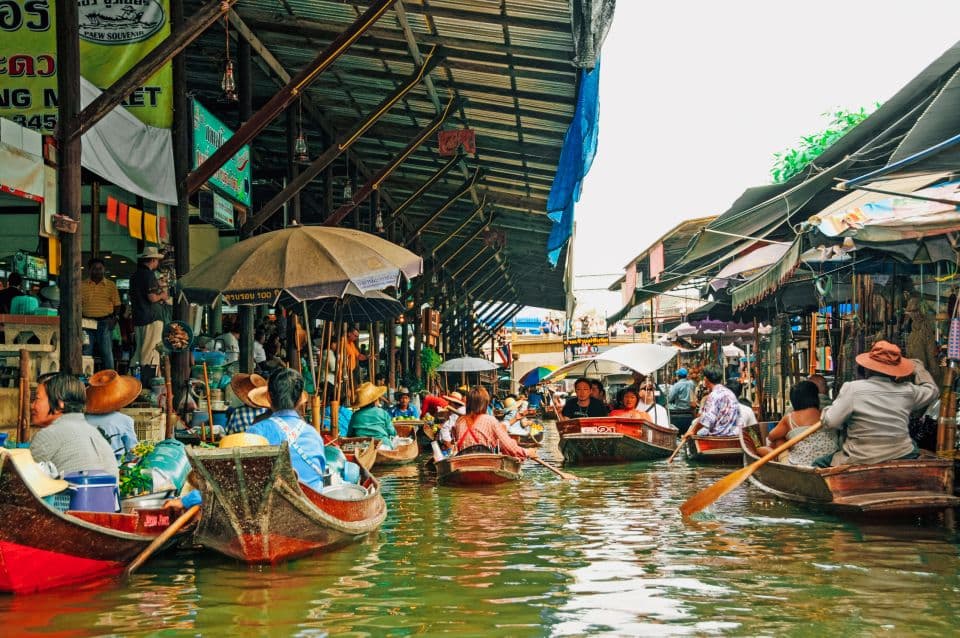
Damnoen Saduak Floating Market & Maeklong Railway Market: Private Half-Day Tour from Bangkok 2026
Visit Damnoen Saduak Floating Market and Maeklong Railway Market on one private half-day tour from Bangkok. Private longtail speedboat through the canals, train guaranteed, hotel pickup. The most exciting morning you will have in Thailand.
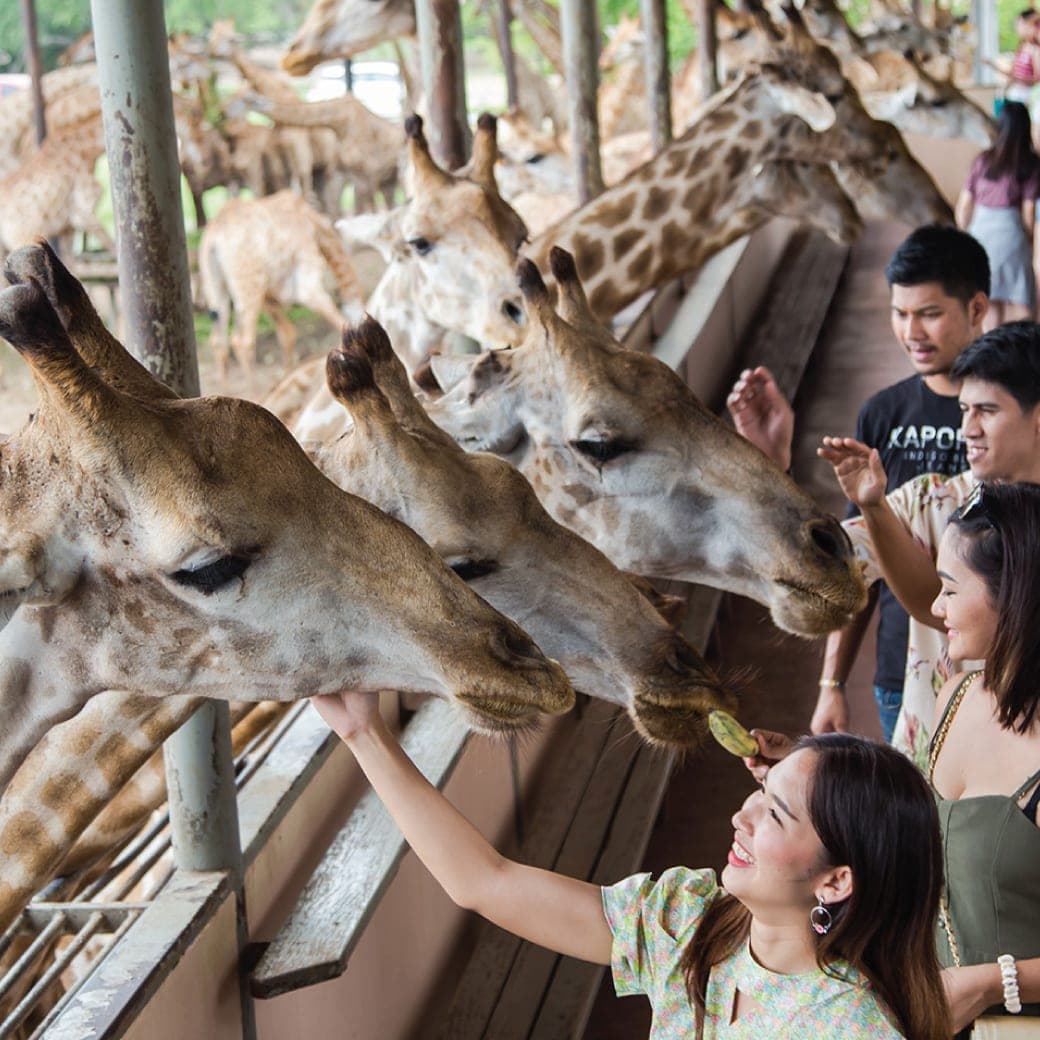
Safari World Bangkok: Complete Guide — Show Timings, Ticket Prices & Indian Buffet Lunch
Safari World Bangkok 2026 guide: official show timings (weekday & weekend), Safari World Bangkok ticket prices, Indian buffet lunch, and tickets at 1,200 THB versus 2,000 THB at the gate. Open Tue–Sun, closed Mondays. Ideal for Indian families.
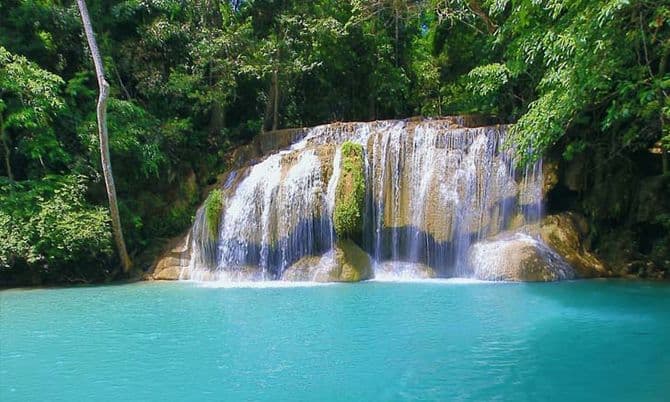
Kanchanaburi Day Trip from Bangkok: River Kwai, Death Railway & Erawan Waterfalls
Private Kanchanaburi day trip from Bangkok — River Kwai bridge, Death Railway history & 3 hours at Erawan Waterfalls. Erawan entrance fee ฿300 included. Hotel pickup 06:30. From ฿4,500/person.