Bangkok + Kanchanaburi — design your own private trip
Temples and street food in Bangkok, then west to the River Kwai: floating hotels, seven-tier waterfalls, retired elephants and the Death Railway. You pick what excites you — we plan the route, the timing and the team.
This is not a fixed package — it is everything we can arrange between Bangkok and Kanchanaburi, laid out for you to choose from. Most guests take 2–3 days in Bangkok and 2 days with 1–2 nights on the river in Kanchanaburi, but the order, pace and mix are yours. Tell us what you pick and we build the day-by-day plan around it.
What stays constant is the team: a private air-conditioned van or SUV, the same professional driver throughout your trip, and a licensed English-speaking guide on touring days. Trip Thai Tour is a TAT-licensed operator (No. 14/04232, verifiable at tourismthailand.org) rated 4.0 from 186 TripAdvisor reviews — and our quotes are transparent with no hidden charges.
Hotels are flexible: many guests prefer booking their own rooms, and that is completely fine — we plan around wherever you stay. Want us to arrange them instead (including the floating raft hotels on the River Kwai)? We do that too. Either way, the tour plan, transport and guiding are what you are booking us for.
Pick
Tap “Add to my trip” on anything below that excites you — there is no fixed plan here.
We design
We sequence your picks into the right days, hours and routes — and tell you honestly what fits.
You approve
You get a transparent line-by-line quote. Adjust anything until it is exactly your trip.
Bangkok
2–3 days · Your trip starts hereBangkok
Bangkok days — temples, canals and the old city
The classics are classics for a reason — the difference is doing them in the right order, at the right hour, with someone who can explain what you are looking at.
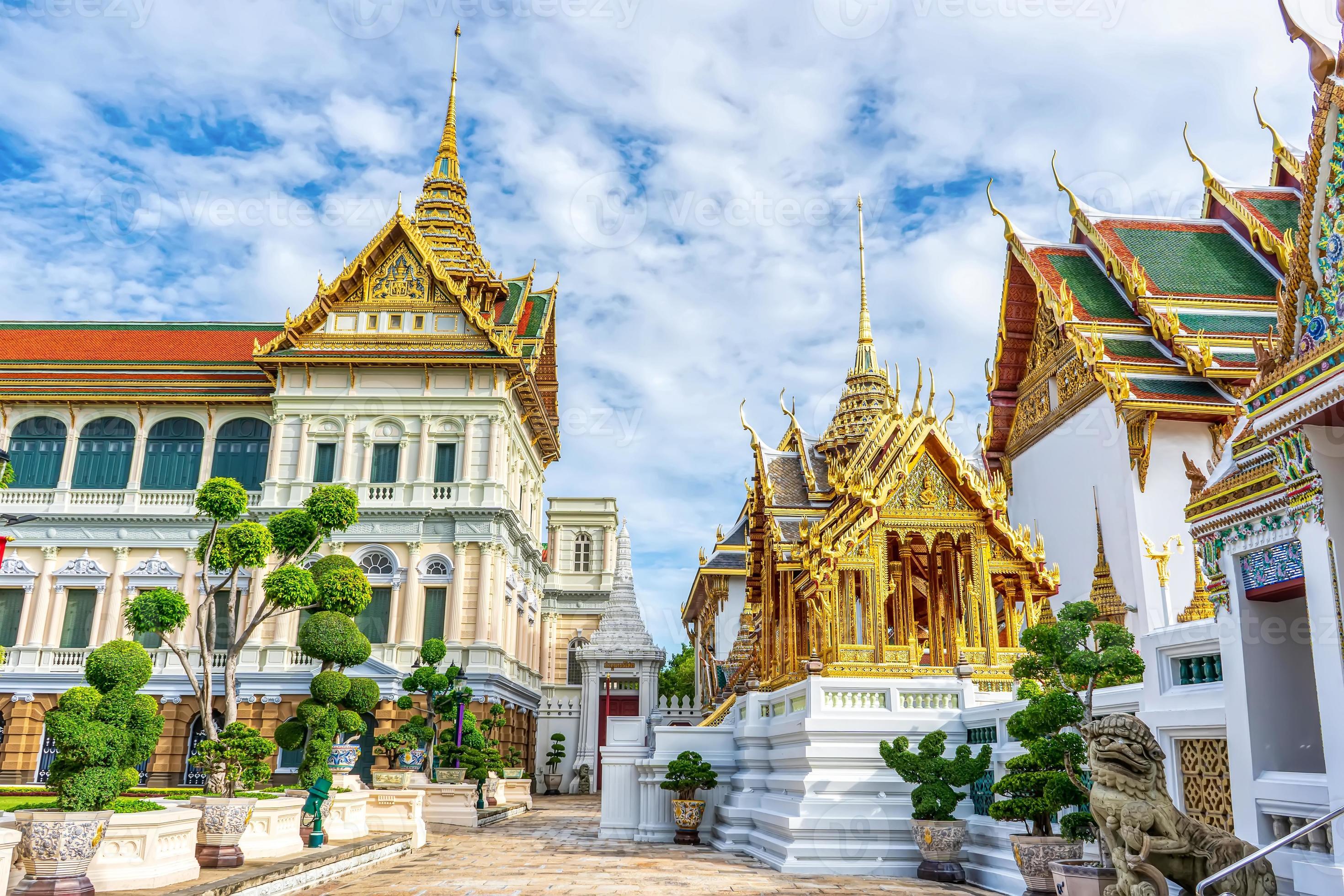
Grand Palace & the Emerald Buddha
Thailand's most sacred site since 1782 — gold spires, mirrored mosaics and the Emerald Buddha.
Read the full story
The royal compound that has anchored Bangkok since King Rama I founded the city in 1782. Inside Wat Phra Kaew sits the Emerald Buddha — a single small figure of green stone whose seasonal gold costumes are changed by the King himself. The murals around the cloister tell the entire Ramakien epic across 178 panels.
It is busy, it is hot, and it is absolutely worth it — with a guide who moves you through in the right sequence and handles the dress-code and 'palace is closed' scams that circle the gates. We cover both on our tour page.
Insider tip: Go at opening time. By 10:30 the tour groups own it.
Wat Pho + morning monk chanting
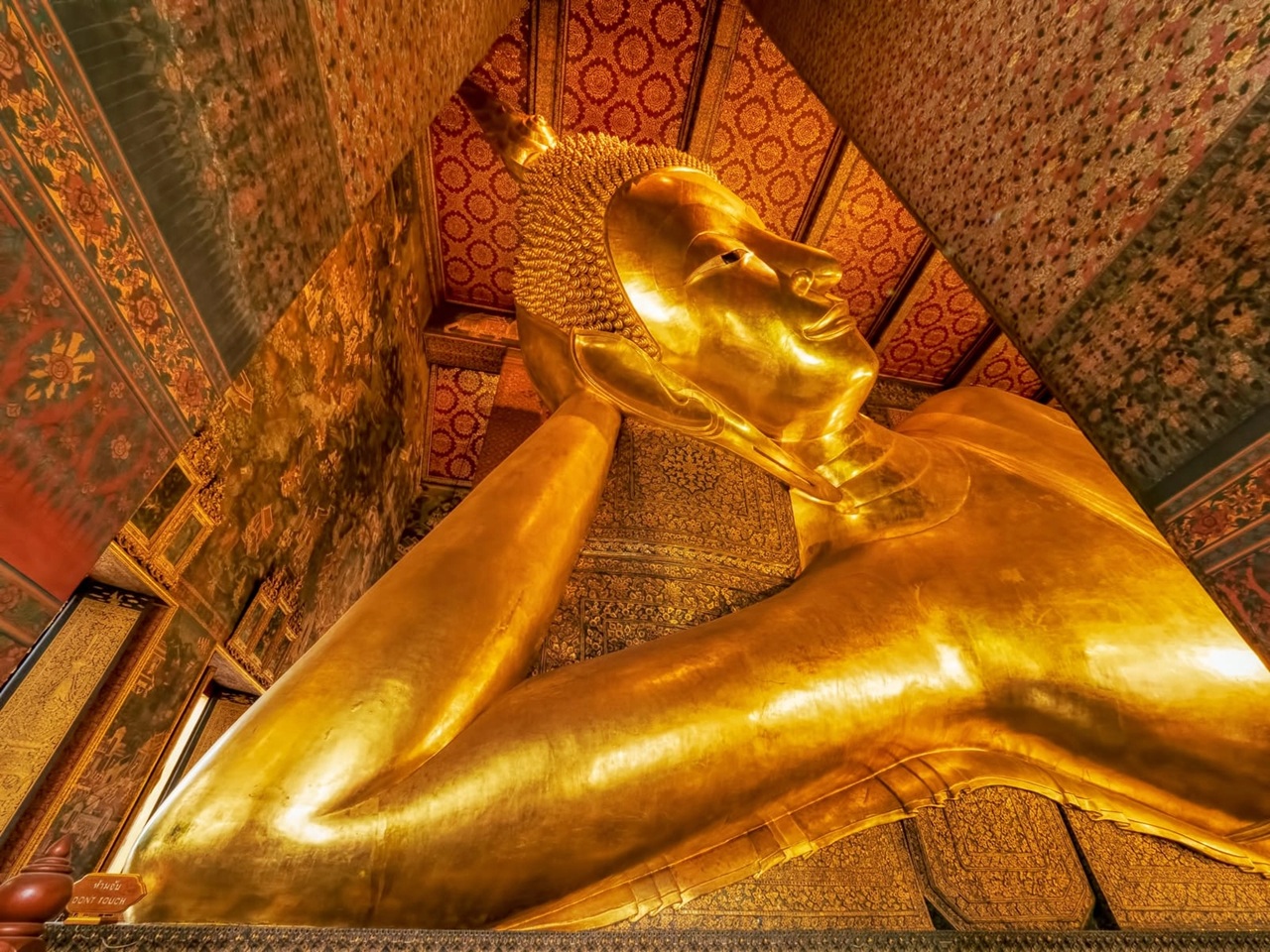
A 46-metre golden reclining Buddha — and at 9 AM, the low hum of monks chanting.
Read the full story
Wat Pho holds the largest reclining Buddha in Thailand — 46 metres of gold leaf, with mother-of-pearl soles inlaid with 108 auspicious symbols. Drop coins in the 108 bronze bowls along the wall as Thais do; the sound follows you down the hall.
Come around 9 AM and, when the schedule allows, you can stand quietly at the back of the ordination hall while the monks chant morning prayers — no ticket, no performance, just the real thing. It is one of the most moving free moments in Bangkok, and most visitors walk straight past it.
Insider tip: Wat Pho is also the birthplace of Thai massage — the on-site school takes walk-ins.
Wat Arun — the Temple of Dawn
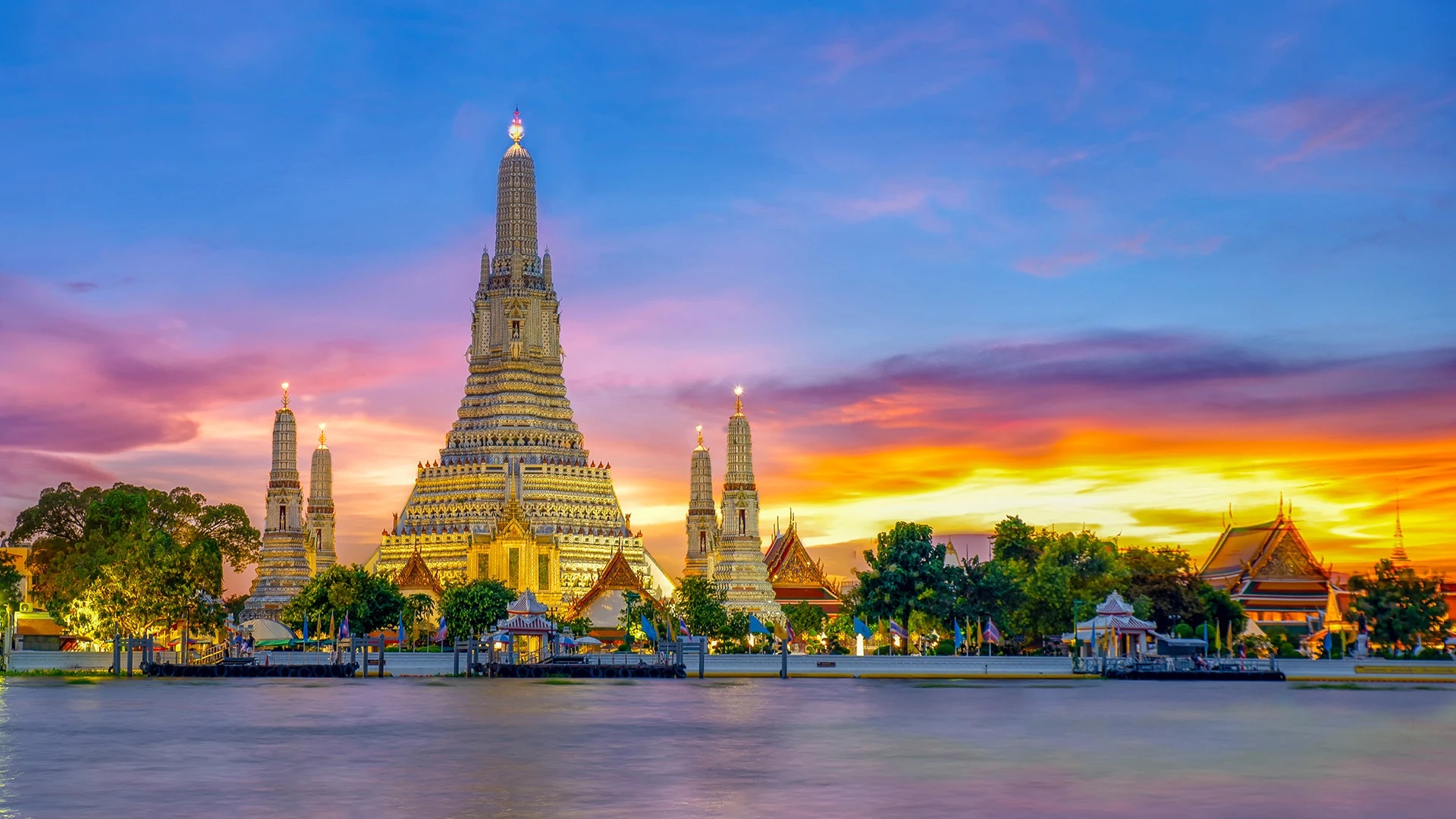
A riverside spire studded with broken porcelain, best reached the old way — by boat.
Read the full story
Wat Arun's central prang rises from the west bank of the Chao Phraya, encrusted with fragments of Chinese porcelain that ballast ships dumped here two centuries ago. Up close it is a mosaic of flowers and demons; from across the river at sunset it is a silhouette.
We take you across by boat — the two-minute crossing is the correct arrival — and you can climb the steep lower terraces for the river view. Rent a traditional Thai costume outside the gate if you want the photo Thais themselves queue for.
Insider tip: Photograph it twice: up close by day, then from the opposite bank at sunset with a drink in hand.
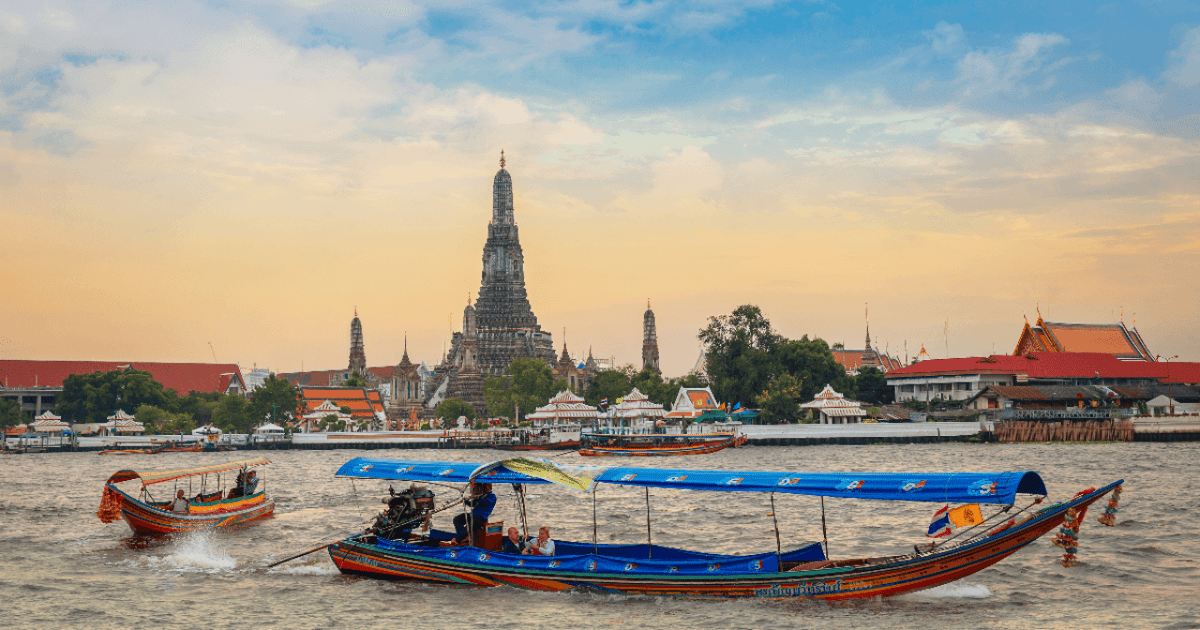
Thonburi canals by long-tail boat
Ten minutes from the palace, Bangkok turns into a village on stilts — teak houses, temples, kids diving off porches.
Read the full story
Cross to the Thonburi side and the city you know disappears. A long-tail boat takes you into the klongs — canals lined with stilt houses, riverside temples, orchid gardens and monitor lizards sunbathing on the banks. This is what all of Bangkok looked like before the roads came.
The boat is private, the route is flexible, and the driver knows which canals are alive at which hour. Pair it with Wat Arun — the boat drops you at the temple pier.
Insider tip: Ask to idle at a canal-side temple where locals feed the fish — buy a bag of bread and join in.
Flower market walk + garland making
Mountains of marigolds and jasmine at Pak Khlong Talad — then you string your own temple garland.
Read the full story
Pak Khlong Talad is Bangkok's 24-hour flower market — wholesale mountains of marigolds, lotus buds, roses and jasmine moving on hand-carts, at its best in the early morning. A guided walk here comes with fruit tasting and the back-lane food stalls the flower porters actually eat at.
Then you sit down and learn to string a phuang malai — the jasmine garland Thais offer at shrines — and carry the one you made to a temple that same morning. Small, hands-on, and the kind of memory that outlasts any viewpoint photo.
Insider tip: Combine with Wat Pho — the market is a ten-minute walk from the temple.
If you have more time
Jim Thompson House
The teak mansion of the American silk king who vanished in 1967 — a real museum, not a 'silk factory' stop.
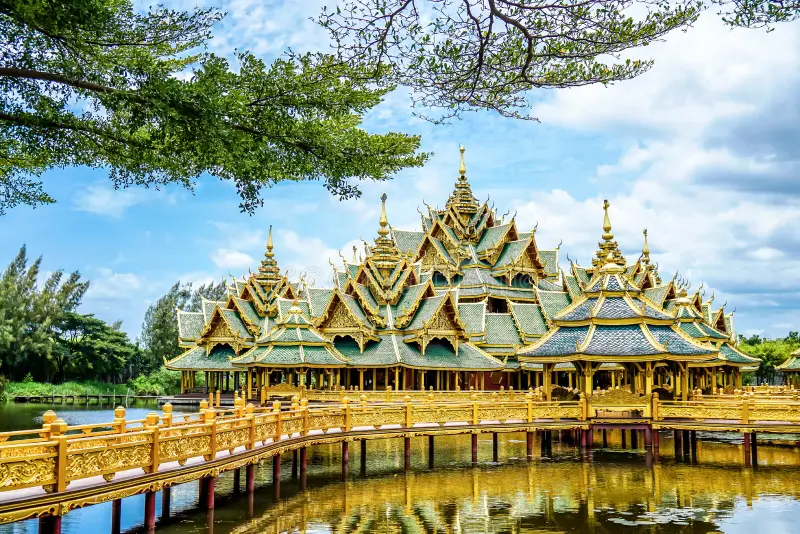
Ancient City + Erawan Museum
All of Thailand's great monuments recreated in one vast park, plus the three-headed elephant museum.
Read the full story
Bang Krachao jungle island by bike
Bangkok's 'green lung' — cross by boat, cycle raised jungle paths in the middle of the city.
Thai cooking class with market visit
Shop a fresh market with the chef, then cook the dishes you have been eating all week.
Bangkok
Bangkok nights — food, lights and the river
Bangkok after dark is its own destination. Pick one big night or several — these all run in the evening, so they stack on top of full sightseeing days.

Night tuk tuk tour
The city's icons lit up after dark, from the open back of a tuk tuk — wind, noise and all.
Read the full story
Bangkok at night from a tuk tuk is the ride everyone imagines before they arrive — the Grand Palace walls floodlit, Wat Arun glowing across the river, flower-market lanes buzzing at midnight, and food stops woven between them. The traffic that frustrates by day becomes the show by night.
It runs as a guided convoy with food and photo stops — you cover more of the city in three hours than most visitors manage in two days, and it doubles as the best orientation night for a first visit.
Insider tip: Do this on your first evening — everything you see, you can go back to properly later.
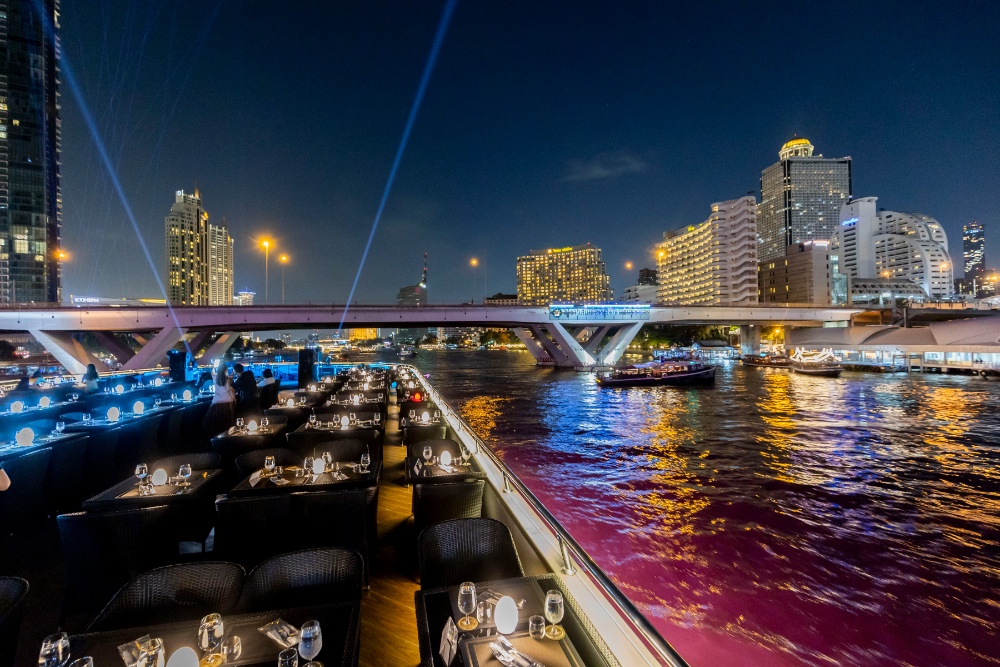
Chao Phraya dinner cruise
Dinner sailing past the floodlit Grand Palace and Wat Arun — boats from beer-buffet fun to free-flow-wine luxury.
Read the full story
The Chao Phraya at night is Bangkok's best free light show — Wat Arun, the Grand Palace and the Rama VIII bridge all floodlit from the water. A dinner cruise puts a buffet and live music in front of it for around two hours.
We book five different boats across every budget and style — from a cheerful beer-and-buffet boat to an Indian-vegetarian menu to the newest free-flow-wine luxury vessel — and we will match the boat to your group rather than sell whatever pays most. Compare them on our cruise pages.
Insider tip: Boats board around 19:30 from ICONSIAM — pair the cruise with the mall's food hall for pre-dinner snacks.
Chinatown street-food night walk
Yaowarat after dark — woks on fire, Michelin-listed stalls, and dishes you order by pointing.
Read the full story
Yaowarat Road is the best street-food strip in Asia after sunset: charcoal woks flaring, queues snaking from Michelin Bib Gourmand stalls, bird's-nest shops and gold dealers glowing neon overhead. Alone you will eat well; with a guide you will eat correctly — the right stall for each dish, in the right order.
A guided night walk covers six to eight tastings — think crab omelette, guay jub peppery pork-roll soup, mango sticky rice, kuay tiew kua gai — with the history of Bangkok's oldest immigrant district between bites.
Insider tip: Come hungry and skip lunch. Seriously.
Muay Thai fight night
Live bouts at a historic Bangkok stadium — the wai kru ritual, the live band, the roaring crowd.
Read the full story
Muay Thai in its home stadium is nothing like the tourist shows: fighters perform the wai kru ram muay ritual to live pipe-and-drum music, the betting sections roar odds between rounds, and the skill level is world championship grade. Bangkok's historic stadiums run cards several nights a week.
We arrange ringside or club-class seats and transport, and brief you on how to read a fight — once you can see the scoring, the night changes completely.
Insider tip: Ringside is worth the upgrade — you hear the shin kicks land.
If you have more time
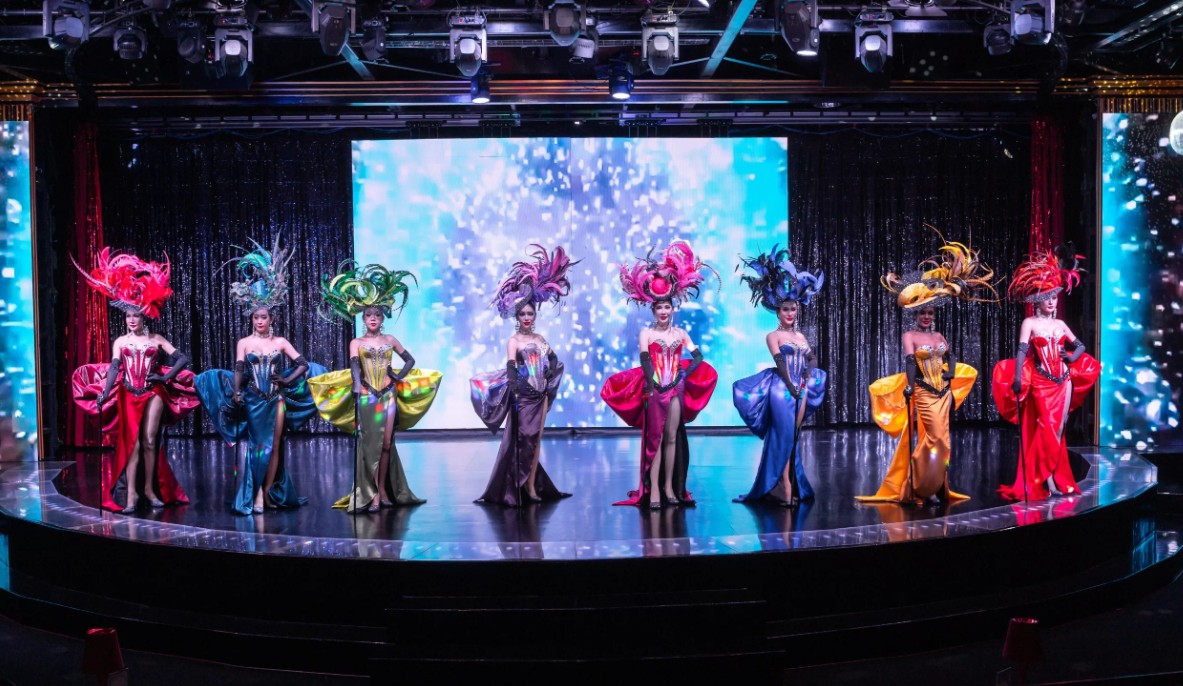
Calypso Cabaret
Bangkok's famous ladyboy cabaret at Asiatique — glamorous, funny, and family-fine.
Read the full story
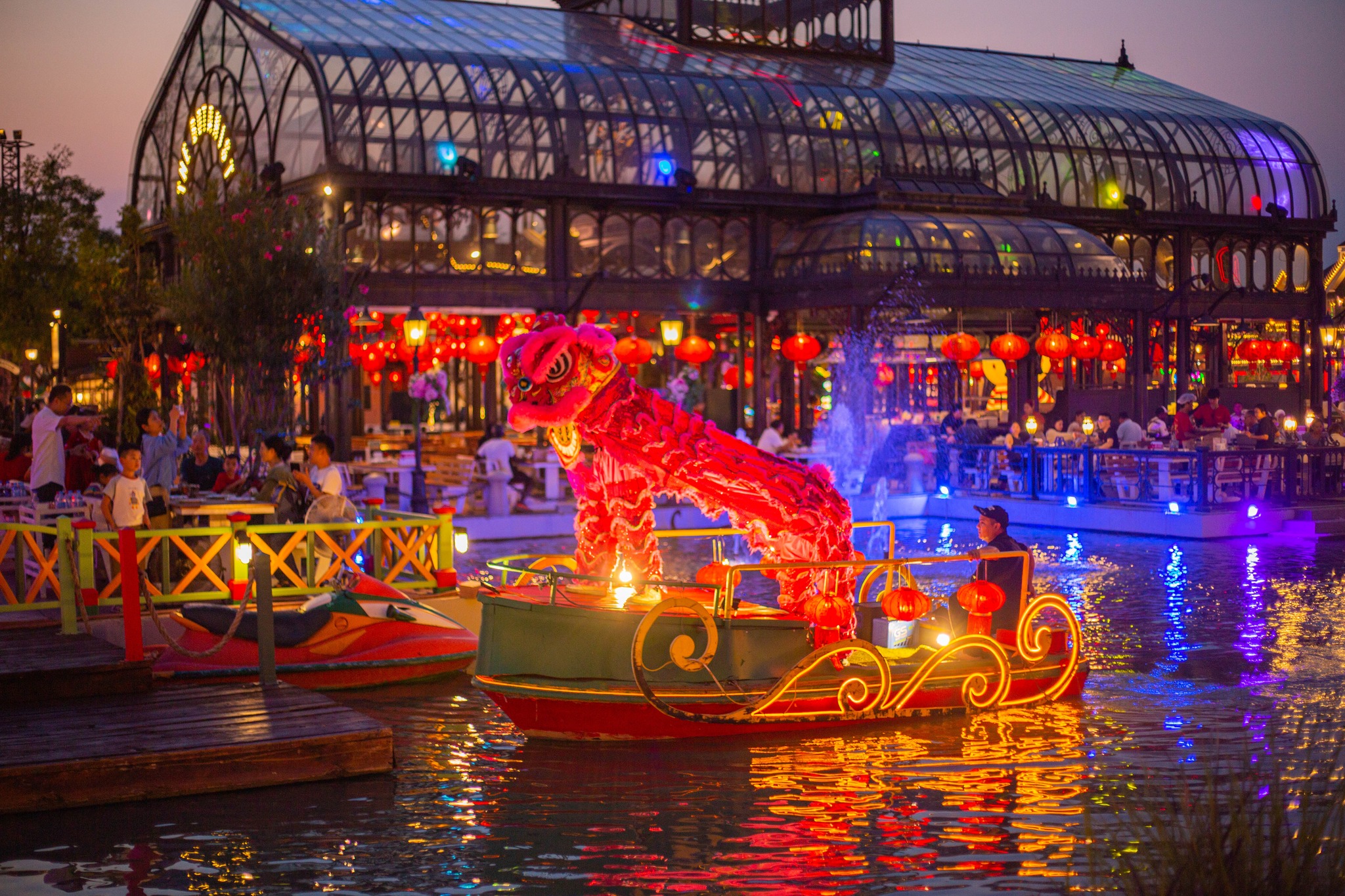
Chocolate Ville dinner park
A European-village theme park that is actually a giant open-air restaurant — great with kids.
Read the full story
Bangkok
Classic day trips from Bangkok
One vehicle, one driver, out and back in a day — these are the two day trips that define central Thailand.
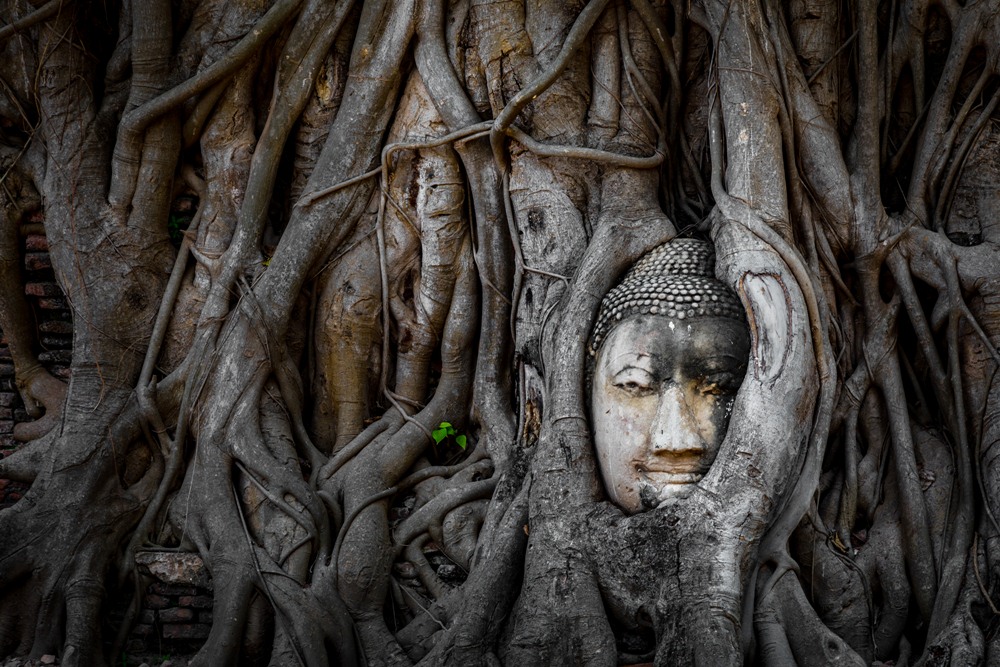
Ayutthaya — UNESCO ruins + Bang Pa-In Summer Palace
The 400-year capital of Siam — the Buddha head in the tree roots, and a royal summer palace on the way.
Read the full story
Founded in 1350, Ayutthaya was one of the largest cities on earth before Burmese armies burned it in 1767 — and its brick prangs and headless Buddhas have been a UNESCO World Heritage Site since 1991. The icon is at Wat Mahathat: a sandstone Buddha head cradled in strangler-fig roots. Wat Phra Si Sanphet's three chedis were the royal temple; Wat Chaiwatthanaram by the river is the sunset finale.
On the way you stop at Bang Pa-In Summer Palace — five architectural styles from Thai to Chinese to Swiss chalet arranged around ornamental lakes, still used by the royal family. Our private day covers the palace and four major temples with every entrance ticket included.
Insider tip: Save Wat Chaiwatthanaram for last light — the river-side ruins at golden hour are the best photo in central Thailand.
Khao Yai National Park — wild Thailand in a day
Thailand's oldest national park — wild elephants, gibbons and jungle waterfalls, 2.5 hours from the city.
Read the full story
Khao Yai became Thailand's first national park in 1962 and anchors the UNESCO-listed Dong Phayayen–Khao Yai Forest Complex. This is real wilderness: wild elephants cross the park roads, white-handed gibbons whoop from the canopy at dawn, hornbills cruise the ridgelines, and the Haew Suwat and Haew Narok waterfalls thunder after rain.
A private day works like a soft safari — your driver stops at viewpoints and trailheads, and a park ranger guide can join for wildlife spotting. On the way back, the Khao Yai foothills hide boutique vineyards and farm cafés for a very un-jungle lunch. It is a long day, and worth every hour of it.
Insider tip: Leave Bangkok by 6 AM — wildlife moves in the cool morning, and you beat the weekend crowds to the falls.
Kanchanaburi
2 days / 1–2 nights · 2-hour private drive west of BangkokKanchanaburi
On the way west — markets, monkeys and canals
The drive from Bangkok to Kanchanaburi passes some of Thailand's most photographed morning scenes. These work best as stops on travel day — no backtracking, no wasted hours.
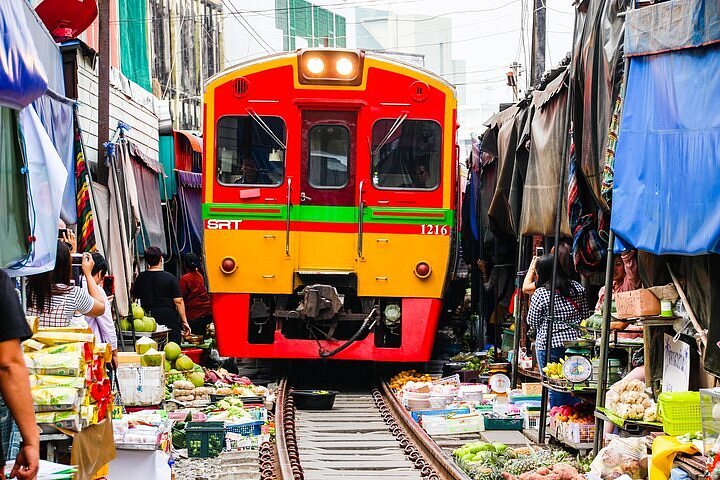
Maeklong Railway Market
Vendors fold their stalls off the tracks up to eight times a day as the train rolls through.
Read the full story
Thais call it Talat Rom Hup — the 'umbrella pulldown market'. A working fresh-seafood market grew directly on top of an active railway line, and every time a train approaches, the awnings snap back, the baskets slide away, and the carriages pass within centimetres of the morning's catch. Thirty seconds later the market reassembles as if nothing happened.
The train crawls through at barely 30 km/h, which is exactly what makes it photographable. Time your visit to a train pass and you get the full theatre; our driver plans the morning schedule around it so you are standing in the right spot, not stuck in the parking area.
Insider tip: Stand near the mid-market curve for the classic shot — arrive 20 minutes before the pass and hold your ground politely.
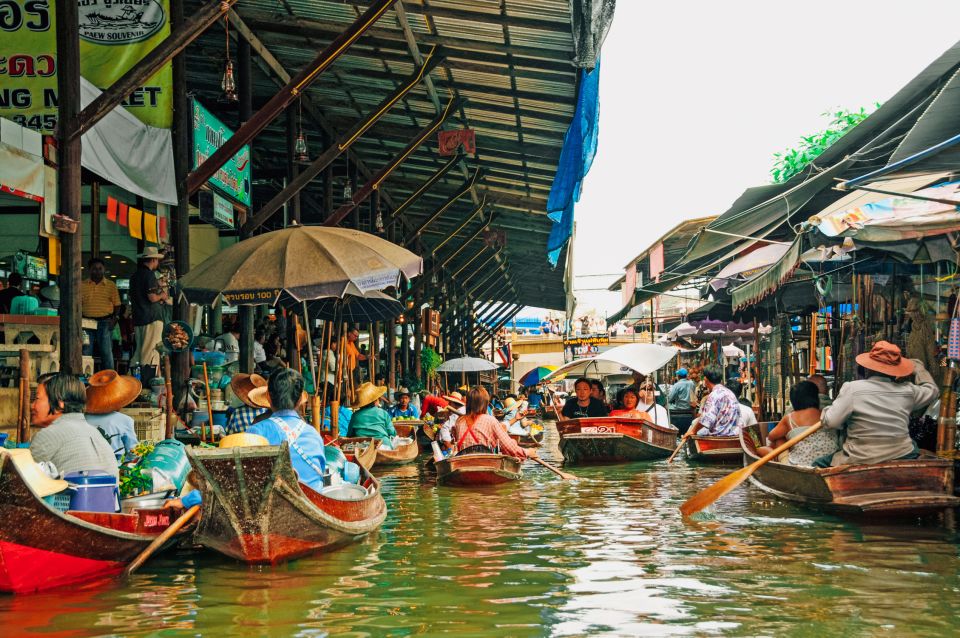
Damnoen Saduak Floating Market
Paddle-boat vendors selling mango sticky rice and boat noodles on a canal grid dug 150 years ago.
Read the full story
Thailand's most famous floating market — wooden paddle boats stacked with mangoes, orchids, and sizzling woks, working a canal network dug in the reign of King Rama IV. Yes, it is popular; it is popular because the visual is real. Go early, before the day-trip coaches arrive, and it still feels like the photographs.
You can walk the canal banks or ride a paddle boat through the middle of it. Our drivers time Damnoen Saduak together with the railway market — the two sit 30 minutes apart, and doing both before noon is the trick most self-drive visitors miss.
Insider tip: Ask your guide to order boat noodles from the boat kitchen — eating on the water is the point.
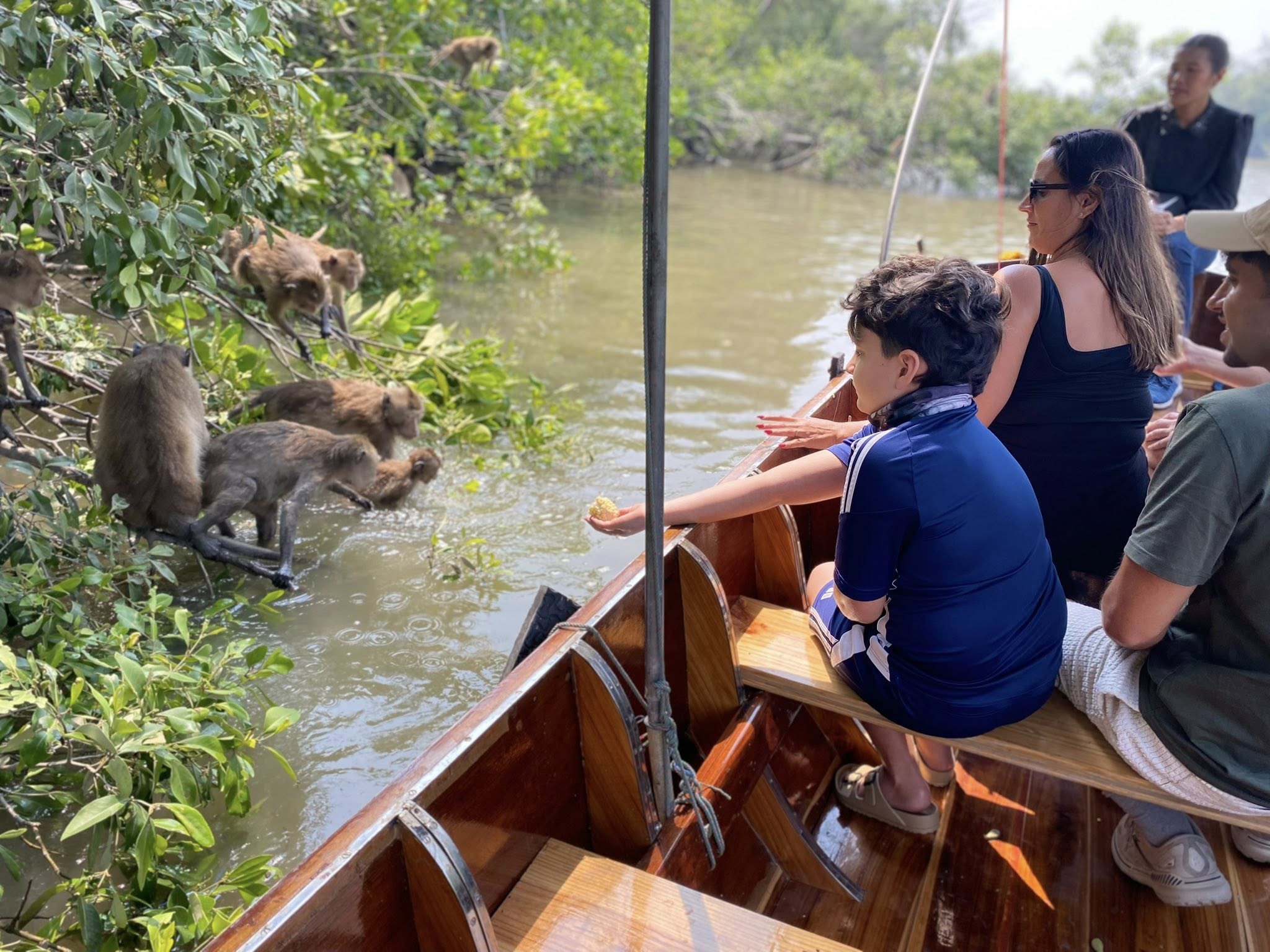
Klong Khon mangrove — feed monkeys by boat
A long-tail boat into the mangrove forest where wild macaques swim out to meet you.
Read the full story
Klong Khon is a working mangrove conservation area in Samut Songkhram, and almost no foreign visitors know it exists. You board a local long-tail boat and run the tidal channels between the mangrove roots; troops of wild macaques know the boats and clamber down to be fed at the waterline — some swim.
It is fifteen minutes of pure delight and one of the most 'local Thailand' moments on this whole route — fishermen's platforms, oyster farms, and mud-skippers included. Because it sits near the two markets, it slots into the same travel morning.
Insider tip: Keep bags zipped and hats in the boat — the monkeys are wild, quick, and shameless.
Kanchanaburi
River Kwai & the Death Railway — walk the history
For many visitors — especially American, Australian and British families — this history is why Kanchanaburi is on the list at all. We treat it with the time and seriousness it deserves.
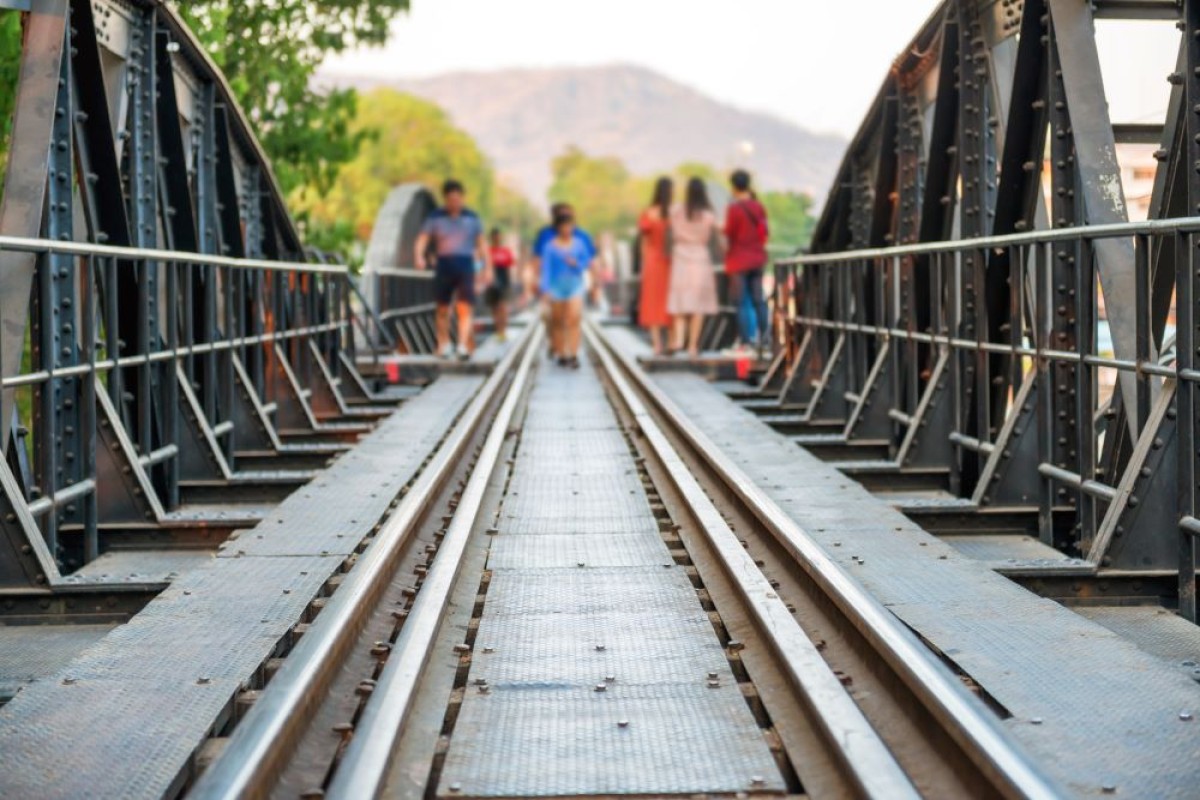
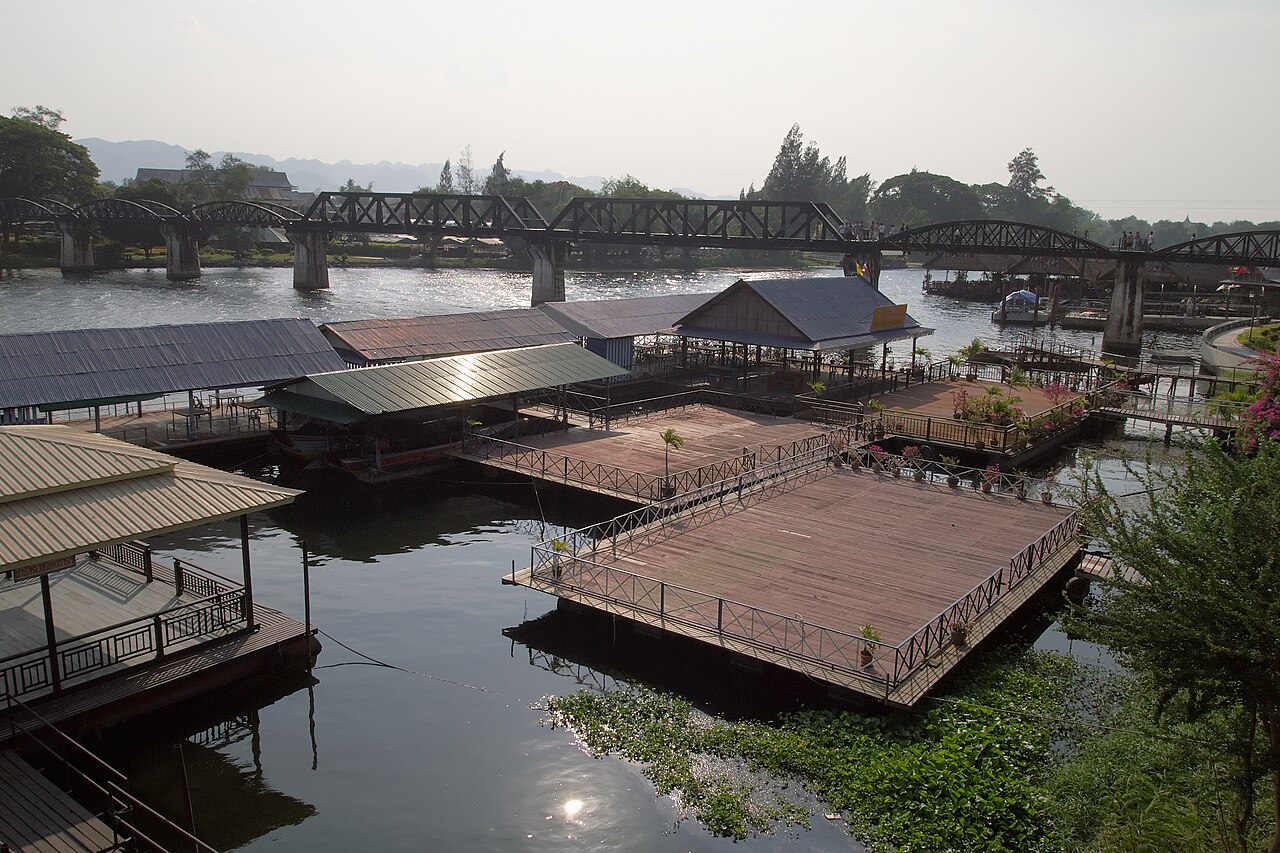
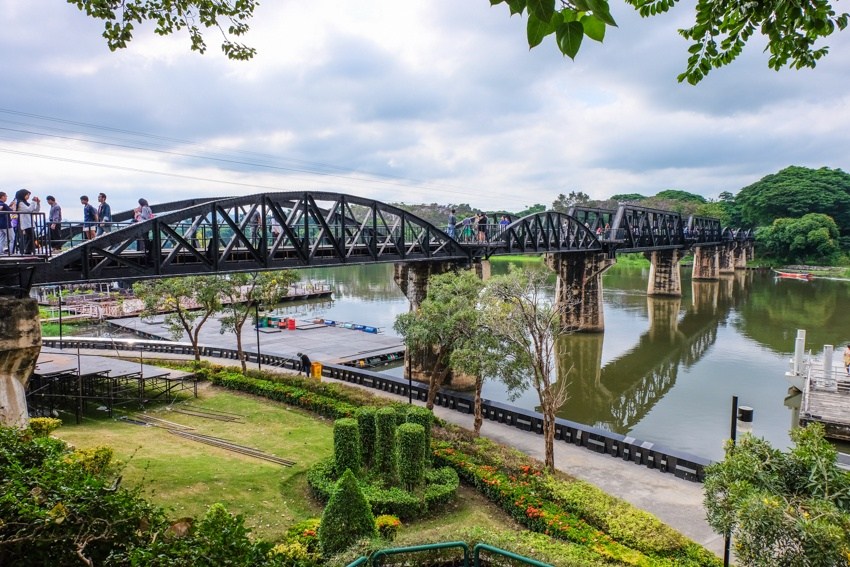
Bridge over the River Kwai
The curved steel spans are the originals from 1943 — you walk across them.
Read the full story
The most famous bridge in Southeast Asia, built by Allied prisoners of war and Asian labourers as part of the Burma Railway in 1943. The curved steel sections you walk across are original; the angular spans replaced those destroyed by Allied bombing in 1945. Your guide explains the history span by span — which is the difference between a photo stop and understanding what you are standing on.
The bridge anchors the whole River Kwai story: the cemetery, the museums, the train ride and Hellfire Pass all radiate from here. It is also the boarding area for the Death Railway train — we sequence it so the walk flows straight onto the platform.
Insider tip: Early morning or late afternoon for soft light and thin crowds — midday is hot steel and tour flags.
Death Railway train ride + Krasae viaduct
90 minutes on the original line, hugging a cliff face on a wooden viaduct above the river.
Read the full story
The train departs River Kwai Bridge Station and runs west through jungle and sugar-cane country alongside the Kwai Noi river. The climax is the Tham Krasae section: the carriages inch across a wooden trestle viaduct pinned to the cliff, the river directly below your window. This is the most dramatic surviving stretch of the railway that 16,000 Allied POWs and around 90,000 Asian labourers died building.
It is a real scheduled train — wooden seats, open windows, farmers commuting with their shopping. That is exactly why it stays with people. We time the day around the fixed departure and position the van at the other end, so you ride the best section without doubling back.
Insider tip: Sit on the left side heading west — that's the river side at Krasae.
Hellfire Pass memorial walking trail
A 75-metre cutting dug by hand through solid rock — named for the torchlight night shifts that looked like hell.
Read the full story
Konyu Cutting — 75 metres long, 25 metres deep — was hacked through the mountain by prisoners working around the clock during the railway's most brutal phase. The night shifts laboured by burning torchlight, and the sight gave the place its name. Sixty-nine men were beaten to death here in six weeks; disease and starvation killed far more.
The memorial museum above the cutting was built by the Australian government and is the best-curated WWII site in Thailand — free entry, moving audio guide narrated by survivors. You then walk down into the cutting itself, on the old rail bed. Allow two hours; nobody regrets them.
Insider tip: Do Hellfire Pass before Erawan on the same day — it sits further west, and reflection then a waterfall swim is the right order.
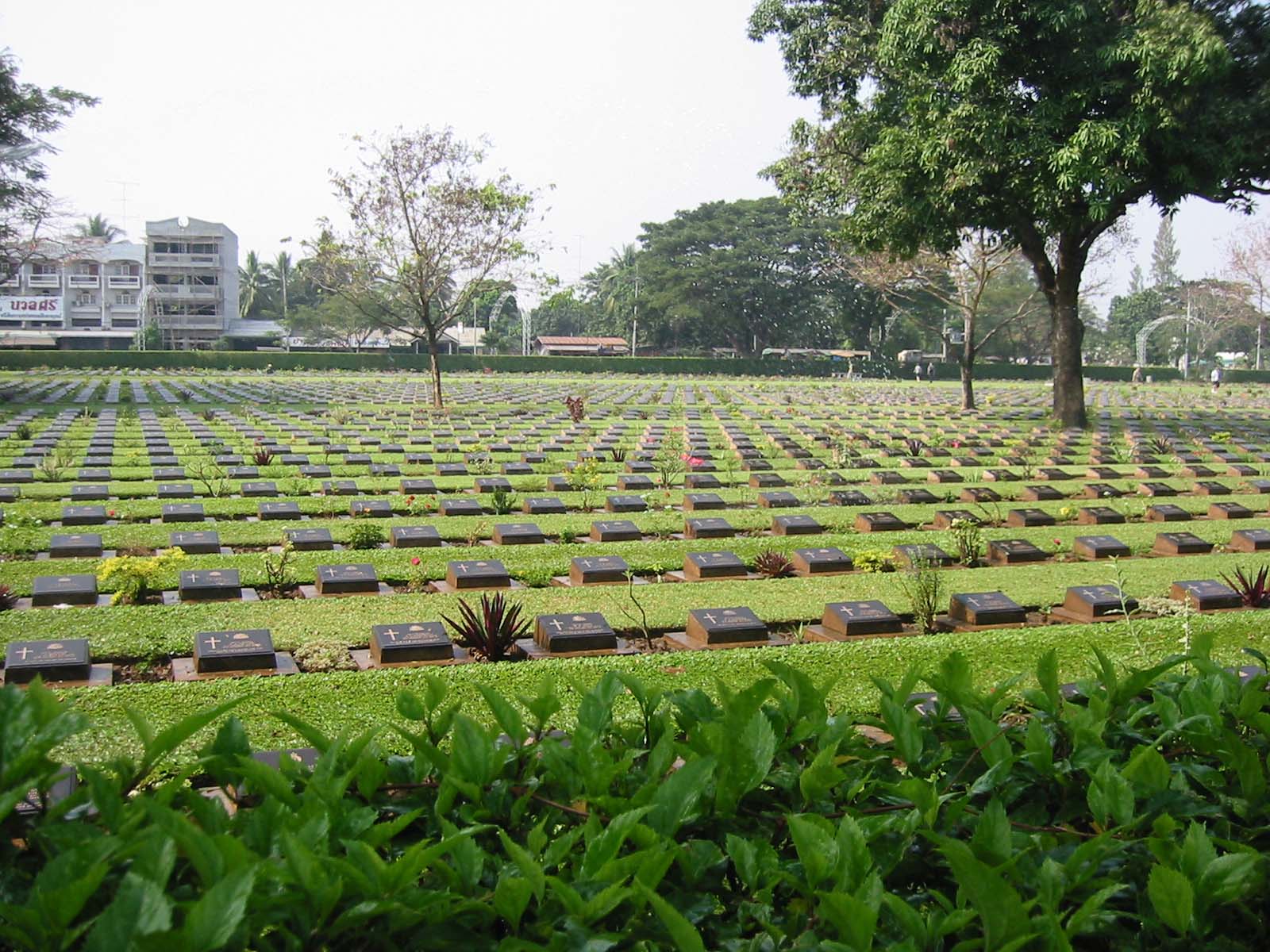
War Cemetery + Death Railway Museum
6,982 graves, each with a name, a regiment and an age — most in their early twenties.
Read the full story
The Kanchanaburi War Cemetery holds 6,982 Allied prisoners of war, maintained immaculately by the Commonwealth War Graves Commission. Walking the rows and reading the ages is the moment the Death Railway stops being a movie title. Directly across the road, the Thailand-Burma Railway Centre museum lays out the full story — maps, artefacts, and the research archive used to identify the men.
For American, Australian, British and Dutch visitors this pairing is often the most meaningful hour of the whole trip. We schedule it in the cool morning, unhurried, before the bridge.
Insider tip: The museum's upstairs gallery ends at a window overlooking the cemetery — save it for last.
If you have more time
JEATH War Museum
A replica bamboo POW hut with original photographs and tools — a shorter, rougher companion to the main museum.
Kanchanaburi
Jungle, river & the floating night
This is the Kanchanaburi most first-timers never give themselves time for — and the reason we recommend at least one night.
A night on a floating raft hotel
Your hotel floats on the River Kwai — you arrive by long-tail boat, and the river runs under your floor.
Read the full story
The van stops at a small pier. Your luggage goes into a long-tail boat, the engine opens up, and you run the River Kwai between jungle banks until a line of floating raft rooms appears against the cliffs — that arrival is the single most memorable moment we arrange on this route. Resorts like The FloatHouse River Kwai offer full-comfort raft villas; several other river resorts offer floating rooms across a range of budgets.
At night there is river sound, jungle sound, and almost nothing else — no roads reach most of these places. Book your own hotel if you prefer (we will happily advise), or let us arrange it as part of the plan. Either way, this is what turns Kanchanaburi from a day trip into the highlight of Thailand.
Insider tip: One night is magic, two nights is a holiday — pair it with Hellfire Pass and Erawan the next morning.
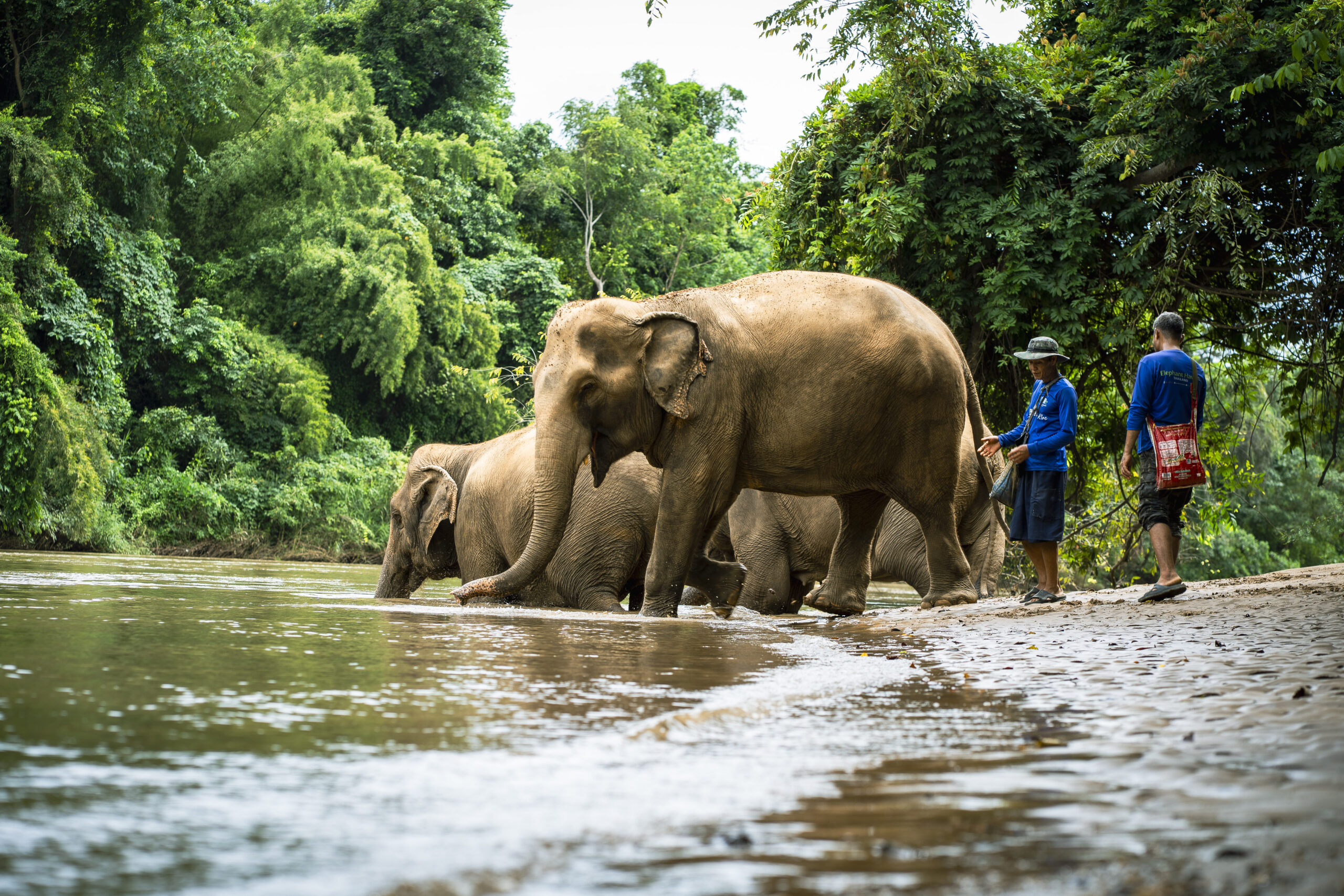
ElephantsWorld — the retirement sanctuary
A sanctuary where old, rescued elephants live out their days — you work for them, not the other way around.
Read the full story
Founded in 2008 by veterinarian Dr. Samart and his wife Khun Fon, ElephantsWorld takes in old, abused and disabled elephants rescued from logging and trekking camps and from street begging. There is no riding and no show. Visitors spend the day the way the sanctuary needs: preparing sticky rice balls for elephants too old to chew, feeding them, walking with them, and bathing them in the river alongside the mahouts.
We are honest about elephant tourism across our whole site: venues sit on an ethical spectrum, and this is the right end of it. For families it is often the day children remember above everything else in Thailand.
Insider tip: Half-day and full-day programs exist — the full day includes the river bath. Bring clothes you are happy to get muddy.
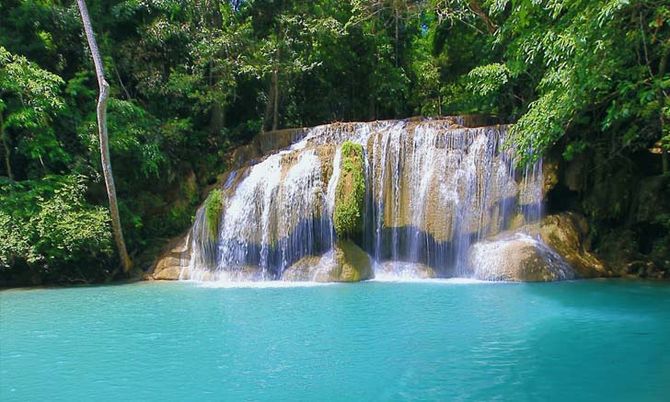
Erawan Falls — seven emerald tiers
Seven waterfall tiers of glass-green limestone pools — you swim in most of them.
Read the full story
Erawan National Park's showpiece is a seven-tier waterfall stepping 1.5 km up a jungle valley, every pool the same improbable emerald — limestone-filtered water over pale rock. Tier 3 is the classic swim; tiers 5 to 7 reward the climb with fewer people and the best pools. The foreigner entrance fee is ฿300 per person, and unlike most listings we include and state fees upfront on our bookable tours.
The mistake almost every tour makes is giving Erawan 90 minutes. It needs three hours to swim past tier 3 — which is exactly what our private Erawan day tour schedules, and what we build into multi-day plans.
Insider tip: Small fish nibble your feet in the pools — harmless, ticklish, and the best free spa in Thailand.
If you have more time
Lawa Cave
The largest cave in the area, near the raft hotels — cathedral chambers, easy walkways.
Bamboo rafting on the Kwai Noi
A slow drift downriver on a lashed bamboo raft — old-Siam pace, zero adrenaline required.
Mallika R.E. 124 heritage town
A living recreation of a 1900s Siamese town — period dress rental, era food, extremely photogenic.
Wat Tham Suea (Tiger Cave Temple)
A giant golden Buddha on a hilltop above the rice paddies, reached by a dragon staircase.
Hin Dat hot springs
Natural riverside hot pools near Hellfire Pass — a genuinely local soak after the trail.
Only have one day for Kanchanaburi?
A one-day Kanchanaburi trip from Bangkok is absolutely possible — we run them daily. But here is the honest part: you cannot fit everything. The Bridge, the train, Erawan Falls, Hellfire Pass and ElephantsWorld together are physically impossible in a single day with the 2-hour drive each way.
So pick your top three and we will tell you straight what fits — history sites pair well with the train; Erawan pairs well with ElephantsWorld. And if you find you cannot choose, that is exactly what the night on a floating hotel is for.
Continue your journey
Add a city to this trip
Tap a city to see what we arrange there, tick what you like, and it all goes into the same message to us — one plan, one transparent quote.
Before you ask
Questions travellers ask us
How many days do Bangkok and Kanchanaburi need together?
The most popular shape is 4–5 days: 2–3 days in Bangkok (temples, canals, one big night out, often the Ayutthaya day trip) and 2 days in Kanchanaburi with one night on the river. That covers the must-do tier of this page without rushing.
With 6–7 days you add a second river night, ElephantsWorld as a full day, and a free Bangkok day for shopping or a cooking class. Tell us your total nights in Thailand and we will suggest the split honestly — including telling you if your plan tries to fit too much.
Do we have to book hotels through you?
No — and most of our American and European guests prefer booking their own hotels, which we fully support. You know your comfort level and your points programs; we simply plan pickups and routing around wherever you stay.
The one place we often help is the River Kwai floating hotels, because availability is limited and arrival works by boat transfer. We can book it as part of the plan, or advise you on which raft resorts fit your budget and you book direct. Completely flexible.
How does pricing work if there is no fixed package?
You tell us what you picked from this page, your dates, and your group size — we reply with a transparent line-by-line quote: vehicle and driver, guide days, activity and entrance costs, and any transfers. No hidden charges is a rule across our whole company, and every quote shows exactly what is included.
Because the trip is built around your selection, you never pay for stops you did not want — that is the whole point of designing it yourself. Quotes are free and non-binding via WhatsApp (+66 89 949 6235) or email.
What exactly is a floating raft hotel — is it comfortable?
Raft hotels are rows of real hotel rooms built on floating pontoons moored to the riverbank of the Kwai, reached by long-tail boat from a pier. Options range from simple fan-cooled rafts to full-comfort resorts like The FloatHouse River Kwai with air-conditioned villas, proper bathrooms and restaurants.
Comfort levels vary by property, so tell us who is travelling — couples, kids, grandparents — and we will match the right raft resort. The arrival by boat and the night on the water are consistently the moment guests rate highest on this route.
Is ElephantsWorld ethical? Is there riding?
There is no riding and no show. ElephantsWorld is a sanctuary founded in 2008 by a Thai veterinarian to care for old, abused and disabled elephants rescued from logging, trekking camps and street begging — its motto is that visitors work for the elephants, not the other way around.
Your day is spent preparing food, feeding, walking with and bathing the elephants alongside their mahouts. We are honest across our site that elephant venues sit on an ethical spectrum; this one sits at the right end of it.
Can we change the plan or the order of days?
Yes — that is the design of this page. Nothing here is a fixed itinerary; every activity is modular and we sequence them based on what you choose, your hotel locations, market days and train times. You can also change your mind after the quote — we re-plan until it is right.
Some pieces have fixed constraints we plan around: the Death Railway train runs on a fixed schedule, the floating markets are at their best before noon, and Erawan needs a full morning or afternoon. Part of our job is telling you these things before they cost you a day.
What vehicle and team do we get?
A private air-conditioned van (or SUV for smaller groups) with the same professional driver for your whole trip — no switching vehicles between cities. On touring days you have a licensed English-speaking guide; on pure travel or beach days you can skip the guide and save the cost.
Trip Thai Tour is TAT-licensed operator No. 14/04232 — verifiable on the official Thai tourism registry — with a 4.0 rating from 186 TripAdvisor reviews. WhatsApp us any time at +66 89 949 6235.
Is the Death Railway train comfortable? Is it suitable for kids?
It is a real scheduled Thai train — wooden seats, open windows, ceiling fans, no air-conditioning. The best section, including the Krasae cliff viaduct, takes about 90 minutes, which is exactly the right length: long enough to feel it, short enough for children.
Kids generally love it — the open windows, the river below the viaduct, vendors walking through with snacks. Your van meets the train at the other end, so nobody rides back.
When is the best time of year for this route?
November to February is the sweet spot — dry, relatively cool, and Erawan's pools are full and clear. This is also Thailand's peak season, so floating hotels should be booked early.
The green season (roughly May to October) has afternoon rain but big rewards: the waterfalls at maximum flow, lush jungle on the river, and quieter sites. March–April is hot season — we sequence swimming stops in the afternoons and temples early. The route works year-round; the plan just changes shape.
Can we continue to Phuket, Chiang Mai or the islands after Kanchanaburi?
Yes — Bangkok–Kanchanaburi is the most common opening leg of longer trips. We drive you back to a Bangkok airport and you fly on to Phuket, Chiang Mai, Chiang Rai or Koh Samui; we arrange the touring on the other end too.
Use the 'Add a city' section on this page to include those legs in your plan, and we will quote the whole trip in one transparent summary.
How far ahead should we book?
For the trip plan itself, 2–4 weeks ahead is comfortable; we confirm drivers, guides and activity bookings with at least 24 hours' notice as standard. For peak season (November–February) — especially if you want a specific floating hotel — start the conversation 1–2 months out.
The quickest path: send your dates and your activity picks via the buttons on this page, and you will have a human answer the same day.
Do you handle food preferences — vegetarian, halal, Indian?
Yes. Lunch stops on this route include halal-friendly, vegetarian, Indian and Western options, and your guide plans restaurants around your preferences rather than around commission — we never route you through gem shops, silk showrooms or any forced-stop economy.
Tell us dietary needs at the quote stage and they are built into the day plans, including at the floating hotels.
Ready to make this trip yours?
Send your picks — a human (not a bot) replies the same day with a transparent, line-by-line quote. No hidden charges, no obligation.
TAT Licence No. 14/04232 · 4.0 rating from 186 TripAdvisor reviews