Elephant Jungle Sanctuary Koh Samui: Honest Review, What to Expect & How to Choose the Right Session (2026)
The Honest Answer: Is Elephant Jungle Sanctuary Koh Samui Worth It?
Yes — and it is likely to be one of the most memorable half-days you spend on the island. But that answer deserves some context, because there are a lot of elephant attractions in Koh Samui, and the word "sanctuary" gets used by operations that do not deserve it.
This guide covers the honest picture: what Elephant Jungle Sanctuary Koh Samui actually is, what happens during the visit in specific detail, how it compares to other Koh Samui elephant experiences, who it suits best, and exactly what the morning versus afternoon session means in practice. It is written to give you the information that most booking pages leave out — so that if you decide to go, you know exactly what you are walking into.
Elephant Jungle Sanctuary Koh Samui — Half Day Tour

Is It Actually Ethical? The Question You Should Ask First
Before anything else — this is the right question, and it deserves a direct answer.
Elephant Jungle Sanctuary operates with a genuine no-riding policy, no bullhooks, and no performance shows. Every elephant at the Koh Samui location has been rescued from logging operations or tourist riding camps — industries where elephants are subjected to a process called phajaan (the crush), a breaking technique that causes deep psychological trauma.
The sanctuary model works because your visit fee funds ongoing rescue. Each elephant eats approximately 10% of its body weight daily — that is 150–250 kg of food — which costs a significant sum. The more visitors, the more elephants can be rescued and maintained in safety. This is not greenwashing: the chain between your booking fee and an elephant's quality of life is direct and verifiable.
Elephant Jungle Sanctuary started in Chiang Mai in 2014 with three elephants and now operates across four provinces in Thailand with over 60 elephants in their care. The Koh Samui location is part of that established network — not a standalone operation set up to capitalise on sanctuary tourism.
What distinguishes a genuine sanctuary from a commercial elephant venue:
| Genuine Sanctuary | Red Flags to Avoid |
|---|---|
| No riding — ever | Elephant rides, elephant trekking |
| No bullhooks visible | Hooks, ankus, or striking implements |
| Elephants roam freely | Chained elephants |
| Schedule adapts to elephants | Forced performance shows |
| Visitor numbers capped — small groups | 50+ visitors at once, assembly-line feel |
| Rescue stories documented | Vague claims about "ethical treatment" |
Elephant Jungle Sanctuary passes all of these. If you want to spend time close to elephants in Koh Samui and leave without that uncomfortable feeling that something was wrong — this is where you go.
What Actually Happens — The Full Half-Day Step by Step
Most booking pages give you a bullet list. Here is what the experience actually feels like, in the order it happens.
Arrival & Welcome (9:00 AM or ~1:30 PM)
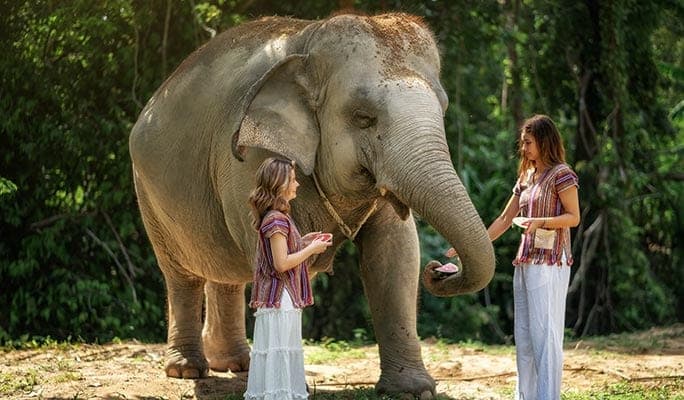
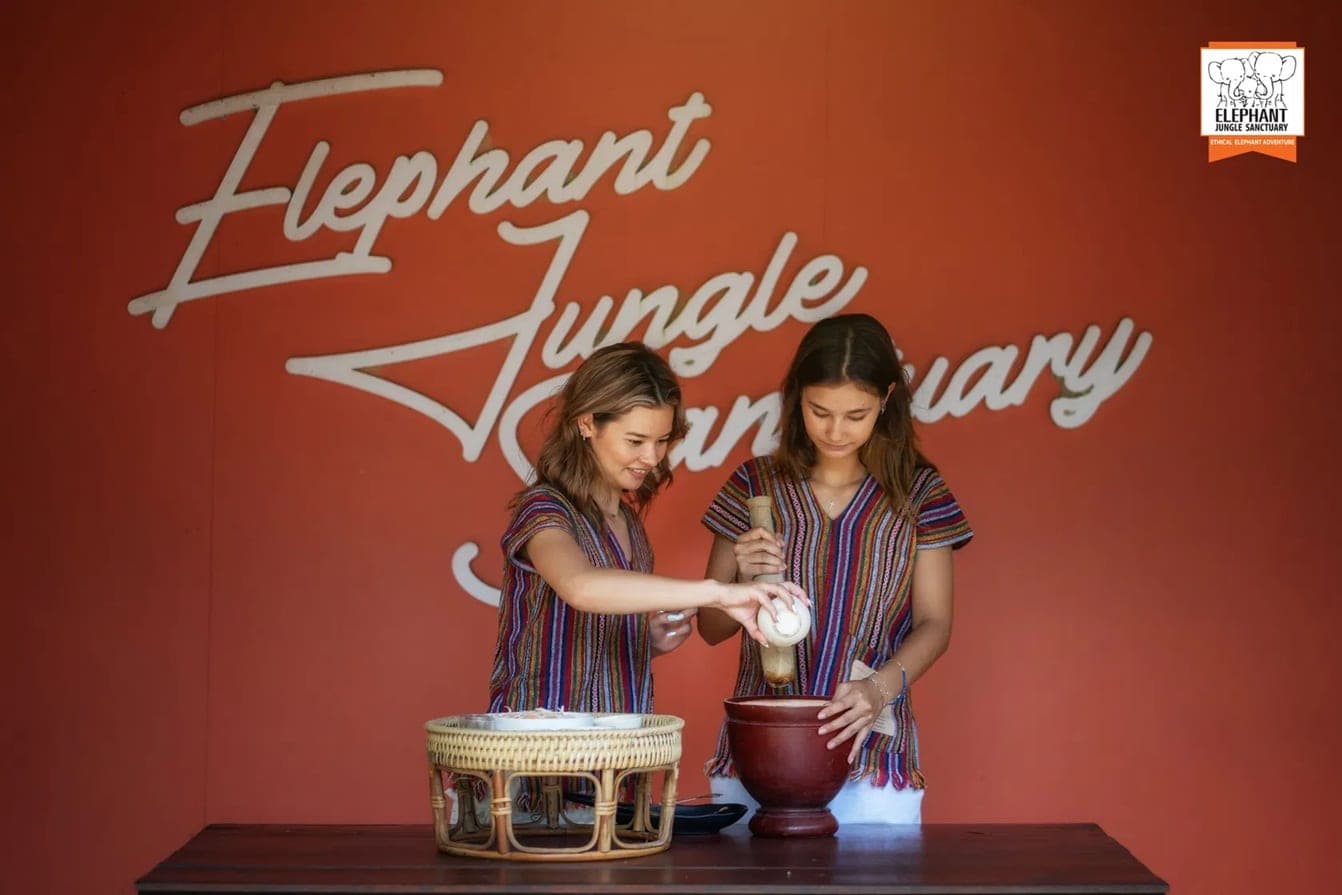
After hotel pickup in an air-conditioned vehicle, you arrive at the sanctuary. Welcome snacks, tea, and coffee are served. You are given the Karen shirt — traditional clothing worn by Thailand's hill tribe communities who have lived alongside elephants for generations. You wear it throughout the visit. It is a genuine touch, not a costume.
Your guide gives a brief introduction to each elephant in the herd — their name, where they came from, and what their life looked like before the sanctuary. These individual stories are what separate this experience from a generic zoo visit. Knowing that the elephant you are about to feed spent years being made to carry tourists up Chiang Mai hillsides changes how you look at her.
Making Natural Dietary Supplements (~9:15 AM)
This is the activity that most surprises visitors and that most other sanctuaries in Koh Samui do not offer in this format. You prepare natural dietary supplements for the elephants with your own hands — mixing specific ingredients (herbs, fruits, minerals) into compact balls that the elephants will eat during the feeding session.
It sounds simple, and the actual mixing is straightforward enough for young children to do. What it creates is a different kind of engagement: you are not just a tourist feeding an elephant — you are contributing something specific to that animal's health and nutrition. The guides explain what each ingredient does and why it matters.
Elephant Feeding (~9:30 AM)
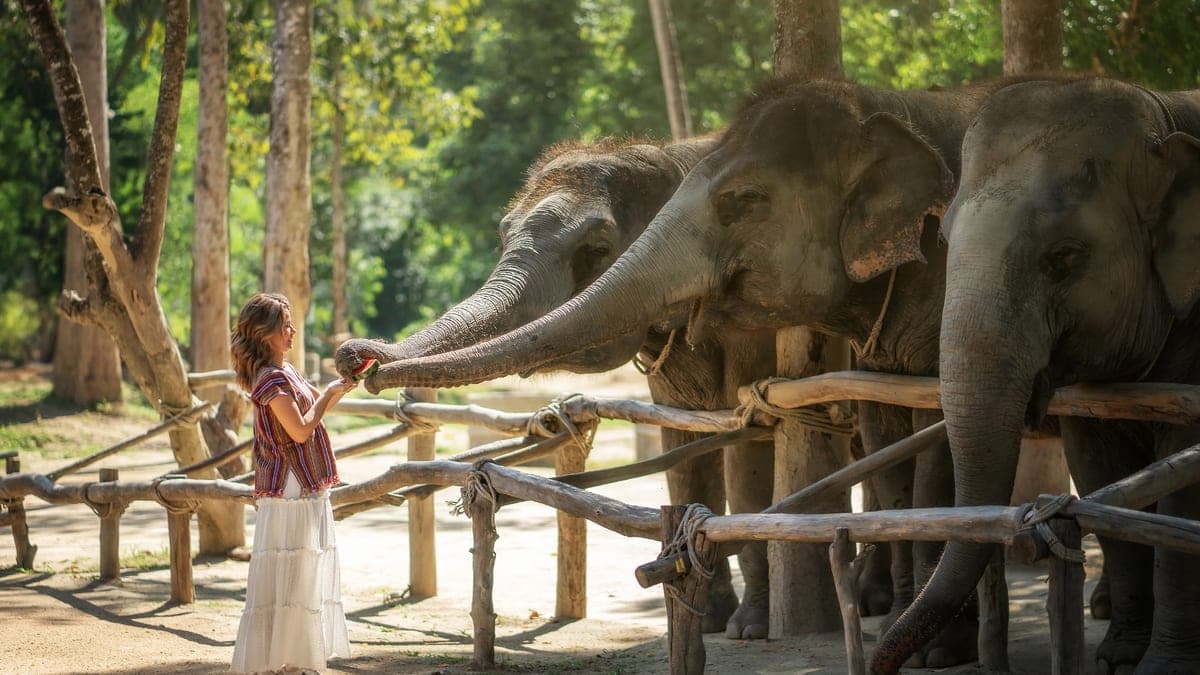
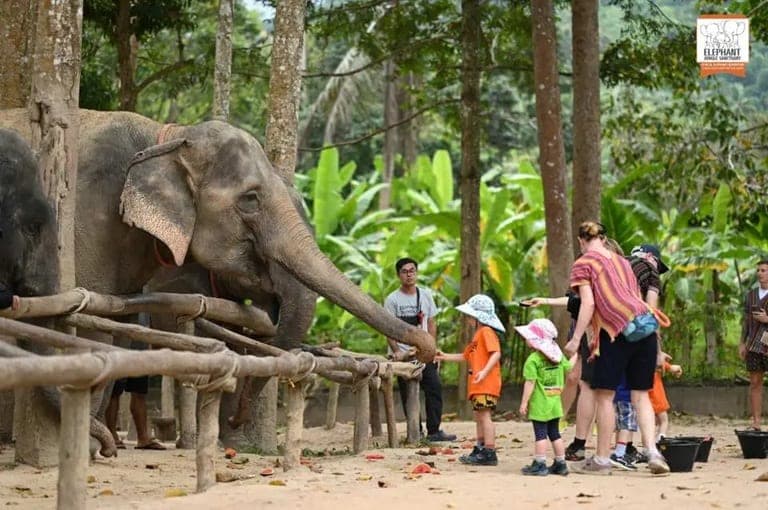
The elephants come to you. No chains, no handling equipment. They reach their trunks forward and take fruit and the supplements you prepared directly from your hands. This is the moment visitors most frequently describe as unexpectedly moving — feeling the rough skin of a trunk, the warm breath, the focused attention of an animal ten times your size that has chosen to trust you.
You will be close enough to see the detail in their eyes. Take your time.
Jungle Walk (~10:00 AM)
You walk with the elephants through the sanctuary's forest land, accompanied by their mahouts. This is where you observe natural behaviour — foraging, breaking branches, using their trunks to investigate the ground. The elephants are not led on a fixed path; they navigate and you follow. This is the correct dynamic.
The jungle walk is the section most affected by weather. In the wet season, the ground is muddy underfoot — wear trainers, not sandals. In the dry season, the forest is drier and easier going.
Mud Spa (~10:30 AM)
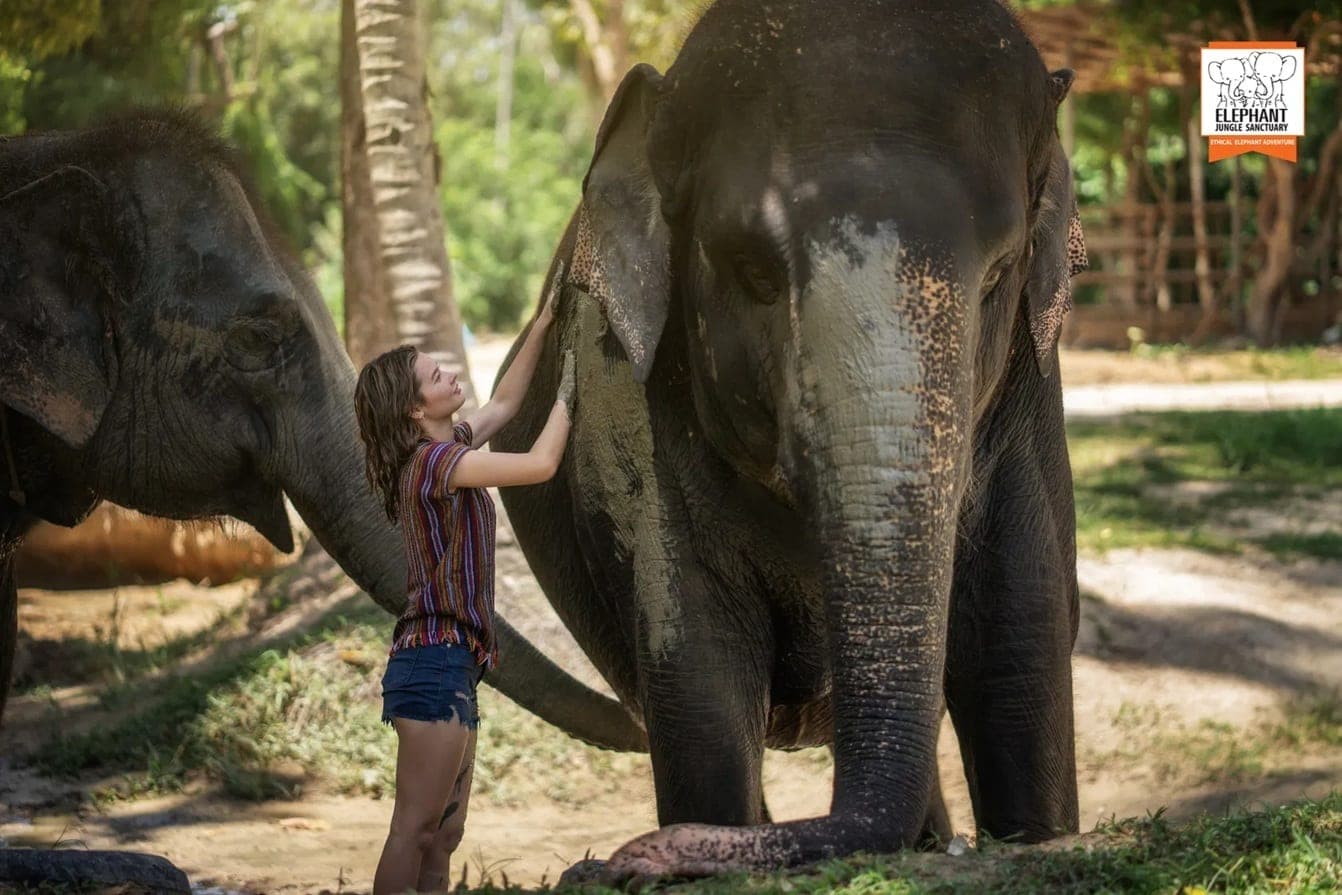
The mud spa is exactly what it sounds like — and the elephants love it. Mud regulates their body temperature, protects their skin from insects, and removes parasites. Your role is to help apply it, which means getting your hands (and likely your arms) into the mud pit alongside the elephants. Children find this section particularly delightful. Adults find it takes about 30 seconds to stop worrying about their clothes and start having fun.
You will be given bags for your dirty clothes and footwear afterwards, and a shower facility to clean up before the meal.
Elephant Shower (~11:00 AM)
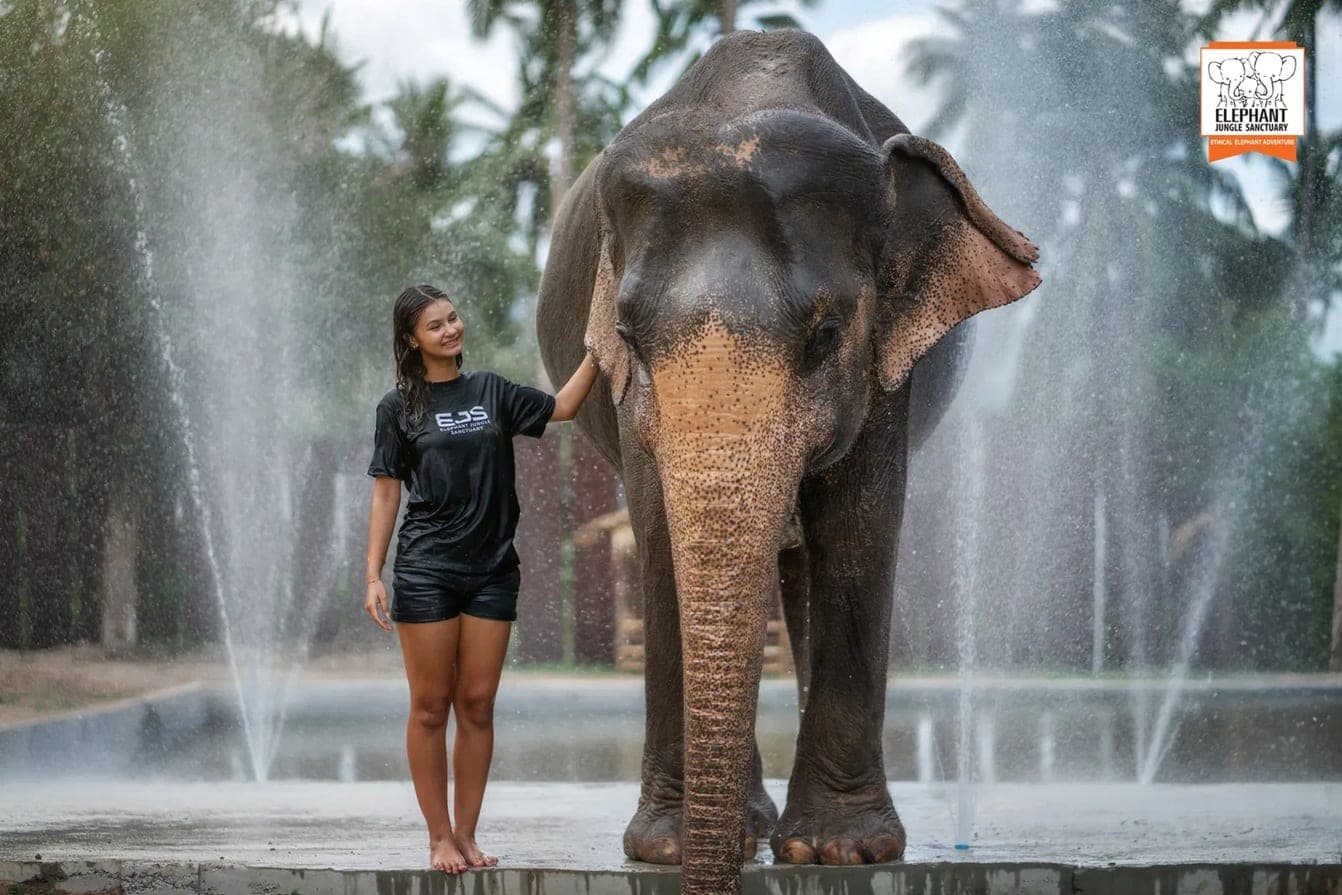
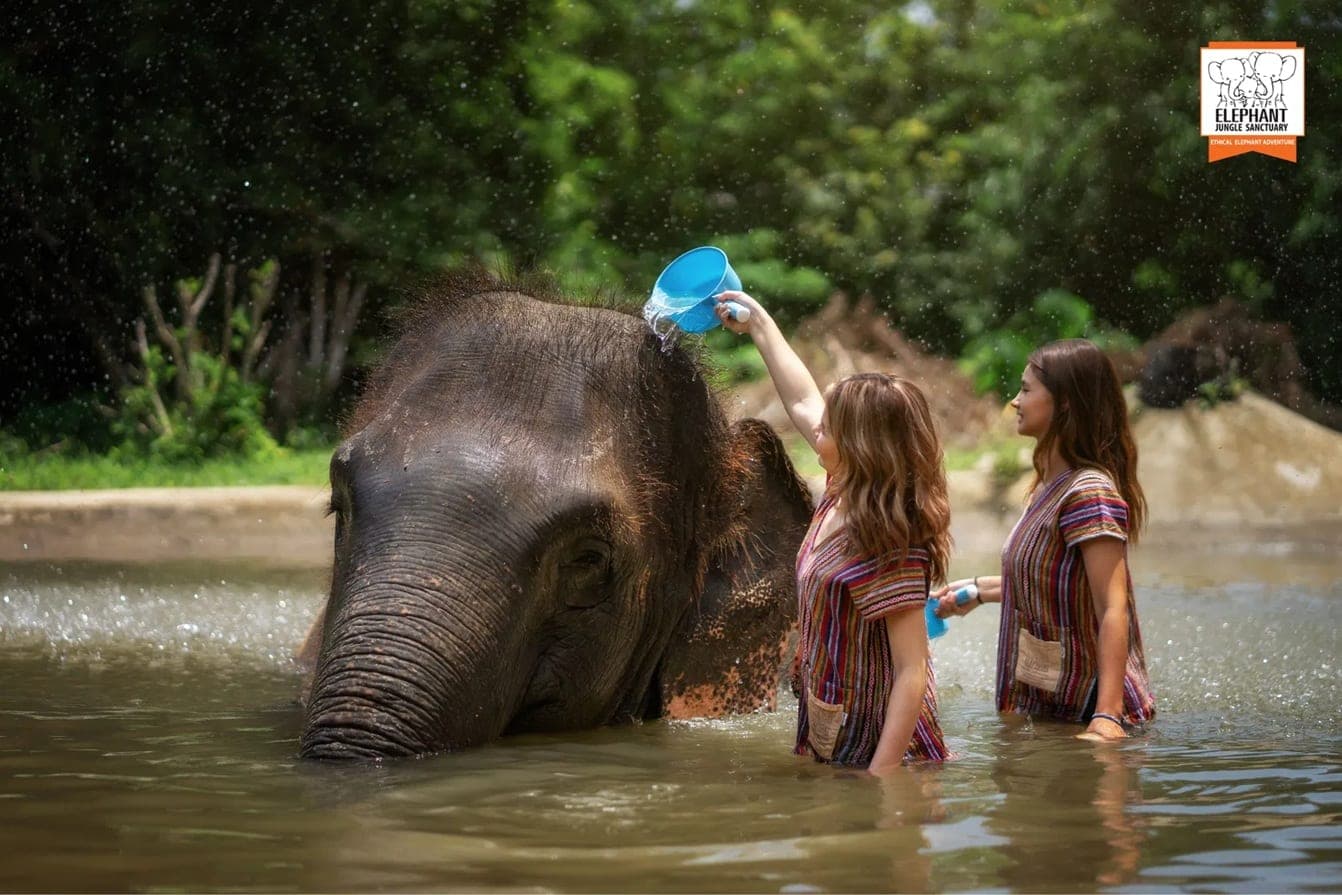
After the mud spa, the elephants move to the outdoor shower station — an open-air area where you help cool them down with water. This is the photographic highlight for most visitors: the combination of water, sunlight, and enormous elephants in a jungle setting produces the kind of images that end up as phone backgrounds for years.
Traditional Thai Meal (~11:30 AM)
After showering and changing, you sit down to a traditional Thai meal — or dinner if you are on the afternoon session. Vegetarian options are available and should be requested at booking. The meal is served in the sanctuary's open-air dining area with the forest visible around you.
This is also where you have the most time to talk with your guide about elephant conservation, the sanctuary's expansion plans, and how the rescue process actually works.
Elephant Poop Paper Activity (~12:00 PM)
This is the activity that gets the most surprised reactions in advance and the best reviews in hindsight. Elephant dung is largely composed of undigested plant fibre — the same raw material used in paper-making. The sanctuary processes the dung to remove all bacteria, and the resulting fibre is transformed into sheets of paper that you make yourself.
You mix, press, and shape the paper. You take the finished result home. It is clean, it does not smell, and it is genuinely enjoyable as a craft activity — especially for children. More importantly, it demonstrates in a concrete way how the sanctuary approaches self-sustainability: finding value in every part of elephant care.
Return to your hotel by approximately 12:30 PM (morning session) or 4:30–5:00 PM (afternoon session).
Morning Session vs Afternoon Session — Which Should You Choose?
This is the question that barely any Koh Samui content answers well, and it genuinely matters.
| Morning Session | Afternoon Session | |
|---|---|---|
| Pickup | 8:00–8:45 AM from hotel | 12:00–12:45 PM from hotel |
| Return | ~12:30–1:00 PM | ~4:30–5:00 PM |
| Temperature | Cooler — best Nov–Apr | Can be hot, better May–Oct |
| Elephant energy | Higher activity, more foraging | Calmer, more relaxed |
| Photography | Good light, slightly harsh midday | Beautiful golden afternoon light |
| Best for | Families with young children | Couples, solo travellers, photographers |
| Your morning | Early start required | Hotel pool, beach, or breakfast at leisure |
The honest recommendation: If you are visiting between November and April, choose the morning session. The cooler temperature makes the jungle walk more comfortable and the elephants are more active. If you are visiting in the hotter months (May–October), the afternoon session may actually be cooler on some days due to cloud cover.
If you have young children who are at their best in the mornings and tend to fade in the afternoon, the morning session is the right call regardless of month.
Is It Suitable for Children and Families?
Yes — this is one of the best family activities in Koh Samui, and it works across a wide age range. Children aged 3 and above handle the experience well. The supplement preparation is a physical, hands-on activity that suits small hands. The elephant feeding captivates children of any age. The mud spa is the section most children rate as the day's highlight.
For toddlers and babies: Bring a baby carrier rather than a pushchair — the jungle terrain is uneven. Keep very young children away from the elephants' feet at all times (the guides will direct you). The meal section gives young children time to eat and recover.
For older children and teenagers: The poop paper activity tends to be a hit with teenagers who would otherwise roll their eyes at a nature experience. The size and closeness of the elephants also consistently impresses children who thought they had seen everything.
For grandparents and elderly visitors: The jungle walk is gentle rather than strenuous, but does involve uneven ground. Sturdy footwear is important. Several visitors in their sixties and seventies have reviewed the experience positively — the pace is flexible and nobody is pushed beyond their comfort level.
How Does It Compare to Other Koh Samui Elephant Sanctuaries?
There are several elephant sanctuaries operating in Koh Samui in 2026. Here is the honest comparison picture:
Elephant Jungle Sanctuary Samui (what we book) — Part of the established EJS network since 2014. Half-day format, supplement preparation activity, mud spa, elephant shower, poop paper craft. Hotel pickup included.
Samui Elephant Sanctuary (Chaweng Noi / Bophut) — TAT award winner, World Animal Protection recognized. Two locations, morning and afternoon 3-hour programs. Strong welfare credentials. Well-reviewed. Does not include transfer from Airbnb/villas/piers.
Samui Elephant Haven (north Samui) — 60 rai (23+ acres), 14 rescued elephants. Offers observation-focused visits without bathing. More hands-off format. Smaller group sizes.
The key differences that affect your booking decision:
Group size — smaller groups mean more time with each elephant and more personal guide attention. Ask at booking.
Transport logistics — some sanctuaries do not offer pickup from villas or private rentals. Our booking includes hotel pickup from all Koh Samui hotels.
Activity format — the supplement preparation and poop paper activity at EJS are not standard at all Koh Samui sanctuaries. If these hands-on elements matter to you, verify they are included.
Duration — a genuine half-day program runs 4–5 hours including transfers. Be cautious of any program advertised as less than 3 hours on-site.
What to Wear and Bring — The Practical Checklist
Visitors who arrive prepared have a significantly better experience than those who don't. This is the complete list:
Wear:
- Comfortable clothes you genuinely do not mind getting muddy and wet
- Closed-toe shoes or trainers (strongly recommended — sandals and flip-flops are a mistake on jungle terrain)
- Clothes that can be a layer under the Karen shirt
Pack:
- Change of clothes and footwear for after the mud spa — essential, not optional
- Hat and sunscreen (the sun in Koh Samui is serious)
- Insect repellent
- Camera or phone for photos
- Small bag for valuables (lockers available at the sanctuary)
- Refillable water bottle
Leave at the hotel:
- Valuables you don't need
- White or light-coloured clothing (mud stains)
- Good shoes you care about
Budget: Bring a small amount of Thai Baht for any personal purchases at the sanctuary shop. No entrance fee is payable on arrival — everything is pre-arranged through your booking.
Elephant Sanctuary Koh Samui Price — What You Actually Pay and What It Includes
Koh Samui elephant sanctuary pricing varies considerably depending on where you book and what is included. Here is the honest breakdown:
What the price should always include:
- Round-trip hotel transfers
- All activities on site (feeding, supplement preparation, mud spa, jungle walk)
- Traditional meal (lunch or dinner)
- Guide
- Karen shirt
What is often not included when you book through OTA platforms:
- Aggregator platforms add their commission (15–25%) on top of the operator price
- Some listings do not include hotel transfers — check the small print carefully
- Some shorter programs (1.5 hours) are priced lower but give significantly less time with the elephants
Our booking through Trip Thai Tour's Elephant Jungle Sanctuary Koh Samui page is at net rate — no OTA commission added, hotel pickup included from all Koh Samui hotels, and the full half-day program with every activity listed in this guide.
For families with children, a half-price child rate is available. Confirm at booking.
The One Thing Most Visitors Say They Didn't Expect
Read through the reviews for any Koh Samui elephant sanctuary and a particular phrase appears repeatedly: "I didn't expect to feel this moved."
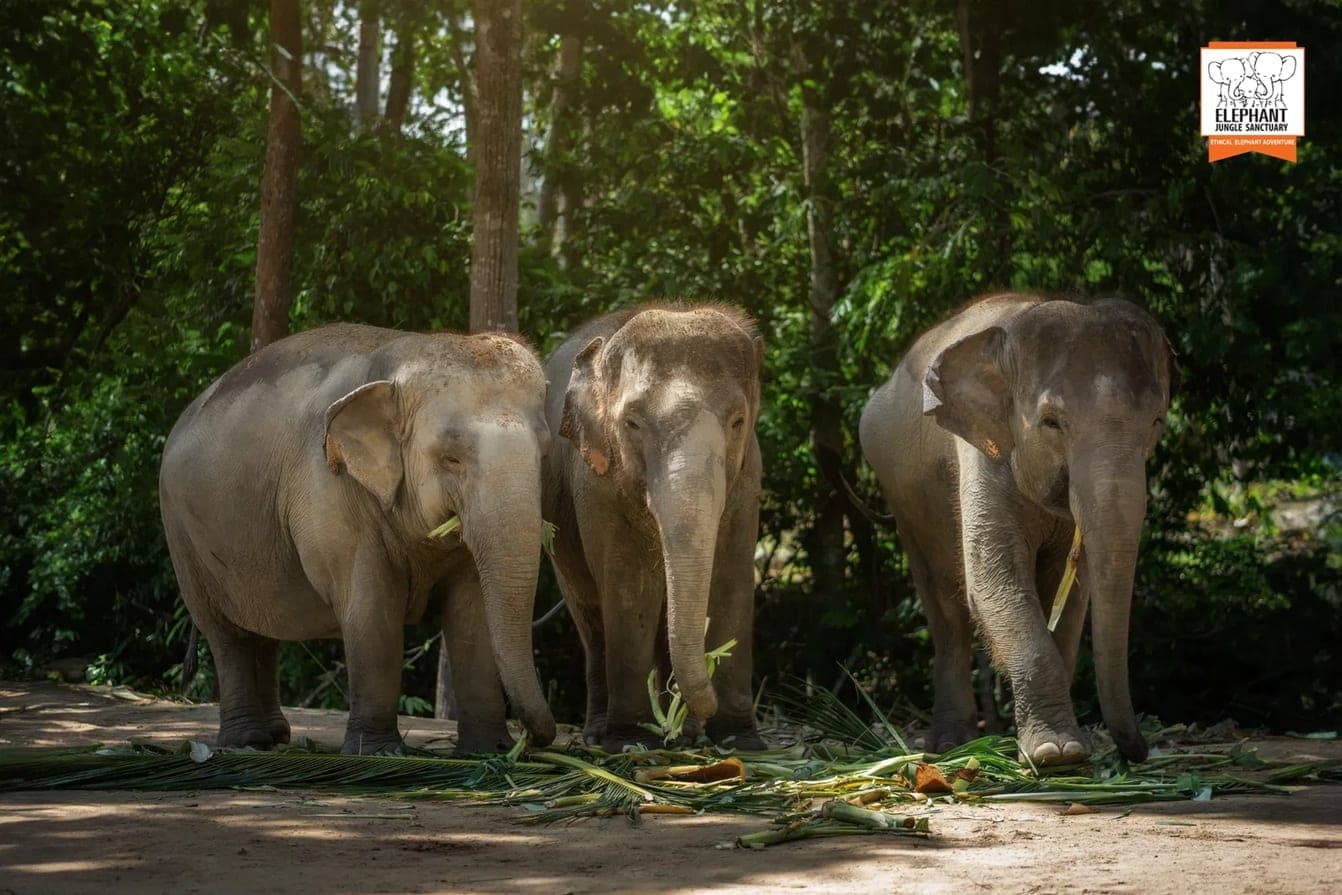
It sounds like marketing language. It isn't. It comes from the moment when a 4-tonne elephant reaches her trunk toward your hand and takes the food you prepared — and you realise, with complete physical certainty, that she chose to do that. Not because she was trained to perform, not because she was chained in place, but because she has learned to trust the people at this sanctuary and she extended that trust to you.
That moment is not available at a riding camp or an elephant show. It is only available at a place where the elephant's wellbeing genuinely comes first.
Koh Samui has beautiful beaches, excellent restaurants, and a well-worn tourist circuit. The Elephant Jungle Sanctuary is the activity that most visitors who have done it say they would do again first.
How to Book
Book the full half-day tour with hotel pickup through our Elephant Jungle Sanctuary Koh Samui tour page. Select your session (morning or afternoon), travel date, and number of guests. Your hotel pickup time is confirmed by WhatsApp the evening before.
Book ahead — the sanctuary does not take same-day bookings, and the online calendar opens from the day after tomorrow (for tomorrow, message us on WhatsApp and we will check with the sanctuary). The price is ฿2,800 per adult with hotel pickup and the Thai meal — the sanctuary's own website lists the same half-day program at ฿3,000, so you pay ฿200 less for the identical session. For peak season (December–January and July–August), book 3–5 days ahead to secure your preferred session and date.
Dietary requirements — vegetarian and other dietary restrictions for the included meal should be noted at booking. Confirm at the time, not on arrival.
For questions before booking, WhatsApp the Trip Thai Tour operations team directly: the number is on the tour page. We answer within 1 hour during operating hours.
Visiting Koh Samui as part of a longer Thailand trip? Read our Bangkok Pattaya tour package guide and our Bangkok tour packages for Indian families — we operate across all major Thailand destinations and can combine your Koh Samui activities with a full Thailand itinerary in a single booking.
Frequently Asked Questions
Yes — and this is the most important question to ask before visiting any elephant attraction in Thailand. Elephant Jungle Sanctuary operates with a strict no-riding policy, no bullhooks, and no performance shows. Every elephant at the Koh Samui location has been rescued from logging operations or tourist riding camps. The sanctuary model funds ongoing elephant rescue: your visit fee contributes directly to the cost of feeding (each elephant eats approximately 10% of its body weight daily) and future rescues. EJS is part of a network of sanctuaries operating across four provinces in Thailand with over 60 elephants in their care. The activities — supplement preparation, feeding, mud spa, and jungle walk — are all structured around what benefits the elephants, not just what makes for good photographs. The elephants roam freely and the schedule adapts to them, not the other way around.
Both sessions are excellent, but they have a different character. The morning session (pickup 8:00–8:45 AM, arrival by about 9 AM) gives you cooler temperatures — important from November to April when mornings are pleasant and afternoons can be quite hot. Elephants are generally more active in the morning, which means more natural behaviour to observe. The afternoon session (pickup from ~12:30 PM, departure ~4:30 PM) works better for guests who want a slower morning at their hotel, and the late afternoon light is excellent for photographs. Families with young children who are at their best in the mornings tend to prefer the morning session. Couples and solo travellers often enjoy the quieter, golden-light atmosphere of the afternoon. If you are visiting between May and October, the afternoon may be cooler than the morning on some days.
Yes — the experience is family-friendly and well-suited to children aged 3 and above. Young children love the hands-on feeding and are fascinated by being close to such large, gentle animals. The supplement preparation is a great activity for children's hands. The mud spa section is a favourite with kids. The sanctuary grounds are manageable on foot without strenuous hiking. For families with very young children (under 3), bring a carrier rather than a pushchair — the jungle terrain is uneven. Children under 18 must be accompanied by an adult at all times near the elephants. The sanctuary is accustomed to family groups and the guides pace the experience for mixed-age groups.
After hotel pickup in an air-conditioned vehicle, you arrive at the sanctuary at approximately 9:00 AM (morning session) or 1:30 PM (afternoon session). You are welcomed with snacks, tea, and coffee, and given an introduction to the sanctuary's elephants and the rescue program. You are fitted with the traditional Karen shirt — worn throughout the visit. The first activity is preparing natural dietary supplements for the elephants — mixing ingredients by hand that will be fed to the herd. You then meet the elephants and feed them directly: fresh fruit, vegetables, and the supplements you prepared. The elephants come to you — no restraints, no chains. You then accompany the elephants on a jungle walk, observing how they forage naturally in the forest. The mud spa follows — the elephants enjoy a mud bath and you participate in helping them. The outdoor elephant shower comes next — cooling them down. After changing and showering yourself, you sit down to a traditional Thai meal (lunch or dinner depending on session). The final activity is the elephant poop paper making — a genuinely fun DIY craft where processed elephant dung is turned into recycled paper. Return hotel transfer follows.
Our current rates are available on the booking page at tripthaitour.com/KohSamui/Elephant-Sanctuary. The price includes everything: round-trip hotel transfers, Karen shirt, all elephant activities (supplement preparation, feeding, mud spa, elephant shower, jungle walk), traditional Thai meal, and the poop paper activity. There are no entry fees to pay on arrival — everything is arranged and paid in advance. The rate is per person with a children's half-price option available.
Our tour includes hotel pickup for guests staying in Koh Samui hotels. For guests staying in private villas, Airbnb properties, or rental accommodation, please contact us before booking and we will advise on the most practical pickup arrangement. We are more flexible on transport logistics than some direct sanctuary bookings.
Wear comfortable clothes you don't mind getting dirty — mud and water are part of the experience. Closed-toe shoes or trainers are strongly recommended (not sandals or flip-flops). Bring a hat and sunscreen. The Karen shirt is provided and worn at the sanctuary over your own clothes. Pack a change of clothes and footwear for after the mud spa — you will be given bags for your dirty clothes. Bring your camera. Leave valuables at the hotel or use the sanctuary's lockers. A small amount of Thai Baht for any personal purchases.
Elephant dung is largely composed of undigested plant fibre — making it ideal raw material for recycled paper. The sanctuary processes the dung, removes all bacteria, and the resulting fibre is made into paper sheets. As an activity, guests mix and press the paper themselves. It sounds unusual — and it is — but it is genuinely enjoyable, educational, and produces a keepsake you can actually take home. The activity also demonstrates how the sanctuary finds creative ways to make elephant care self-sustaining. Yes, it is clean, and no, it does not smell.
No — absolutely not. Riding is not offered, not permitted, and not consistent with the sanctuary's mission. Elephant riding requires elephants to be broken through a cruel training process and causes long-term spinal damage. If you see an attraction in Koh Samui offering elephant rides, it is not an ethical sanctuary. At Elephant Jungle Sanctuary, the elephants are never ridden, never chained for visitor interactions, and never trained to perform. The interactions — feeding, mud spa, walking — are activities the elephants genuinely enjoy and that are consistent with their natural behaviour.
Check Availability & Book
Send us your details to get an instant quote and secure your date.
Related Guides
Bangkok Pattaya Tour Package: 4 Nights 5 Days Complete Itinerary for Indian Families 2026
Complete Bangkok Pattaya tour package for Indian families — 4 nights 5 days. Day-by-day itinerary: Tiger Topia, Alcazar show, Coral Island, Safari World, dinner cruise & Indian buffet every day. Private car, licensed guide. From ฿13,500/person.
Safari World Bangkok: Complete Guide — Show Timings, Ticket Prices & Indian Buffet Lunch
Safari World Bangkok 2026 guide: official show timings (weekday & weekend), Safari World Bangkok ticket prices, Indian buffet lunch, and tickets at 1,200 THB versus 2,000 THB at the gate. Open Tue–Sun, closed Mondays. Ideal for Indian families.
Phuket Island Hopping 2026: Every Island Compared — Phi Phi, James Bond, Coral, Racha & Similan
The complete Phuket island hopping guide for 2026 — Phi Phi, James Bond, Coral Island, Racha and the Similan Islands compared on water clarity, crowds, boat type, season and the national park fees nobody mentions until you reach the pier.