Chiang Rai One Day Tour 2026: White Temple, Blue Temple, Golden Triangle & More
Chiang Rai One Day Tour 2026: White Temple, Blue Temple, Golden Triangle & More
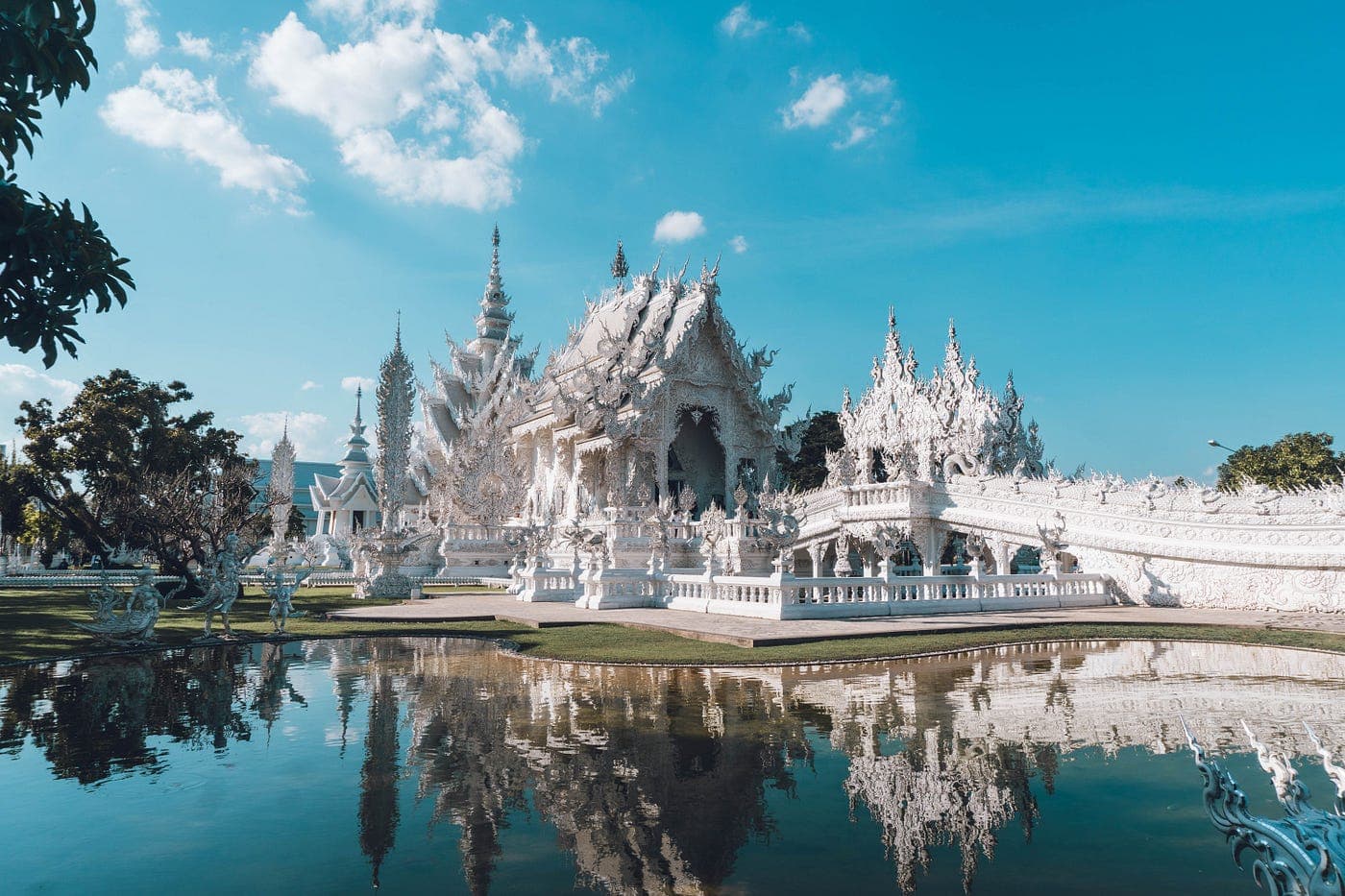
There are places in Thailand that photographs genuinely cannot prepare you for. The White Temple is one of them. You turn a corner on a quiet highway in northern Thailand, a blaze of white and mirror-glass appears above the treeline, and the only reasonable response is to go completely silent. That reaction — that moment of genuine disbelief that something this extraordinary exists — is what a Chiang Rai full day tour is built around.
Chiang Rai is Thailand's northernmost major city, sitting close to the borders of both Myanmar and Laos. It is a city of startling contrasts — one of the world's most opulent Buddhist temples stands 15 minutes from one of the darkest and most provocative art collections in Asia. A golden sacred mountain overlooks a tranquil river café where time moves at the pace of a good slice of banoffee cake. The Golden Triangle, once the heart of the global opium trade, now watches river boats pass in peaceful silence.
A full day in Chiang Rai — done properly, with a knowledgeable local guide and a vehicle that is yours alone — covers all of this and leaves you with photographs you will be explaining for years.
At Trip Thai Tour, our Chiang Rai private tours depart from your hotel or directly from Chiang Rai Airport at 8:00 AM (or adjusted to your flight arrival time). We use a private van or Alphard depending on your group size, and our English-speaking local guides have spent years understanding not just what these places look like, but what they mean.
Contact us for your custom plan and best price deals — or message us on WhatsApp for a quote within the hour.
The Smart Traveller's Chiang Rai Option: Airport to Chiang Mai En Route
If you are flying into Chiang Rai and planning to spend time in Chiang Mai, this is one of the most efficient itineraries in northern Thailand. We pick you up at Chiang Rai Airport (CEI) on arrival, take you through a full day of Chiang Rai highlights, and drop you in Chiang Mai in the evening — ready to check in and start your Chiang Mai experience without a wasted day of travel.
You see everything Chiang Rai has to offer. You save an entire hotel night. And you arrive in Chiang Mai having already had one of the best days of your trip.
Just tell us your flight arrival time when booking and we plan the day around it.

Seasons and Weather: When to Visit and What to Expect
Chiang Rai's seasons genuinely matter — more so than many other Thai destinations — because the contrast between the cool season and the hot season is significant.
November to February is as good as northern Thailand gets. Temperatures hover between 15°C and 28°C, the sky is clear blue, and the morning light on the White Temple is the kind that makes professional photographers weep. Cool enough for comfortable walking, warm enough for outdoor cafés. This is peak season for a reason.
March and April bring real heat — regularly 38°C to 40°C — and agricultural burning season fills the hills with smoke haze that affects both visibility and air quality. It is still worth doing the tour, but you need to plan smartly. Start at 8:00 AM, complete all outdoor sites before noon, and use café stops and the Black House (indoor) for the hottest hours. Carry extra water. Wear a hat. The White Temple glitters even through haze — but the distant mountain views from Singha Park will be less dramatic than in winter.
☀️ Hot season advice: When Chiang Rai is hot, it is genuinely hot. We carry cold water in the vehicle and plan the route to keep outdoor exposure to the cooler parts of the day. Listen to your guide and do not skip the midday café break — Chivit Thammada in the shade of a riverside garden is one of the better ways to spend a hot afternoon in northern Thailand.
May to October is the green season — lush hills, occasional dramatic skies, and dramatically fewer tourists at the White Temple. Afternoon rain is common but brief. The landscapes around Singha Park and the drive up to the Golden Triangle are at their most beautiful.
Dress Code: What to Wear
All three major temples on this tour — the White Temple, Blue Temple, and Black House — require covered shoulders and knees for entry. The White Temple is strict about this and has sarongs for rent at the gate, but arriving properly dressed is faster and more comfortable.
The practical solution: light loose trousers or a long skirt, a short-sleeved top, and a thin scarf or sarong in your bag for shoulder cover. Your guide carries spare sarongs in the vehicle. Comfortable walking shoes are non-negotiable — the White Temple grounds and Singha Park both involve significant walking on varied terrain.
What to Pack for a Chiang Rai Day Tour
- Comfortable walking shoes — non-negotiable for the White Temple grounds
- Sarong or light scarf — covered shoulders and knees at all temples
- Sunscreen and a hat — essential from March to October, advisable year-round
- Fully charged phone and a power bank — the White Temple, Blue Temple, and Chivit Thammada are all extremely photogenic. You will drain a battery without realising it
- Cash in Thai baht — White Temple entrance is ฿200 per person; other fees and food are cash-friendly
- Light layers for cool season — November to February mornings in Chiang Rai can be surprisingly cool (12°C–15°C at dawn)
The Attractions: Every Major Stop, What Makes It Extraordinary
Wat Rong Khun — The White Temple — Allow 1–1.5 Hours
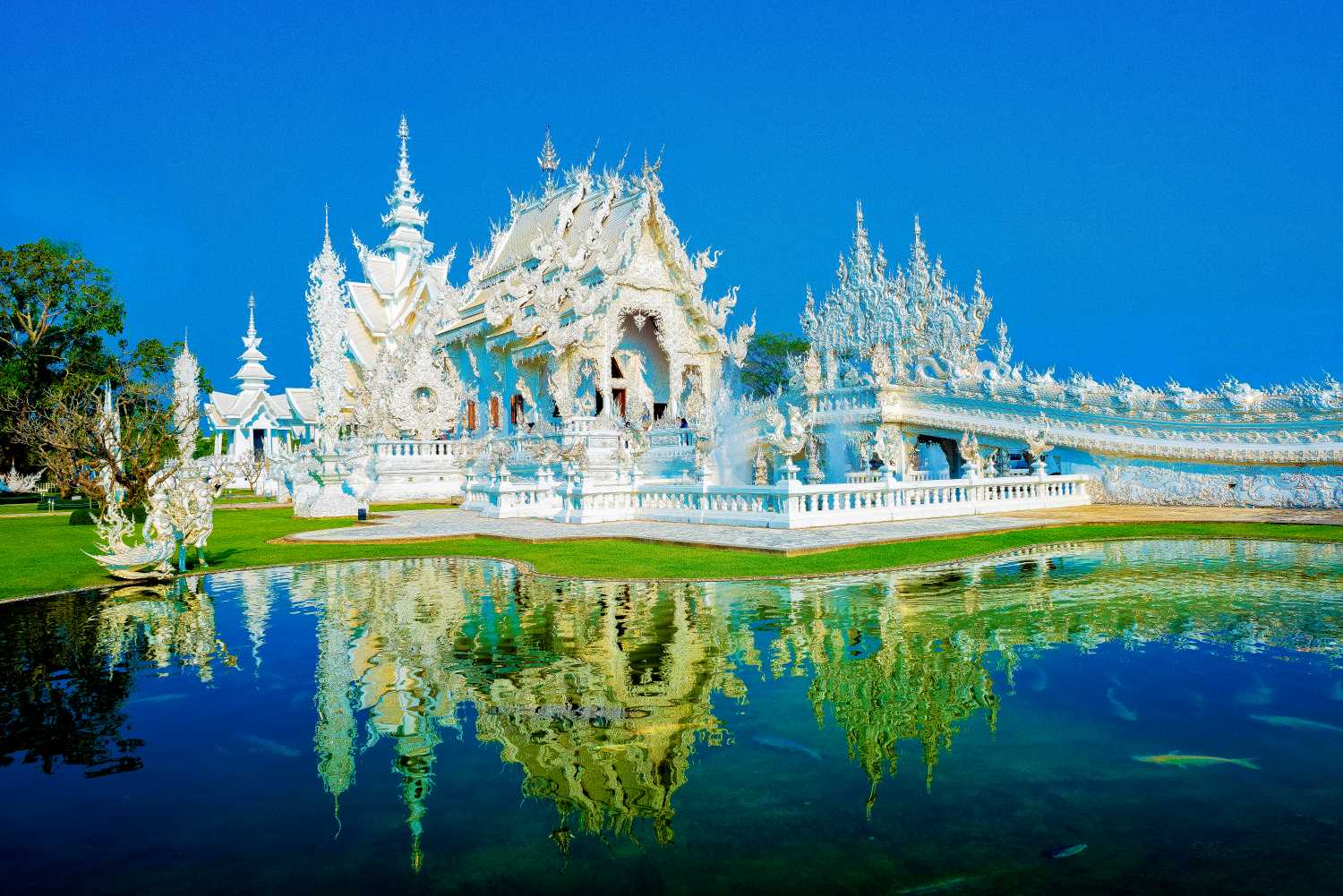
Nothing in Thailand looks like Wat Rong Khun. Not even close.
Thai artist Chalermchai Kositpipat began building it in 1997 as a personal devotional project, funding it entirely himself with profits from his paintings. The concept was to create the most beautiful Buddhist temple ever built — a building that would last 1,000 years and represent the purity of the Buddha's teachings through the colour white and the reflective quality of mirror glass. He is still building it. The temple will never be declared finished in his lifetime, because perfection, in his view, cannot have an end date.
The approach across the bridge is the most photographed moment — a walkway passing over a pool of outstretched sculpted hands reaching upward, representing souls seeking release from the cycle of suffering. The main hall murals inside are extraordinary: traditional Buddhist cosmology sits alongside painted references to Superman, Neo from The Matrix, and various pop culture figures — all depicted as contemporary manifestations of the battle between good and evil. It sounds strange. Inside the hall, it is oddly profound.
Entrance: ฿200 per person (2026). Photography inside the main hall is not permitted. Arrive before 10:00 AM if possible — it is one of the most photographed sites in Thailand and crowds build quickly after mid-morning.
Official site: watrongkhun.org
Wat Rong Suea Ten — The Blue Temple — Allow 45–60 Minutes
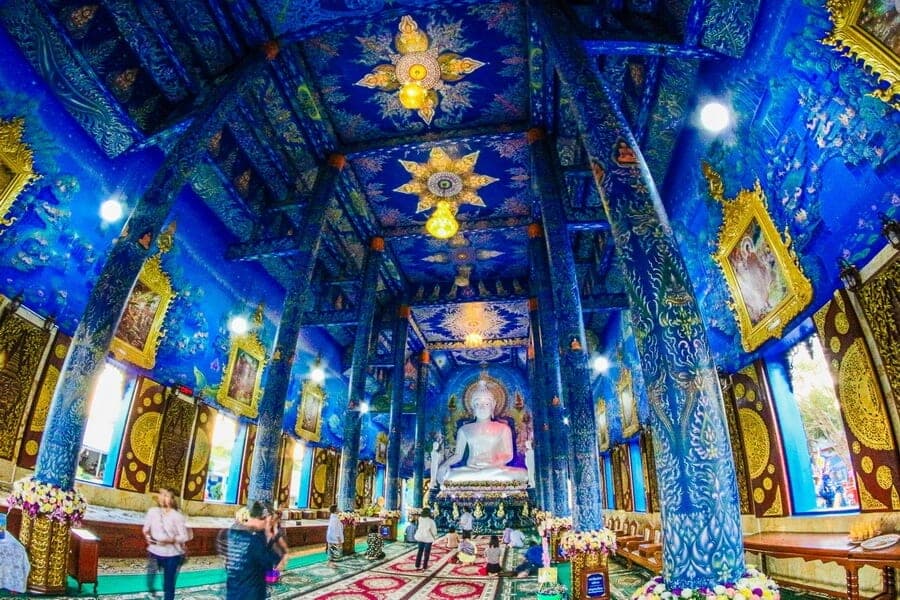
If the White Temple announces itself with noise and spectacle, the Blue Temple seduces quietly.
Wat Rong Suea Ten — the Temple of the Dancing Tiger — is finished entirely in deep cobalt blue with gold detailing, its interior glowing like the inside of a sapphire. The white Buddha at the centre sits in absolute stillness against the electric blue walls. There is something about the colour combination — the warmth of gold against the cool of deep blue — that makes the space feel genuinely sacred rather than simply ornamental.
Entry is free. Open 7:00 AM – 8:00 PM daily. The relative calm here compared to the White Temple makes it a favourite second stop — guests who felt rushed and overwhelmed at Wat Rong Khun often find they can breathe properly for the first time at the Blue Temple.
Baan Dam Museum — The Black House — Allow 1–1.5 Hours
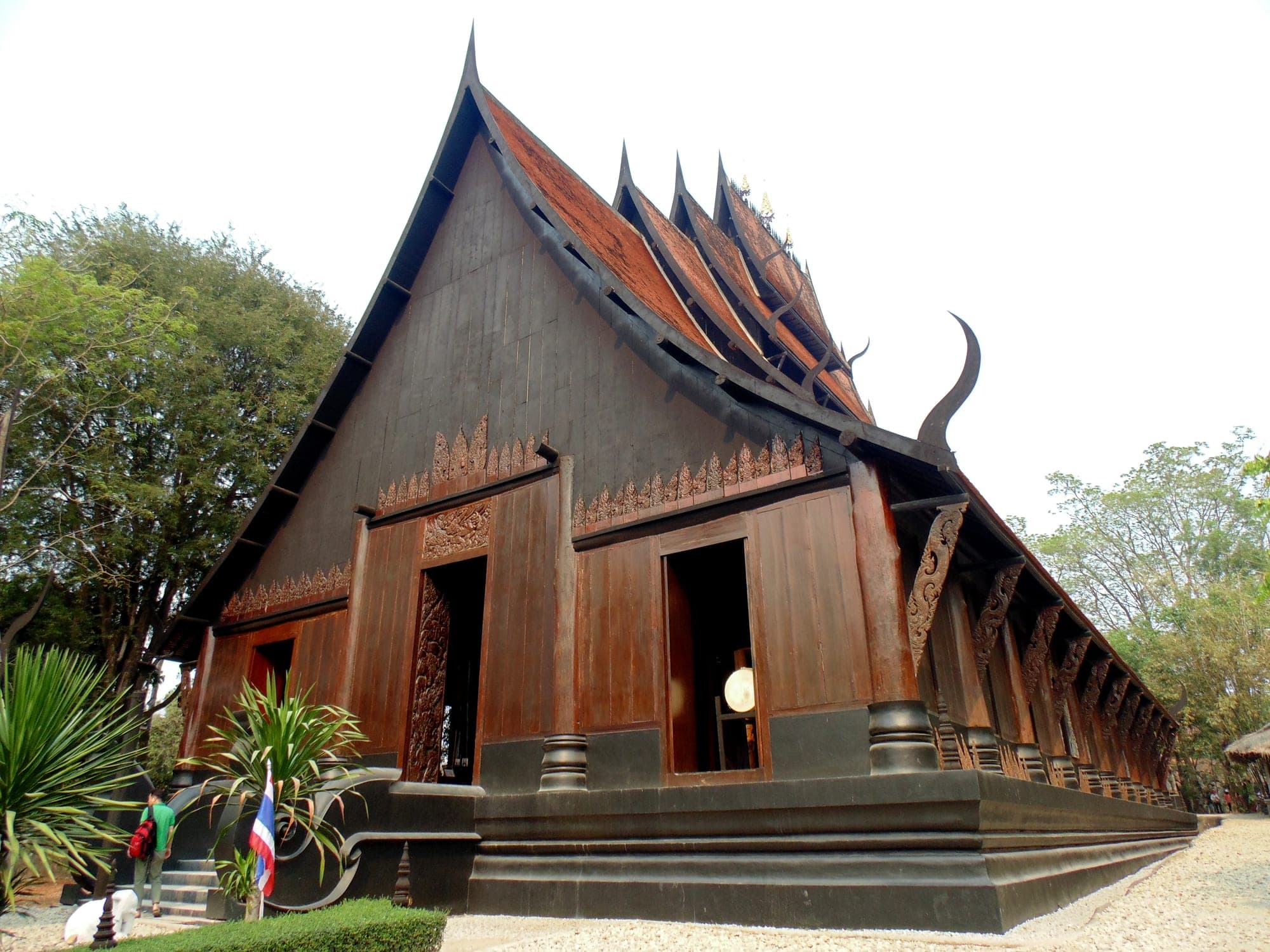
Everything about Baan Dam is the deliberate opposite of the White Temple — and that contrast is exactly the point.
Thai National Artist Thawan Duchanee spent decades assembling this collection of over 40 black buildings filled with crocodile skins, animal bones, antlers, snake vertebrae, dark wooden sculptures, and artworks that meditate on death, power, sexuality, and the parts of human nature that polished religious art tends to avoid. It is not dark for the sake of shock. It is an artist working at the edge of what Thai culture permits, asking uncomfortable questions with extraordinary craft.
Walking through Baan Dam is like entering a different dimension from the white and gold of the temple circuit. Your guide's context transforms it from strange to remarkable. Entry approximately ฿80 per person.
Golden Triangle (Sop Ruak) — Allow 1–1.5 Hours
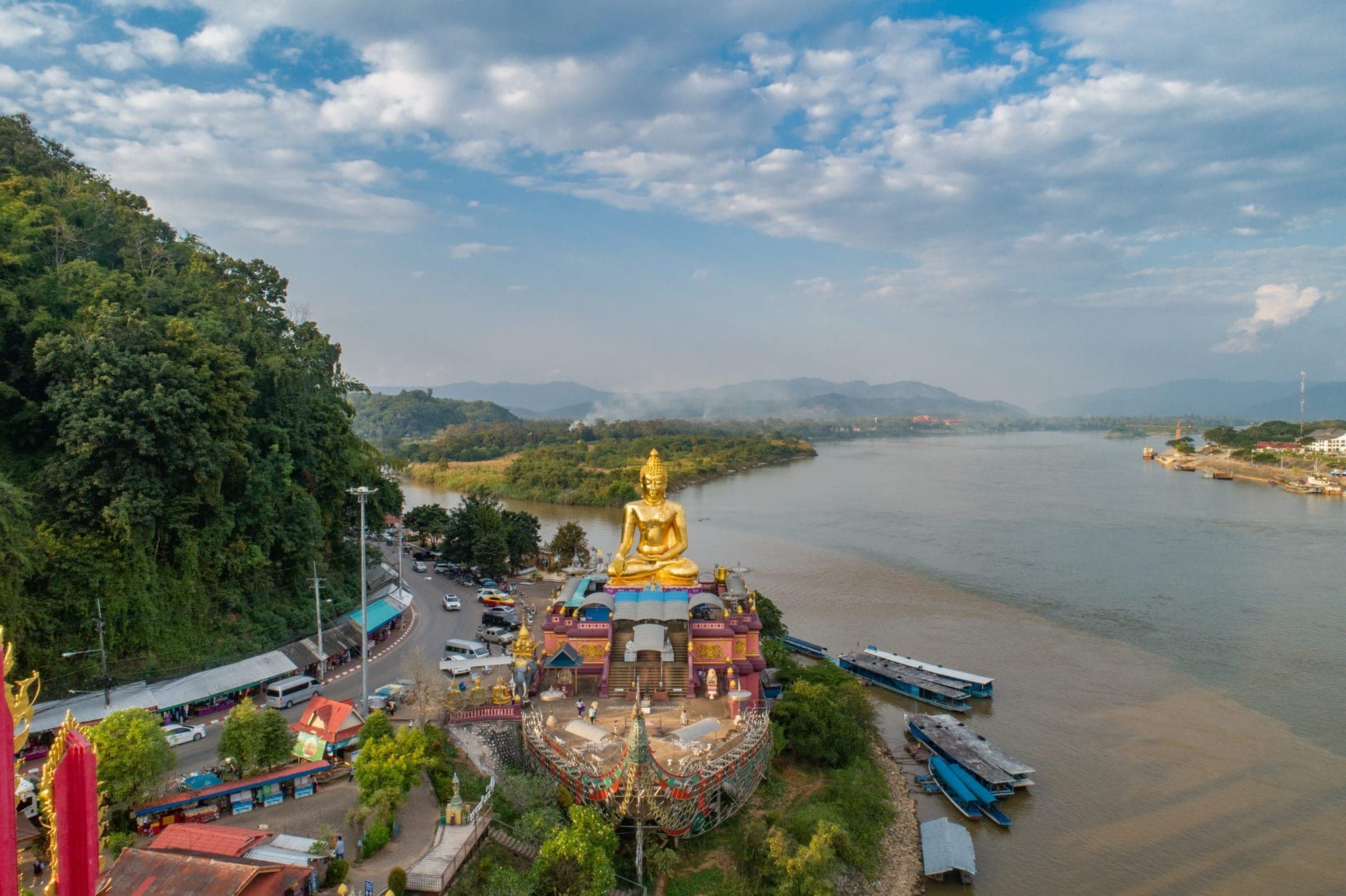
Stand at the right spot and you are in three countries at the same time — or as close to it as geography allows.
The Golden Triangle is where the Mekong River and the Ruak River meet, marking the intersection of Thailand, Laos, and Myanmar. For decades this region produced a significant portion of the world's opium. Today it is peaceful, scenic, and anchored by the Hall of Opium Museum — one of the most thoughtfully designed museums in Southeast Asia, telling the full history of the opium trade from ancient Chinese medicine to the Cold War drug networks that made this triangle infamous.
Optional boat rides along the Mekong take you to the border marker for photographs and river views (approximately ฿80–150 per person). The golden Buddha statue on the Thai bank, facing across to Laos, is one of the most photographed images in northern Thailand.
Hall of Opium Museum: Open Tuesday–Sunday, 8:30 AM – 4:00 PM. Entrance approximately ฿200 per person. Worth the time — allow 45–60 minutes inside.
Wat Huay Pla Kang — The Giant White Buddha — Allow 30–45 Minutes
High on a hilltop north of the city, the 69-metre white Buddha of Wat Huay Pla Kang watches over Chiang Rai with a calm that you feel before you are close enough to see the detail. The base of the statue contains nine floors of religious murals and shrine rooms, accessible by lift or stairs. The panoramic view from the upper levels across the valley — particularly in the late afternoon — is one of the finest in the region. Entry is free.
Singha Park Chiang Rai — Allow 1.5–2 Hours
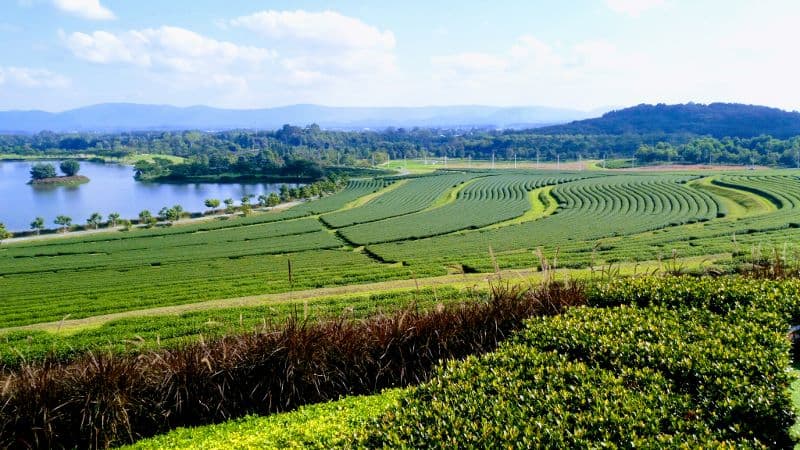
Singha Park is the kind of place that makes you rethink what a park can be.
The Singha beer group's private agricultural estate covers 12,000 rai of rolling hills planted with tea, strawberries, and seasonal flowers — sunflowers in peak season, Sakura-adjacent blossom in cool months. A wildlife zone houses giraffes, zebras, and other animals in open paddocks. There are cycling routes, a zipline, koi ponds, and multiple café and restaurant stops spread across the grounds. Entry to the park itself is free — activities and transport within are optional extras.
The afternoon light across the tea fields is genuinely extraordinary. If you are visiting in the cool season between November and February, this is where the photographs that look like they were taken in New Zealand come from — golden hills, cool air, and a sky that cooperates. The park café serves some of the best food in Chiang Rai alongside it.
Doi Tung Royal Villa and Mae Fah Luang Garden — Allow 1.5–2 Hours
Perched in the hills above Chiang Rai near the Myanmar border, the Doi Tung Royal Villa was the mountain retreat of the Princess Mother — mother of two Thai kings — who spent her later years here developing agricultural projects to replace opium cultivation in the surrounding hill communities. The Swiss chalet-style villa is elegant and intimate, still maintained as it was during her lifetime. The Mae Fah Luang Garden surrounding it is one of the most beautiful formal gardens in Thailand — particularly spectacular in the cool season when flowers are at their peak. Entrance approximately ฿90 per person for gardens, ฿50 additional for the villa. Open 6:30 AM – 6:00 PM daily.
Wat Phra Kaew Chiang Rai — Allow 30 Minutes
Before the Emerald Buddha reached its current home in Bangkok's Grand Palace, it resided here in Chiang Rai for centuries — discovered inside this temple in 1434 after lightning split open a chedi and revealed the jade statue hidden inside. The temple now houses a jade replica of the original, but the history embedded in the quiet courtyard is extraordinary. For anyone who has visited the Grand Palace in Bangkok or the iconic Wat Arun, standing in the place where that statue was first found adds a layer of connection that makes both temples more meaningful. Free entry.
Where to Eat and Drink in Chiang Rai: The Cafés and Restaurants Worth Planning Around
Chiang Rai has developed a café and restaurant scene that regularly surprises visitors who arrived expecting a quieter version of Chiang Mai. The food here is some of the best in northern Thailand — and the café settings are in a league of their own.
Chivit Thammada Coffee House, Bistro & Bar — The One You Cannot Miss
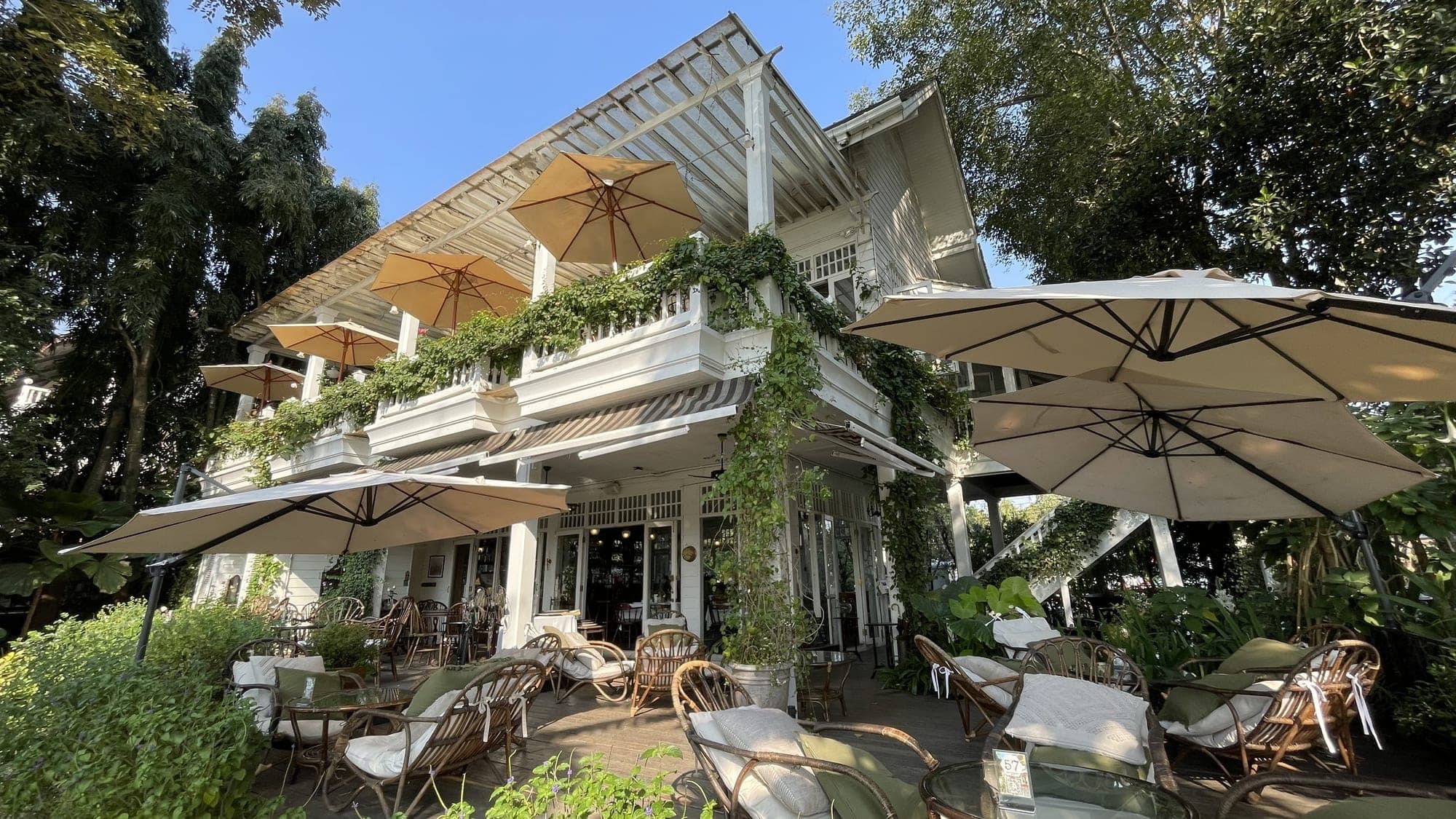
Chivit Thammada does not look like it belongs in Chiang Rai. The white colonial building, the English garden, the books stacked inside an antique bar, the sound of the Kok River behind the outdoor terrace — it all suggests somewhere in the English countryside, or perhaps a very particular corner of New Orleans. The food and coffee bring you back to northern Thailand in the best possible way.
The Thammada Banoffee is the dish that has made this café famous across Thailand — a banoffee pie that regular visitors plan entire return trips around. The edible flower cold press is equally iconic and deeply photogenic. The menu covers excellent Thai fusion dishes (the fried rice with Chiang Rai ingredients is genuinely outstanding), Western bistro mains, fresh pasta, and one of the finest coffee selections in the north.
Pair this with the Blue Temple — they are a ten-minute walk apart — and you have the finest hour and a half in Chiang Rai's café circuit. Open 8:00 AM – 9:00 PM daily. Budget ฿150–500 per person. Official site: chivitthammada.com
Singha Park Café — Eat with a View That Earns Its Place
The café and restaurant options inside Singha Park are consistently excellent — and the setting, looking out across tea plantation hills with the mountains in the background, turns a meal into an event. Food trucks and permanent café structures operate throughout the park. The tea-based drinks using Singha Park's own harvest are the order to make.
Northern Thai Food Stops — What Your Guide Will Choose
Your guide knows where locals eat — not where tour operators send their groups. Across a full day in Chiang Rai, we build in at least one proper northern Thai meal:
Khao soi is the dish that defines northern Thai cuisine — a rich, slightly spicy coconut broth over fresh egg noodles, topped with crispy deep-fried noodles and served with pickled mustard greens, shallots, and lime. Order it with chicken (kai) or beef (neua). Every food writer who comes to Chiang Rai writes about it and they are all correct.
Sai ua (Northern Thai herb sausage) is fragrant with lemongrass, galangal, and kaffir lime leaves, grilled over charcoal and eaten with sticky rice. Nam prik noom — a roasted green chilli dip with raw vegetables and pork cracklings — is the Chiang Rai flavour that people remember when they are home and craving something they cannot name.
We can accommodate Indian vegetarian, Indian non-vegetarian, Thai, international, and other food preferences — just tell us when booking and we plan accordingly.
Ready to plan your Chiang Rai day?
Tell us your hotel or flight arrival time, group size, and top attractions. We'll design your perfect day and send a quote within the hour.
Message us on WhatsApp
Sample One Day Itineraries
Choose the route that fits your group — or tell us your priorities and we design from scratch.
The Classic Chiang Rai Circuit
8:00 AM — Hotel or airport pickup
9:00 AM — White Temple, Wat Rong Khun (1.5 hours — arrive before crowds)
11:00 AM — Blue Temple, Wat Rong Suea Ten (1 hour)
12:00 PM — Lunch at a local northern Thai restaurant — khao soi, sai ua
1:30 PM — Black House, Baan Dam Museum (1 hour)
3:00 PM — Singha Park (1.5 hours)
5:00 PM — Chivit Thammada café on the Kok River (1 hour)
6:00 PM — Drop-off at Chiang Rai hotel or depart for Chiang Mai
The Full Northern Sweep
8:00 AM — Hotel or airport pickup
9:00 AM — White Temple (1.5 hours)
10:45 AM — Blue Temple (45 minutes)
12:00 PM — Lunch at Chivit Thammada (1 hour)
1:30 PM — Golden Triangle and Hall of Opium Museum (2 hours)
4:00 PM — Wat Huay Pla Kang Giant Buddha (45 minutes)
5:00 PM — Black House (45 minutes)
6:00 PM — Drop-off at Chiang Rai hotel
The Airport-to-Chiang Mai En Route Option
Flight arrives Chiang Rai (CEI) — we meet you at arrivals
White Temple → Blue Temple → Black House → Singha Park → local lunch → Chivit Thammada
7:00–8:00 PM — Drop-off at your Chiang Mai hotel
One hotel night saved. One extraordinary day gained.
For Families with Children
8:00 AM — Hotel pickup
9:00 AM — White Temple (the kids will remember this forever — 1.5 hours)
11:00 AM — Blue Temple (45 minutes)
12:00 PM — Lunch stop — northern Thai food or flexible to preferences
1:30 PM — Singha Park including wildlife zone and café (2 hours)
4:00 PM — Wat Huay Pla Kang — Giant Buddha hilltop views (45 minutes)
5:30 PM — Drop-off at hotel
Practical Information
Opening Hours and Entrance Fees
| Attraction | Hours | Entrance Fee (approx.) |
|---|---|---|
| White Temple (Wat Rong Khun) | 6:30 AM – 6:00 PM daily | ฿200 per person (2026) |
| Blue Temple (Wat Rong Suea Ten) | 7:00 AM – 8:00 PM daily | Free |
| Black House (Baan Dam Museum) | 9:00 AM – 5:00 PM daily | ฿80 per person |
| Golden Triangle viewpoint | Open daily | Free |
| Hall of Opium Museum | Tue–Sun, 8:30 AM – 4:00 PM | ฿200 per person |
| Wat Huay Pla Kang (Giant Buddha) | 6:00 AM – 8:00 PM daily | Free |
| Singha Park | 8:00 AM – 6:00 PM daily | Free entry (activities extra) |
| Doi Tung Royal Villa | 6:30 AM – 6:00 PM daily | ฿90 gardens / ฿50 villa |
| Wat Phra Kaew Chiang Rai | 6:00 AM – 6:00 PM daily | Free |
| Chivit Thammada Café | 8:00 AM – 9:00 PM daily | No entry fee (restaurant) |
All fees are approximate and subject to change. Confirm current rates at the venue on the day.
How to Book Your Custom Chiang Rai Private Day Tour
This is a fully custom-designed private tour in Thailand — there is no fixed package and no fixed price list. Every day is built around your group, your flight times, your food preferences, and your priorities.
Contact us on WhatsApp at +66 89 949 6235. We reply within 15 minutes during business hours and confirm bookings within one hour. Tell us:
- Your pickup point — hotel name in Chiang Rai, or Chiang Rai Airport with your flight arrival time
- How many adults and children are in your group
- Your top 4–5 attractions from this list
- Your food preferences (Northern Thai, international, Indian veg/non-veg)
- Your preferred drop-off point — Chiang Rai hotel, or onward to Chiang Mai
- Any timing constraints or preferences
We design the most efficient day around your choices, send you a custom quote, and handle everything from pickup to final drop-off.
Contact us for your custom plan and best price deals — or explore our Bangkok tour packages if you are planning a wider Thailand trip. You can also read our guide on the Damnoen Saduak Floating Market for more inspiration.
We are a TAT Licensed Tour Operator — Licence No. 14/04232, verified on the official Tourism Authority of Thailand registry.
Frequently Asked Questions
We pick you up directly from your hotel in Chiang Rai city, or from Chiang Rai International Airport (CEI) if you are flying in. Standard departure is 8:00 AM, but we adjust to your flight arrival time if you are doing the airport pickup option. The tour finishes with drop-off back at your Chiang Rai hotel, or we can drop you onward to Chiang Mai to save you a hotel night — just tell us when booking.
Yes — this is one of our most popular and cost-efficient options. You fly into Chiang Rai (CEI), we pick you up at arrivals, do the full Chiang Rai highlights tour across the day, and drop you in Chiang Mai in the evening. You see everything without paying for a Chiang Rai hotel night. It works beautifully if you have an early morning Chiang Rai flight and plan to stay in Chiang Mai afterwards.
November to February is the finest season — temperatures sit between 15°C and 28°C, the air is clear, and the morning light on the White Temple is spectacular. March and April bring intense heat (35°C–40°C+) and smoke haze from agricultural burning in the hills, which can affect visibility and comfort outdoors. May to October is the rainy season — green and lush, but afternoon rain is common. If you visit in the hot season, start early, stay hydrated, and use air-conditioned stops strategically.
Yes — March and April are the hottest months in Chiang Rai, regularly reaching 38°C–40°C during the day, and agricultural smoke from the surrounding hills can create haze that affects visibility and air quality. It is still very much worth visiting, but we strongly advise arriving early (8:00 AM), completing outdoor attractions before noon, and scheduling indoor stops like Baan Dam Museum or café breaks during the midday heat. We carry cold water and plan the route to minimise sun exposure.
Wat Rong Khun is a privately built temple designed entirely by Thai artist Chalermchai Kositpipat, who began construction in 1997 and continues expanding it today. Every surface is white and embedded with mirror glass — in sunlight it glitters like it was built from crushed diamonds. The bridge to the entrance passes over a sea of outstretched hands representing souls in suffering. Inside the main hall, murals blend Buddhist teachings with modern pop culture references. It is unlike any religious building anywhere in the world. Entrance is ฿200 per person (as of 2026).
Wat Rong Suea Ten translates roughly as 'Temple of the Dancing Tiger', named after the tigers that were once said to roam the area. The building is a deep cobalt blue, covered in gold detailing, with an interior that glows like a sapphire. Unlike the White Temple, entry is free and the atmosphere is calmer and more contemplative. Many visitors say the Blue Temple is the more beautiful of the two once they are inside. Open 7:00 AM – 8:00 PM daily.
Baan Dam — meaning 'Black House' — is the life's work of Thai National Artist Thawan Duchanee, a collection of over 40 buildings painted black and filled with animal bones, skins, antlers, dark sculptures, and artworks that explore death, power, and the shadow side of existence. It is confronting, fascinating, and completely unlike anywhere else in Thailand. Entry is approximately ฿80 per person. Not suitable for very young children but deeply memorable for curious adults and teenagers.
The Golden Triangle (Sop Ruak) is the point where Thailand, Laos, and Myanmar meet at the confluence of the Mekong and Ruak rivers. Once one of the world's largest opium-producing regions, it is now a peaceful scenic area with river views, the Hall of Opium Museum, and optional boat rides along the Mekong. You can stand at the precise border marker, look across to Laos on the opposite bank, and understand with a single glance why this corner of Southeast Asia carries such an extraordinary history.
Singha Park is a vast agricultural estate and leisure park owned by the Singha beer group, covering over 12,000 rai of rolling hills, tea plantations, sunflower and strawberry fields (in season), and a wildlife zone with giraffes, zebras, and other animals. The park has multiple café and restaurant options, a zipline, cycling routes, and some of the most photogenic landscapes in northern Thailand. Entry is free; activities cost extra. The café scene inside the park is consistently excellent.
Chivit Thammada Coffee House, Bistro & Bar is a colonial-style café and riverside bistro on the banks of the Kok River, a short walk from the Blue Temple. The building and its English garden setting feel like they were lifted from a different century and placed on the Thai riverbank. The Thammada Banoffee is the non-negotiable order — a legendary cake that regular visitors plan their return visits around. The edible flower cold press is equally famous. The menu covers Thai fusion, Western mains, pasta, and excellent breakfast options. ฿100–500 per person depending on what you order. Open 8:00 AM – 9:00 PM.
Northern Thai cuisine is distinct from Bangkok food and Chiang Rai is one of the best places to experience it. Khao soi is the must-order — a rich coconut curry broth over egg noodles with crispy noodles on top, served with chicken or beef. Sai ua (Northern Thai sausage) is fragrant with lemongrass and galangal, best eaten with sticky rice. Nam prik noom is a roasted green chilli dip served with fresh vegetables and pork cracklings. Your guide will take you to a local restaurant where these dishes are genuinely good — not a tourist-adapted version.
The day typically runs 8:00 AM to 5:00–6:00 PM if you are staying in Chiang Rai, or until arrival in Chiang Mai if you are doing the airport-to-Chiang Mai enroute option (arriving approximately 7:00–8:00 PM). The return time is flexible — tell us your preference when booking and we plan the day accordingly.
We use a private air-conditioned van for most groups, or a Toyota Alphard for smaller groups who prefer a more premium ride. The vehicle is yours exclusively — no other passengers, no shared schedule. Your guide travels with you in the vehicle throughout the day.
All three major temples — the White Temple, Blue Temple, and Black House — require covered shoulders and knees. Lightweight loose trousers or a long skirt and a short-sleeved top with a scarf or sarong to cover your shoulders is ideal. Comfortable walking shoes are essential — both the White Temple grounds and Singha Park involve significant walking. Bring sunscreen, a hat for outdoor stops, cash in Thai baht for entrance fees and food, and a fully charged phone. The White Temple in morning light is one of the most photographed sites in Thailand — you will use every percentage of battery.
Contact us on WhatsApp at +66 89 949 6235 — we reply within 15 minutes and confirm within one hour. Tell us your pickup location (hotel name or Chiang Rai Airport), your flight arrival time if applicable, how many people are in your group, which attractions you prioritise, your food preferences, and your desired drop-off point (Chiang Rai hotel or onward to Chiang Mai). We design your day and send a custom quote. TAT Licensed Tour Operator — Licence No. 14/04232.
Check Availability & Book
Send us your details to get an instant quote and secure your date.
Related Guides
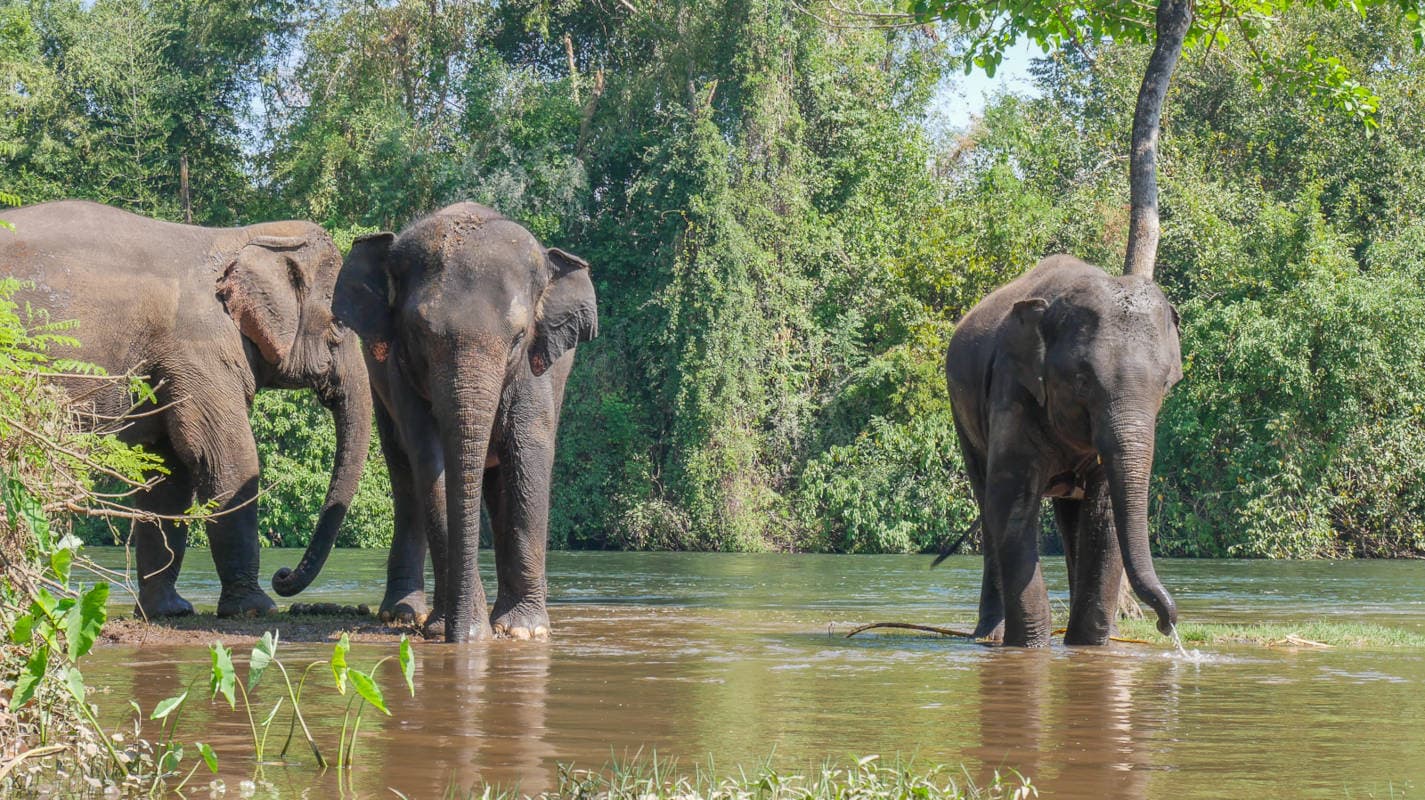
Best Elephant Sanctuary Chiang Mai 2026: EJS, Kanta & Maerim Compared
EJS, Kanta or Maerim? We operate all 3 ethical elephant sanctuaries near Chiang Mai. Compare prices (฿1,500–฿1,900), drives, activities and book directly.
Phuket City Day Tour 2026: Big Buddha, Wat Chalong, Karon Viewpoint & Old Town by Private Van
Honest 2026 guide to the Phuket City Day Tour by private van — Wat Chalong, Big Buddha, Karon Viewpoint and Old Town. Flexible 8 hours, all-area hotel pickup. Flat ฿3,500 per van.
The Best Full-Day Pattaya Tour 2026: 5 Attractions in One Perfect Private Day
The perfect full-day Pattaya itinerary: Tiger Park, Underwater World, the [Floating Market](/Pattaya/Floating-Market), Big Buddha Hill and the Sanctuary of Truth in one private route — with timings, costs and honest tips.