Phuket Big Buddha, Old Town & Night Market: The Complete 2026 Guide
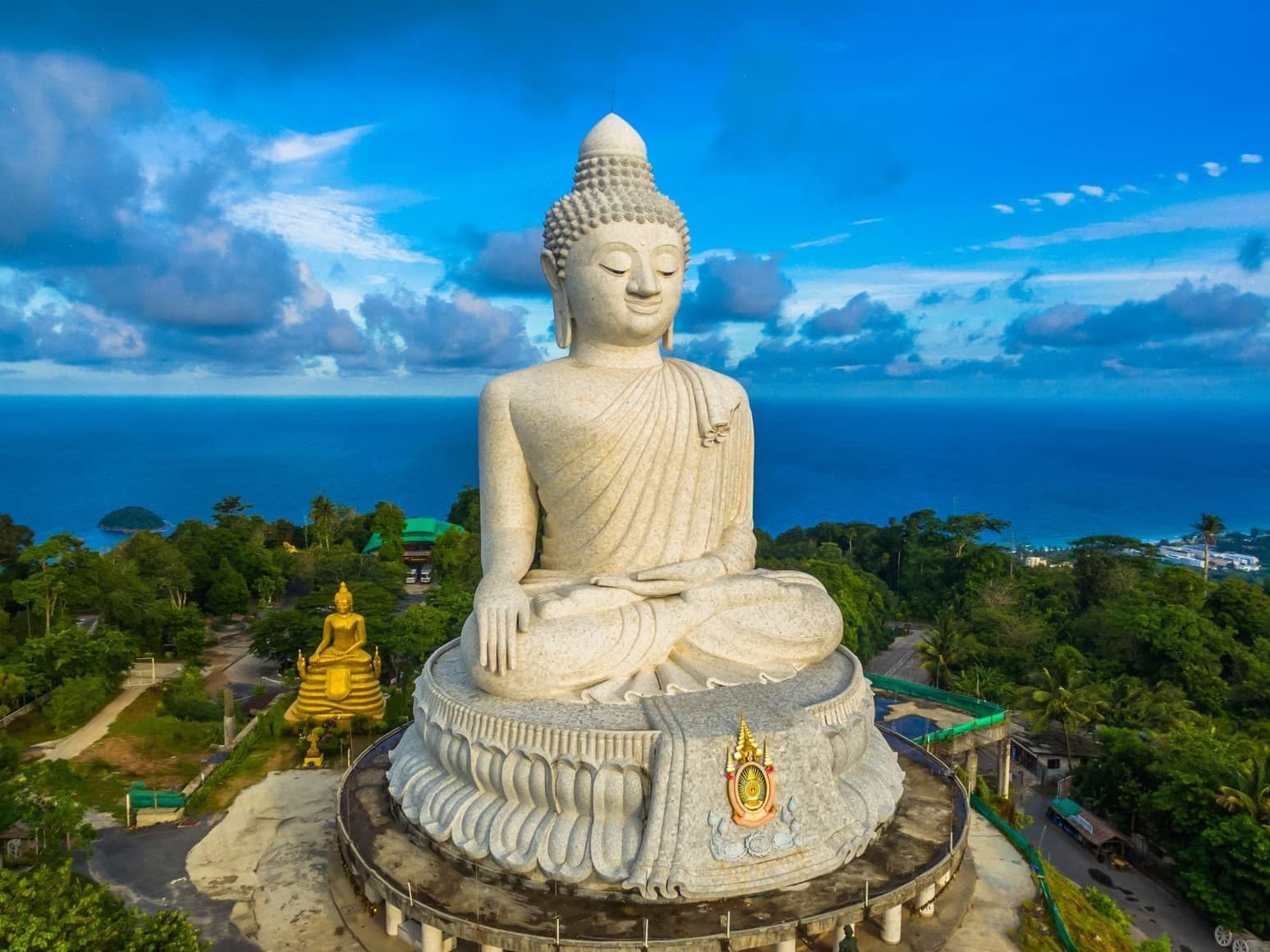
Most visitors to Phuket try to see the Big Buddha, Wat Chalong, Old Phuket Town and a night market, and most of them fail to do it in one day. Not because the island is big — it is only about 50 kilometres long — but because of a scheduling collision almost nobody mentions until you are standing in an empty car park at seven in the evening.
Wat Chalong closes at 17:00. The Big Buddha closes at 18:00. Phuket's night markets do not open until 16:00 or 17:00.
That single hour of overlap is the whole problem. Run the day the conventional way, starting at nine in the morning, and by the time the markets wake up your tour has finished and your driver has gone home. This guide explains how to build the day so all four actually fit, which night market is open on which evening, and the honest current status of a Big Buddha that Google still insists is permanently closed.
The Short Answer: Run the Day Backwards
Pickup at about 13:00. Big Buddha from roughly 13:45 to 14:45. Wat Chalong from 15:00 to 16:00, comfortably inside its 17:00 close. Old Phuket Town from 16:30 through golden hour to 18:30. The night market from 18:30 to about 20:45. Home by 21:00.
That is eight hours, four stops, and — this is the part people do not believe until it happens — not a single entry fee. The Big Buddha is free. Wat Chalong is free. Old Phuket Town is a public street. Every night market on the list is free to enter. Unless you buy food or add an optional paid attraction, your only cost for the entire day is the vehicle.
Our Phuket Big Buddha, Wat Chalong, Old Town & Night Market tour runs exactly this route for a flat ฿3,000 per SUV (up to 4 passengers) or ฿3,500 per van (up to 10) — per vehicle, never per person. For a family of six in the van that works out at under ฿600 each for eight hours of private transport with a driver.
If 13:00 sounds late, it is deliberate. It is the latest start that still fits everything, and starting earlier only buys you more time in Old Town. Start later and you will have to drop a temple, which we will tell you plainly rather than discovering it together at 16:55 outside a locked Wat Chalong.
Phuket Big Buddha, Wat Chalong, Old Town & Night Market Tour
From ฿3,000 per vehicle (8 hours) — TAT Licensed Operator · Instant WhatsApp confirmation

Is the Big Buddha Actually Open? Yes — and Google Is Wrong
This deserves its own section because it is the most common reason travellers cut the stop from their plans.
The Big Buddha is open. Daily, 09:00 to 18:00. Free entry.
Here is the full timeline, because the confusion is understandable:
- 23 August 2024 — a landslide in Kata killed 13 people and injured 19. The Nakkerd Hill site closed.
- 1 January 2026 — the site briefly reopened, then closed again after three days.
- 3 March 2026 — it reopened properly on Makha Bucha Day, now managed solely by Wat Kittisangharam and officially named Wat Kittisangharam (Big Buddha). It has stayed open since.
So why does your phone say otherwise? Because many Google listings still display "Permanently closed" — the info box was changed during the closure and, for a great many searchers, has never been corrected. A customer who books a Big Buddha tour, googles it that evening and reads "Permanently closed" understandably panics.
The venue maintains its own site at mingmongkolphuket.com, and the Tourism Authority of Thailand lists it among Phuket’s active attractions on tourismthailand.org. If you want to check the day before you travel, use either of those rather than the Google info box — or just ask us.
Two caveats we are not going to hide. The reopening is conditional on 25 Department of Forestry conditions for the 15-rai forest-reserve site, and a class action brought by affected residents is still before the Phuket Provincial Court. The site is reliably open today, but it is not a site with a twenty-year record of uninterrupted opening.
Which is exactly why a flexible private day is the right way to visit it. On our tour, if the Big Buddha is shut on your date for any reason, your driver substitutes Karon Viewpoint or Promthep Cape at no charge and the price does not move. A closure costs you nothing because the vehicle is yours and re-routing is free.
The Phuket Night Market Calendar — Which One Opens on Which Day
This is the information the rest of the internet leaves out, and it is the difference between a great evening and a wasted hour of driving. Phuket does not have one nightly night market. It has four main ones, and they run on different days.
| Market | Days | Hours | Where | What it's like |
|---|---|---|---|---|
| Lard Yai Walking Street | Sunday only | 16:00–22:00 | Thalang Road, Old Town | Street closed to traffic, live music, food the length of it |
| Naka Weekend Market | Saturday & Sunday | 16:00–22:00 | Chao Fa West Road | Much bigger, far more local — clothes, plants, electronics |
| Chillva Market | Monday–Saturday | 17:00–23:00 | Yaowarat Road | Painted shipping containers, live music, Thai students |
| Indy Market | Wednesday–Friday | 16:00–22:30 | Limelight Ave, off Dibuk Rd | Small, handmade goods, compact food court |
Read that table and one thing jumps out: Sunday is the best day of the week to do this tour, by a distance. Lard Yai closes Thalang Road to traffic, which means the night market and Old Phuket Town are the same place. You park once, walk the shophouses at golden hour, and simply stay where you are as the stalls light up around you. No transfer, no second parking hunt, no decision about when to leave.
Saturday is the second-best day, because Naka Weekend Market is genuinely the most interesting market on the island if you want to see where Phuket residents actually shop rather than where tourists are taken.
Monday and Tuesday are the thinnest evenings — Chillva is your only real option. It is a good one, and it runs latest of all at 23:00, but it is a twenty-minute drive from Old Town rather than a continuation of it.
Whatever your date, there is something open. The point is knowing which, before you set out.
Stop 1: The Big Buddha on Nakkerd Hill
The road up is six kilometres of switchbacks from the Chalong roundabout, about twenty minutes in a van. Worth knowing: this climb is the most surcharged piece of tarmac on Phuket. Many island drivers ask for around ฿300 extra at the bottom of it because it burns fuel and eats clutches — a charge that frequently appears only once you are already there and unlikely to argue.
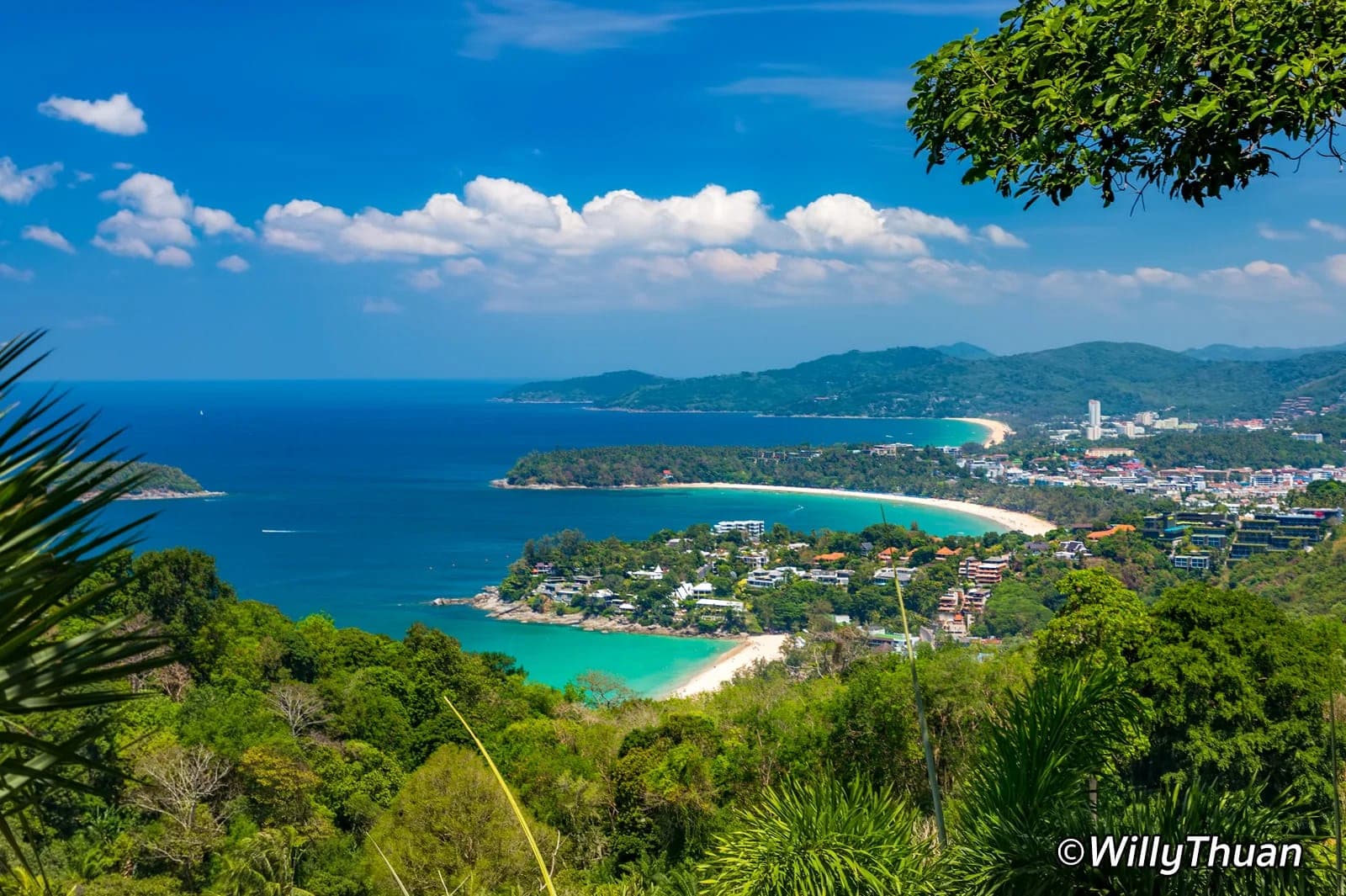
Halfway up there is an unmarked pull-in with a view over Chalong Bay that most drivers pass. Ask yours to stop; in early-afternoon light it is better than the view from the top.
The statue is 45 metres tall, clad in Burmese white marble, sitting at roughly 400 metres above sea level. It has been officially unfinished for two decades and is funded entirely by donation — you will see marble tiles for sale that visitors sign and add to the structure. From the terrace the whole southern half of the island is laid out: Chalong Bay and its moored longtails directly below, Kata and Karon curving west, the southern capes beyond, and on a clear day the outline of Phi Phi far out to sea.
Allow about an hour. There is almost no shade, so a hat matters here more than anywhere else on the route.
Stop 2: Wat Chalong, and Why You Keep Hearing Explosions
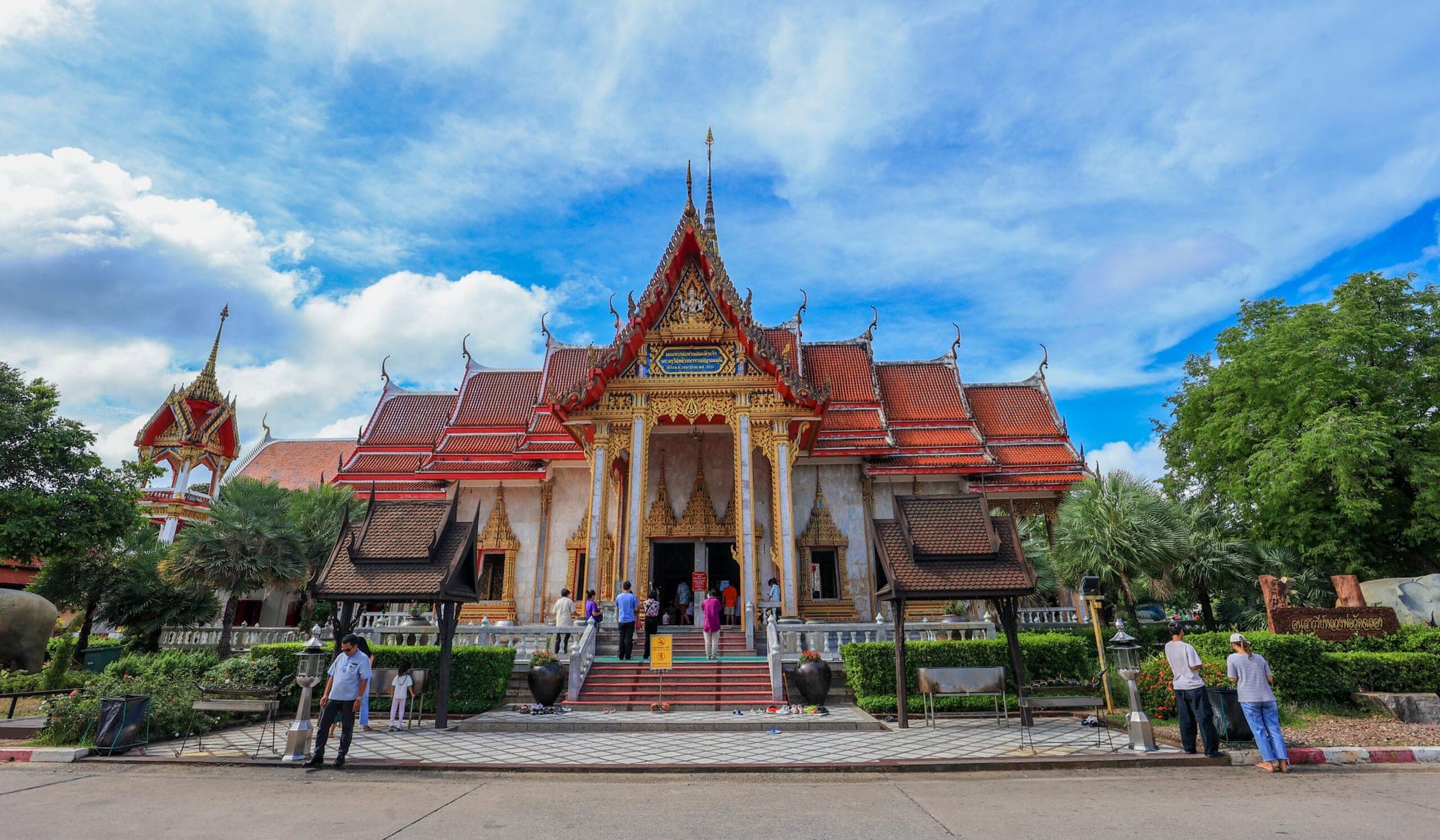
Fifteen minutes back down the hill, Wat Chalong is Phuket's most important temple and, crucially, a working one rather than a monument. On a weekday afternoon there will be islanders praying, monks crossing the courtyard, and a smell of incense and gunpowder.
Free, open daily 07:00 to 17:00. That closing time is why this tour starts at 13:00.
The visual centre is the Phra Mahathat Chedi, a 60-metre golden pagoda built to house a bone fragment of the Buddha. Climb it. Most visitors do not, the upper levels are cooler and nearly empty, and the top balcony looks straight back at the Big Buddha you were standing under an hour earlier. Those two sites photographed from each other is the best shot of the day and hardly anyone takes it.
The temple's fame rests on two monks, Luang Pho Chaem and Luang Pho Chuang, who treated the wounded, sheltered civilians and helped mediate an end to the Chinese tin-miners' rebellion of 1876. Their statues stand in the main viharn under thick layers of gold leaf pressed on by visitors, and islanders still come to petition them for healing.
Which explains the bangs. When a petition is granted, people return and set off firecrackers in a purpose-built brick kiln beside the shrine as thanks. They go off at random through the afternoon and are startlingly loud in an enclosed courtyard — warn small children before you walk in. It is also the clearest signal in Phuket that this is a temple still being used for what it was built for.
Stop 3: Old Phuket Town at Golden Hour
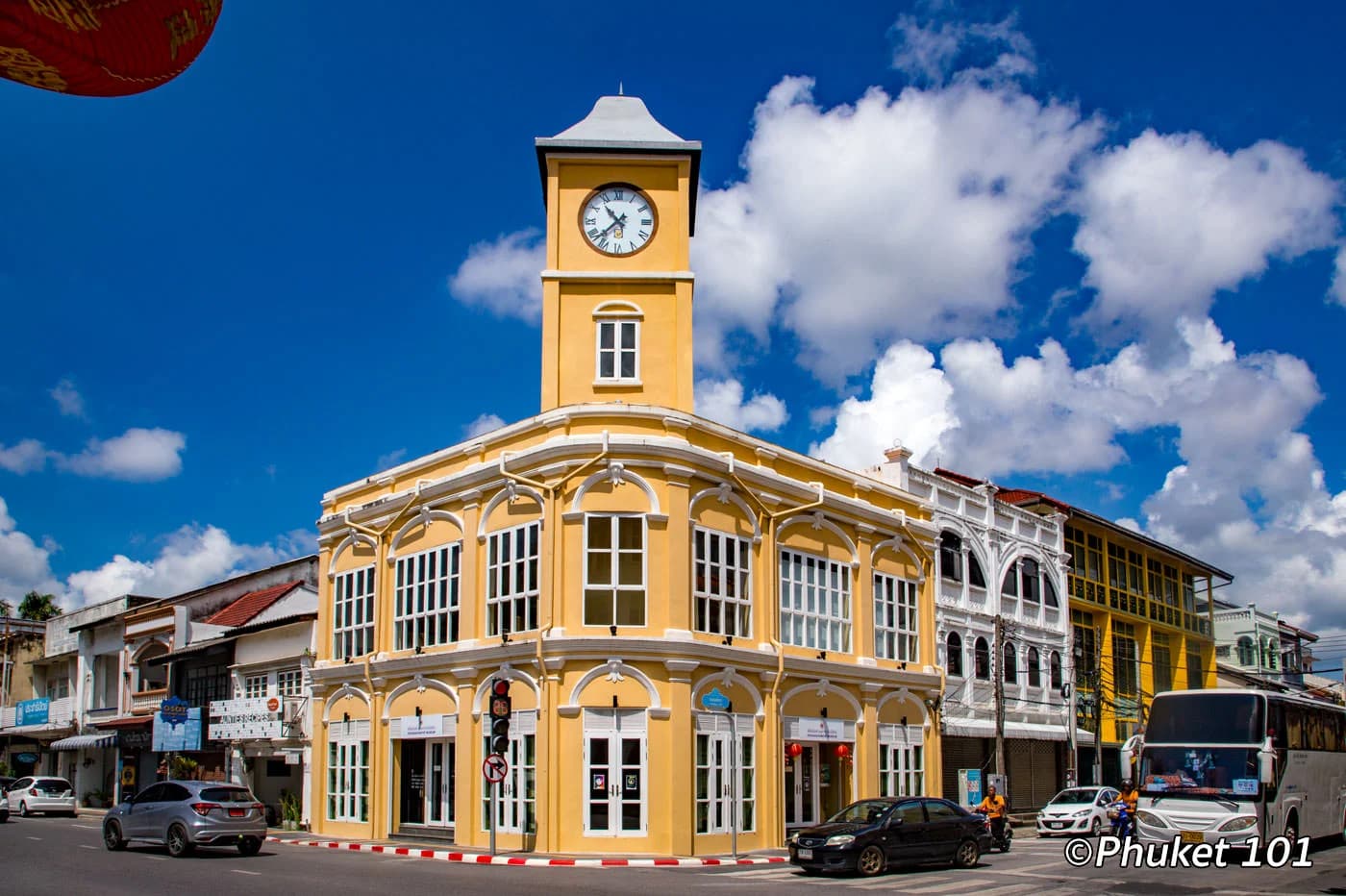
Old Phuket Town surprises people because almost nothing about it looks Thai. You walk streets of two-storey shophouses in faded pink, mint, ochre and blue, with shuttered windows, arcaded walkways and heavy carved doors.
There is a specific reason. Phuket got rich on tin in the nineteenth century. The labour and then the money came from Hokkien Chinese and Peranakan merchants trading through Penang and Malacca, and they built in the style they knew — Sino-Portuguese. The pastel facades along Thalang Road are what tin profits looked like.
The history is worth two minutes because it changes what you are looking at. Tin was mined on Phuket for centuries, but the boom that built this town came in the 1800s, when the island's mines drew tens of thousands of Hokkien Chinese labourers from Penang and the Straits Settlements. Some got rich. Their descendants — the Peranakan or Baba-Nyonya community, the product of Chinese men marrying local Malay and Thai women — developed a culture that was neither Chinese nor Thai, and an architecture to match: a Chinese shophouse floor plan wearing European neoclassical decoration, built by craftsmen trained in Penang and Malacca. The style is documented as Sino-Portuguese architecture, and Phuket Town has one of the best surviving concentrations of it anywhere.
Look for the specifics once you know they are there: the five-foot way, a covered arcade running continuously along the shopfronts so pedestrians never leave the shade; the airwell in the middle of each house, letting light and rain into a long narrow building; the pastel stucco mouldings above the windows; and the heavy carved timber doors, many of them original. Several buildings carry the year they were completed in the plasterwork above the entrance.
It also explains the food. Phuket's signature dishes — Hokkien noodles, moo hong braised pork belly, o-tao oyster omelette — are Peranakan rather than central Thai, which is why the night markets here taste different from Bangkok's. That is not a detail for the guidebook; it is a reason to eat things you do not recognise.
Come between 17:00 and 18:30. This is not a stylistic preference. Midday here is brutal: white overhead light, no shade, and the pastels wash out to grey. From about 17:30 the sun drops low enough to travel down the street rather than onto it, the colours saturate, and the shutters throw long shadows through the arcades.
Walk Thalang Road end to end, then turn into Soi Romanee — a single short lane of the most beautifully restored shophouses on the island, which was the brothel and gambling street of the tin era and is now the most photographed forty metres in Phuket. Hunt the street murals; there are more than a dozen scattered through the quarter, several down alleys you would never otherwise enter. The coffee is genuinely good, with several roasters occupying old shophouses.
Two hours is right: enough to walk it slowly, photograph it properly, sit down for a coffee, and still arrive at the market hungry.
Stop 4: The Night Market
By now you know which one you are going to. What is worth adding is how little it costs to eat well.
Satay skewers from ฿20. A bowl of Hokkien noodles ฿60 to ฿80. Fresh fruit shakes ฿40 to ฿60. Most people eat extremely well for under ฿250 a head, and a family of four can graze their way through a full dinner for well under ฿1,000.
Practical notes that matter more than they sound:
- Bring small notes. Card acceptance at stalls is close to nonexistent, and the nearest working ATM is rarely as near as you would like. ฿20 and ฿100 notes make everything easier.
- Skip a big lunch. The single most common regret on this itinerary is arriving at the market full.
- Tell your driver about dietary needs at pickup, not at the market. Halal-friendly, vegetarian, Indian and Western options all exist at every market on the list, but they are not evenly distributed — he knows which end to point you at.
- Go slowly at first. Walk the whole length before buying anything. The best stalls usually have the longest queues and they are usually worth it.
Pickup Times by Where You Are Staying
Phuket is longer than it looks on a map — about 50 kilometres end to end — and the drive to Chalong is the first thing that decides whether an eight-hour day feels relaxed or rushed. Approximate one-way drive times to the Big Buddha:
| Staying at | Drive to Big Buddha | Suggested pickup |
|---|---|---|
| Chalong, Rawai, Nai Harn | 15–25 min | 13:00 |
| Kata, Karon | 25–30 min | 13:00 |
| Patong | 35–40 min | 12:30 |
| Phuket Town | 25–30 min | 13:00 |
| Kamala, Surin | 45–50 min | 12:30 |
| Bang Tao, Laguna | 50–60 min | 12:15 |
| Mai Khao, Nai Yang (far north) | 60–75 min | 12:00 |
If you are in the far north, be realistic: two hours of your eight are going to be spent driving, and you may want to drop one temple rather than compress all four stops. We will say so when you send your hotel name rather than letting you find out on the day. There is no outer-zone surcharge either way — a Mai Khao pickup costs the same as a Chalong one, which is not true of most island operators.
Doing It Yourself: The Honest Comparison
We are a tour operator, so treat this section sceptically — but the numbers are the numbers, and for some people self-driving genuinely wins.
By scooter (around ฿250–350 a day plus fuel) you will pay the least and have the most freedom. The problems are specific rather than theoretical: the Nakkerd Hill road is a six-kilometre climb that underpowered rental scooters struggle with two-up, you are riding it back down in the dark after the market, and you have nowhere to put shopping or a change of clothes. Thailand's road-safety record for tourists on scooters is poor and Phuket's hill roads are a large part of why.
By taxi or ride-hailing app, each leg is a fresh negotiation or a fresh surge price. A rough reckoning for this route is ฿500–700 to the Big Buddha, ฿300 down to Wat Chalong, ฿400–500 into Old Town, then whatever it costs to get home from a night market at 21:00 — which is the expensive one, because you are hailing from a crowded street late in the evening. Call it ฿1,800–2,500 for four legs, with no waiting time included, nowhere to leave your bags, and no vehicle to retreat to when a child melts down.
By private vehicle you pay ฿3,000 or ฿3,500 once, for eight hours, with waiting time, luggage space, air conditioning and no negotiation at any point. For two people the taxi option is genuinely competitive. For four or more it stops being close — six people in the van pay ฿583 each for the entire day.
The real argument is not price, though. It is that a taxi day has to be planned around getting home, and this itinerary deliberately ends after dark in a place where getting home is hardest.
When to Go, and What to Bring
Season. Phuket's dry season runs roughly November to April and is the best time for the Big Buddha, because the view from the terrace depends entirely on visibility. The green season, May to October, brings heavy but usually short rain — an hour, not a day — and everything on this route except the hilltop view carries on regardless. Both temples have substantial covered areas, Old Town's five-foot ways keep you dry along most of Thalang Road, and Chillva Market is largely under cover.
Best day. Sunday, for the Lard Yai reasons above. Second best is Saturday. Monday and Tuesday are the thinnest evenings.
What to bring:
- Clothing covering shoulders and knees for both temples, or a scarf and sarong you can pull on
- Slip-on shoes — you will remove them several times
- Small notes for the market; stalls rarely take cards
- A light jacket for after dark, especially November to February
- Sunscreen and a hat for the Big Buddha terrace, which has almost no shade
- A power bank — golden hour in Old Town will eat your battery
- A light rain jacket in green season
- An appetite: skip the big lunch
Optional Stops You Can Add
Because the vehicle is private and there is no kilometre cap, the route bends around what you want. The three most common additions:
Tiger Park Chalong sits directly on the Big Buddha road, so it costs nothing in driving time — you simply stop on the way up. Paid at the gate. It is the most-requested addition on this route by a wide margin, and it works best slotted in before the temples while everyone still has energy.
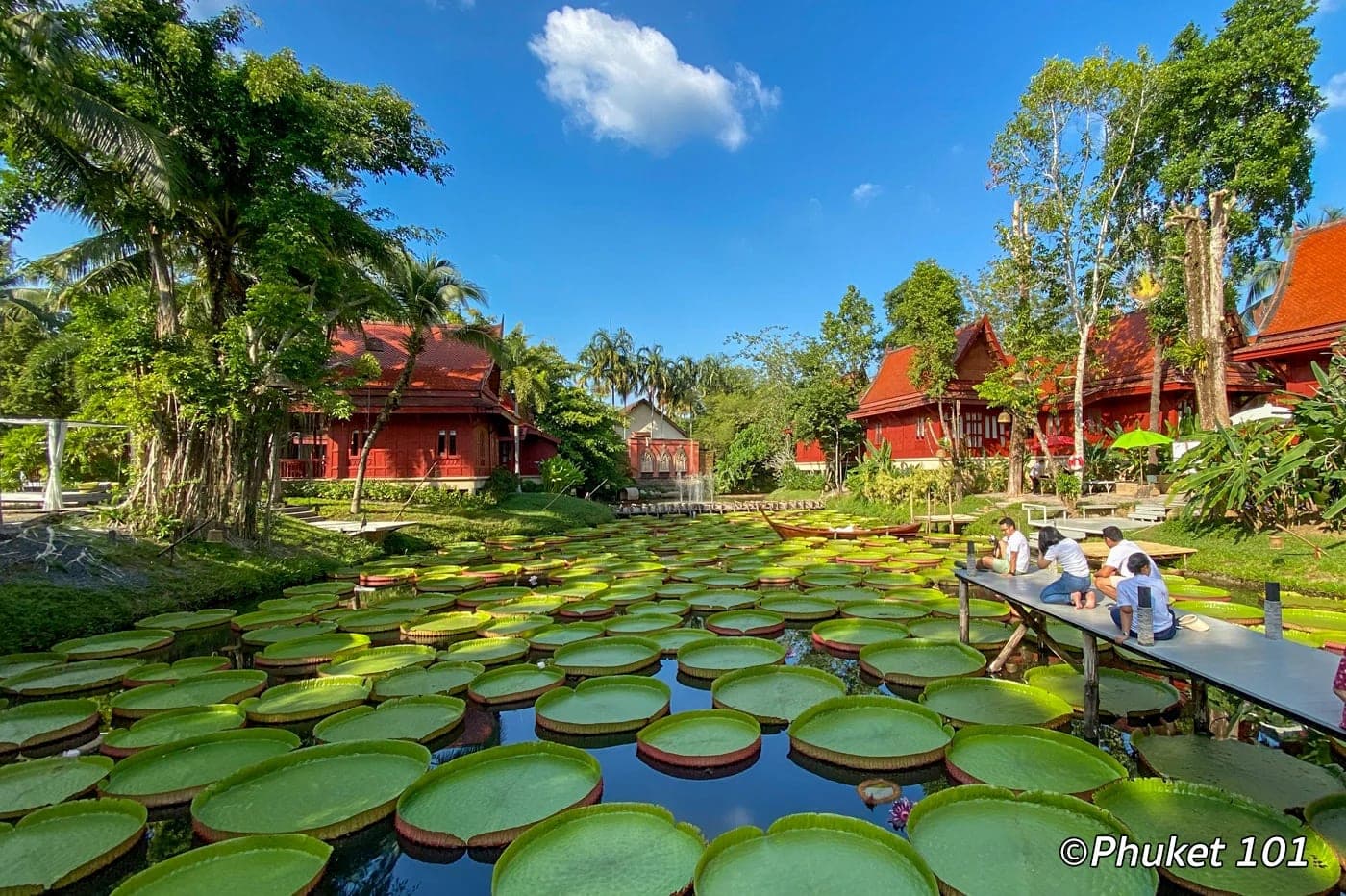
Ma Doo Bua is a café built around a pond of giant Victoria water-lily pads big enough to photograph a child standing beside. Entry is about ฿350 per person including a drink. It is a photo stop rather than an attraction and adds roughly 40 minutes including the detour.
Promthep Cape is the classic Phuket sunset, on the island's southern tip and free. The honest trade-off: taking it means arriving at the night market late or dropping Old Town, because sunset and golden hour on Thalang Road are the same hour. Most people who ask for it end up keeping the original plan once we explain that — which is the point of asking before you book rather than after.
What This Costs, Honestly
| What you pay | |
|---|---|
| Private SUV, up to 4 passengers, 8 hours | ฿3,000 flat |
| Private van, up to 10 passengers, 8 hours | ฿3,500 flat |
| Big Buddha entry | Free |
| Wat Chalong entry | Free |
| Old Phuket Town | Free |
| Night market entry | Free |
| Market food | ฿60–250 per person |
| Extra hour if you stay late | ฿400 (SUV) / ฿500 (van) |
| Optional TAT-licensed guide | ฿2,500 for the whole group |
The vehicle price is flat and per vehicle, so the arithmetic improves with every passenger: ฿1,500 each for two in the SUV, ฿583 each for six in the van, ฿350 each for ten. Children of any age travel at no extra cost within the seats. Fuel, all parking and island-wide hotel pickup are included, with no kilometre cap and no charge per stop.
What is not in the price is anything you did not ask for. There are no gem shops, no silk factories and no commission stops on this route — the only detours are the ones you request.
What Real Guests Say
"Six of us in the van for ฿3,500 and we did not pay an entry fee all day, which I did not believe until it happened. The Big Buddha was the surprise — we had read online it was permanently closed and almost cancelled. Trip Thai Tour sent us the reopening date in writing before we booked. Driver found us pure vegetarian food at the Sunday market without being asked twice."
— Rakesh & Priya M., Pune, India
"The afternoon start made all the difference. Our previous tour in another city had us at temples at 9am in the heat with children. Here we saw the temples in good light and finished at the market after dark. The driver waited while we prayed and pointed out the halal stalls at Chillva."
— Fatima & Khalid A., Dubai, UAE
"We took the SUV and specifically booked a Sunday because of what the tour page says about Lard Yai — completely correct, the market is the same street as Old Town and we never got back in the car. Thalang Road at 6pm is worth the whole day on its own."
— Emma & Tom H., Bristol, United Kingdom
Common Mistakes to Avoid
- Starting in the morning. The most common planning error, and it makes a night market impossible. The temples close before the markets open.
- Assuming there is a market every night. There is something every night, but not the same thing, and not in the same place.
- Wearing shorts to the temples. Both sites enforce shoulders and knees covered. You will not be turned away — Wat Chalong lends sarongs, the Big Buddha hands out wraps — but you will queue for them and they are hot.
- Photographing Old Town at midday. The single biggest difference between a flat holiday snap and a genuinely beautiful photograph is arriving after 17:00.
- Trusting the Google listing on the Big Buddha. It is open. Check the venue, not the info box.
- Booking a shared minibus. On a route with four stops of wildly different appeal, a fixed group timetable means leaving somewhere you love and lingering somewhere you do not.
Frequently Asked Questions
Frequently Asked Questions
No. The Big Buddha is open daily from 09:00 to 18:00 and entry is free. Many Google listings still display 'Permanently closed', which is out of date and is the single most common reason travellers skip this stop unnecessarily. The site closed after the landslide of 23 August 2024, briefly reopened on 1 January 2026 and closed again after three days, then reopened properly on 3 March 2026 under the management of Wat Kittisangharam. The statue, staircase, temple area and viewing terraces are all accessible.
It depends on the day. Sunday is the Lard Yai Walking Street on Thalang Road in Old Town, 16:00 to 22:00. Saturday and Sunday also have the Naka Weekend Market on Chao Fa West Road, 16:00 to 22:00. Monday to Saturday there is Chillva Market on Yaowarat Road, roughly 17:00 to 23:00. Wednesday to Friday adds the smaller Indy Market on Limelight Avenue off Dibuk Road, 16:00 to about 22:30. There is no night of the week with nothing open, but there are nights where the wrong choice means a locked car park.
Wat Chalong is open daily from 07:00 to 17:00 and entry is free. The 17:00 closing time is the single most important constraint on planning a Phuket temple-and-market day, because it means you must reach the temple by about 16:00 to have a worthwhile visit. Certain areas may be restricted during religious ceremonies. Shoulders and knees must be covered and shoes come off inside temple buildings; sarongs are lent at the entrance if you arrive unprepared.
Trip Thai Tour charges a flat ฿3,000 for an SUV carrying up to 4 passengers or ฿3,500 for a van carrying up to 10, for 8 hours. That is per vehicle rather than per person, so six people in the van pay ฿583 each. All four stops are free to enter, so unless you buy food the vehicle fee is your entire cost. Budget roughly ฿60 to ฿250 per person for night-market food, which is where most people happily spend.
Because of opening hours. Wat Chalong closes at 17:00 and the Big Buddha at 18:00, while Phuket's night markets do not open until 16:00 or 17:00. Those facts overlap by roughly one hour, so a day including both temples and a market has to begin in the early afternoon. A 13:00 pickup is the latest start that still fits all four stops. A morning city tour finishes around 17:00, before the markets have properly opened.
Shoulders and knees must be covered at both sites, for men and women, and shoes come off inside temple buildings. Sleeveless tops, shorts above the knee, short skirts and bare midriffs will get you stopped. Wat Chalong lends sarongs at the entrance and the Big Buddha hands out wraps at the top of the hill, so you will not be turned away, but there is often a queue and the wraps are hot. Slip-on shoes make the day much easier.
Yes, and it is the single best reason to take this tour on a Sunday. Lard Yai closes Thalang Road to traffic from 16:00 to 22:00, so the market fills the same Sino-Portuguese street you came to photograph. There are food stalls the length of it, live musicians under the shophouse arcades, and the shops stay open behind the stalls. Because the market and Old Town are the same place, you never get back in the vehicle between stops.
Very little. Satay skewers start around ฿20, a bowl of Hokkien noodles runs ฿60 to ฿80, and fresh fruit shakes are ฿40 to ฿60. Most people eat extremely well for under ฿250 a head, and a family of four can graze their way through dinner for well under ฿1,000. Bring small notes, because card acceptance at market stalls is close to nonexistent and there is not always a working ATM nearby.
Yes, easily. They are about fifteen minutes apart, both free, and both on the same side of the island around Chalong. The practical order is Big Buddha first and Wat Chalong second, because the Buddha sits at the top of a six-kilometre climb and Wat Chalong closes an hour earlier. Allow about an hour at each. Adding Old Phuket Town and a night market afterwards turns it into a comfortable eight-hour afternoon-to-night day.
Your driver substitutes Karon Viewpoint or Promthep Cape at no charge and the price does not change. We build the day this way on purpose. The Big Buddha reopened on 3 March 2026 under 25 Department of Forestry conditions for the forest-reserve site, and a landslide class-action is still before the Phuket court, so while the site is reliably open today we will not pretend closure is impossible. A flexible private day costs nothing to re-route.
It is the most photogenic place on the island and almost nothing about it looks Thai. Streets of two-storey Sino-Portuguese shophouses in faded pink, mint and ochre were built on nineteenth-century tin money by Hokkien Chinese and Peranakan merchants trading through Penang. Come between 17:00 and 18:30. Midday light is flat and washes the pastels out completely, while at golden hour the sun comes down the street rather than onto it and the colours saturate.
A driver is enough for most people on this route, because all four stops are self-explanatory walking experiences. Your driver speaks working English, knows the parking, and can point you at halal or vegetarian stalls at the market. He will not narrate the temples, because Thai law reserves guiding for licensed guides under the Tourism Business and Guide Act B.E. 2551, with penalties up to ฿500,000. A TAT-licensed guide can be added for ฿2,500 for the whole group.
Phuket Big Buddha, Wat Chalong, Old Town & Night Market Tour
From ฿3,000 per vehicle (8 hours) · TAT Licensed No. 14/04232 · ⭐ 4.0 (186 reviews)
Book the Day
Trip Thai Tour is a licensed Thai tour operator — TAT Licence No. 14/04232, verifiable on the official Tourism Authority of Thailand registry — rated 4.0 from 186 reviews. You can read more about us on our About page.
The Big Buddha, Wat Chalong, Old Town & Night Market tour is ฿3,000 per SUV or ฿3,500 per van, 8 hours, door-to-door from any Phuket hotel. Tell us your date and we will confirm which night market runs that evening before anything is charged.
Prefer a morning start with a beach viewpoint instead of a market? That is our Phuket City Day Tour. Want no fixed route at all? Take the same vehicle as a private car at disposal and design the day yourself, or browse our Phuket packages.
Message us on WhatsApp at +66 89 949 6235 — we reply in minutes, and we will tell you honestly if the day you want does not fit in eight hours.
Check Availability & Book
Send us your details to get an instant quote and secure your date.
Related Guides
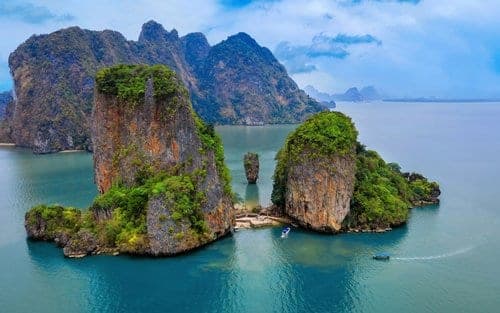
James Bond Island Tour from Phuket 2026 — Complete Phang Nga Bay, Sea Cave & Koh Panyee Guide
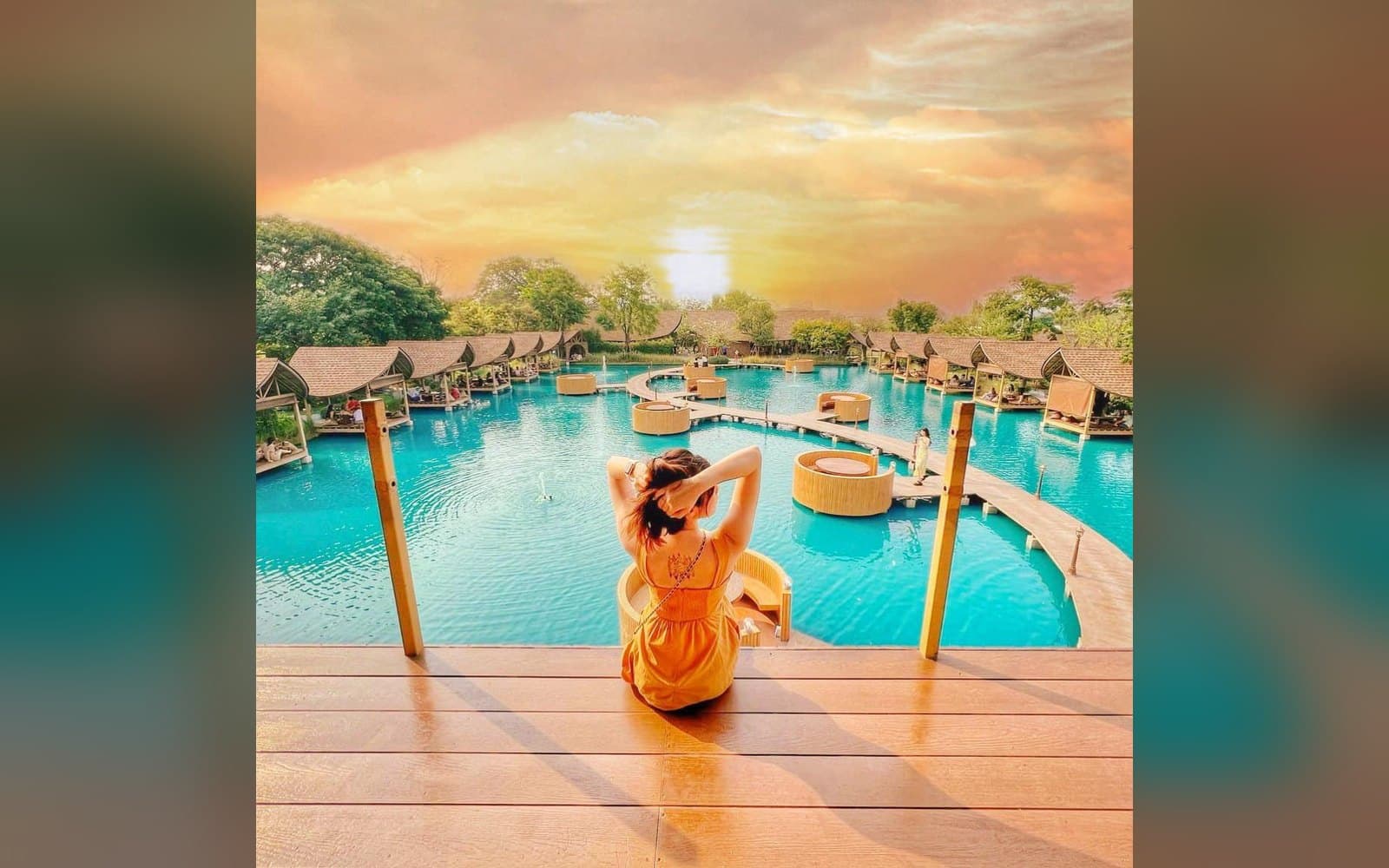
Bubble in the Forest Cafe Bangkok 2026: The Seat Guide Nobody Writes — Zones, Timing, Food and How to Actually Get a Table on the Water
A complete 2026 guide to Bubble in the Forest Cafe in Sam Phran, Nakhon Pathom — the five seating zones ranked, why walk-ins never get the water booths, the two hours of good light, what to order, what it costs, and how to reserve a seat for free.

Hanuman World Phuket 2026: Every Package Price, the Session That Decides Your Day & an Honest Review
Complete guide to Hanuman World Phuket zipline park on Chaofa Road — all four packages priced, why the 08:00 session decides whether your visit takes three hours or seven, the roller zipline and skywalk queue problem nobody explains, and how it compares to Flying Hanuman.