Muay Thai in Bangkok 2026: Rajadamnern Ticket Prices, Which Night to Book & How to Avoid the Touts
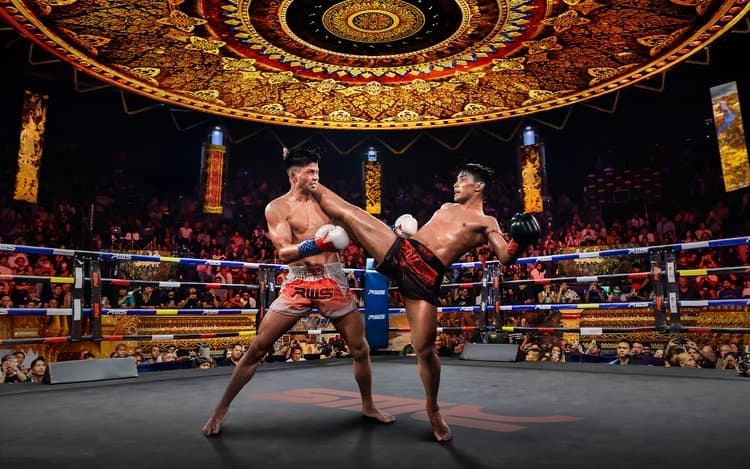
The Men Outside Will Tell You It's Sold Out
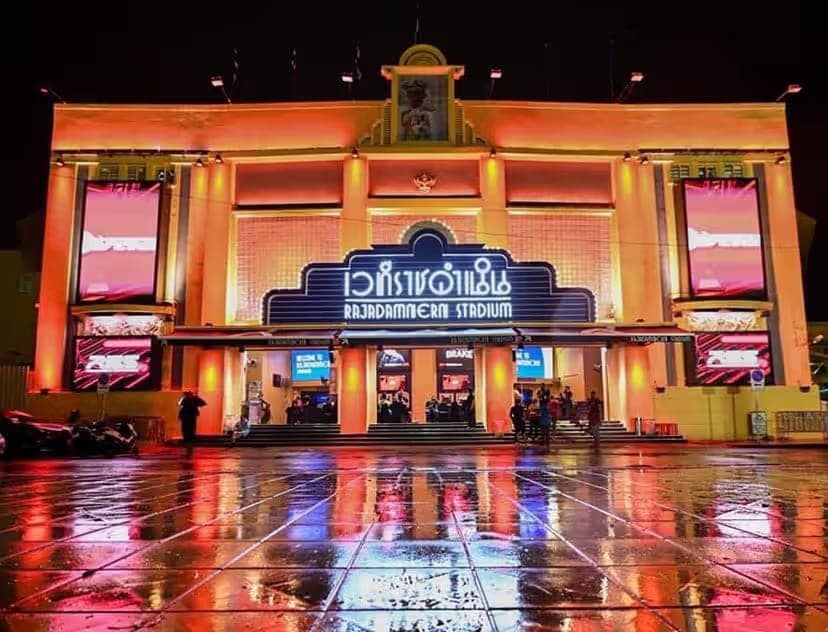
You will not have reached the entrance yet.
Somebody will step forward on the approach road, friendly and speaking good English, and tell you one of two things: that tonight's fights are sold out, or that foreigners need a special ticket that is not sold at the window. Then they will offer to sort it out for you — at two or three times what the seat actually costs.
This is the most-reported experience at Rajadamnern Stadium anywhere online. Reviewers describe it as an organised operation rather than opportunistic hustling, and it is the reason that a venue with a genuinely great product carries so many one-star reviews about being ripped off. It is also, and this is the important part, entirely avoidable — because it only works on people who arrive with nothing in their hands.
That is the shape of this guide. Muay Thai at Rajadamnern is one of the best evenings available in Bangkok and one of the easiest to get wrong, and almost everything that goes wrong happens before you sit down. So this covers what every seat tier actually costs, which of the seven fight nights you should book and why they are different, why the person next to you may have paid a fraction of your price, and what is happening in the ring and in the tiers above you once the bell goes.
Rajadamnern Stadium Muay Thai — Club Class
From ฿1,800 per person — TAT Licensed Operator · Instant WhatsApp confirmation

What Rajadamnern Actually Is
Rajadamnern is the oldest of Bangkok's great stadiums and the reason Muay Thai has a formal ranking system at all.
Ground was broken on 1 March 1941, on the order of Field Marshal Plaek Phibunsongkhram, then Prime Minister of Thailand. The build ran through the war years and the first fight was staged on 23 December 1945. The construction cost was ฿258,900. The original building was open-air and modelled on a Roman amphitheatre; the concrete roof that makes it weatherproof was added in 1951. It holds 3,078 people.
Before Rajadamnern, Muay Thai was fought at temple fairs and improvised rings. The stadium gave the sport a fixed home, a fixed rule set, and a championship structure — which is why a Rajadamnern title still means something to a Thai fighter in a way that no international belt quite does. Every Thai champion worth the name has walked up those steps. You can read the full institutional history on the stadium's official website and the construction record on Wikipedia's Rajadamnern Stadium entry.
Two modern dates are worth knowing. On 22 July 2022, Rajadamnern held its first female Muay Thai bouts, ending a rule that had stood since the building opened. And in late 2022 the stadium launched the Rajadamnern World Series, its Saturday flagship promotion, which signed an international broadcast deal in June 2023 and is now the strongest card of the week.
The distinction that matters to you as a visitor is simple. There are two ways to watch Muay Thai in Bangkok. One is a staged show, built for visitors, with a fixed narrative and performers. The other is a professional fight night at a national stadium, where ranked fighters are working, purses are on the line, and the crowd's money is on the result.
Rajadamnern is the second kind. Nothing about the evening has been arranged for your benefit, and that is precisely the appeal.
Rajadamnern Ticket Prices 2026 — Every Tier
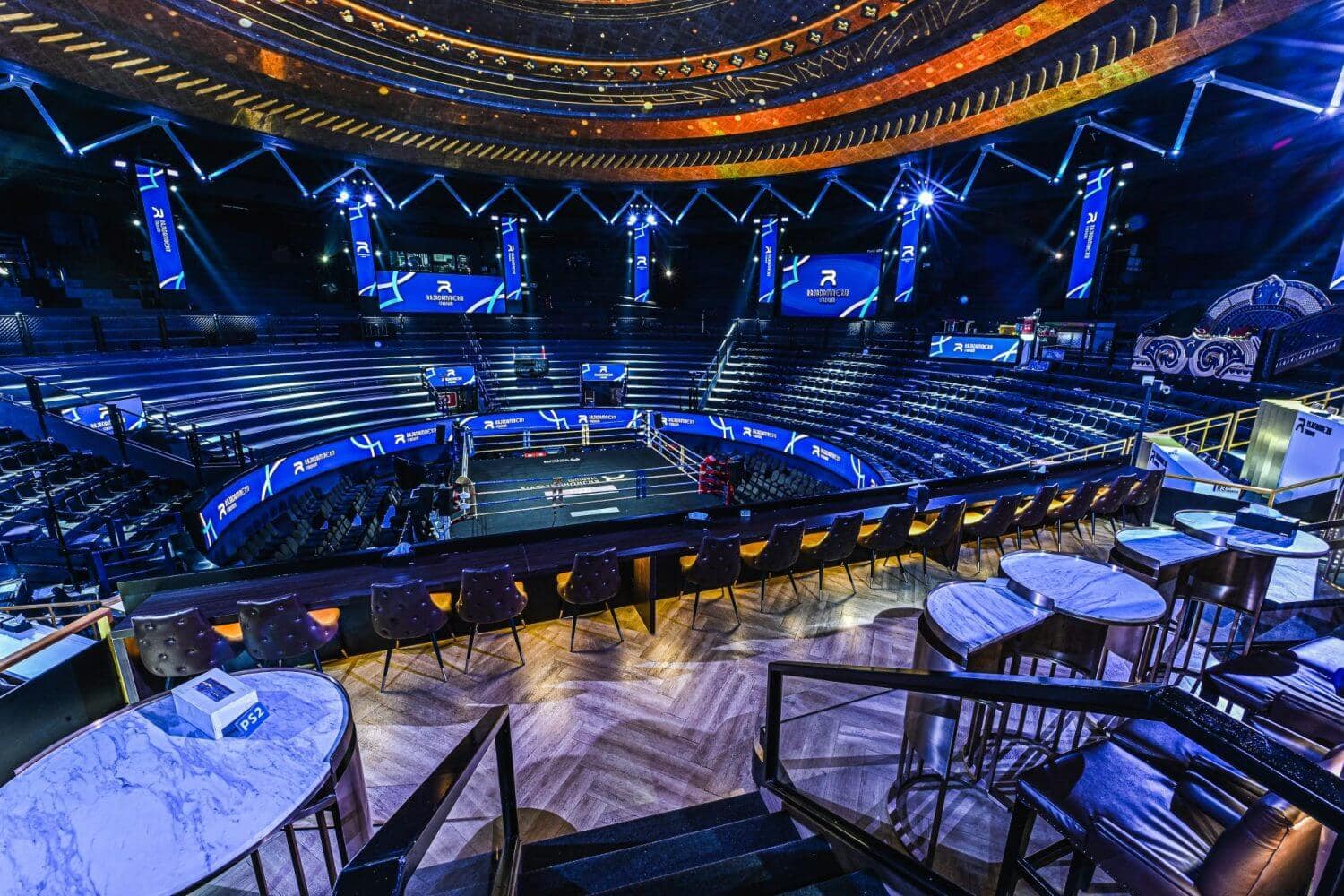
Rajadamnern sells a full ladder of seat tiers, and unlike most venues they are genuinely different experiences rather than marketing labels. Here is the whole board:
| Zone | Section | Price (THB) | Capacity | What you get |
|---|---|---|---|---|
| Third Class | 11 | ฿1,000 | 2,000 | Unassigned. Not open every night — see below |
| Second Class | 10 | ฿1,500 | 300 | Unassigned. The legal public betting tier |
| Club Class | 8–9 | ฿1,800 | 495 | Assigned. Clear elevated view — best first visit |
| Ringside | 3–7 | ฿2,500 | 200 | Assigned, at the canvas itself |
| Presidential Box | 1–2 | ฿3,500 | 44 | Assigned, snacks and soft drinks included |
| Panoramic Balcony | — | ฿4,500 (฿10,000 Sat RWS) | 15 | Saturday rate includes free beer, snacks, soft drinks |
| Couple Suite | — | ฿9,000 | 12 | Snacks and soft drinks included |
| Family Suite | — | ฿22,500 | 10 | Snacks and soft drinks included |
Those capacities add up to 3,076, which is essentially the stadium's stated 3,078 — and they explain almost everything about buying a ticket here.
Club Class is the right answer for most people, and the capacity column is why. Sections 8 and 9 hold 495 seats, the largest reserved-seating block in the building. That is the reason a reputable seller can confirm it instantly rather than checking first. It also happens to be the best seat for actually watching a fight: one ring back with an elevated sightline, close enough to read technique, high enough to see the shape of a round. If you train Muay Thai, this is where you will learn something.
The premium zones are rooms, not tiers. The Panoramic Balcony holds 15 people. The Couple Suite holds 12. The Family Suite holds 10. These are not "sections" with a bit of spare capacity — they are single small spaces, and anyone taking your money for one without confirming with the stadium first is gambling with your evening.
And now the ฿1,000 ticket, which is the one that catches people out. Third Class is section 11, a 2,000-capacity overflow zone, and the stadium opens it only when the other zones have filled. On a quiet midweek card it may not go on sale at all. So if you have seen Rajadamnern advertised "from ฿1,000" and then found it unavailable on your date, that is why — the cheapest number is real, but it is not a seat you can plan around.
We sell Club Class at ฿1,800, which is the same tier at the same price the stadium charges on its own site. Your e-ticket goes to your phone before you travel. Book Rajadamnern Club Class tickets here — or message us for any other tier and we will confirm availability before you pay anything.
Which Night Should You Book? The Card Changes Every Day
This is the single most useful thing in this guide, and almost no listing mentions it. "Rajadamnern" is a building, not a promotion. Five different promoters rent that ring across the week, and the difference between them is not decoration — it is the structure of what you will watch.
| Night | Promoter | Format | Gates | Fights | Book it if… |
|---|---|---|---|---|---|
| Mon · Tue · Fri | Rajadamnern Knockout | 7 bouts × 3 rounds | 6:00 PM | 7–9 PM | You want non-stop action — 80% knockout rate |
| Wednesday | Suek Muay Thai Palangmai (New Power) | 8–9 bouts × 5 rounds | 5:00 PM | 6–10 PM | You want the traditional article, clinch work and full ritual |
| Thursday | Petchyindee (founded 1976) | 8–9 bouts × 5 rounds | 5:00 PM | 6–10 PM | Heritage promotion, Thailand's leading domestic fighters |
| Saturday | Rajadamnern World Series | 3 rounds + open scoring | 6:30 PM | 7–10 PM | Best fighters, full entrance production, free-flow beer every seat (beer only, no food) |
| Sunday | Kiatpetch | Mixed 3 & 5 rounds | 5:00 PM | 6–10 PM | Technical strikers with loyal local followings |
The three-round versus five-round split is the whole decision
A five-round traditional bout has a shape. Rounds one and two are assessment — the fighters read range, timing and guard, and the crowd stays relatively quiet. The scoring weight lands in rounds three and four, which is when the betting tier erupts. Round five can be almost ceremonial if the fight is already decided, both men circling out the last three minutes in mutual respect. First-time Western viewers routinely misread that opening as boring and that ending as the fighters giving up. Neither is true — it is a scoring system doing exactly what it was designed to do.
A three-round bout has no room for any of it. A fighter who spends round one measuring range has burned a third of the contest, so nobody does. Everyone comes forward from the first bell.
That is the mechanism behind the number the stadium sells hardest: Rajadamnern Knockout advertises an 80% knockout rate, billed as the highest of any Muay Thai promotion. It is not a marketing figure bolted onto an ordinary card — it is the arithmetic of a shortened format plus matchmaking that favours forward-pressure fighters over defensive technicians. Frequent knockdowns, decisive stoppages, and you are out of the building by nine.
Thursday, and why Petchyindee is worth knowing about
Of the traditional nights, Thursday carries the most history. Petchyindee was founded by Virat Vachirarattanawong in 1976 and moved into promotion in 1982, staging some of the biggest cards of what Thais still call the golden era of Muay Thai. The camp produced Sagat Petchyindee, a champion at both Rajadamnern and Lumpinee — and, for anyone who grew up on arcade machines, the fighter who inspired Street Fighter's Sagat. Since 2013 the promotion has been run by Virat's son Nuttadaj, who became the youngest promoter ever licensed at this stadium.
Wednesday's Suek Muay Thai Palangmai — "New Power" — and Sunday's Kiatpetch are the other two traditional cards, both long-running fixtures with deep ties to Thailand's leading gyms.
Saturday: open scoring and free beer
The Rajadamnern World Series is the flagship, and it carries two things no other night gives you.
Open scoring. The judges' cards are displayed after every single round. For a visitor watching an unfamiliar sport, this is transformative — instead of guessing who is ahead, you can simply read it, and the fifth-round circling suddenly makes sense because you can see the fight was decided in round three.
Free-flow beer at every seat, Club Class included — and this is worth stating precisely, because it is the kind of thing people mis-hear. It is beer, and only beer. No snacks, no soft drinks, nothing to eat comes with a Club Class ticket on any night of the week. Food and soft drinks are a benefit of the premium zones — the Presidential Box, Panoramic Balcony, Couple Suite and Family Suite — regardless of which night you go. Everyone else buys from the kiosks.
One further caveat: alcohol service is suspended nationwide in Thailand on election days and certain Buddhist holidays. If one falls on your date the fights run exactly as normal — just without the beer.
Why Thais Pay Less Than You Do
Now the thing that generates the angriest reviews, which we would rather you heard from us before you book than from a stranger in the seat beside you.
Rajadamnern operates dual pricing. Thai nationals pay a local rate for these seats and foreign visitors pay substantially more for the same tier on the same night.
This deserves precision rather than outrage. Dual pricing is standard practice at Thai attractions — national parks, museums and temples do the same thing — and the reasoning is that residents already contribute through taxation to institutions that exist partly as cultural preservation. It is not illegal, it is not hidden from Thai customers, and it applies identically to every operator selling these tickets, including us.
What is genuinely unsatisfactory is that it is not disclosed to visitors anywhere obvious. Nobody enjoys learning, halfway through a good evening, that the arrangement was different from what they assumed. So: know it going in, and it stops being a grievance and becomes a fact about how Thailand prices its institutions.
The thing actually worth avoiding is a different animal entirely. The touts at the gate are not charging a national rate — they are charging two to three times face value to people who did not know what the face value was. That markup is optional, it is avoidable, and the way to avoid it is to arrive holding a ticket.
Look Up: The Largest Dome Projection in Any Stadium on Earth
Here is the part that appears on virtually no listing selling these tickets, and it is one of the genuine reasons to come.
Rajadamnern operates the largest dome projection inside any stadium in the world. The entire ceiling of the building is a working projection surface. Fighters do not simply walk to the ring here — the entrances are staged through it, with lighting, screens and full-dome projection wrapping the room. At the interval, the same system runs a light and sound show telling the roughly 80-year history of Muay Thai and this stadium's part in it.
It is the reason footage shot in this room travels internationally, and it is a strange thing to discover on the night rather than in advance. The production runs on every card and is at its fullest on Saturday's World Series, which adds championship entrances and a broadcast crew on top.
And the building's international fame is considerably older than the projectors. The Muay Thai scene in the 1974 James Bond film The Man with the Golden Gun — where Roger Moore's Bond first meets Christopher Lee's Scaramanga at ringside — was filmed at Rajadamnern. You are sitting in a room that half the world has already seen.
The Ritual, and the Band That Never Stops
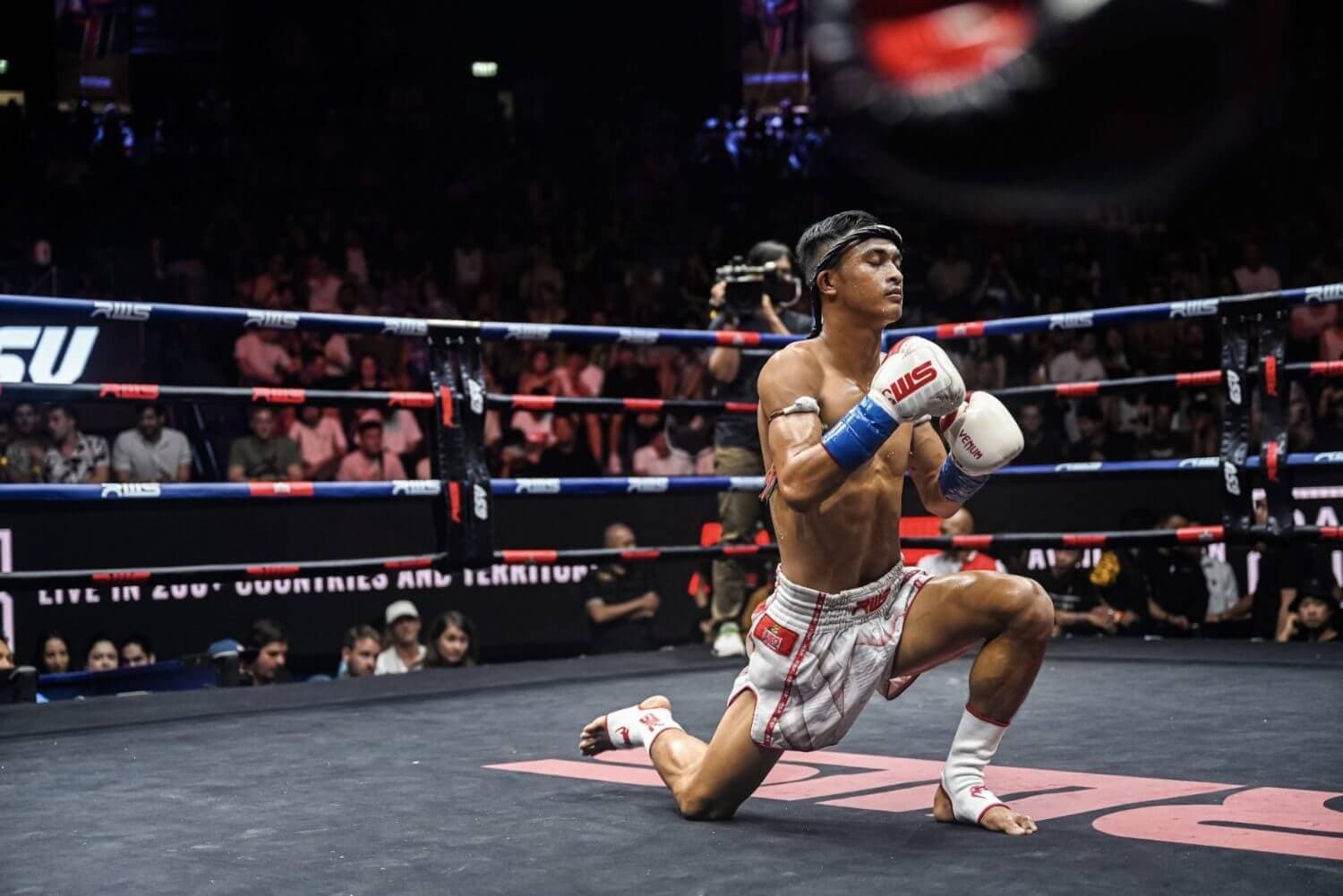
The first bout is called and two fighters climb through the ropes wearing a braided headband — the mongkhon — and cords tied around their biceps called prajioud. Then, instead of squaring up, they walk the perimeter of the ring with one hand on the top rope, sealing it, and begin to move through a slow sequence of postures.
This is the wai kru ram muay. It is not a warm-up. It is an act of respect to the fighter's teacher, gym and parents, and it is one of the reasons Muay Thai is treated in Thailand as a cultural inheritance rather than only a sport. Individual gyms have their own sequences, so the movements differ from fighter to fighter, and a Thai spectator can often name the camp from the ram muay alone.
The stadium's own etiquette guidance asks spectators to stay seated with phones on silent through it, and to hold applause until it finishes. It takes a couple of minutes and it is the moment most first-time visitors realise this evening was not assembled for them.
Then the mongkhon comes off, the trainer says something in the fighter's ear, and the bell goes.
Here is the detail that changes your whole evening, and almost nobody explains it: the band never stops.
The music you can hear is called sarama, played live by a small ensemble — a pi java, the reedy Javanese oboe that produces the sound most people associate with Muay Thai, plus drums and finger cymbals. It plays through all five rounds of every bout. And its tempo follows the fight.
When the fighters are circling and reading each other, the music is slow and almost meandering. When somebody commits — a clinch, a knee, a sustained exchange — the drums accelerate and the oboe climbs, and the entire room lifts with it. Once you notice this, you stop watching with your eyes alone. You start hearing an attack coming a beat before it lands, exactly the way three thousand Thai spectators in the tiers above you are doing.
Most visitors take two or three bouts before this clicks. It is the single best reason to arrive when the gates open rather than for the main card.
The Betting Tier — The Second Event Happening Above Your Head
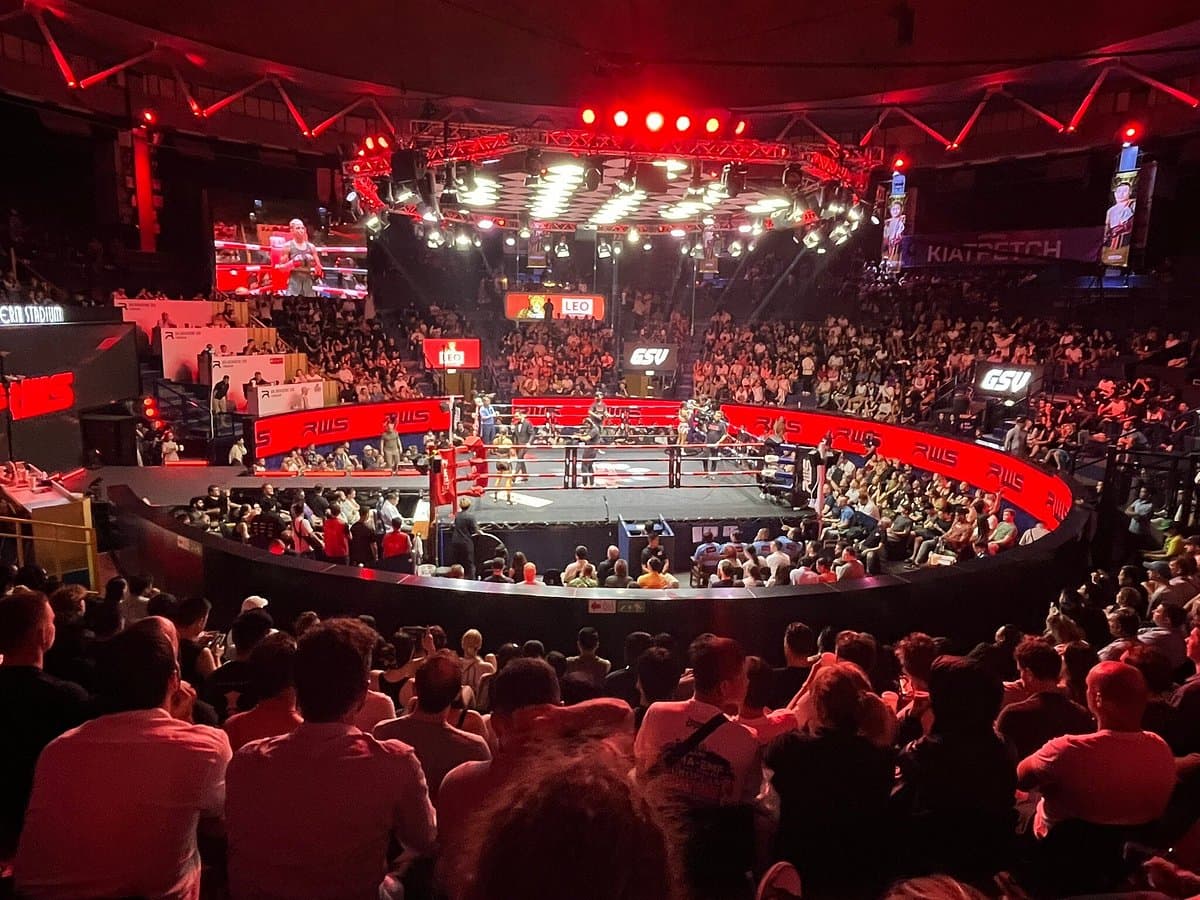
Somewhere around the third bout you will notice that a large number of people in this building are not watching the fight the way you are.
The Second Class tier (section 10) operates as a legal public betting area, and it is one of the most extraordinary things in the room. Men stand rather than sit, facing partly away from the ring, and communicate across the tier in hand signals — fingers held at different heights, palms turned, a flick of the wrist that settles a wager with a stranger four rows away whose name they may not know. Odds move continuously during the round. Nothing is written down. The entire market runs on gesture, memory and a code of honour that has functioned in this building since the 1940s.
Two rules for visitors, both firm. Foreign spectators watch; only local bettors take part, so do not attempt to place a wager — this is the stadium's own stated position. And do not photograph individuals in the betting tier. Wide crowd shots are fine; faces are not.
Why Round One Is Quiet and Round Three Is Deafening
The betting tier is also the answer to the question every first-time visitor asks, usually in a slightly disappointed tone, somewhere in the second round: why is nothing happening?
Muay Thai is not scored like boxing. Rounds one and two are assessment. The fighters are measuring range, reading guard, testing timing and finding out what the other man does under pressure. A fighter who looks passive in round two is almost always working. Thai judges know this and weight the scoring accordingly.
The scoring weight lands in rounds three and four. That is when the fight is decided, which means that is when the money moves — and it is why the noise from the upper tiers arrives so suddenly and so completely. That wall of sound frequently precedes the big shot rather than reacting to it. The tier is pricing the fight in real time and reacting a half-second before you do.
Round five can then be almost ceremonial. If one fighter is clearly ahead on the cards, both may simply circle out the last three minutes with no real exchanges. Western visitors sometimes read this as the fighters giving up, and it is the opposite: it is a decided fight being allowed to finish with dignity, and the room understands it that way.
Important caveat: all of the above applies to the five-round traditional nights only — Wednesday, Thursday and Sunday. On a three-round Knockout card (Monday, Tuesday, Friday) or a World Series bout on Saturday, none of it happens, because there is no time for it. That is the entire point of the shortened format, and it is why those nights carry an 80% knockout rate while a traditional card produces far more decisions.
So if you have been told Muay Thai starts slow and you would hate that, you have not been told the whole thing. You have been told about half the week.
The Practical Evening — Bags, Cold Air, Food and the 10 PM Exit
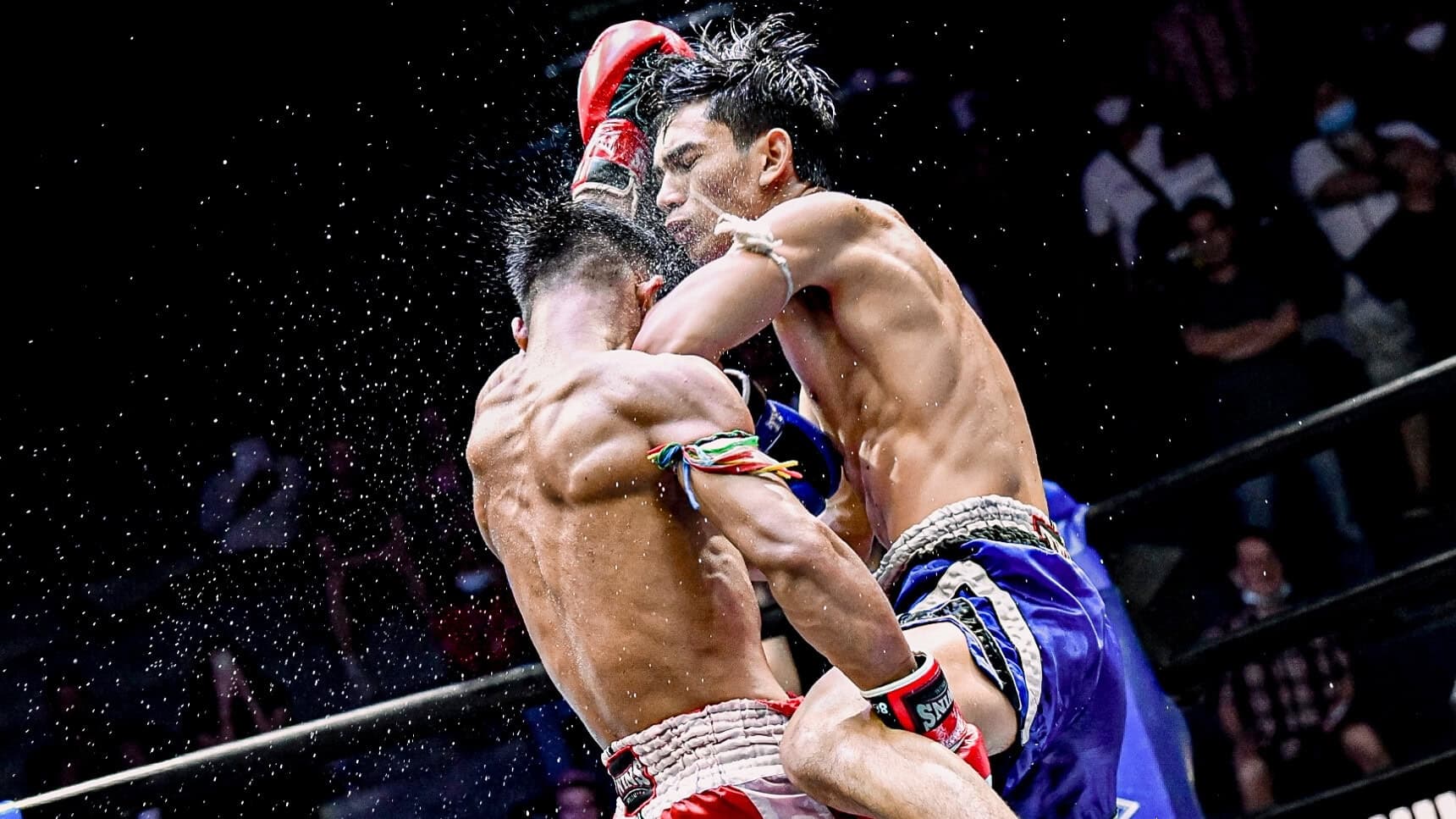
Arrive 30 to 45 minutes before the card begins. Bags are scanned at the gate — a small cross-body bag is easiest — and only collapsible water bottles are permitted inside.
Screenshot your e-ticket before you leave your hotel. When three thousand people arrive within the same twenty minutes, mobile data in that pocket of the Old Town slows to a crawl. A screenshot scans exactly as well as a live page and saves you standing at the gate watching a loading spinner.
Bring a light layer. The stadium is air-conditioned and three hours seated gets genuinely cold, particularly if you have walked in from a 33-degree Bangkok evening in a t-shirt.
Food is available but modest. Kiosks inside sell snacks, hot dogs, beer and soft drinks from around ฿60. The stalls outside the gate sell Thai rice dishes and noodle soups and are both cheaper and better. The Old Town streets around the stadium have halal-friendly, vegetarian, Indian and Western options within a few minutes' walk, which makes an early dinner before a 6:00 PM gate very easy.
Then there is the exit, which is the part worth planning. Knockout cards finish around 9:00 PM; traditional and World Series cards run to about 10:00 PM. Either way, roughly three thousand people leave the building within ten minutes, into a neighbourhood that is not on the BTS or MRT network — the nearest station, Sam Yot, is about 2 km away.
Tired foreign tourists leaving a venue late at night in an area with limited transport are precisely the customers that meter-refusing drivers wait for, and reviewers warn about it consistently. If you are taking a taxi, agree the meter before you get in. If you are using a ride-hailing app, walk a little way from the exit before ordering — the pickup point immediately outside is chaos for the first fifteen minutes.
The alternative is a private vehicle that waits through the entire card and is at the same drop-off point when you come out. At ฿1,500 for the whole vehicle round trip, up to 10 people, a group of four pays ฿375 each and a family of eight pays under ฿190 each, which is less than the taxi fare in each direction and considerably calmer.
One genuine advantage of the location: you are in the Old Town. Khao San Road is about ten minutes away and only starting to get going at that hour, and the Golden Mount is nearby. If you want to make a night of it, this is the right side of the city to finish on.
Rajadamnern or Lumpinee?
Bangkok has two great Muay Thai stadiums and visitors reasonably want to know which one to take.
Rajadamnern is the older — opened 1945, in the Old Town, 3,078 seats, a concrete roof over what began as an open-air amphitheatre. Its practical advantage is decisive for most travellers: it runs cards seven nights a week, so it fits whatever dates you already have. The building itself is part of the appeal; the history is in the room with you.
Lumpinee is the newer institution, relocated to a modern purpose-built arena in the north of the city. The presentation is more international, the facilities are newer, and the sightlines are arguably cleaner. Cards typically run on fewer nights of the week — commonly Tuesday, Friday and Saturday — so it depends on your dates lining up.
Neither is a wrong answer. If your itinerary is tight, book Rajadamnern, because it will have a card on the night you are free. If you have a flexible week and want the modern arena experience, take whichever has the better card. If you want the older room, the betting tier and the sense that you are in the building where the sport was formalised, that is Rajadamnern.
Rajadamnern Stadium — Practical Information 2026
| Address | 8 Ratchadamnoen Nok Road, Wat Somanas, Pom Prap Sattru Phai, Bangkok 10100 |
| Opened | 23 December 1945 (ground broken 1 March 1941) |
| Capacity | 3,078 |
| Fight nights | Every night, Monday to Sunday |
| Promoters | 5 across the week — Knockout · Palangmai · Petchyindee · World Series · Kiatpetch |
| Gates open | 6:00 PM (Mon, Tue, Fri) · 5:00 PM (Wed, Thu, Sun) · 6:30 PM (Sat) |
| Fight times | 7–9 PM (Mon, Tue, Fri) · 6–10 PM (Wed, Thu, Sun) · 7–10 PM (Sat) |
| Card length | 7 bouts × 3 rounds (Knockout) · 8–9 bouts × 5 rounds (traditional) |
| Knockout rate | 80% advertised on Mon, Tue, Fri Knockout cards |
| Production | World's largest in-stadium dome projection; interval light and sound show |
| Ticket range | ~฿1,000 (third class) to ฿10,000 (panoramic suite) |
| Club Class | ฿1,800 — assigned seating, the tier we recommend |
| Nearest metro | MRT Sam Yot, approximately 2 km |
| Dress code | None enforced; smart casual suggested for ringside and VIP |
| Age limit | None — the stadium is family-friendly |
| Photography | Permitted from your seat, no flash, do not stand on railings |
| Betting | Legal in the 2nd class tier; foreign visitors observe only |
Rajadamnern Stadium Muay Thai — Club Class
From ฿1,800 per person · TAT Licensed No. 14/04232 · ⭐ 4.0 (186 reviews)
How to Book Rajadamnern Tickets with Trip Thai Tour
⭐ "Two men told us the fight was sold out before we even reached the entrance. We just held up the QR code and walked in. Club Class was the right call — close enough to see the clinch work properly, and nobody had explained to us anywhere else that the band speeds up with the fight. Once you hear that, you watch completely differently." — Michael R., Austin, United States (verified booking, 2026)
Booking ahead gives you three things the gate cannot: a ticket in your hand before you arrive, so the touts have nothing to sell you; a Club Class reserved seat at ฿1,800, the same price the stadium charges for that tier with no markup added; and the option of a private vehicle that waits through the whole card so the 10:00 PM exit is somebody else's problem.
We sell Club Class online and nothing else, deliberately. Ringside, the Second Class tier (section 10) and the premium boxes are limited and they genuinely sell out on big Saturday cards. Rather than take your money and discover the problem afterwards, we check those with the stadium first. Message us with your date and we will come back with what is actually available.
To book: choose your date on the Rajadamnern Stadium booking page, tell us your group size, and add the private transfer if you want it. Bookings close 24 hours before your date so we have time to confirm your seats with the stadium.
Prefer to ask first? Message us on WhatsApp at +66 89 949 6235 — typically answered within 15 minutes during business hours. Tell us what kind of evening you want and we will tell you honestly which night to take, including when the answer is "wait for Saturday".
Trip Thai Tour is a TAT-licensed Thai tour operator, Licence No. 14/04232, verifiable on the official Tourism Authority of Thailand registry, rated 4.0 from 186 reviews. You can read who we are and how we work on our About page.
Book Rajadamnern Stadium tickets →
Building a fuller Bangkok trip? The stadium is an evening product, so it pairs cleanly with anything in daylight — see our Grand Palace tour for the same day, the Chao Phraya dinner cruises for the alternative Bangkok evening, or our full Bangkok tour packages.
Frequently Asked Questions
Rajadamnern's published 2026 rates run from ฿1,000 to ฿22,500 depending on the zone. Third Class (section 11) is ฿1,000, Second Class (section 10) is ฿1,500, Club Class (sections 8–9) is ฿1,800, Ringside (sections 3–7) is ฿2,500 and the Presidential Box (sections 1–2) is ฿3,500. Above those sit the Panoramic Balcony at ฿4,500 — or ฿10,000 on Saturday World Series nights, when it includes free beer — the Couple Suite at ฿9,000 and the Family Suite at ฿22,500, all of which include snacks and soft drinks. Trip Thai Tour sells Club Class at ฿1,800, the stadium's own rate with nothing added, and quotes the other zones on WhatsApp after confirming availability.
Yes, and it is the most-reported complaint about this stadium anywhere online. Men work the approach road outside the entrance and follow a consistent script: they tell arriving visitors that tonight's fights are sold out, or that foreigners need a special ticket that is not sold at the window, and then offer to help — at two to three times face value. Reviewers describe it as organised rather than opportunistic. It works entirely because most visitors arrive with nothing in hand. If you already hold a ticket on your phone, there is no conversation to have: you decline, walk to the gate, scan your QR code, and go in. Buying in advance removes the problem completely.
Yes. Rajadamnern operates dual pricing, with Thai nationals paying a local rate and foreign visitors paying substantially more for the same seats. This is standard practice at many Thai attractions and it is not illegal or hidden from Thai customers, but it is not disclosed to visitors anywhere obvious, which is why people who discover it afterwards feel misled and say so in reviews. It is worth separating two different things: the dual price structure, which is the stadium's own policy and applies to every operator; and the two-to-three-times markup charged by the touts at the gate, which is avoidable and only affects people arriving without a ticket.
Five different promoters run the week and the format changes with them. Monday, Tuesday and Friday are Rajadamnern Knockout: seven bouts of three rounds, an advertised 80% knockout rate, gates 6:00 PM and fighting 7:00 to 9:00 PM. Wednesday (Suek Muay Thai Palangmai), Thursday (Petchyindee) and Sunday (Kiatpetch) are traditional five-round cards of eight to nine bouts, gates 5:00 PM and fighting 6:00 to 10:00 PM. Saturday is the Rajadamnern World Series: three-round bouts from 7:00 to 10:00 PM with open scoring and free-flow beer at every seat. Want constant action and an early finish? Take a Knockout night. Want the traditional article? Wednesday, Thursday or Sunday. Want the biggest production? Saturday.
It depends on the night. Knockout nights on Monday, Tuesday and Friday open the gates at 6:00 PM and run the fights from 7:00 to 9:00 PM — seven bouts of three rounds. Traditional nights on Wednesday, Thursday and Sunday open at 5:00 PM and run from 6:00 to 10:00 PM, with eight to nine bouts of five rounds. Saturday's World Series opens at 6:30 PM and runs 7:00 to 10:00 PM. Aim to arrive 30 to 45 minutes before the first bell. On traditional nights that matters more than at most venues, because the early bouts are where you learn to read the scoring rhythm — which is what makes the later, better fights make sense.
Rajadamnern operates the largest dome projection inside any stadium in the world. The entire ceiling is a working projection surface, and it is used to stage the fighter entrances — walkouts run with lighting, screens and full-dome projection wrapping the room rather than a fighter simply walking to the ring. At the interval, the same system runs a light and sound show telling the roughly 80-year history of Muay Thai and this stadium's part in it. It is unique to Rajadamnern, it is a large part of why footage from this room circulates internationally, and it appears on almost none of the listings selling these tickets. The production is at its fullest on Saturday's World Series.
Yes. The Muay Thai scene in the 1974 James Bond film The Man with the Golden Gun was filmed at Rajadamnern Stadium — it is the fight Roger Moore's Bond attends when he first meets Christopher Lee's Scaramanga. It remains one of the earliest appearances of Muay Thai in a major Hollywood production and it introduced the sport, and this stadium, to a global audience decades before the internet did. The building you sit in today is recognisably the same one, though the concrete roof had already been added in 1951 and the modern dome projection and lighting rig arrived much later.
It is the stadium's own advertised figure for its Rajadamnern Knockout promotion on Monday, Tuesday and Friday, and the stadium bills it as the highest knockout rate of any Muay Thai event. The mechanism is the format rather than marketing. These cards are seven bouts of three rounds instead of the traditional five, and in a three-round fight a fighter who spends the opening round measuring range has burned a third of the contest — so nobody does. The matchmaking supports it too, favouring aggressive forward-pressure fighters over defensive technicians. In practice it means frequent knockdowns and decisive stoppages rather than decisions, in an evening that finishes by 9:00 PM.
Rajadamnern is the older and more atmospheric of the two. It opened on 23 December 1945 as the world's first purpose-built Muay Thai stadium, sits in the Old Town near Khao San Road, and holds 3,078 people under a concrete roof added in 1951 over what began as an open-air amphitheatre. Its practical advantage is that it runs cards seven nights a week, so it fits any itinerary. Lumpinee is the newer venue, relocated to a modern arena in the north of the city, with a more international presentation and fights on fewer nights — typically Tuesday, Friday and Saturday. If your dates are tight, book Rajadamnern. If your dates are flexible, take whichever has the better card.
It is the wai kru ram muay, and it is an act of respect rather than a warm-up. Each fighter wears the mongkhon headband and the prajioud armbands, seals the ring by circling it with one hand on the top rope, and then performs a slow sequence of postures honouring their teacher, their gym and their parents. Individual camps have their own sequences, so a Thai spectator can often identify a fighter's gym from the ram muay alone. It is performed to live sarama music — a pi java oboe, drums and finger cymbals. The stadium asks spectators to stay seated with phones on silent during the ritual and to hold applause until it finishes.
Because Muay Thai is not scored like boxing. Rounds one and two function as assessment — the fighters are reading range, timing and guard — and a fighter who looks passive is usually working rather than losing. The scoring weight lands in rounds three and four, which is exactly when the betting market moves and the upper tiers become deafening. The wall of noise from above often precedes the big shot rather than reacting to it. It also explains the ending that confuses first-time visitors: if one fighter is clearly ahead going into round five, both may simply circle out the last three minutes. That is not giving up, it is a decided fight being allowed to finish with dignity.
On Saturday nights, yes — and it is beer only. Rajadamnern World Series cards include free-flow beer at every seat, Club Class included. What it does not include is food: no snacks, no soft drinks, nothing to eat. Those are a premium-zone benefit — the Presidential Box, Panoramic Balcony, Couple Suite and Family Suite carry snacks and soft drinks on any night. On the other six nights nothing is included at all; the kiosks inside start around ฿60 and the Thai food stalls outside the gate are cheaper. One caveat: alcohol service is suspended nationwide on Thai election days and certain Buddhist holidays, when the fights run as normal without the beer.
Because Third Class is not a normal zone. Section 11 is a 2,000-capacity overflow area, and the stadium opens it only when the other zones have filled up. On a quiet midweek card it may not go on sale at all, which is why a ฿1,000 ticket you saw advertised can turn out not to exist on the night you want. It is also unassigned seating, so even when it is open you are not guaranteed a particular view. If budget matters, Second Class at ฿1,500 holds 300 seats and is the next zone up. Club Class at ฿1,800 in sections 8–9 holds 495 — the largest reserved block in the building, which is why it can be confirmed instantly.
No. The Second Class tier (section 10) operates as a legal public betting area, but participation is limited to local bettors, and the stadium's own etiquette guidance states that foreign visitors may only observe. Do not attempt to place a wager. Watching it, though, is one of the best things in the building. The tier runs entirely on hand signals — fingers held at varying heights, palms turned, wagers settled across four rows with strangers, nothing written down, odds moving continuously through the round. One rule of courtesy: wide crowd photographs are fine, but do not photograph individuals in the betting tier.
There is no strict dress code at Rajadamnern and shorts and a t-shirt are perfectly acceptable in the general tiers. Avoid very revealing clothing or offensive slogans — this is a national stadium with real cultural weight, not a bar. The stadium suggests smart casual for the ringside and VIP sections: a collared shirt with dark jeans or trousers for men, a smart blouse and trousers or a dress for women. Closed flat shoes are more comfortable than sandals or heels on concrete steps. Most importantly, bring a light layer: the stadium is air-conditioned and three hours seated gets genuinely cold.
The stadium is at 8 Ratchadamnoen Nok Road, Wat Somanas, Pom Prap Sattru Phai, Bangkok 10100, in the Old Town. It is roughly 20 minutes by taxi from central Bangkok and about 2 km from MRT Sam Yot — there is no BTS or MRT station at the door, which is the entire issue. Getting back is the part worth planning: around three thousand people leave within ten minutes of the card ending, into an area with limited transport, and late-night meter refusal for tired tourists is a well-documented problem here. Insist on the meter, walk a short distance from the exit before ordering a ride-hailing car, or book a private transfer that waits.
The stadium sets no age limit and presents itself as family-friendly, and children are welcome. There are two honest things to weigh. First, this is a professional combat sport with real consequences, not a choreographed performance — only you can judge whether that suits your children. Second, the traditional cards on Wednesday, Thursday and Sunday run until 10:00 PM, which is a long evening for younger children. With children, book a Monday, Tuesday or Friday Knockout card instead: the fighting finishes at 9:00 PM, and the three-round format holds a shorter attention span far better than five-round bouts. A private vehicle that waits is worth more than the fare when the card ends.
It is worth it, and the reviews that call it a tourist trap are almost always describing the ticket buying rather than the fighting. The complaints cluster on three things: being intercepted by touts on the way in, discovering the dual price structure afterwards, and expecting a fast-paced spectacle and finding the first two rounds slow. All three are solved by information. Buy your ticket in advance, know before you go that Thais pay a local rate, and understand that the early rounds are assessment rather than filler. Do those three things and what you are left with is a professional fight card in the building where Muay Thai became a national sport.
Yes. Photographs from your seat without flash are permitted at Rajadamnern, and there is no ban on phones or cameras in the general tiers. There are two courtesies the stadium asks you to observe. Do not stand on seats or railings to get a better angle — standing on the railings is read as disrespectful in Thai culture and it blocks everyone behind you. And keep phones on silent and stay seated during the wai kru ram muay, which is a genuine act of respect rather than a photo opportunity. Do not photograph individuals in the betting tier.
Check Availability & Book
Send us your details to get an instant quote and secure your date.
Related Guides
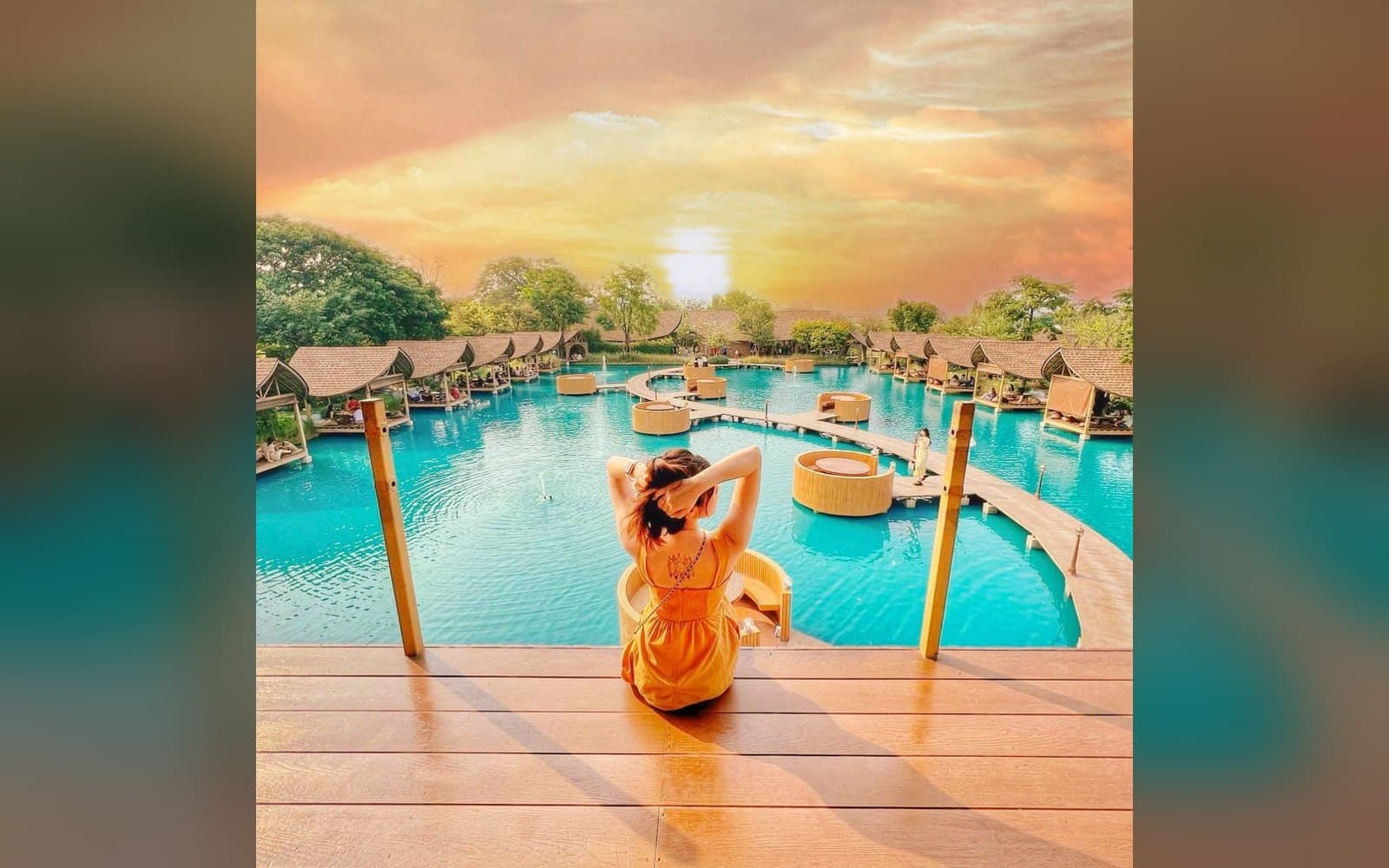
Bubble in the Forest Cafe Bangkok 2026: The Seat Guide Nobody Writes — Zones, Timing, Food and How to Actually Get a Table on the Water
A complete 2026 guide to Bubble in the Forest Cafe in Sam Phran, Nakhon Pathom — the five seating zones ranked, why walk-ins never get the water booths, the two hours of good light, what to order, what it costs, and how to reserve a seat for free.
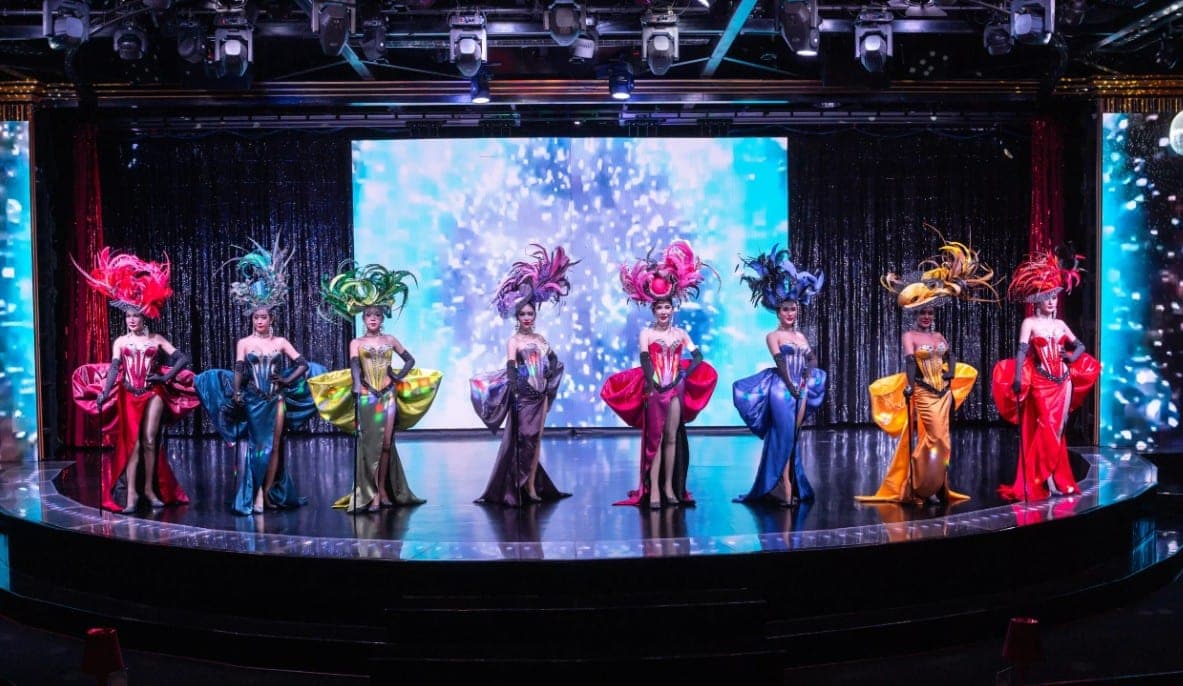
Calypso Cabaret Bangkok 2026: Show Times, Ticket Prices & Honest Guide
Complete 2026 guide to Calypso Cabaret at Asiatique The Riverfront — both nightly show times, tickets from ฿900, why the 540-seat theatre changes everything, and the history nobody tells you.

Thailand Elite Visa Bronze Ends 30 September 2026: The Real Deadline, the Maths, and What Replaces It
Thailand Privilege Bronze closes to new applications on 30 September 2026, and the cheapest way into the programme rises from ฿650,000 to ฿900,000. Here is the real submission deadline, the cost-per-year maths on all five tiers, and an honest look at who should not buy it at all.