Private Car with Driver in Thailand 2026: The Complete 5-City Guide to Hiring a Car at Disposal
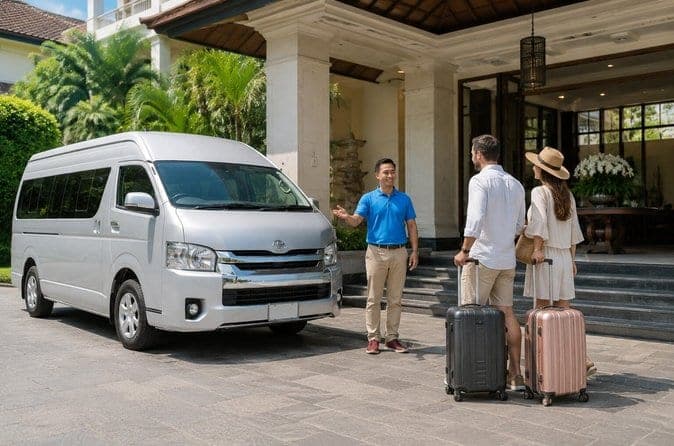
Thailand is a country where the distance between "I want to see that" and "I can actually get there" is bigger than most visitors expect. Bangkok's Grand Palace and Chatuchak market are forty minutes apart in traffic. Phuket runs fifty kilometres end to end. Koh Samui is a fifty-one kilometre circle. Chiang Mai's most important temple sits fifteen kilometres up a mountain. And in every one of those places, the standard tourist solutions — metered taxis, ride-hailing apps, songthaews, scooters, packaged coach tours — each fail in their own particular way.
This guide is about the option that solves most of it: hiring a private car with a driver at your disposal for a full day. It covers what the term actually means, what it should cost, what the small print usually hides, and — the part most guides skip — what you can realistically see in eight hours in each of the five cities where we run the service: Bangkok, Pattaya, Phuket, Koh Samui and Chiang Mai.
We are Trip Thai Tour, a TAT-licensed Thai tour operator (Licence No. 14/04232, verifiable on the official Tourism Authority of Thailand tour-agent registry). We sell this service, so treat the recommendations accordingly — but everything factual below is checkable, and where the local market beats us we say so.
What "Car at Disposal" Actually Means
A car at disposal means you hire the entire vehicle and its driver for a fixed block of time — normally 8 hours — instead of paying per journey or per person. The vehicle stays with you for the whole period. It takes you somewhere, waits while you are there, then takes you on to the next place, as many times as you want. You are buying a driver's day, not a ride.
The phrase comes from the Indian travel trade, and if you have booked a Thailand holiday through an agent in Delhi, Mumbai or Hyderabad you have almost certainly seen it in your itinerary. It is also increasingly used by aggregator platforms selling "custom" or "flexible" hire.
Here is the problem. In most packaged versions, the disposal is heavily restricted, and the restrictions are rarely on the front page:
- A kilometre cap, very often 80 km for a full day. Enough for a tight itinerary, not enough for a real one.
- A fixed itinerary, with the vehicle "as per itinerary only" — meaning any extra stop is a deviation.
- Re-routing charges for changing your mind, which is the entire point of hiring a car at disposal in the first place.
- A clock that starts at the depot, not at your hotel.
Travellers typically discover these halfway through the day, standing at a junction while the driver explains that he cannot turn left. It is a genuinely miserable experience, and it is common enough that it shapes how we price and describe our own version.
Our version has no kilometre cap, no per-stop charge and no re-routing fee inside the city zone. We can afford that honestly, because a van waiting in a car park costs us almost the same as a van driving. Charging per stop would be a fee invented purely to extract money rather than to recover a cost. The two things that genuinely do cost us more are time and leaving the city, so those are the only two things we charge for: hours beyond the eighth, and a separate quote for intercity or airport routes.
Private Car & Van with Driver — 8 Hours at Your Disposal
From ฿3,000 per vehicle (8 hours) — priced per group and itinerary — TAT Licensed Operator

What It Costs — and How That Compares City by City
Our rate is flat: ฿3,000 for an SUV carrying up to 4 passengers, or ฿3,500 for a van carrying up to 10, for 8 hours, in Bangkok, Pattaya, Phuket and Chiang Mai. Per vehicle, never per person.
Koh Samui is the one exception, at ฿4,500 for the SUV and ฿5,500 for the 10-seat van. The island genuinely costs more to operate on: a small fleet, spare parts and fuel arriving by ferry, villa accommodation up steep access roads that eat brakes and clutches, and a season concentrated into a few months. Samui's own market is advertised at ฿3,000–5,000 a day, but that is for a small car, so compare the finished totals rather than the headlines — ours has no kilometre cap, no villa-road surcharge and no outer-zone fee.
What does not change anywhere is what the number contains. There is no kilometre cap, no charge per stop, no re-routing fee, no outer-zone or villa-road surcharge, and on Phuket no ฿300 fee for the Big Buddha hill road that island drivers routinely add once you are at the bottom of it. We would rather quote one number you can hold us to than a low headline topped up on the road.
Split across a group that becomes striking. Six people in the van pay ฿583 each for an entire day of private transport with a driver. Ten pay ฿350 each. A couple in the SUV pays ฿1,500 each. You can see the full breakdown and send us a plan on any of the city pages — Bangkok is the busiest, and the rate is identical everywhere except Koh Samui, which is ฿4,500 for the SUV and ฿5,500 for the van (฿550 each for ten).
What makes this interesting is that Thailand's local markets price this service very differently from city to city, because each has its own fleet, geography and demand pattern. Here is the honest comparison:
| City | Typical local rate (8 hrs) | Local extra hour | Our van (10 seats) | Our SUV (4 seats) |
|---|---|---|---|---|
| Bangkok | ฿2,000–3,500 | ~฿300 | ฿3,500 | ฿3,000 |
| Pattaya | ~฿500/hr for a van (≈฿4,000) | ฿300–500 | ฿3,500 | ฿3,000 |
| Phuket | ฿2,100–2,800 + surcharges | ~฿350 | ฿3,500 | ฿3,000 |
| Koh Samui | ฿3,000–5,000 (small car) | ~฿500 | ฿5,500 | ฿4,500 |
| Chiang Mai | ฿3,000 for a 3-seat car | ~฿300 | ฿3,500 | ฿3,000 |
Read that table honestly and three things stand out.
In Bangkok we are mid-market. The city has the deepest fleet in Thailand and genuine competition, including Grab's hourly rental product. If you are two people making three simple stops, a cheaper option exists. What you get from us instead is tolls included, no km cap, and a vehicle that waits.
In Chiang Mai the gap is enormous, and it is about seats rather than price. The established northern rate for a full-day car with an English-speaking driver and fuel is ฿3,000 — for a vehicle seating three. That is a fair price for what it is; northern drivers are not overcharging. But it means a family of five is quoted two cars and a group of eight is quoted three, and you arrive everywhere in separate halves. Our SUV costs the same ฿3,000 and seats four; our van is ฿3,500 and seats ten.
On Koh Samui we sit above the band, and we would rather say so. Samui is the most expensive place in Thailand for private transport, for structural reasons: a small island, a limited fleet, spare parts and fuel arriving by ferry, villa-based accommodation on steep hillsides, a concentrated December-to-March season, and no rail or metered-taxi culture to hold prices down. The result is ฿3,000–5,000 a day and ฿500 an hour to extend — but almost always for an older four-seat car. Our Samui rates are ฿4,500 for the SUV with ฿500 extra hours and ฿5,500 for the 10-seat van with ฿600 extra hours, and those numbers already include the villa access road, the outer-zone pickup and the whole ring road with no kilometre cap. In the van, six people pay ฿917 each and ten pay ฿550.
In Phuket the headline rate looks competitive until you add the surcharges — which is a big enough issue to deserve its own section below.
The Small Print — Four Questions to Ask Any Operator
Whoever you book with, including us, these four questions separate a real quote from a headline number.
1. Is there a kilometre cap?
Ask directly. A capped day is a different product from an uncapped one, and the cap is usually invisible until you hit it. In Phuket the classic sightseeing loop alone runs 80–100 km. On Samui the ring road is 51 km before you have done anything. An 80 km cap makes both impossible.
2. When does the clock start?
At your hotel, or at the depot? The difference is routinely thirty to sixty minutes of a day you paid for. Ours starts at your hotel door and ends when you are returned to it.
3. What does an extra hour cost, and is it guaranteed?
Note the second half of that question. In Phuket and Samui, extensions are commonly described as "subject to availability", meaning the driver may simply decline because he is slotted between two other bookings. Ours are ฿500 (van) or ฿400 (SUV), and ฿600 on Koh Samui, and they are unconditional, because your driver is assigned to you for the whole day.
4. What surcharges apply — and specifically, which roads?
This is the Phuket question, and it is worth its own paragraph.
On Phuket, the road up Nakkerd Hill to the Big Buddha is a six-kilometre climb that is hard on fuel and brakes, and it is standard practice for island drivers to ask for around ฿300 extra to make it. Some disclose it upfront. Many mention it at the bottom of the road, when you are unlikely to argue. Airport pickups are commonly surcharged at ฿500 booked ahead or ฿1,000 on the day, and hotels in the far north (Mai Khao, Nai Yang) or far south (Rawai, Nai Harn) often carry an outer-zone fee.
We charge none of those. The hill is included, the whole island is included, and pickup costs the same wherever you are staying. So when you compare a ฿2,100 Phuket quote against our ฿3,000, add ฿300 for the hill, add your hotel's zone, add ฿350 for an hour, and then compare — it lands in the same place, except ours cannot move afterwards.
What's Included, and What Isn't
Included: the vehicle, the driver's full eight hours, all fuel with no kilometre cap inside the city zone, door-to-door hotel or villa pickup with no outer-zone surcharge, and unlimited stops, route changes and waiting time.
In Bangkok, expressway tolls are included too. This is a genuine cost that many operators pass back to you at drop-off. According to Bangkok Expressway and Metro's official toll schedule, the inner-city Chalerm Maha Nakhon expressway charges a flat ฿50 per toll plaza for a four-wheel vehicle, and a day that crosses the city two or three times passes through several — ฿100–200 that appears as a handful of receipts at exactly the moment you least want to discuss them.
Not included: attraction entry fees, venue parking (typically ฿20–100), food, the optional licensed guide, and hours beyond the eighth.
The entry-fee point deserves nuance, because it varies enormously by city. In Bangkok a temple day genuinely adds up — the Grand Palace is ฿500 per person, Wat Pho ฿300, Wat Arun ฿200. In Phuket, Samui and Chiang Mai it barely registers: Wat Chalong, Phuket's Big Buddha, Karon Viewpoint, Promthep Cape, Samui's Big Buddha, Hin Ta Hin Yai and the Na Muang waterfalls are all free, and Chiang Mai's Doi Suthep is ฿30. In those three cities, the vehicle plus lunch is usually the entire cost of a full sightseeing day.
Bangkok — What Eight Hours Actually Covers
Bangkok punishes ambition. Traffic is genuinely unpredictable, and the worst of it runs roughly 07:00–09:30 and 16:00–19:00. Eight hours comfortably covers four or five stops spread across the city, or a great deal more if you stay in one district. An 08:00 start is worth roughly two extra stops compared with a 10:00 one.
The classic first-timer day follows the river: the Grand Palace (฿500, opens 08:30, and the single best argument for starting early — by eleven it is shoulder to shoulder), Wat Pho and its reclining Buddha ten minutes away (฿300), a crossing to Wat Arun (฿200), lunch by the water, and an afternoon at ICONSIAM or Asiatique.
The shopping day is where the disposal model earns its money outright, because taxis and ride-hailing punish exactly this pattern. Chatuchak Weekend Market on a Saturday or Sunday — free, over 15,000 stalls, genuinely exhausting — then Platinum Fashion Mall, then Siam Paragon or MBK, with the boot filling at every stop and nobody carrying anything.
The family day usually heads to Safari World out in Min Buri, or to Sea Life and a central mall with an early finish. Because Samut Prakan is inside the Bangkok zone at no extra cost, the Erawan Museum and the Ancient City are also fair game — an underrated day most visitors never manage without a private vehicle.
What does not fit: Ayutthaya, Kanchanaburi, the Damnoen Saduak floating market and Pattaya. All are outside the zone and outside a comfortable eight hours, which is why we sell them as dedicated full-day tours instead.
Pattaya — What Eight Hours Actually Covers
Pattaya is the opposite of Bangkok: everything is close, and eight hours here covers noticeably more. Six or seven stops is a normal day rather than an ambitious one, because almost everything sits within a ten-to-twenty-five minute drive of Beach Road.
The north loop takes in the Sanctuary of Truth in Naklua (฿500 day, ฿700 sunset), an all-teak carved temple that is the one genuinely world-class thing in the city, then Naklua's seafood market and Terminal 21.
The south loop runs to Big Buddha Hill on Pratumnak (free, and the best free view in the city), down to Jomtien Beach, then out to Nong Nooch Tropical Garden (from ฿950 with tram and cultural show). Add the Pattaya Floating Market (฿300 adult, ฿200 child including a boat ride) on the way back.
The boat day is the quiet winner. Your driver drops you at Bali Hai Pier for a Coral Island trip, waits through the day with your bags and dry clothes locked in the vehicle, and collects you when the boat comes in. Anyone who has stood on that pier at four in the afternoon in wet swimwear hunting for a ride knows what that is worth.
Pattaya is also the one city where we actively recommend an afternoon start. The Sanctuary of Truth photographs far better in late light, Pratumnak is a sunset spot, and the night markets, beach-road restaurants and cabaret shows are all evening events. A 14:00 pickup gives you all of that inside the same eight hours you would otherwise spend in the midday heat.
Phuket — What Eight Hours Actually Covers
Phuket rewards clustering, because the island is long and hilly and the classic loop runs 80–100 km.
The southern classic covers Wat Chalong and its 60-metre Grand Pagoda; the Big Buddha, a 45-metre white-marble figure on Nakkerd Hill that reopened on 3 March 2026 after a landslide closed the access road in August 2024; Karon Viewpoint, where Kata Noi, Kata and Karon beaches line up in one frame; and Phuket Old Town for the Sino-Portuguese shophouses along Thalang Road and the painted lane of Soi Romanee. Every one of those is free to enter.
The sunset variant reverses the order and finishes at Promthep Cape, the southernmost headland and the island's designated sunset spot — usually with one extra hour on the clock.
The boat day works as it does in Pattaya: drop-off at Rassada Pier for Phi Phi or Ao Po for James Bond Island, with the car and your belongings waiting when you return.
A note on timing: go up the hills early. By late morning the haze thickens over Chalong Bay and the coaches arrive, and both the Big Buddha panorama and Karon Viewpoint soften into white. Old Town is better later, when the afternoon light warms the painted facades. Hills first, coast second, town last.
If you would rather not plan at all, our Phuket City Day Tour is the same vehicle running that curated route with the timings worked out.
Koh Samui — What Eight Hours Actually Covers
Samui is the easiest of the five to plan, because Route 4169, the ring road, runs about 51 kilometres in a complete loop and almost everything sits on it or a short spur off it. The longest drive between neighbouring highlights is about twenty minutes, so a full circuit with six or seven proper stops is a comfortable day.
The north-east cluster opens most itineraries: the Big Buddha at Wat Phra Yai, a 12-metre golden seated figure on a connected islet, and Wat Plai Laem with its eighteen-armed Guanyin over a fish-filled lake. Both free, and Plai Laem is usually quieter.
The south coast holds the island's oddest famous sight — Hin Ta and Hin Yai, the grandfather and grandmother rocks at Lamai, exactly as suggestive as the guidebooks imply — and Wat Khunaram, where the mummified monk Luang Pho Daeng has sat upright behind glass since 1973, wearing sunglasses added because the eye sockets unsettled visitors.
The interior is where a private vehicle genuinely earns its money, because songthaews will not go there. The Na Muang waterfalls sit about twelve kilometres inland from Lamai; Na Muang 1 is a short walk from the car park, Na Muang 2 a steeper climb to a taller drop. Both free, and both better in or just after the wet season.
The north and west close the loop: Fisherman's Village at Bophut, whose Friday walking street takes over the entire lane, quiet Maenam beach, and west-coast sunsets at Lipa Noi and Nathon — Samui's best sunsets face west, so run the loop anticlockwise if you want to finish there.
One Samui-specific practicality: villa access roads. Hillside villas at Chaweng Noi, Choeng Mon, Bang Por and Taling Ngam are reached by steep, narrow, roughly surfaced private roads, and it is genuinely common for drivers here to decline the last stretch and ask guests to walk down to the main road with their bags. We serve those roads without surcharge — but on the very steepest few a 10-seat van genuinely cannot make the last stretch where the SUV can, so tell us your road at booking and we will check it in advance rather than put you in the wrong vehicle on the morning.
Chiang Mai — What Eight Hours Actually Covers
Chiang Mai divides cleanly into things you should walk and things that need a vehicle, and knowing which is which is most of a good day.
Walk the Old City. Inside the moat, Wat Phra Singh (founded 1345) and Wat Chedi Luang — whose enormous 14th-century chedi partly collapsed in a 16th-century earthquake and was left magnificently ruined — sit within a square mile with a dozen smaller temples. Most are free or ฿20–50. Your driver drops you at one end and collects you at the other.
Drive the mountain. Wat Phra That Doi Suthep is about 15 kilometres and 30–45 minutes up a switchback road, and it is the main reason to want a vehicle here. Entry is ฿30 for foreign visitors; the traditional approach is the 306-step naga staircase, or ฿20 takes the funicular. Open daily 06:00–20:00.
Drive the east. The Bo Sang umbrella village and the San Kamphaeng silver and celadon workshops stretch along a road no songthaew serves usefully. It is also the most commission-heavy stretch of road in northern Thailand, lined with showrooms that pay drivers to deliver visitors — so it is worth booking with someone who will tell you which places are working craft studios and which are sales floors dressed up as one.
What does not fit — and this matters. Chiang Rai and the White Temple is roughly three hours each way. Doi Inthanon, Thailand's highest peak, is a full mountain day. Pai is 762 curves of winding mountain road that visitors underestimate badly. None of these belong in an eight-hour city charter, and any operator who says otherwise is selling you six hours in a vehicle and ninety minutes at a temple. Elephant sanctuaries are also generally out of town, which is why our Chiang Mai sanctuary visits come with their own transfers included.
Chiang Mai is also, for what it is worth, the city where we most recommend adding a licensed guide. This is a 700-year-old Lanna capital, not a resort town, and almost nothing about it is self-explanatory — why the great chedi is broken, why Doi Suthep sits where it does (by legend, a white elephant carrying a Buddha relic was released to choose the site, climbed the mountain, trumpeted three times and died there), and what makes Lanna temple architecture a separate tradition entirely.
Van or SUV — How to Choose
SUV: ฿3,000, up to 4 passengers. Van: ฿3,500, up to 10 passengers. (On Koh Samui the same two vehicles cost ฿4,500 and ฿5,500.)
Since the gap is ฿500 for a whole day, the van is the better buy more often than the seat count alone suggests. Take it if there are five or more of you, if you are travelling with grandparents or small children, or if the day involves shopping or beaches — the space behind the back row swallows a Chatuchak haul, wet towels and snorkels without anyone holding anything on their lap.
Take the SUV if you are a couple, a solo traveller, or three to four adults travelling light. It handles Bangkok's Chinatown lanes, Phuket Old Town's one-way streets, Chiang Mai's narrow sois, Samui's steep villa roads and the Doi Suthep switchbacks more easily, and for a day of business meetings it is the more discreet vehicle.
One honest caveat: the seat numbers are real limits, not optimistic ones. Ten adults with ten suitcases will not fit comfortably in a ten-seat van. If you are changing hotels or arriving with full luggage rather than day bags, count your group as one or two people larger and tell us at booking. Groups over ten: message us and we will quote two vehicles or a minibus.
Bigger Groups — Minibus and Coach
The SUV and van are our two standard disposal vehicles because they cover the great majority of bookings. But they are not the whole fleet, and groups over ten do not need to split into two vans unless they want to.
| Vehicle | Typical capacity | Best for |
|---|---|---|
| Sedan / car | 1–3 passengers | Couples, solo travellers, business days, light luggage |
| SUV | Up to 4 passengers | Small families, narrow old-town streets, hill roads |
| Van | Up to 10 passengers | Families and groups, shopping and beach days |
| Minibus | Roughly 12–20 passengers | Extended families, two families travelling together |
| Bus / coach | 20+ passengers | Large groups, company trips, wedding parties, tour groups |
Minibuses and coaches are quoted per booking, not from a fixed price list, because the rate depends on group size, vehicle size, the route and the day. Message us with your numbers and your plan and we will send a written price before you commit to anything.
One honest note on the large vehicles: a coach cannot go everywhere a van can. Narrow old-town streets, some hill and villa roads, and a few temple and market car parks are simply not built for a 20-metre vehicle. If your plan includes stops like that, we will tell you at quoting stage and suggest either a minibus or two vans instead — before you book, not on the morning.
Every vehicle in the fleet, from the sedan to the coach, is air-conditioned, clean and maintained, and comes with a professional driver. We do not run a separate "budget" tier with older vehicles and hope you do not notice.
And above the standard fleet there is an executive tier on request — Mercedes-Benz, BMW, Toyota Camry and the Mercedes V-Class. That is explained in full in the next section.
Executive Service — Mercedes-Benz, BMW, Camry and V-Class
Everything above is our standard fleet: clean, air-conditioned, well-maintained vehicles that do the job properly. But some days call for a different standard of vehicle — and for those we run an executive tier, available on request.
What the executive vehicles actually are
| Vehicle | Passengers | What it is |
|---|---|---|
| Toyota Camry | 1–3 | The executive saloon Thailand runs on. Quiet, smooth, understated. The default choice for airport transfers and business days when you want comfort without announcing it. |
| Mercedes-Benz E-Class / S-Class | 1–3 | The full luxury saloon. Deep leather seats, near-silent cabin, genuine rear legroom. What embassies and five-star hotels send. |
| BMW 5 Series / 7 Series | 1–3 | The same class as the Mercedes with a firmer, more driver-focused character. Choose it if you prefer BMW — the comfort level is equivalent. |
| Mercedes-Benz V-Class | Up to 6–7 | The one most guests do not know exists, and the one most families end up wanting. |
Why the V-Class deserves its own explanation
The Mercedes-Benz V-Class is a luxury MPV — think of it as the difference between a standard van and a private lounge on wheels.
Where a normal van seats ten people in fixed rows, the V-Class carries six or seven in individual captain's chairs, often facing each other around a table. Every seat reclines. There is real leg and shoulder room rather than the minimum that fits. The cabin is properly insulated, so a conversation at normal volume works at motorway speed, and children sleep through a two-hour drive.
Who books it:
- Families who want space rather than seats. Four or five people in a V-Class travel far better than the same four in a ten-seat van, because the room is distributed to them rather than to empty rows.
- Airport arrivals after a long-haul flight. The first hour in Thailand sets the tone for the trip, and the V-Class is a considerably gentler landing than a standard van.
- Business travellers and delegations. You can work, take a call, or hold a conversation in it.
- Weddings, anniversaries and honeymoons, where the vehicle is part of the occasion.
- Elderly passengers, because the doors are wide, the step is manageable and the seats are genuinely supportive over a long day.
Our drivers on the executive tier
The vehicle is only half of an executive service — the driver is the other half, and it is the half most operators quietly skip.
Our executive drivers are professionals who do this work full time. That means: they arrive early rather than on time; they open doors; they handle luggage without being asked; they cool the cabin before you get in; they drive smoothly, because in a luxury vehicle a rough driver undoes everything the car is doing for you; and they understand discretion — no unasked-for commentary, no radio you did not choose, no phone calls from the front seat.
They know the routes, the hotel entrances, the airport pick-up procedure and where a large vehicle can and cannot go. And as with every booking, you get the driver's name, phone number and the vehicle's plate before the day.
How to book the executive tier
Executive vehicles are on request, not on a fixed price list, and they are a limited part of the fleet rather than something sitting idle waiting for a booking. That means two things in practice:
- Tell us early. A few days' notice for a V-Class or a Mercedes on a specific date, more in high season (December to February) and over Songkran and New Year.
- Tell us the actual make you want, or tell us the occasion and let us recommend. If you specifically need a Mercedes rather than "a luxury car", say so, because we will confirm the exact vehicle in writing before you commit.
Message us with your date, city, passenger count, luggage and what the day is for, and we will come back with the exact vehicle available and the price in writing. We will not confirm a Mercedes and then send something else — if the vehicle you asked for is not available on your date, we tell you before you book, not on the morning.
Special Requests We Can Arrange
Some things do not appear on any booking form because they are not standard equipment — but we can arrange them if you ask when you send your plan, not on the morning of your trip.
A vehicle with a fridge or cool box — for baby milk and medication
If you are travelling with an infant, we can arrange a vehicle fitted with a fridge or a cool box so prepared bottles and formula stay cold through a full day out. Thailand's heat is the practical problem here — a bag that would stay cool for hours in a European summer does not last a Bangkok afternoon.
The same applies to medication that must be kept refrigerated. Tell us at booking and we will confirm what we can fit to the vehicle for your dates.
This is a request, not a standard fitting, so we need notice. Ask on the day and the honest answer is usually no.
Wheelchair and mobility access for elderly or disabled guests
We can arrange a vehicle able to carry a wheelchair, and we do this regularly for families travelling with elderly parents or a guest with limited mobility.
What we need from you to get it right:
- Whether the wheelchair is folding or rigid, and its approximate dimensions.
- Whether the guest can transfer into a normal vehicle seat with help, or needs to remain seated in the chair.
- Whether you need one wheelchair or two, and whether a walker or mobility scooter is also travelling.
- Any stops in your plan with steps, steep paths or long walks, so we can flag them honestly before you go.
That last point matters more than the vehicle. Many Thai attractions have uneven ground, high thresholds or long unshaded walks, and a stop that looks fine on a map can be impossible in practice. We would rather tell you which stop to swap than have your family arrive and be unable to enter.
Message us before booking with the details above and we will confirm exactly what we can provide for your dates and your route.
Other requests worth asking about
- Child seats and booster seats — tell us the child's age and weight.
- A larger luggage allowance — if you are changing hotels or arriving from the airport with full suitcases rather than day bags, say so and we will size the vehicle up.
- A stroller or pram travelling with you all day — usually fine in a van, tight in an SUV.
- Extra cold water or specific stops — for prayer, feeding, or a pharmacy run.
None of these carry a surprise charge. Where something genuinely costs more — a larger vehicle, for instance — we tell you the number before you confirm.
Your Driver Is Not Your Guide — and That's the Law
This is the part of the industry most operators are quiet about, so here it is plainly.
Under Thailand's Tourism Business and Guide Act B.E. 2551 (2008), guiding tourists without a licence is an offence carrying penalties of up to ฿500,000 or two years' imprisonment, and tourist guiding is one of the occupations reserved exclusively for Thai nationals under the Ministry of Labour's prohibited-occupations list. Enforcement has tightened in recent years, with additional penalties and bans introduced for illegal guiding.
Your driver speaks working English. He knows the city — which expressway exit is moving at four o'clock, where a van can actually park near Wat Pho, which noodle shop is worth stopping at, which coast the Phuket weather is on. He will recommend restaurants happily and carries WhatsApp translation for anything complex.
He will not narrate temples, and we will not pretend he can. Plenty of operators quietly let drivers do it anyway, which puts the driver at genuine legal risk and gives you history of uncertain accuracy.
If you want commentary, add a TAT-licensed English-speaking guide for ฿2,500 for the whole day — for the group, not per person. Where it pays off most:
- Chiang Mai — Lanna history is dense and almost entirely unexplained on site.
- Pattaya's Sanctuary of Truth — unguided it is a bewildering wooden building covered in thousands of carvings; guided, it resolves into a readable Hindu-Buddhist cosmology.
- Bangkok's Grand Palace — the Ramakien murals along the cloister become a story rather than a very long wall.
- Samui's Wat Khunaram — the mummified monk goes from macabre curiosity to a genuinely moving lesson about impermanence.
For beach days, shopping days and market days, skip it happily. Nothing is lost and the vehicle price does not change.
What This Service Is Not Good For
Worth stating clearly, because the honest limits are as useful as the features.
- Airport transfers. Quoted separately by route. Flight timing risk does not belong inside a flexible sightseeing day.
- Intercity travel. Bangkok↔Pattaya, Chiang Mai↔Chiang Rai, Phuket↔Krabi — all separate route quotes.
- Long-haul day trips. Ayutthaya, Kanchanaburi, Damnoen Saduak, Doi Inthanon, Pai. These need ten to twelve hours and are sold as their own tours.
- One or two simple journeys. If you just need to get from A to B twice, ride-hailing is cheaper and we will tell you so.
- Groups over ten. Message us for a second vehicle or a minibus.
What Our Customers Say
"Our agent's package said 'car at disposal' but capped it at 80 km and wanted extra for every change. We cancelled and booked Trip Thai Tour directly instead. ฿3,500 for the van, six of us, and we went to the Grand Palace, Chatuchak, Platinum and out to Samut Prakan with no arguments about kilometres. The driver found us pure vegetarian food twice without being asked twice." — Deepak & Anjali S., Mumbai, India
"We had been quoted ฿5,000 for a day by our resort on Samui and ฿500 an hour to extend. This was ฿5,500 for a ten-seat van with ฿600 extra hours, no surcharge for our villa road and nothing added at the end — for the six of us that worked out cheaper per head and far more comfortable. The driver waited while we prayed, found us halal food at Fisherman's Village, and never rushed us at the waterfalls." — Aisha & Yusuf B., Dubai, UAE
"Nine of us in Chiang Mai. Two other companies quoted three separate cars because their vehicles only seat three or four. Trip Thai Tour sent one van for ฿3,500 — ฿350 each — and we all travelled together. Doi Suthep road included, no arguments." — Sanjay & Poonam T., Pune, India
Why We Check Your Plan Before Confirming
One deliberate difference in how we sell this: we do not take payment online, and you cannot instantly auto-confirm a day with us. You configure everything on the page — vehicle, date, hours, passengers — tell us roughly what you want to do, and send it over. We check it, then confirm.
That sounds like friction. It is actually the opposite, and here is why.
A disposal charter is the one product we sell where the customer's plan determines whether the product works at all. Four things routinely go wrong when a booking is auto-confirmed without anyone reading it:
- The route leaves the zone. Someone books a Bangkok day and plans Ayutthaya. Someone books Chiang Mai and plans the White Temple. Both are outside the product, and both discover it at 9am with a driver who cannot take them.
- The hours do not add up. Twelve stops across Bangkok in eight hours is not a tight day, it is an impossible one. Better to say so at the booking stage than to spend the day apologising.
- The group does not fit. Ten adults with ten suitcases do not fit in a ten-seat van, however the seat count reads.
- The guide is not available. Licensed guides are a limited pool, and the ฿2,500 add-on is not guaranteed on 24 hours' notice.
An operator that takes your money instantly and discovers any of that afterwards ends up issuing a refund and you end up with a ruined day. Checking first costs us a few minutes and costs you nothing — sending a plan commits you to nothing and is never charged. It means every confirmed booking is one we already know we can deliver.
Private Car & Van with Driver — 8 Hours at Your Disposal
From ฿3,000 per vehicle (8 hours) · TAT Licensed No. 14/04232 · ⭐ 4.0 (186 reviews)
How to Book
Pick your city, configure the day, and send us the plan:
- Bangkok — Private Car & Van at Disposal
- Pattaya — Private Car & Van at Disposal
- Phuket — Private Car & Van at Disposal
- Koh Samui — Private Car & Van at Disposal
- Chiang Mai — Private Car & Van at Disposal
Each page has a short form: choose van or SUV, set the date, pickup time, hours and passenger count, add the optional guide, and write a line or two about what you would like to do. It sends straight to us on WhatsApp with everything laid out. We reply with a confirmation, usually within minutes during Thai business hours — and if your plan needs adjusting, we will tell you exactly what and why rather than taking the booking and hoping.
Send it at least 24 hours ahead so we can check availability and assign a driver. Once confirmed, you will receive his name, mobile number and the vehicle's plate by WhatsApp the night before. For airport transfers, intercity routes, groups over ten, or a multi-day arrangement, message us on WhatsApp +66 89 949 6235 and we will quote it properly.
Trip Thai Tour is TAT Licensed No. 14/04232, rated 4.0 from 186 reviews, and operated by Global Feed Limited Partnership in Bangkok. You can verify our licence yourself on the official TAT tour-agent registry — we would encourage you to check any Thai operator you are considering, not just us.
Frequently Asked Questions
Yes, on request. Alongside our standard fleet we run an executive tier: the Toyota Camry as an executive saloon for one to three passengers, Mercedes-Benz E-Class and S-Class and BMW 5 and 7 Series for full luxury saloon travel, and the Mercedes-Benz V-Class for up to six or seven passengers. The V-Class is the one most guests have not considered and most families end up preferring: it is a luxury MPV with individual reclining captain's chairs rather than fixed van rows, so four or five people travel far more comfortably in it than in a ten-seat van. It is the usual choice for long-haul airport arrivals, business delegations, weddings and honeymoons, and for elderly passengers who need wide doors and genuinely supportive seats. Executive vehicles are quoted per booking rather than from a fixed price list, and they are a limited part of the fleet, so give us a few days' notice and more in high season. Tell us the exact make you want and we confirm that specific vehicle in writing before you commit.
Our drivers do this work full time and are experienced with international guests, and on the executive tier that standard is explicit. They arrive early rather than on time, open doors, handle luggage without being asked, and cool the cabin before you get in. They drive smoothly, which matters more than people expect, because a rough driver undoes everything a luxury vehicle is doing for you. They also understand discretion: no unrequested commentary, no radio you did not choose, no phone calls from the front seat. They know the routes, hotel entrances and airport pick-up procedures, and where a larger vehicle can and cannot go. As with every booking, you receive the driver's name, phone number and the vehicle plate before the day, so you know exactly who is coming. One thing to be clear about: a driver is not a licensed tour guide under Thai law, and that applies to the executive tier too.
Yes. Our two standard disposal vehicles are the SUV for up to four passengers and the van for up to ten, but the fleet also covers sedans for one to three passengers, minibuses for roughly twelve to twenty, and full coaches for larger groups, company trips and wedding parties. Minibuses and coaches are quoted per booking rather than from a fixed price list, because the rate depends on group size, vehicle size, route and day. One honest limitation: a coach cannot reach everywhere a van can, as narrow old-town streets and some hill, villa and temple car parks are not built for a large vehicle. If your plan includes stops like that we will say so at quoting stage and suggest a minibus or two vans instead.
Yes to both, with advance notice. For infants we can arrange a vehicle fitted with a fridge or cool box so prepared bottles and formula stay cold through a full day out, which matters far more in Thai heat than most visitors expect. The same applies to medication that must stay refrigerated. For guests with limited mobility we can arrange a vehicle able to carry a wheelchair, and we do this regularly for families travelling with elderly parents. Tell us whether the chair is folding or rigid, whether the guest can transfer into a normal seat with help, and how many chairs are travelling. We will also review your planned stops and flag any with steps, steep paths or long unshaded walks, because the vehicle is usually the easy part and the destination is not. Both are requests rather than standard fittings, so ask when you send your plan, not on the morning.
A car at disposal means you hire the whole vehicle and its driver for a fixed block of time — usually 8 hours — rather than paying per journey or per person. The vehicle stays with you throughout: it takes you somewhere, waits while you are there, and takes you on to the next place as many times as you like. It is the difference between buying a taxi ride and buying a driver's day. The term comes from the Indian travel trade and appears in most Thailand packages sold from India, though packaged versions almost always cap the kilometres and charge for re-routing.
With Trip Thai Tour it is a flat ฿3,000 for an SUV carrying up to 4 passengers, or ฿3,500 for a van carrying up to 10, for 8 hours, in Bangkok, Pattaya, Phuket and Chiang Mai. Koh Samui is ฿4,500 for the SUV and ฿5,500 for the 10-seat van, because a small island fleet, ferried parts and steep villa access roads genuinely cost more to run. That is per vehicle rather than per person, so six people in the van pay ฿583 each, or ฿917 each on Samui, and ten people pay ฿350 each or ฿550 on Samui. Local market rates vary widely by city: roughly ฿2,000–3,500 in Bangkok, ฿2,100–2,800 in Phuket, ฿3,000 for a three-seat car in Chiang Mai, and ฿3,000–5,000 on Koh Samui, which is the most expensive.
With us, no — you can visit as many places as you like inside the city zone, in any order, with no kilometre counter and no per-stop charge. This matters because a kilometre cap, commonly 80 km, is the single most frequent restriction in packaged 'car at disposal' deals sold through agents, alongside a fixed itinerary and re-routing charges. Travellers usually discover the cap halfway through the day when the driver declines to turn. Always ask three questions before booking anyone: is there a km cap, when does the clock start, and what does an extra hour cost?
With Trip Thai Tour the clock starts the moment your driver collects you at your hotel or villa door, and ends when he drops you back. A 09:00 pickup means a 17:00 drop-off. This is worth confirming with any operator, because starting the clock at dispatch rather than at pickup is a common practice that quietly consumes thirty to sixty minutes of a day you have paid for. Ask the question directly before you book — a straight answer tells you a lot about how the rest of the day will be handled.
The vehicle, the driver's full 8 hours, all fuel with no kilometre cap inside the city zone, and door-to-door hotel or villa pickup with no outer-zone surcharge. In Bangkok, all expressway tolls are included too, which matters because the inner-city Chalerm Maha Nakhon expressway charges a flat ฿50 per toll plaza and a cross-city day passes several. Not included are attraction entry fees, venue parking of roughly ฿20–100, food, the optional licensed guide at ฿2,500 per day, and any hours beyond the eighth.
The SUV is ฿3,000 and seats up to 4; the van is ฿3,500 and seats up to 10. On Koh Samui the same choice exists at island prices: ฿4,500 for the SUV and ฿5,500 for the van. Since the gap is only ฿500 for a whole day (฿1,000 on Samui), the van is better value for any group of four or more, and it is the clear choice if you have grandparents, small children, or a shopping or beach day ahead, because of the luggage space behind the back row. Take the SUV if you are a couple or three to four adults travelling light — it handles narrow old-town streets and the Doi Suthep switchbacks more easily. On Samui, tell us at booking if your villa is up a steep access road so we can check it in advance — on the very worst few the SUV makes the last stretch where a long-wheelbase van cannot.
No, and any operator telling you otherwise is putting their driver at legal risk. Under Thailand's Tourism Business and Guide Act B.E. 2551, guiding tourists without a licence carries penalties of up to ฿500,000 or two years' imprisonment, and guiding is one of the occupations reserved for Thai nationals. Your driver speaks working English and will happily recommend restaurants and explain practicalities, but he will not narrate temples. A TAT-licensed English-speaking guide can be added for ฿2,500 per day for the whole group — most worthwhile in Chiang Mai.
Not on the 8-hour disposal product. Airport transfers are quoted separately by route, because they carry different timing risk — flight delays, arrivals-hall waiting, and hard deadlines in the other direction — and folding them into a flexible sightseeing day tends to produce a stressful one. Message us on WhatsApp +66 89 949 6235 for a fixed transfer price. For comparison, many Phuket operators surcharge airport pickups at around ฿500 booked ahead, or ฿1,000 requested on the day.
Not on this product, which covers each city and its immediate area only. Intercity routes are quoted separately by route because they are genuinely different jobs: Bangkok to Pattaya is roughly two hours each way, Chiang Mai to Chiang Rai about three, and Doi Inthanon or Pai are full mountain days. Cramming any of them into an 8-hour charter means most of the day spent in a vehicle. Message us on WhatsApp and we will price the real journey properly rather than selling you a day that cannot do what you want.
Yes, at no extra cost. Tell us at booking or tell your driver on the day, and he will take you to genuinely good halal-friendly, vegetarian, Jain-friendly, Indian or Western food rather than a restaurant that pays him commission. All five cities are well served. Your driver will also pause for prayer times whenever you ask and will wait as long as you need at any stop, since there is no time pressure inside your eight hours. Lunch is not included — budget roughly ฿150–500 per person, less in Chiang Mai.
Send your plan at least 24 hours ahead, so we can check availability, assign a driver and confirm your pickup time. Weekends, Thai public holidays and each city's high season fill faster, so 48 to 72 hours is safer then — particularly Koh Samui from December to March, where the island's vehicle fleet is genuinely limited, and Chiang Mai around Loi Krathong and Yi Peng. If you want the licensed guide add-on, give us 48 hours where possible, as guides are subject to availability. Same-day requests are sometimes possible via WhatsApp.
No. You configure the day on the page — vehicle, date, hours, passengers — tell us roughly what you would like to do, and send it to us on WhatsApp. We check the plan against the vehicle size, the hours and the route, confirm a driver is free, and reply, usually within minutes during Thai business hours. Payment is arranged only once your day is confirmed. We work this way because a disposal charter is the one product where your plan decides whether we can actually deliver it: a route may leave the city zone, twelve stops may not fit into eight hours, or a guide may be unavailable. Checking first means every confirmed booking is one we know we can run.
Extra hours are ฿500 for the van and ฿400 for the SUV — on Koh Samui ฿600 for the van and ฿500 for the SUV — charged in whole hours, agreed with your driver on the day and settled directly with him. There is no advance commitment, no minimum extension, no evening premium and no penalty rate. Local norms sit in the same range — roughly ฿500 an hour on Koh Samui and ฿350 in Phuket — but there extensions are commonly described as 'subject to availability' because the driver may be slotted between other bookings. Yours is assigned to you for the day.
It depends entirely on how many stops you make. For one or two direct journeys, a taxi or ride-hailing app is cheaper. From roughly four stops onward the disposal model wins, and it wins decisively on shopping, beach and market days. It also provides something apps cannot: a vehicle that waits, so your bags, shopping and dry clothes stay locked inside all day and there is no scramble for a car outside a venue at closing time or in the rain.
Cancellations more than 7 days before your booked pickup time receive a full refund; between 7 days and 48 hours a 50% refund applies; within 48 hours or for no-shows the booking is non-refundable. Cancellations count from the moment your written message reaches us on WhatsApp +66 89 949 6235 or by email. If your airline cancels your flight or you have a documented medical emergency, we offer one free date change within six months instead. If we cancel for any reason, you choose a full refund or a free new date.
Check Availability & Book
Send us your details to get an instant quote and secure your date.
Related Guides

Bubble in the Forest Cafe Bangkok 2026: The Seat Guide Nobody Writes — Zones, Timing, Food and How to Actually Get a Table on the Water
A complete 2026 guide to Bubble in the Forest Cafe in Sam Phran, Nakhon Pathom — the five seating zones ranked, why walk-ins never get the water booths, the two hours of good light, what to order, what it costs, and how to reserve a seat for free.
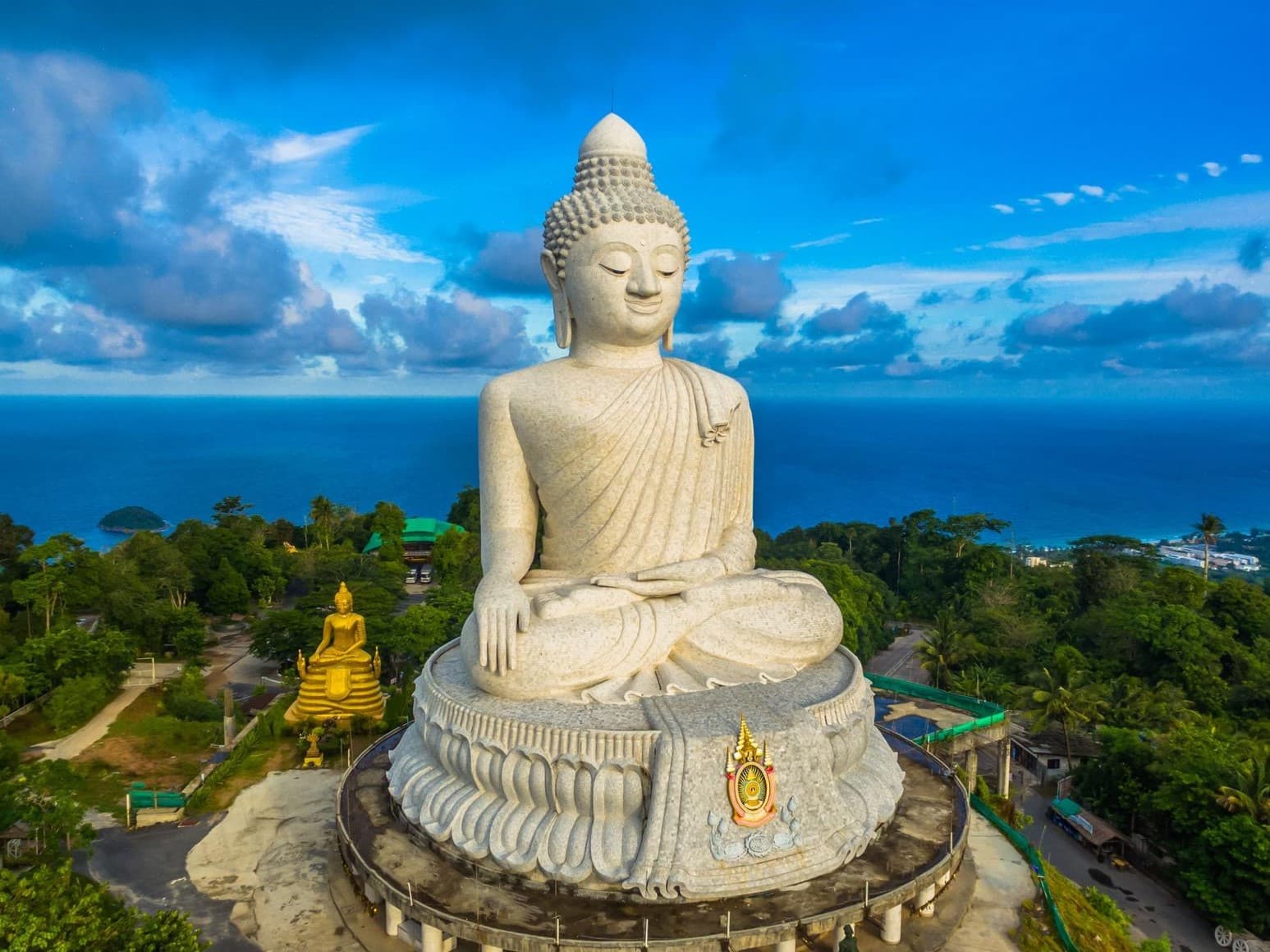
Phuket Big Buddha, Old Town & Night Market: The Complete 2026 Guide
Which Phuket night market opens on which day, why the temples force an afternoon start, and the honest truth about the Big Buddha's 'Permanently closed' Google listing.

Hanuman World Phuket 2026: Every Package Price, the Session That Decides Your Day & an Honest Review
Complete guide to Hanuman World Phuket zipline park on Chaofa Road — all four packages priced, why the 08:00 session decides whether your visit takes three hours or seven, the roller zipline and skywalk queue problem nobody explains, and how it compares to Flying Hanuman.